If you are savvy enough to arrange flowering plants, then year round color is possible. Color begins the moment you plan your garden’s bloom cycle. You can enjoy non-stop floral displays by selecting plants with staggered flowering times. Group early, mid, and late-season bloomers together, ensuring at least one variety is always in color. Avoid bare patches by filling gaps with reliable perennials and self-sowing annuals.
Key Takeaways:
- Plan your garden in layers by selecting flowering plants with different bloom times to ensure color from spring through fall.
- Group plants in clusters of odd numbers for a natural look that maximizes visual impact and supports pollinators.
- Choose varieties suited to your soil type and sunlight conditions to reduce maintenance and improve plant health.
- Use repeat bloomers like coneflowers, salvias, and daylilies to maintain color without constant replanting.
- Keep a garden journal to track when each plant blooms, making it easier to fill gaps in future seasons.
Understanding Bloom Cycles and Seasonality Factors
Plants follow natural bloom cycles shaped by seasonality factors like daylight, temperature, and moisture. To maintain continuous color, align your selections with these rhythms.
- Choose species tuned to spring, summer, and fall blooming periods
- Match plants to your local climate zone
- Track photoperiod sensitivity in flowering responses
Knowing which varieties bloom when ensures seamless transitions across the seasons.
Identifying Early, Mid, and Late Season Bloomers
Early bloomers like crocus and pansies deliver the first splashes of color after winter. Mid-season performers such as coneflowers and daylilies sustain vibrancy through summer. Late bloomers including asters and sedums extend the display into fall. Staggered flowering prevents gaps in visual interest. Knowing when each plant peaks helps you plan for uninterrupted color.
Environmental Factors Influencing Floral Longivity
Temperature extremes, soil quality, and sun exposure directly affect how long blooms last. Even drought-tolerant plants may fade early without proper care.
- Sunlight duration influences flowering intensity
- Soil pH impacts nutrient uptake and bloom health
- Water consistency determines petal resilience
Perceiving subtle shifts in plant response helps you adjust care for longer-lasting color.
Environmental Factors Influencing Floral Longivity
Microclimates in your garden can shorten or extend bloom periods dramatically. A south-facing bed may push early flowering due to increased heat retention, while low-lying areas risk frost damage during spring. Poor drainage leads to root stress, reducing floral longevity. Wind exposure can physically damage delicate petals, especially in tall perennials.
- Wind exposure affects structural integrity
- Microclimate shifts alter bloom timing
- Drainage quality determines root health
Perceiving how site-specific conditions shape performance allows you to position plants for peak, sustained flowering.
Strategic Color Theory and Palette Selection
Color shapes how your garden feels and flows through the seasons. By choosing a cohesive color palette, you create visual rhythm that guides the eye. Limiting your dominant hues while layering in accents ensures balance. Thou
Utilizing the Color Wheel for Visual Harmony
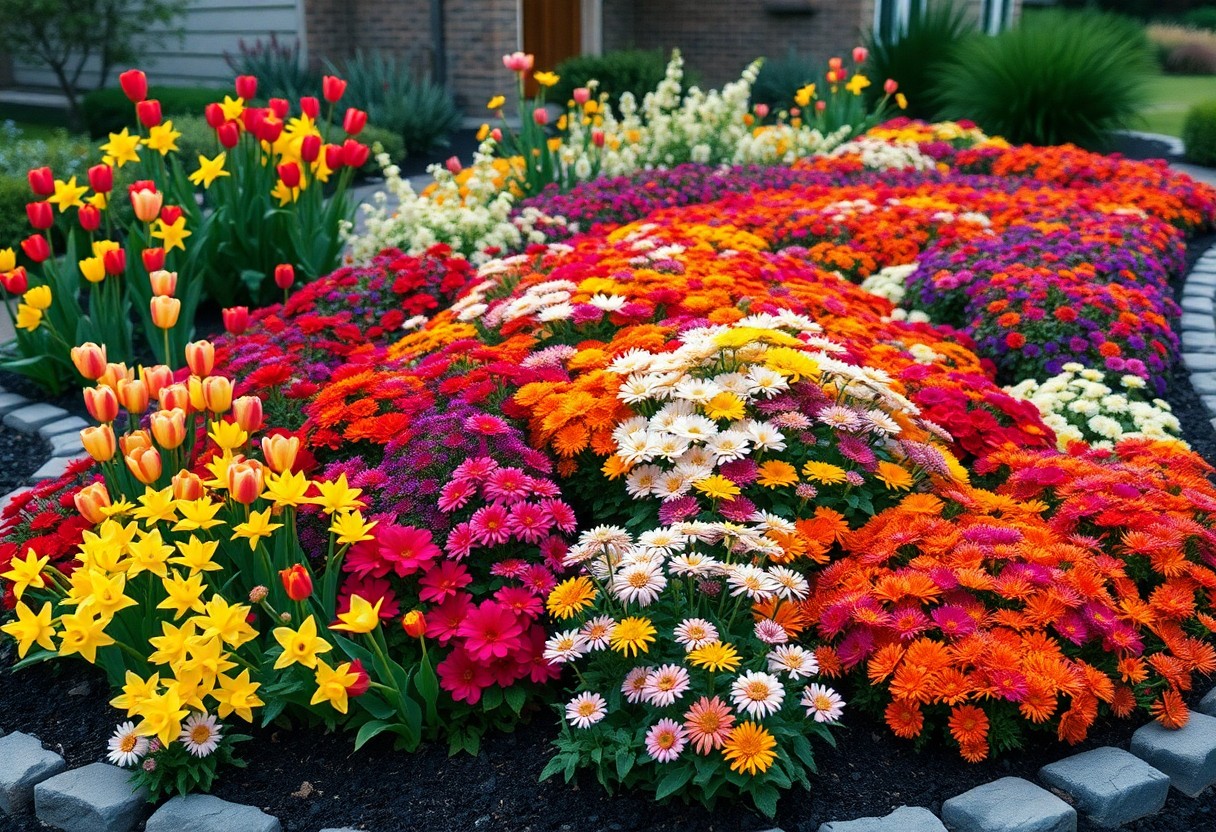
Complementary colors like purple and yellow intensify each other when placed side by side. Analogous schemes, such as red, orange, and yellow, offer smooth transitions. Use the color wheel to predict how blooms will interact. Thou
- Choose complementary colors for dynamic pairings
- Apply analogous colors for soothing blends
- Balance cool tones with warm accents
- Repeat dominant hues for unity
Tips for Creating High-Contrast Focal Points
Bold contrasts draw attention and add drama to your planting design. Pair deep purples with bright yellows or scarlet with lime green. These combinations create visual impact that stands out, especially mid-border. Use them sparingly to avoid chaos. Thou
- Place dark blooms against light foliage for depth
- Highlight with neon-toned flowers in neutral beds
- Frame focal plants with silver or gray leaves
- Position high-contrast groupings where light enhances color intensity
Strategic placement of high-contrast plants ensures they shine without overwhelming. Position bold combinations where sunlight amplifies their color saturation, like south-facing borders. Avoid clustering too many intense pairings-space them as surprises along pathways. Let each focal point breathe within its surroundings. Thou
How-To Design a Layered Garden Bed
Build visual depth by positioning plants in tiers, starting with tall varieties at the back and stepping down to low-growers at the front. This structure ensures every plant is visible and receives adequate sunlight. Proper layering prevents overcrowding and supports healthy growth while maximizing seasonal color impact.
Arranging Plants by Height and Growth Habit
Place tall, upright plants like delphiniums or hollyhocks toward the center or rear of the bed, letting them serve as anchors. Mid-height, bushy types such as coneflowers fill the middle zone, while creeping thyme or alyssum spill gently over edges. Matching growth habits to position enhances airflow and reduces disease risk.
Integrating Perennials with Seasonal Annuals
Slot annuals like marigolds or petunias into gaps around perennials to bridge color lapses when established plants are dormant. These short-term performers extend bloom time and fill spaces with reliable color. You gain season-long vibrancy without disrupting the bed’s long-term structure.
Perennials form the backbone of your design, returning year after year with minimal input, but they often have limited bloom windows. By weaving in seasonal annuals, you cover the quiet periods when perennials rest. For example, plant zinnias in front of emerging peony foliage to hide bare stems. This pairing ensures your garden never looks empty or dull, giving you consistent visual payoff with smart, low-effort planning.
Soil Preparation and Nutrient Management
Healthy soil sets the stage for vibrant, long-lasting blooms. Begin by loosening compacted ground and mixing in organic matter to improve texture and water retention. Test your soil’s pH and adjust it to match your plants’ preferences-most flowering varieties thrive in slightly acidic to neutral conditions. This
Critical Soil Factors for Sustained Growth
Texture, drainage, and pH directly influence root health and nutrient uptake.
- Ensure well-draining soil to prevent root rot
- Maintain a pH between 6.0 and 7.0 for optimal nutrient availability
- Incorporate organic matter like compost to boost microbial activity
This
Tips for Optimizing Fertilization Schedules
Timing and nutrient balance determine bloom performance.
- Apply slow-release fertilizer at planting time for steady feeding
- Supplement with liquid feed during peak blooming periods
- Match N-P-K ratios to growth stage-higher phosphorus for flowers
The
Aligning your feeding routine with plant needs prevents waste and burn. Begin with a soil test to identify deficiencies, then choose fertilizers that address specific gaps. Water before applying granular fertilizers to protect roots, and avoid feeding during drought or extreme heat. For continuous bloomers, a light application every four to six weeks keeps energy levels high. The
Essential Maintenance for Prolonged Flowering
Consistent care keeps your garden vibrant through the seasons. You must remove spent blooms and shape plants regularly to encourage new growth. Skipping maintenance can halt flowering entirely, leaving gaps in color. Feed your plants with balanced fertilizer and monitor for pests before problems spread. Your effort directly determines how long your display lasts.
Professional Deadheading and Pruning Techniques
Pinch or cut faded flowers just above a leaf node or bud to redirect energy into new blooms. Proper cuts prevent disease and stimulate branching. Use clean, sharp shears and prune at an angle to avoid water pooling. You’ll see faster reblooming in petunias, salvias, and roses when done correctly.
Managing Water Requirements Across Species
Different flowering plants demand different moisture levels. Overwatering kills more plants than drought. You must group species by water needs and adjust frequency with weather. Succulents thrive on neglect, while impatiens need consistent moisture. Matching irrigation to plant biology prevents stress and supports steady flowering.
Understanding individual water needs prevents root rot and promotes strong blooming. You should observe soil dryness an inch below the surface before watering. Drought-tolerant plants like lavender suffer if kept too wet, while moisture lovers such as begonias wilt quickly when dry. Installing drip irrigation or using mulch helps maintain even moisture without over-saturating the soil.
Final Words
Conclusively, you achieve continuous color by selecting flowering plants with staggered bloom times and placing them strategically in your garden. You maintain visual flow by grouping plants in clusters and considering sun exposure, soil type, and color harmony. Your consistent care and seasonal planning ensure a vibrant display year after year.
FAQ
Q: How do I choose flowering plants that bloom at different times of the year?
A: Select plants based on their bloom seasons to ensure color throughout the year. Early spring bulbs like crocus and daffodils emerge first, followed by tulips and hyacinths. Summer brings blooms from coneflowers, black-eyed Susans, and salvias. For fall, consider mums and sedum. Some perennials, like hellebores, even flower in late winter. Group plants with staggered bloom times in the same bed so as one fades, another begins to flower. Check plant tags or catalogs for bloom period information when shopping.
Q: Can I mix annuals and perennials for longer color in my garden?
A: Yes, combining annuals and perennials is an effective way to maintain continuous color. Perennials return each year but often have short bloom windows. Annuals, such as marigolds, petunias, or zinnias, flower nonstop from spring until frost. Plant annuals in front of or between perennials to fill gaps when perennials are not in bloom. This pairing keeps beds vibrant and full without relying on a single plant type.
Q: What is succession planting, and how does it help with flower color?
A: Succession planting means timing the planting of different species so one set of flowers finishes just as the next begins. For example, plant pansies in early spring, replace them with sun-loving zinnias in summer, then transition to ornamental kale and mums in fall. This method works well in containers or small beds where you can easily swap out plants. Planning bloom cycles ahead ensures no empty or dull periods in your garden display.
About the Author