
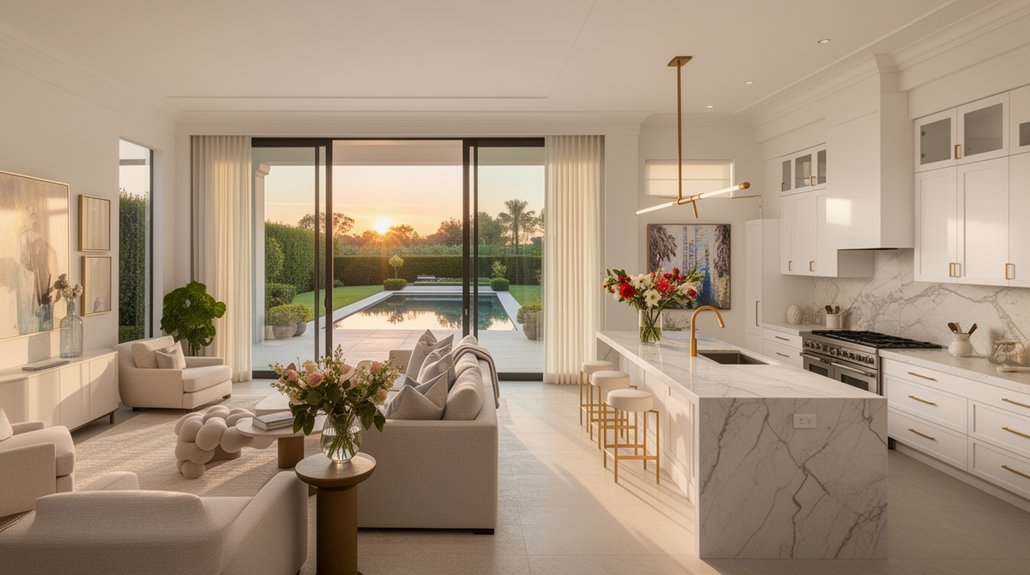
You can’t assume a higher price just because your home feels upscale; you have to define “luxury” in your exact market and position it with precision. You’ll map a timeline, set non‑negotiables, and build privacy rules before any photos go public. Then you’ll vet buyers early, control showings, and negotiate terms that protect both value and discretion. The question is which lever to pull first—and what it’ll cost you if you don’t.
Key Takeaways
- Define “luxury” by local closed-sale premiums, not price; segment by prestige, design, privacy, views, and elite amenity access.
- Audit the home against local must-haves; elevate entry, kitchen, and primary suite with timeless finishes, layered lighting, and cohesive styling.
- Plan backward from your target close; set non-negotiables, build buffers, and align staging, photography, and launch timing to buyer patterns.
- Pre-inspect and fix deal-killers early; resolve permits, roof/HVAC issues, and compile a due-diligence packet with receipts, warranties, and sign-offs.
- Protect privacy with appointment-only showings, ID checks, no recording, secure document portals, and NDAs controlling digital exposure and data sharing.
Define What “Luxury Home” Means in Your Market

A “luxury home” isn’t defined by a nationwide price tag—it’s defined by what your local market rewards with scarcity and premium demand. You’ll start by studying recent closed sales, not list prices, then isolate the top tier where buyers paid aggressive premiums per square foot and waived common contingencies. Use Market segmentation to separate true luxury from merely expensive: neighborhood prestige, architectural pedigree, lot privacy, views, and access to elite schools or amenities often matter more than size. Next, audit your property against local “must-haves” and “nice-to-haves.” Luxury amenities might include chef-grade kitchens, spa baths, smart-home systems, resort pools, guest suites, elevators, or bespoke finishes. Finally, confirm how buyers signal status locally—waterfront, gated streets, or signature designers—and align your positioning accordingly.
Map Your Sale Timeline and Non‑Negotiables
Before you pick a list date, map your sale backwards from the outcome you need and lock in the few terms you won’t compromise on. Start with your target closing date, then set deadlines for pricing strategy, inspections, vendor bids, and contract review. Give yourself cushion for appraisal, repairs, and buyer financing delays so you don’t negotiate under pressure.
Define your non‑negotiables in writing: minimum net proceeds, acceptable contingencies, preferred closing window, and limits on credits or repairs. Align Property staging with those dates—design consult, edits, procurement, and photography must land before launch. Use Market timing to your advantage by tracking local absorption, competing inventory, and buyer travel patterns, then schedule exposure when qualified demand peaks. You’ll stay in control and avoid last‑minute compromises.
Build a Privacy Plan Before You Market
Because luxury listings attract attention well beyond qualified buyers, you need a written privacy plan in place before any marketing goes live. Define your Privacy strategy: what details you’ll disclose, what stays private, and who can approve changes. Remove identifying items from photos, blur views that reveal security features, and limit floor plans to vetted prospects. Set showing rules in writing: appointment-only access, no open houses if you prefer, verified ID at entry, and escorted tours. Require Confidentiality agreements for buyers, guests, contractors, and photographers, and specify penalties for unauthorized sharing. Control digital exposure by using password-protected property websites, expiring links, and watermarked media. Document data handling—where inquiries go, how long records are kept, and when materials are deleted.
Choose a Luxury Agent With Proven Reach
After you’ve set your privacy plan, you need a luxury agent who can put your home in front of qualified buyers worldwide. You should insist on demonstrated global marketing reach—premium listing syndication, international press placement, and targeted outreach to vetted high-net-worth databases. You’ll also want an agent with elite luxury networks and partnerships that activate referrals, private showings, and cross-border buyer introductions.
Demonstrated Global Marketing Reach
Even in a strong local market, your luxury home needs worldwide exposure to attract qualified buyers and protect your negotiating leverage. You should confirm your agent can prove Global exposure with measurable distribution, not promises. Ask for past listing analytics: international web traffic sources, inquiry volume by country, time-on-site, and conversion rates from ads to showings. Demand a channel plan that syndicates to premium portals, runs targeted social and search campaigns, and retargets high-intent visitors. Require professional media formatted for global consumption: multilingual captions, compliant disclosures, and mobile-first video. Luxury branding must stay consistent across every touchpoint, from headline to photography style to email templates. When your agent documents reach and results, you’ll price confidently and negotiate from strength.
Luxury Network And Partnerships
While glossy marketing matters, a luxury agent’s network is what turns exposure into credible offers. You need someone who can call top buyer agents, family offices, and relocation advisors, not just post online. Ask for proof of closed transactions sourced through referrals, not advertising, and confirm relationships with private banks, wealth managers, architects, and concierge firms.
Luxury branding works best when it’s reinforced by trusted gatekeepers. Your agent should leverage exclusive partnerships with high-end broker networks, boutique developments, and invitation-only listing exchanges to place your home in front of qualified buyers before it hits the broader market. Insist on a written outreach map: who they’ll contact, when, and how they’ll track responses. That discipline protects your privacy, strengthens negotiating leverage, and improves terms.
Review Luxury Comps and a True Pricing Range
Because luxury homes don’t follow cookie-cutter pricing rules, you need comps that match your property’s true caliber—location nuances, architectural pedigree, lot characteristics, finishes, and amenities—not just the same zip code. Start with a disciplined Market comparison: closed sales first, then pending and active listings to gauge current leverage. Validate adjustments with evidence, not assumptions, so you protect Pricing accuracy and avoid chasing the market.
- Match micro-locations: view corridors, school pockets, gated streets, noise buffers
- Compare true condition: renovation date, craftsmanship, smart-home scope, warranties
- Normalize the lot: frontage, topography, privacy, usable yard, guest parking
- Audit amenities: pools, kitchens, wellness rooms, elevators, docks, security
From that dataset, you’ll define a defensible pricing range with a low, likely, and high band anchored to buyer behavior.
Pick a Pricing Strategy That Fits Your Goals
Once you’ve set a defensible low/likely/high pricing band from true luxury comps, choose a strategy that matches how you want the sale to unfold—speed, maximum price, privacy, or leverage for a replacement purchase. If you need momentum, price at the lower end to widen qualified showings and invite multiple offers. If you’re optimizing for a record result, anchor near the high end only when your Market analysis supports scarcity, strong buyer depth, and clean days‑on‑market trends. For discretion, you can run a quiet launch with selective outreach and tighter Pricing flexibility, then expand exposure if terms lag. If timing a purchase, set a price that protects appraisal risk and supports rent‑back, extended closing, or contingent‑free strength. Reassess weekly and adjust decisively.
Upgrade First‑Impression Spaces (Entry, Kitchen, Primary)
You’ll win luxury buyers faster when you upgrade the spaces they judge first: the entry, the kitchen, and the primary suite. Elevate the entryway with high-impact lighting, refined hardware, and clean sightlines that signal quality on arrival. In the kitchen and primary, prioritize premium finishes, crisp surfaces, and cohesive styling so every showing feels turnkey and worth the price.
Elevate The Entryway
While buyers may tour the entire property, they’ll decide how they feel about it within seconds of stepping inside, so treat the entryway as a high‑impact investment, not an afterthought. You’re setting the tone for the entire showing, so make every detail read “intentional” and “premium,” from sightlines to scent.
- Specify layered lighting (ceiling fixture plus sconces) to eliminate shadows and flatter finishes.
- Upgrade entryway decor with a scaled console, a statement mirror, and a single curated object—no clutter.
- Create a welcoming ambiance with a subtle signature fragrance, spotless flooring, and quiet door hardware.
- Improve flow: clear the path, define a drop zone, and ensure doors, trim, and paint look flawless.
If buyers pause to admire the entry, you’ve already raised perceived value.
Upgrade Kitchen And Primary
Few spaces influence luxury buyers as quickly—or as decisively—as the kitchen and the primary suite, so prioritize upgrades that photograph flawlessly and signal “move-in ready” at a glance. Start with Kitchen upgrades that read custom: replace dated hardware, update lighting to layered warm LEDs, and refresh cabinetry with professional paint or new doors. If countertops show wear, choose a timeless stone and a crisp, full-height backsplash. Confirm appliances match and vents, faucets, and sinks shine.
In the Primary bedroom, create a calm, hotel-grade feel. Patch and repaint in a soft neutral, upgrade window treatments, and add symmetrical bedside lighting. In the bath, re-caulk, replace tired mirrors, and refinish dull fixtures. Finish with spotless grout, plush towels, and clean closet organization that proves storage is effortless.
Pre‑Inspect and Fix Deal‑Killers (Permits, HVAC, Roof)
Before a discerning buyer’s inspector ever steps on-site, commission your own pre-inspection and resolve the issues that routinely blow up luxury escrows—unpermitted work, aging or undersized HVAC, and roof defects. You’ll surface Permit issues and HVAC concerns early, control the narrative, and prevent last-minute credits that cheapen your result. Addressing findings upfront also supports cleaner disclosures and stronger buyer confidence.
- Pull permits, close open permits, and document final sign-offs
- Have a licensed HVAC contractor test capacity, airflow, and refrigerant performance
- Order a roof certification, repair flashing, replace damaged tiles, and fix leaks
- Compile receipts, warranties, and photos into a due-diligence packet
When you pre-fix deal-killers, you keep inspections predictable, shorten renegotiations, and protect your pricing power at close.
Curate a Luxury Lifestyle With Staging and Styling
You’ll position your home as a complete luxury lifestyle by staging with designer vignettes that signal quality, scale, and intentional living. You’ll highlight resort‑style comfort—plush seating groups, spa‑like baths, and inviting outdoor zones—so buyers can picture effortless downtime. You’ll style every room for photographic impact with clean sightlines, layered lighting, and restrained, high‑end accessories that read instantly online.
Elevate With Designer Vignettes
When you stage with designer vignettes, you’re not decorating—you’re directing how buyers experience the home. You guide their eyes to the home’s best architecture and signal a polished, turnkey lifestyle. Keep every moment intentional, with Artistic details and Interior textures that read refined, not busy.
- Anchor each scene with one hero piece, then edit carefully around it.
- Layer materials—linen, boucle, matte ceramics—for quiet depth.
- Use scaled lighting and a tight color story to elevate sightlines.
- Style surfaces with curated objects in odd numbers; leave breathing room.
Place vignettes where decisions happen: entry, living focal wall, primary suite, and dining area. Photograph each angle to confirm proportions, eliminate glare, and ensure the story feels cohesive.
Showcase Resort‑Style Comfort
A few resort-caliber touches can shift a luxury listing from “beautiful” to “irresistible.” Showcase resort‑style comfort by staging the home like a private retreat—crisp bedding with layered pillows, spa-grade towels and trays in the bath, plush seating grouped for conversation, and outdoor zones styled with cushions, lanterns, and a quiet beverage moment.
Then reinforce the feeling with Luxury amenities buyers expect: set out a robe and slippers in the primary suite, place a carafe and glasses near a soaking tub, and keep closets edited to feel boutique. Create effortless Resort living cues by arranging a shaded lounge chair with a side table, styling a dining terrace for lingering meals, and ensuring lighting feels warm and consistent. Keep surfaces calm, pathways open, and every vignette functional so buyers can imagine unwinding immediately.
Style For Photographic Impact
Resort-style comfort sets the mood in person; now make it read instantly in photos. You’ll curate a luxury lifestyle by staging with intention, then directing the camera with Artistic framing that highlights scale, texture, and flow. Remove visual noise, anchor each room with one hero moment, and style in odd-number groupings so your spaces feel designed, not decorated. Use smart lighting techniques to balance window light, warm up shadows, and keep whites crisp without glare.
- Create a focal vignette: tray, book stack, sculptural object, fresh stems
- Edit countertops and open shelving to two or three premium items
- Align furniture to clear sightlines and emphasize ceiling height
- Add layered textiles and neutral tones for depth and softness
You’re selling a lifestyle; every frame must feel effortless and elevated.
Capture Magazine‑Level Photos, Video, and Drone
Because luxury buyers decide with their eyes first, you need magazine-level photography, cinematic video, and compliant drone coverage that capture scale, light, and craftsmanship without distortion. Hire a specialist who shoots luxury interiors, brackets exposures for balanced windows, and uses precision lenses to keep verticals true. Direct Lighting techniques—layered ambient, accent, and practicals—so rooms read warm, not flat, and keep color schemes consistent with calibrated white balance. Schedule for best sun angles, then stage micro-details: aligned pillows, polished fixtures, cleared counters, and fresh linens. Add smooth gimbal walkthroughs to show flow, plus short lifestyle vignettes that reveal how spaces live. Use drone for lot lines, approach, privacy, and rooflines, following FAA rules and local restrictions. Demand tight editing, natural skin tones, and accurate materials.
Write Listing Copy That Sells Story, Not Specs
You don’t sell a luxury home with a feature list—you sell the life your buyer can step into. Write copy that guides them through emotion-driven moments: sunrise coffee on the terrace, a chef’s dinner in a flawless kitchen, and a quiet retreat at day’s end. When your words match the property’s level of craft and the client’s goals, you turn interest into appointments.
Craft A Lifestyle Narrative
When you sell a luxury home, the copy has to do more than list finishes—it must place a buyer inside a daily rhythm they want to live. You guide them room to room with purposeful language that signals value, discretion, and ease, while supporting every claim with concrete details.
- Open with arrival: gated entry, quiet drive, and immediate sense of Privacy protection.
- Show how spaces work: morning coffee in the sunlit kitchen, seamless flow to outdoor living.
- Reference Luxury amenities with restraint: spa bath, wellness room, smart lighting, climate zoning.
- Anchor location benefits: walkability, private club access, top schools, or effortless airport routing.
Keep sentences tight, avoid jargon, and write as if you’re briefing a qualified buyer who expects precision, not adjectives.
Highlight Emotion-Driven Moments
As the front door closes and the outside noise falls away, the right listing copy shifts from features to feeling, capturing the moments a qualified buyer quietly shops for—calm, control, and belonging. You don’t just describe square footage; you stage Emotional storytelling that lets them imagine arriving home, setting keys down, and exhaling. Name the pause at the kitchen island before dinner, the hush of a primary suite behind a solid-core door, the glow of layered lighting at twilight, and the certainty of well-planned storage. Use sensory cues—sound, light, privacy, flow—so your copy reads like lived experience. Anchor each scene to a benefit: discretion, ease, wellness, entertaining. These Memorable moments create urgency without hype, because buyers buy the life your words let them feel.
Market to Qualified Buyers (Not Just Clicks)

Although broad online exposure can generate plenty of traffic, luxury homes sell faster and for stronger terms when the marketing targets verified, financially capable buyers. You don’t need more clicks—you need the right eyes, backed by proof of funds or vetted financing. Use data-driven Digital advertising and tightly segmented Social media campaigns to reach decision-makers who match your price point, lifestyle, and timeline, not casual browsers. Then reinforce credibility with polished assets and precise follow-up that keeps momentum moving toward an offer.
- Target by wealth indicators, relocation signals, and luxury purchase intent
- Require buyer vetting through lender letters or financial verification
- Retarget engaged prospects with listing-specific messaging and timelines
- Track inquiries, source quality, and conversion to keep spend efficient
Run Private Showings With Tight Controls
Because luxury listings attract curiosity along with qualified interest, you’ll protect your price and your privacy by running private showings with tight controls. Schedule by appointment only, group visits by buyer profile, and cap attendance to reduce disruption. Use a dedicated access plan: pre-set showing windows, escort all visitors, and keep interior doors, safes, and personal spaces locked. Apply Security protocols such as ID check-in, camera status verification, and a log of entry/exit times and agents present. Require shoes-off or protective coverings, and prohibit photos, video, and live streaming unless you approve it in writing. Maintain Confidential communications by routing all questions through your listing agent, limiting disclosures, and sharing documents through secure portals only.
Require Proof of Funds and Lender Vetting Early
Before you open the door to serious negotiations, require proof of funds and vetted lender credentials from every buyer. You’ll filter out lookers, reduce disruption, and keep your timeline intact. Ask for clear Financial documentation that matches the offer structure, including account statements or verified asset letters, and confirm identities through your agent or attorney. For financed buyers, insist on lender qualification up front: review pre-approval terms, underwriting status, and the lender’s track record with jumbo and complex-income borrowers. You’re not being difficult—you’re protecting certainty and momentum while your home stays market-ready.
- Proof-of-funds letter dated within 30 days
- Supporting statements with redacted account numbers
- Pre-approval showing program, loan amount, and conditions
- Direct lender contact for rapid verification
Negotiate Terms That Protect Price and Privacy
Once you’ve confirmed a buyer can perform, negotiate terms that lock in your price while limiting unnecessary exposure of your home and personal details. Push for firm deadlines, meaningful earnest money, and clear consequences for missed dates to strengthen price protection. Limit contingencies to those you’ll accept, and require written, specific requests rather than open‑ended re-trades.
For Property privacy, control access tightly: show only to named decision-makers, require photo ID, and restrict recording, photography, and disclosure of plans, security features, and personal artifacts. Use an NDA that survives termination and specifies permitted uses of any shared documents. Keep communications routed through your representative, and cap who can attend inspections or walk-throughs. You’ll preserve leverage, reduce risks, and maintain a discreet, premium process throughout negotiations.
Close Cleanly: Appraisal, Repairs, and Last‑Minute Risks
Even after you’ve agreed on price and terms, appraisal conditions, repair requests, and timing gaps can reopen negotiations and threaten a clean closing. You stay in control by preparing documentation, verifying buyer capacity, and managing every contingency with firm deadlines and clear evidence.
- Pre-brief the appraiser with upgrades, permits, and recent comps that justify value.
- Triage inspection items: fix safety, document cosmetic, and credit only when it protects price.
- Confirm Property tax proration, HOA disclosures, and transfer fees match the settlement statement.
- Lock Home insurance requirements early, especially for high-value contents, pools, or specialty roofs.
You also monitor lender re-verifications, buyer walk-through demands, and title issues. If anything shifts, you respond fast, keep communication tight, and preserve leverage through written amendments.
Frequently Asked Questions
How Are Luxury Home Sale Profits Taxed, and Can I Defer Capital Gains?
You’ll pay Tax implications on Capital gains: federal, possibly state, plus net investment income tax. You can defer via a 1031 exchange for investment property, or exclude gains on a primary residence if qualified.
Should I Sell Through an LLC or Trust for Liability and Privacy?
You’ll typically sell in your personal name; use a trust for privacy and Estate planning, and an LLC only for asset protection before closing. You can’t easily deed mid-sale—coordinate with your attorney.
What Insurance Coverage Do I Need During Marketing, Showings, and Vacancy?
You’ll need homeowner’s/dwelling coverage, higher liability, and vacant-home endorsement if unoccupied. Add umbrella, theft/vandalism, and workers’ comp for Home staging crews. Confirm Marketing strategies don’t void terms; require agent, contractor certificates, too.
How Do I Handle Art, Wine, or Jewelry During the Move and Sale?
Like a curator guarding a crown, you’ll catalog valuables, photograph condition, and use insured specialty movers. Prioritize Artwork preservation with climate control and crating; maintain Wine storage temperature and inventory. Keep jewelry in a bank vault.
What Should I Do if the Buyer Requests Seller Financing or a Leaseback?
If a buyer requests Seller financing options or Leaseback agreements, you’ll require written terms, verify qualification, price risk, and consult your attorney and lender. You’ll set escrow protections, timelines, rent, deposits, and default remedies.
Conclusion
Sell luxury like you’re orchestrating a headline-worthy premiere—because you are. You define “luxury” by your micro-market, lock your timeline, and treat privacy like priceless currency. You hire an agent with real reach, price inside a disciplined range, and control access with vetted proof of funds. You negotiate terms that defend value and discretion, then close with zero loose ends—appraisal, repairs, and contingencies handled before they dare to bite.
About the Author