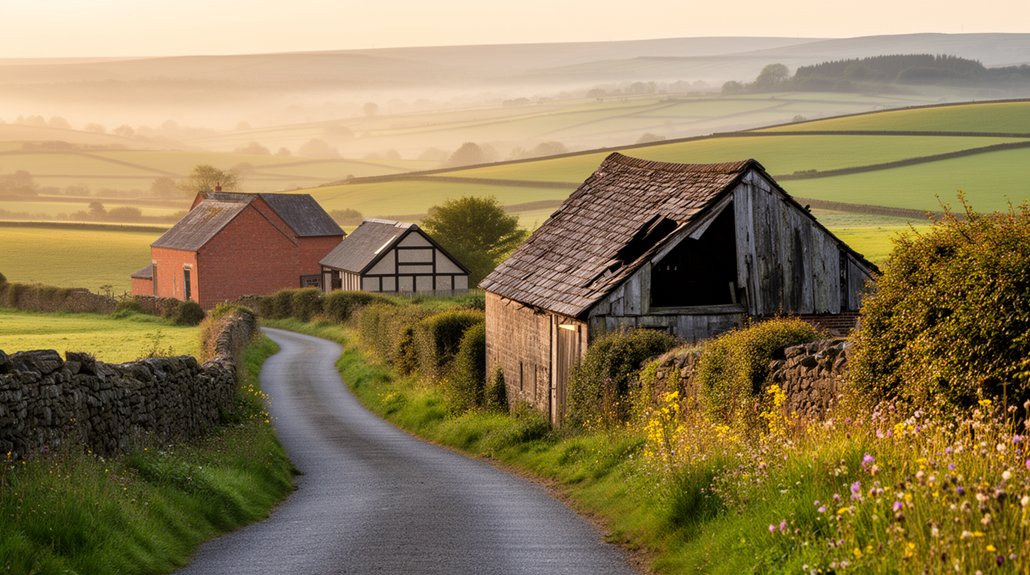
You’ll find the best undervalued barn conversion projects where barn stock is high, planning is predictable, and build £/m² stays competitive. Start with Lincolnshire for scale and pragmatic decisions, then Shropshire and Herefordshire for reliable Class Q pathways and strong local trades. Staffordshire offers keen land pricing and sensible access standards, while North Yorkshire costs more but rewards premium contemporary design. Run planning and utilities checks early to protect your margin, and you’ll spot the patterns that separate bargains from money pits.
Key Takeaways
- Lincolnshire offers abundant barn stock, lower land prices, pragmatic planning, and strong resale demand for contemporary conversions.
- Shropshire has consistent Class Q pathways, good builder availability, and manageable utility connections, keeping £/m² conversion costs competitive.
- Herefordshire can deliver value when heritage constraints are navigated early, balancing character retention with straightforward modern services upgrades.
- Staffordshire combines competitive land values with sensible access standards and reliable local consultants, reducing planning and enabling-works risk.
- North Yorkshire costs more upfront, but predictable planning and premium buyer appetite can make well-bought barns undervalued relative to finished values.
What Makes a County “Good Value” for Barn Conversions?
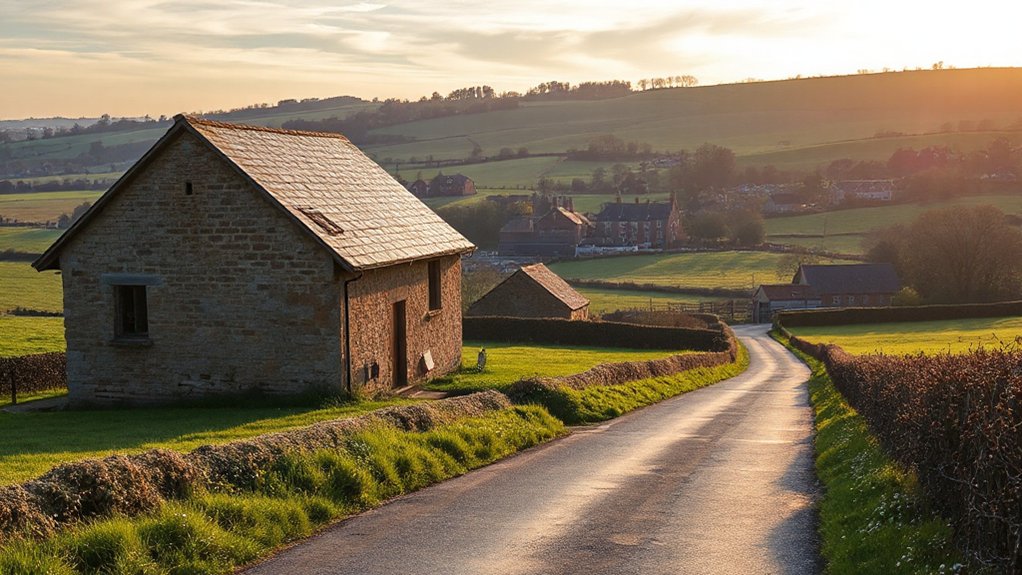
Although list prices grab attention, a county only counts as “good value” for barn conversions when the total project math works in your favor: lower land and outbuilding costs paired with planning policies that routinely approve residential change-of-use, predictable utility connections (power, water, broadband), and a local trades base that can deliver weather-tight envelopes, insulation upgrades, and structural repairs at competitive rates. You also want comparables: track £/m² for finished conversions, typical build costs, and time-to-complete benchmarks from local contractors. Design value rises where Architectural styles (timber frame, stone, brick) support efficient spans, easy glazing upgrades, and straightforward airtightness detailing. Balance that against Historical significance: listings and conservation premiums can add survey, specialist joinery, and materials costs, but they can also lift resale demand and rental yield.
Barn Conversion Planning Checks Before You Pick a County
Good “value” on paper can evaporate fast if the local planning framework won’t support residential change-of-use or it loads your scheme with costly conditions. Before you choose a county, you’ll de-risk the design by stress-testing planning signals, not just listing prices. Start with Local zoning maps, prior approvals, and Article 4 directions; then cross-check constraints that shift your build from simple to specialist.
- Audit 3–5 recent barn decisions: approval rate, refusal reasons, typical conditions
- Screen designations: Green Belt, AONB, flood zones, highways visibility splays
- Verify Historical preservation triggers: listed status, curtilage, conservation areas
- Model infrastructure costs: utilities distance, drainage strategy, broadband provision
- Pre-app for concept massing: openings, cladding palette, bat roost mitigation
Best-Value Counties for Barn Conversion Projects (Ranked)
Because “cheap” barns often hide planning friction and high enabling works, this ranking focuses on counties where you’re more likely to secure consent and deliver a clean, design-led conversion without your budget bleeding out in surveys, drainage, and highways upgrades.
1) Lincolnshire: large stock, pragmatic rural authorities, strong resale for contemporary agrarian detailing.
2) Shropshire: consistent Class Q pathways, good builders’ depth, easy pairing with a Farmhouse renovation.
3) Herefordshire: heritage-led but navigable; you can thread Historic preservation with modern services.
4) Staffordshire: competitive land values, sensible access standards, solid local consultants.
5) North Yorkshire: bigger prices, yet predictable processes and premium design appetite.
Use this list to shortlist viewings, then brief an architect early so your layout, daylighting, and envelope strategy stay coherent.
Why Barn Conversion Prices Vary in These Counties
While two barns can look identical in the listing photos, county-level variables push your all-in conversion cost up or down fast: planning risk (Class Q interpretation and pre-app discussions), enabling works (access visibility splays, drainage and soakaway testing, utility runs), and fabric complexity (structural stitching, roof replacement, insulation strategy for airtightness without trapping moisture). Price spreads widen where Local regulations are stricter, ecology constraints are common, and trades are capacity-limited. You’ll also pay a premium when Historical significance triggers conservation-grade detailing, slower approvals, and specialist materials. Track these county signals before you commit:
- LPA Class Q approval rate and typical conditions attached
- Highways stance on sightlines, bellmouths, and surfacing spec
- Flood zone mapping and percolation pass rates
- Grid capacity, pole upgrades, and connection lead times
- Heritage sensitivity: listing density, archaeology, and mortar/stone requirements
Barn Conversion Budget Checklist to Avoid Overpaying
County signals (Class Q conditions, highways demands, flood risk, grid constraints, heritage sensitivity) explain the spread in headline prices; your job now is to stop the “cheap barn” from turning into the most expensive build on your spreadsheet. Start with a measured survey and structural engineer report; if roof spread or wall bowing exceeds tolerance, price steelwork and re-roofing upfront. Validate Class Q or full planning path, plus Local zoning limits on curtilage, glazing, and access splays. Model utilities: quote DNO upgrades, water mains distance, and wastewater treatment tests. Treat Historic preservation as a cost line: heritage statements, brick/mortar specs, and window profiles. Design for airtightness and thermal bridging early; otherwise you’ll pay twice in rework. Add 12–18% contingency and lock contractor scope.
Frequently Asked Questions
How Long Does a Typical Barn Conversion Take From Purchase to Completion?
You’ll typically take 12–24 months from purchase to completion, including design, planning, and build. Timelines vary with Architectural styles, Historical significance, surveys, and utilities; you’ll cut delays by locking specs and contractors early.
Can I Get a Mortgage on a Barn Conversion Project Before Planning Permission?
You usually can’t get a standard mortgage before planning permission; you’ll need bridging finance or a self-build lender. Expect lender checks on zoning restrictions, historical preservation, and design plans, plus higher rates.
What Insurance Do I Need During Renovation and Once the Conversion Is Finished?
You’ll need renovation insurance (site, public liability, employer’s liability, contract works, tools, existing structures) and, once finished, buildings and contents cover. Confirm compliance with Building regulations and Historic preservation requirements; insurers may require surveys, valuations.
Are Barn Conversions Eligible for VAT Reductions or Other Tax Reliefs?
You can often claim VAT eligibility and tax reliefs, but it depends. Design smart, document thoroughly, apply early: qualifying residential conversions may get 5% VAT; listed buildings, reliefs. Your accountant should model scenarios before contracts.
How Do I Find Reliable Local Contractors Experienced in Barn Conversions?
You’ll find reliable barn-conversion contractors by checking Historic preservation directories, verifying Building codes track records, and requesting three comparable case studies. You can interview past clients, inspect site photos, and require insured, fixed-scope bids with schedules.
Conclusion
You’ll find the best-value barn conversions where low £/sq ft meets permissive policy, solid comps, and dependable utilities. Do your due diligence early—title, access, services, ecology—so the “cheap” shell doesn’t become a money pit. Think of your county choice like a foundation pour: get it right, and everything above stays true. Track price bands, contingency rates, and buildability scores, then design boldly—your ROI follows good decisions.
About the Author