
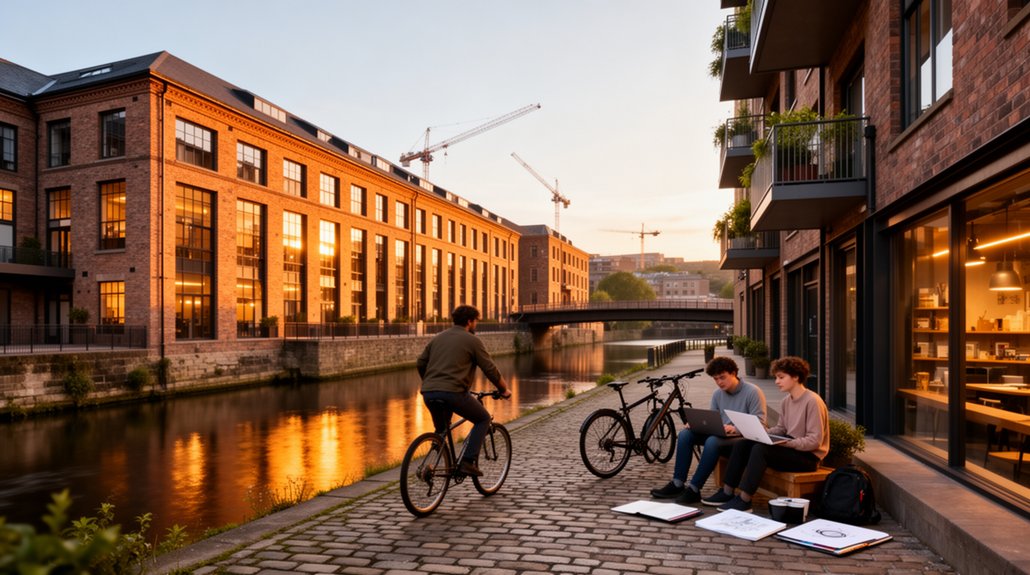
Sheffield’s becoming a hub for creative professional housing because you can live close to studios, makerspaces, darkrooms, and co-working hubs, then reach gigs, exhibitions, and talks in minutes by tram or bike. You’ll find warehouse conversions in Kelham–Neepsend with tall ceilings, exposed brick, and maker-ready power, plus compact studio apartments with sound-managed zones and shared amenities. Universities and incubators keep commissions flowing, while regeneration upgrades streets, routes, and mixed-use blocks—keep going for neighbourhood picks and costs.
Key Takeaways
- Dense creative infrastructure—studios, makerspaces, darkrooms, and co-working hubs—supports production, networking, and client work across the city.
- Universities, incubators, and agencies commission design, film, and digital projects, creating steady demand and a pipeline of creative professionals.
- Regeneration zones deliver mixed-use, heritage-led conversions with ground-floor studios, maker-ready power, and upgraded public realm that attracts creatives.
- Housing variety fits creative lifestyles: warehouse lofts, compact studio apartments, and neighbourhood options from Kelham to Sharrow Vale at relatively accessible rents.
- Strong connectivity via Supertram, rail links, and green cycling corridors makes commuting between homes, studios, and venues fast and predictable.
Is Sheffield Right for Creatives? Quick Checklist

If you’re weighing up Sheffield as your next base, run through this quick checklist to see whether the city’s creative infrastructure matches how you work and what you want to make. Can you access studios, makerspaces, and darkrooms within a short tram or cycle? Do venues program exhibitions, gigs, and talks often enough to keep your calendar moving?
Check the pipeline: universities, incubators, and agencies that commission design, film, and digital work. Look for Artistic collaboration through collectives, residencies, and shared workshops where you can prototype fast. Test Creative networking at meetups, portfolio reviews, and industry nights—are decision-makers actually in the room? Finally, scan for production support: print shops, fabricators, AV hire, and post suites you can book reliably.
Sheffield Housing Costs: Rent, Bills, Deposits
You’ll want a clear cost map before you commit: average rents shift fast by area, from city-centre apartments to leafy south-west terraces. Next, you’ll price the monthly baseline—utilities, broadband, and council tax—so your budget fits the way you live and work. Finally, you’ll plan the upfront hit with deposits and any permitted fees, keeping your cashflow as clean as your layout.
Average Rents By Area
Where do Sheffield’s rent hotspots sit on the map? In the City Centre and Kelham Island, you’ll typically pay the top end for warehouse-style conversions, concierge-led blocks, and walkable studio culture—often £900–£1,200 for a one-bed. Crookes and Broomhill price slightly softer, around £800–£1,000, trading loft drama for leafy streets and quick uni access. Ecclesall Road and Sharrow Vale sit mid-to-high, £850–£1,100, with design-forward flats above independents.
For sharper value, look to Hillsborough, Meersbrook, and Woodseats at £700–£900, where you still get Affordable amenities and strong Community engagement. When you tour, benchmark rent per square metre, storage, daylight, and cycle parking—small details that protect resale appeal and liveability.
Typical Utility Bill Costs
Although rent sets the headline, your monthly utilities in Sheffield often decide whether a flat genuinely pencils out: expect roughly £140–£260 for energy (higher in leaky conversions, lower in newer EPC A–C blocks), £30–£40 for water, £25–£45 for broadband, and £15–£35 for council tax after discounts in many shared setups. Treat utility costs like a material spec: glazing, insulation, and heating type shape your burn rate more than postcode. Ask for EPC ratings, last winter kWh, and boiler age before you commit. In co-living, check whether bills are capped or truly inclusive, and model worst-case months. Run a quick bill comparison for tariffs and broadband, then set autopay so your cashflow stays clean. Smart meters and zoned heating reward disciplined routines.
Upfront Deposits And Fees
Before you fall for a high-ceiling conversion in Kelham or a crisp EPC‑B new-build near the station, price the move‑in hit: most Sheffield lets ask for a 5‑week deposit (sometimes 6 on higher rents), plus the first month’s rent upfront, and occasional add-ons like a holding deposit (typically capped at 1 week) or fees tied to late changes, key replacement, or contract variations. Treat these upfront costs like a design brief: list every line item, then stress‑test your cashflow. Ask if the holding deposit rolls into rent, when the deposit’s protected, and how quickly you’ll get it back. Scan the inventory for finish-level details—scuffs, grout, appliance models—so deposit fees don’t appear later as “wear and tear” disputes. If you’re negotiating, push for a longer tenancy or minor upgrades instead.
Best Sheffield Neighbourhoods for Creatives (By Vibe)
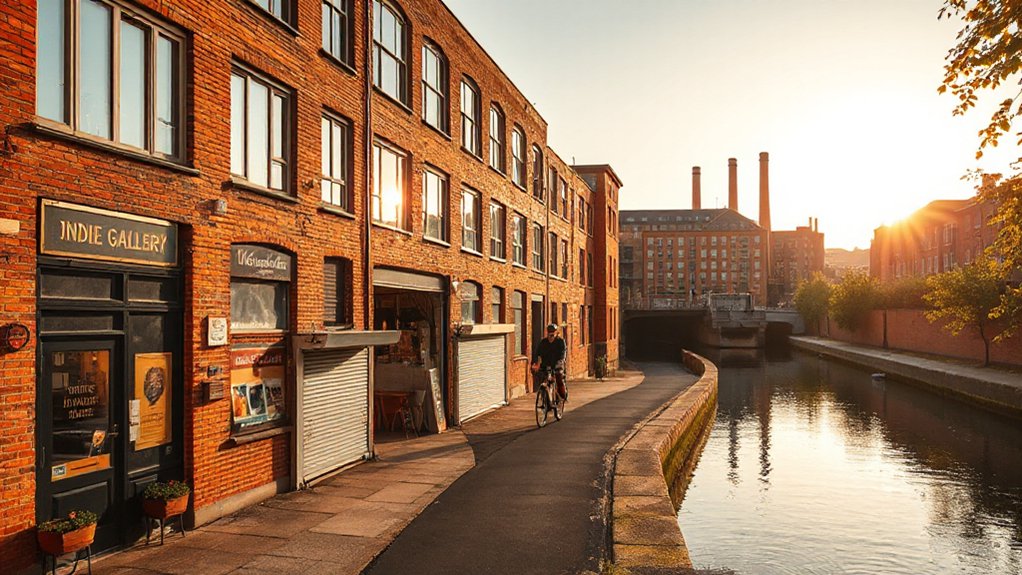
If you’re choosing a Sheffield base that matches your creative brief, you’ll want to shop by vibe as much as by price. Pick Kelham Island for industrial-cool warehouse lines and studio-ready conversions, the Devonshire Quarter for indie-arts energy and walk-to-everything convenience, or Sharrow Vale for a laid-back creative rhythm with character terraces and café streets. Each neighbourhood signals a different lifestyle and layout—so you can align your home, commute, and community in one move.
Kelham Island: Industrial-Cool
A former steel-and-cutlery district turned design hotspot, Kelham Island pairs raw industrial texture with a polished creative edge. You’ll feel the Industrial heritage in brick arches, riverside mills, and exposed beams, yet the area’s urban revival keeps everything sharp, walkable, and investment-ready. Choose it if you want a home that doubles as a studio backdrop and signals taste to clients.
- Loft-style apartments with high ceilings and steel-framed glazing that floods your workspace with daylight.
- Converted warehouses offering flexible layouts for editing bays, product shelves, or small shoot sets.
- Canal-side routes and pocket parks that reset your head between deadlines without leaving the neighbourhood.
You’re close to independent makers and modern eateries, so meetings and inspiration happen on your doorstep.
Devonshire Quarter: Indie-Arts
While Kelham leans industrial, Devonshire Quarter trades brick-and-beam drama for indie-arts energy—think mural-lined side streets, record shops, zines, and galleries stitched between cafés and late-night bars. You’ll want housing that matches the tempo: compact loft-style apartments, high ceilings, clean lines, and flexible rooms that double as edit suites or studio corners.
You can walk to gallery openings, pop into print studios, and meet makers for Art collaborations without touching your car. Look for buildings with secure bike storage, acoustic glazing, and shared work lounges that feel like boutique co-working, not corporate spillover. Rental demand stays strong because the quarter sells a lifestyle: curated design, fast connections, and a calendar that keeps your creative network within a five-minute radius.
Sharrow Vale: Laid-Back Creative
Leave Devonshire Quarter’s late-night buzz behind and you’ll find Sharrow Vale, where creativity runs on a slower, more liveable rhythm—specialty coffee, indie food shops, and small studios tucked along tree-lined streets. You’ll get a neighbourhood that sells itself on walkability, well-kept terraces, and a calm, design-conscious feel that suits focused work.
- Studio-friendly housing: period homes with spare rooms for editing suites, sketch desks, or a tidy client corner.
- Curated culture: nearby Art galleries and music venues keep your calendar full without the constant noise.
- Everyday sourcing: delis, bakers, and independent retailers make it easy to host, shoot, or pitch on short notice.
If you want creativity with breathing space, you’ll land here.
Commutes in Sheffield: Tram, Train, Cycle Routes
How do you move through Sheffield without sacrificing time—or style? You’ll lean on a commute network that feels engineered for creatives: Supertram lines stitch the centre to Kelham, Hillsborough, and Meadowhall with predictable headways, while clear wayfinding keeps transfers frictionless. You can pair that with Northern and TransPennine rail from Sheffield Station for quick runs to Leeds, Manchester, and London connections—ideal when client days stack up.
For local hops, you’ll find public transport integrates cleanly with park-and-ride and bike carriage options. Meanwhile, Sheffield’s cycling infrastructure keeps improving: signed routes, calmer streets, and the Porter Brook and Five Weirs green corridors let you ride in, lock up, and arrive looking sharp, not stressed. It’s commute design that sells.
Sheffield Live-Work Spaces: Warehouses to Studios
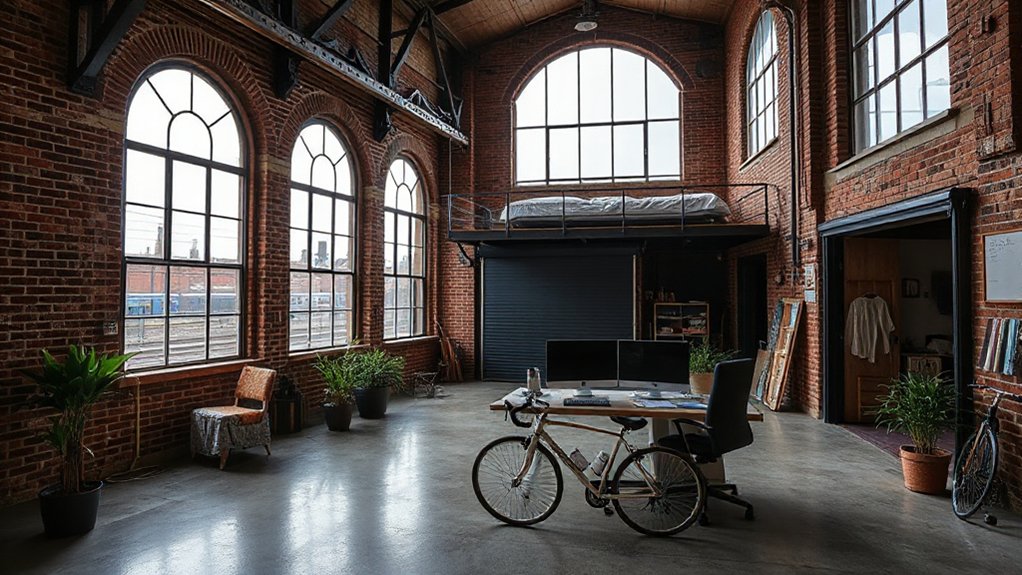
If you want space that sells your craft as much as it houses you, Sheffield’s warehouse conversions give you tall ceilings, exposed brick, and flexible floorplates that fit both living and production. You can set up a street-facing studio, keep tools and stock in dedicated zones, and still get clean, quiet residential finishes behind sliding partitions. These live-work layouts let you brand your home, cut overheads, and work on your terms without sacrificing design quality.
Warehouse Conversions For Creatives
While Sheffield’s industrial past still shapes its skyline, it’s the city’s warehouse conversions that now draw designers, makers, and founders who want a true live-work setup. You get volume, daylight, and grit—without sacrificing spec. Original brick, steel trusses, and loading-bay proportions protect Industrial heritage, while upgrades like acoustic layers, smart ventilation, and high-speed fibre keep you market-ready. You’re also buying into community engagement: courtyards, shared lobbies, and resident-led events that turn neighbours into collaborators. Look for conversions that balance character with performance:
- Oversized windows and rooflights that give consistent north light
- Flexible floorplates with clean service runs for future fit-outs
- Secure bike storage, parcel rooms, and discreet deliveries for clients
You’ll feel credible the moment a client walks in.
Studio Living With Workspaces
Because not every creative needs a cavernous warehouse, Sheffield’s live-work studios deliver a tighter, more efficient setup that still reads premium. You get zoning that works: a sound-managed work bay, a clean client-facing nook, and a compact kitchen-lounge that resets your head between edits. Expect high-spec lighting tracks, ample plug points, durable microcement floors, and lockable storage that keeps kit safe and your space camera-ready.
You’ll also buy time. With your studio steps from your bed, you can ship faster, host reviews, and keep overheads predictable. Many schemes add shared meeting pods, print rooms, and roof terraces that fuel Artistic collaboration without sacrificing focus. You’re never isolated: on-site programming and concierge-led Creative networking turn neighbours into collaborators and clients.
Where Creatives Work: Sheffield Co-Working & Studios
Whether you’re prototyping a product, editing a short film, or building a brand, Sheffield gives you a practical network of co-working hubs and studio spaces designed for serious output—fast Wi‑Fi, bookable meeting rooms, maker facilities, and clean, flexible desks that feel more like a well-specified workspace than a stopgap. You’ll find options that match how you work: quiet zones for deep focus, pin-up walls for critiques, and secure storage for kit. These spaces also support Art entrepreneurship, letting you meet clients, price projects, and ship work without friction, while Creative collaborations happen naturally through shared workshops and event nights.
- Pick a membership that scales month-to-month.
- Use bookable studios for shoots, podcasts, or product photography.
- Tap maker tools and on-site support to prototype faster.
University Pipelines Driving Sheffield Creative Housing Demand
Co-working hubs and studios help you ship work, but Sheffield’s universities keep the pipeline of makers, designers, and filmmakers flowing—and that steady intake pushes creative housing demand year-round. You see it in lease cycles that don’t dip: post-grad start dates, research contracts, and placement rotations keep flats moving even off-peak.
You’ll want housing that supports production: spare-room offices, robust Wi‑Fi, acoustic separation, and secure bike/storage for kit. Proximity to campus corridors matters, because critiques, labs, and client briefs run late and early. That daily rhythm fuels Artistic Collaboration and turns neighbours into project partners through constant Creative Networking. As cohorts graduate, many stay, upgrading from shared houses to smarter, design-led apartments—sustaining demand and lifting specs landlords now compete on.
Sheffield Indie Scene: Venues, Markets, Maker Culture
As soon as you step beyond campus corridors, Sheffield’s indie scene turns into a live marketplace for makers—venues that double as launchpads, weekend markets that move product, and small studios that keep the city’s craft economy visible. You’ll see how quickly ideas become inventory, and how footfall translates into commissions, collabs, and repeat buyers.
- Indie venues host pop-ups, EP launches, and zine fairs, giving you low-risk ways to test pricing, branding, and demand.
- Maker markets bring consistent Saturday trade: ceramics, prints, upcycled fashion—products designed for grab-and-go gifting and impulse buys.
- Micro-studios offer bench space and shared tools, so you can prototype faster, photograph work on-site, and fulfill orders without long lead times.
Sheffield Regeneration Hotspots to Watch (And Why)
If you track where Sheffield’s money and planning attention land next, you can spot the regeneration zones that will shape rents, footfall, and the kind of housing you can actually live—and build—in. Start with the City Centre Heart of the City: public-realm upgrades, tighter pedestrian routes, and mixed-use blocks that favour compact, well-specified apartments and ground-floor studios. Watch Kelham–Neepsend’s river-edge plots, where heritage shells meet new massing; you’ll see loft-style layouts, maker-ready power, and courtyards that anchor Artistic communities. Around Castlegate and the Grey to Green corridor, expect greener streets, small-unit retail, and evening economy uplift. Finally, follow Sheaf Valley and the station approach: better connections, new workspace, and Creative collaborations baked into flexible floorplates.
Renting vs Buying in Sheffield: Where Creatives Invest
Regeneration maps tell you where Sheffield’s demand will concentrate; the next decision is whether you rent for flexibility or buy to lock in upside. If you’re building a creative career, you’ll weigh commuteable studio space, daylight, and sound insulation against price per square foot.
- Rent if you’re scaling freelance income: prioritise rental affordability, shorter leases, and buildings with shared work lounges and secure bike storage.
- Buy if you want Property investment fundamentals: target walkable nodes near Kelham, the Cultural Industries Quarter, and tram links, and favour adaptable layouts you can reconfigure.
- Hybrid by renting now, then tracking sold prices and yields on your shortlist; you’ll move fast when a well-designed unit hits the market.
Frequently Asked Questions
What Visas or Residency Rules Affect International Creatives Moving to Sheffield?
You’ll need the right UK visa—Skilled Worker, Global Talent, Innovator Founder, or Student/Graduate—and meet residency and Language requirements. Plan Cultural integration, keep contracts tidy, and track right-to-rent checks, BRP/eVisa, renewal timelines.
How Does Sheffield Compare to Manchester or Leeds for Creative Housing?
You won’t sacrifice quality: Sheffield beats Manchester on housing affordability, and rivals Leeds for a tight Creative community. You’ll find more design-led co-living, studio-ready layouts, and walkable neighbourhoods—while Manchester’s options feel pricier and fragmented.
Are There Grants or Subsidies for Creatives Renting Live-Work Spaces?
Yes—you can find support, but it’s limited. Grants overview: you’ll target Arts Council-style funds and local enterprise schemes. Subsidy eligibility depends on income, workspace use, and lease terms. Ask landlords about discounted studio rents.
What Are Typical Landlord Rules on Pets, Subletting, or Home Businesses?
Like a telegram from 1920, you’ll find leases tight: Pet policies often ban cats/dogs or demand deposits; subletting needs written consent; Home business restrictions limit client visits, noise, signage—so you’ll protect design and neighbours.
How Competitive Is the Rental Application Process for Creative-Friendly Flats?
You’ll face strong competition; well-presented portfolios and fast responses help. Expect Application screening with income checks, references, and credits. You’ll win via Lease negotiations by offering longer terms, flexible studio clauses, and crisp documentation.
Conclusion
If you’re weighing Sheffield, you’ll find a city that works like a well-lit studio: affordable, connected, and quietly ambitious. You can rent close to tram lines, cycle routes, and indie venues, or buy into neighbourhoods where regeneration is sharpening the edges. From warehouse live-work units to purpose-built apartments, the details add up—space, light, and momentum. Follow the hum of makers’ markets and university pipelines, and you’ll see why demand keeps rising.
About the Author