
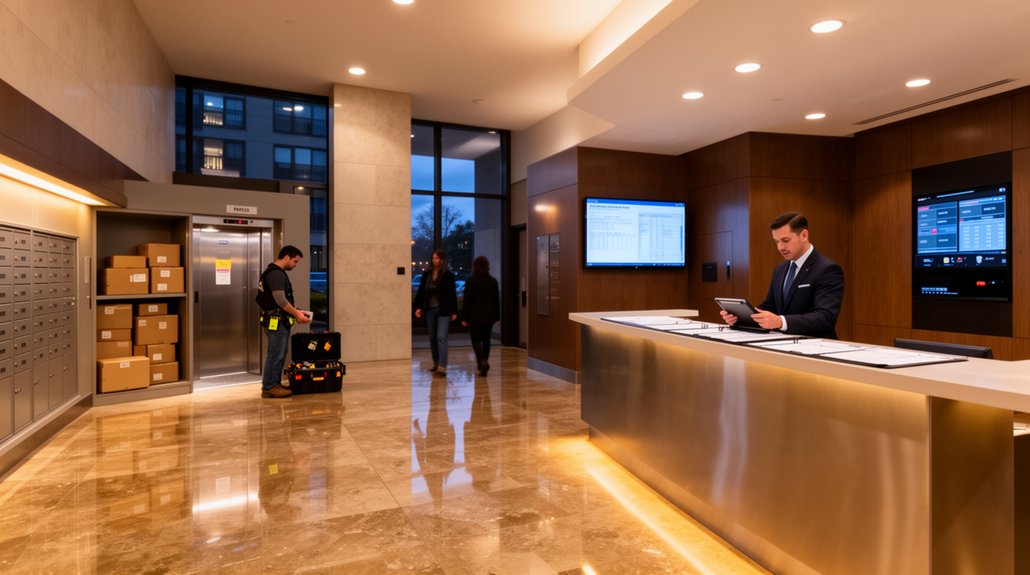
Running an apartment building is like conducting an orchestra—miss one cue, and the whole place feels it. You’re juggling rent collection, lease enforcement, maintenance triage, and vendor oversight while keeping tenants satisfied and costs controlled. You also can’t ignore fair-housing rules, safety standards, and local codes that carry real penalties. If you’re managing it yourself, you’ll quickly see which tasks drain time, create risk, and quietly erode cash flow—and what that means next.
Key Takeaways
- Professional managers coordinate maintenance, inspections, and vendors quickly, preventing small issues from becoming costly habitability and safety problems.
- They enforce leases, renewals, and move-outs consistently, reducing disputes, accelerating turnovers, and keeping occupancy stable.
- They systematize rent collection with automation and clear delinquency policies, protecting cash flow and reducing owner-tenant friction.
- They manage vendors with standardized scopes, pricing controls, and performance tracking, improving quality while limiting overruns and callbacks.
- They ensure legal compliance across screening, notices, disclosures, and building safety requirements, lowering risk of fines, lawsuits, and reputational damage.
What Apartment Managers Do Every Day
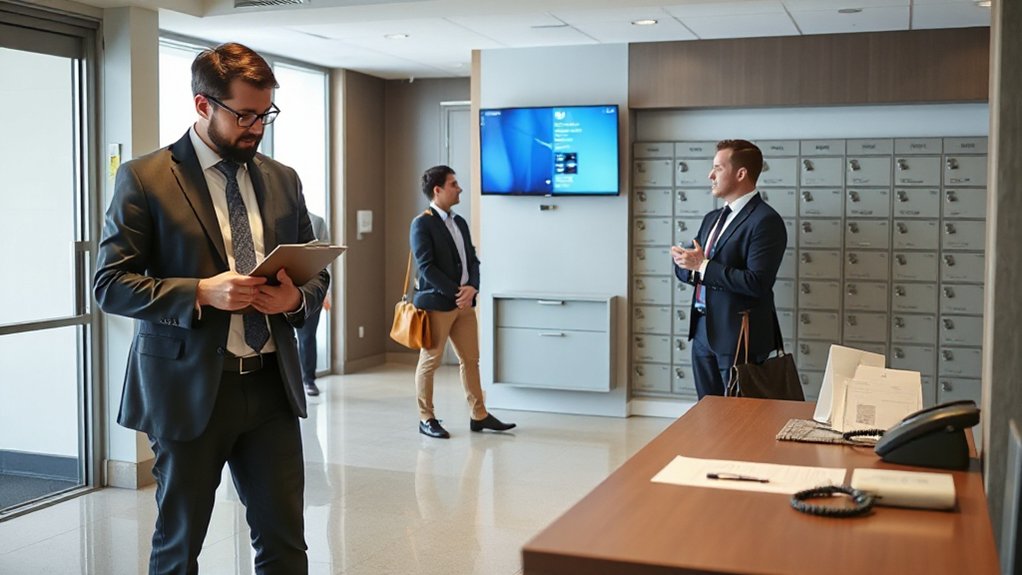
Although tenants often only notice management when something breaks or a notice goes up, apartment managers run a full daily operation behind the scenes. You coordinate maintenance tickets, schedule vendors, and verify work completion so small issues don’t become costly damage. You conduct inspections, document unit conditions, and track compliance with safety requirements and building policies. You handle Tenant engagement by responding to concerns, sending updates, and enforcing rules consistently to protect quiet enjoyment. You manage leasing activity: advertise vacancies, screen applicants, run background checks, and prepare move-in paperwork. You also lead lease negotiations, ensuring terms align with owner goals, local regulations, and market rents while reducing delinquency risk. You reconcile rent rolls, follow up on late payments, and maintain accurate resident files for audits and dispute resolution.
What Apartment Management Fees Cover (and Don’t)
When you review an apartment management agreement, you need to separate what your base fee actually covers from what you’ll pay extra for. You can typically expect leasing and rent collection, routine tenant communication, vendor coordination, and basic reporting to be included. You shouldn’t assume big-ticket repairs, after-hours emergency response, eviction and legal work, major turnovers, or project oversight are covered unless the contract lists them as exclusions or add-ons with specific pricing.
Services Typically Included
Before you sign a management agreement, you need a clear picture of what the monthly fee actually buys—because “full-service” can mean very different things from one company to the next. Typically, you’re paying for rent collection, delinquency follow-up, and clear monthly financial reporting with bank reconciliations. You also get coordinated maintenance: vendor dispatch, work-order tracking, preventive scheduling, and after-hours response protocols. On the front end, managers handle marketing, showings, applicant screening, lease preparation, and compliant move-in documentation, often supported by leasing incentives you approve. Day to day, you’ll see stronger tenant engagement through notices, portal communications, renewal outreach, and issue resolution that reduces turnover. Good firms also manage rule enforcement, inspection scheduling, and documented incident reporting so you keep consistent operations without micromanaging every decision yourself.
Common Exclusions And Add-Ons
Because “full-service” is a marketing label rather than a standard, you need to confirm what the base management fee *doesn’t* include so you don’t get surprised by extra invoices. Many contracts exclude leasing commissions, unit turns, after-hours calls, and project management for capital work. You’ll often pay extra for bookkeeping cleanup, delinquency collections beyond notices, and court filings for evictions. Watch for Insurance exclusions: managers may bill separately for claims administration, incident documentation, or insurer-required inspections. Vendors may be marked up, or you may owe a coordination fee per work order. If you want add on amenities like package lockers, concierge, valet trash, or fitness programming, expect separate setup, monitoring, and reporting charges. Ask for a schedule of fees and approval thresholds in writing.
Rent Collection Systems That Prevent Cash-Flow Gaps
To prevent cash-flow gaps, you need a rent collection system that runs on automated recurring payments, not reminders and hope. You’ll enforce late fees consistently with clear, written rules and timelines so tenants know exactly what happens after a missed due date. You’ll track delinquencies in real time, flag partial payments and failed transactions immediately, and act before arrears snowball.
Automated Recurring Payment Options
Even if your tenants pay on time most months, manual rent collection still leaves you exposed to avoidable cash-flow gaps. Automated recurring payment options tighten your income schedule by initiating pulls on set dates, reducing reliance on reminders, office hours, or mailed checks. With Automated billing, you can generate consistent monthly charges, apply prorations accurately, and deliver instant receipts that cut disputes. Payment automation also supports multiple methods—ACH, debit, and credit—so tenants choose what’s reliable for them while you standardize processing. You’ll see fewer partial payments when the portal defaults to the full balance and confirms funding before posting. Tie the system to your ledger so deposits reconcile automatically and you can forecast cash with confidence, week to week.
Clear Late Fee Enforcement
When your rent collection system enforces late fees automatically and consistently, you stop negotiating the same policy every month and start protecting your cash flow. Clear Late fee policies remove ambiguity, so residents know exactly when fees apply, how they’re calculated, and how they’ll appear on statements. You also reduce staff time spent on exceptions, arguments, and manual adjustments. To lock in enforcement consistency, you set rules that are transparent and defensible:
- Define due dates, grace periods, and fee caps that match local laws and your lease.
- Apply fees uniformly across units, with documented, preapproved hardship protocols.
- Communicate fee triggers in onboarding, reminders, and posted building policies.
With professional management, you’ll keep penalties predictable, minimize disputes, and stabilize collections without chasing tenants individually.
Real-Time Delinquency Tracking
Because rent problems rarely show up all at once, you need real-time delinquency tracking that flags missed payments the moment they happen and shows exactly who’s behind, by how much, and for how long. Tie your rent ledger to automated receipts, bank reconciling, and alerts so you don’t wait for month-end reports. Segment delinquencies by unit, resident, and aging bucket, then trigger the right workflow: friendly reminder, formal notice, or payment plan offer. Use tenant portals and two-way messaging to boost Tenant engagement and document every promise to pay. When patterns emerge, you can adjust screening, tighten renewals, and use data in lease negotiations to protect revenue. You’ll reduce write-offs, keep cash flow predictable, and act before small gaps become defaults.
How Managers Handle Leases, Renewals, and Move-Outs
Although leases may look like standard paperwork, a professional manager treats them as a controlled process that protects your revenue and reduces disputes. You get consistent Lease negotiations, compliant disclosures, and documented tenant screening that supports defensible approvals and denials. They standardize signatures, collect required fees, and confirm insurance and occupants before keys change hands.
- Renewal cadence: they start outreach early, compare market rents, and present options that reduce vacancy risk.
- Move-out protocol: you issue written notice rules, schedule walkthroughs, and apply a checklist so charges match lease language.
- Closeout accuracy: you reconcile ledgers, calculate prorations, and send itemized deposit statements on deadline.
With tight timelines and records, you limit ambiguity, accelerate turns, and keep cash flow predictable.
Maintenance Triage: Repairs Without Long Delays
You can’t treat every maintenance request the same, so you triage fast by flagging safety and habitability issues—water leaks, no heat, electrical hazards—for immediate action. You set clear response targets, log each request with photos and access notes, and dispatch pre-approved vendors from a tight roster within minutes, not days. You track work orders to completion, verify the fix, and close the loop with the resident so repairs don’t stall.
Prioritizing Urgent Repair Requests
- Classify by risk: fire, flooding, gas odors, electrical hazards, and no-heat/no-water issues jump to the top.
- Verify details immediately: confirm location, shutoff access, affected units, and safety instructions you’ll give the tenant.
- Set time targets and updates: define response windows, log photos/notes, and send status messages so residents know what to expect.
You’ll prevent small issues from escalating into costly damage and churn.
Streamlined Vendor Dispatch Process
When a work order hits your inbox, a streamlined vendor dispatch process turns “we’ll get to it” into a scheduled arrival with clear scope and accountability. You capture key details upfront—unit access, photos, shutoff locations, resident availability—so the vendor shows up prepared and you avoid repeat trips. You route issues by trade and urgency, bundle like repairs, and keep preferred vendors on service-level targets to protect response times and costs.
With disciplined vendor scheduling, you confirm ETA, parts requirements, and authorization limits before anyone rolls a truck. You communicate the plan to residents, log updates, and close the loop with completion photos and invoices tied to the original work order. That dispatch efficiency reduces downtime, prevents small leaks from becoming claims, and keeps your building running predictably daily.
24/7 Emergencies: Floods, Heat Outages, and Safety
Although most days run smoothly, apartment buildings can shift into crisis mode in minutes—burst pipes flood units, a heat outage threatens habitability, or a security incident puts residents at risk. You need a plan that’s operational at 2 a.m., not a binder on a shelf. Professional management enforces Emergency preparedness so staff know roles, residents get clear instructions, and critical shutoffs are labeled and accessible. You also need disciplined disaster recovery to document damage, protect evidence, and restore services safely. Focus on:
- Immediate triage: stop water flow, isolate hazards, verify alarms, and account for vulnerable residents.
- Communication: mass texts, lobby notices, and updates with realistic timelines.
- Incident logs: photos, time-stamped actions, and follow-up inspections to prevent recurrence.
How Apartment Management Controls Vendor Pricing and Quality
Even if your building runs a tight maintenance schedule, vendor costs can drift upward fast unless you manage them like a controlled process. You standardize scopes of work, require itemized bids, and benchmark rates against recent jobs and local indexes. You run Vendor negotiations with clear deliverables, response-time clauses, and not-to-exceed limits, then lock pricing through master service agreements.
To protect outcomes, you build Quality assurance into every work order: photos before/after, code-compliant materials, and documented warranties. You track callbacks, missed appointments, and change-order frequency, then score vendors monthly. You rotate bids when performance slips and maintain a short list of prequalified trades with verified insurance. This keeps pricing predictable and workmanship consistent.
Enforcing House Rules Without Escalating Tensions
Because house rules touch people’s daily routines, you’ll get better compliance by enforcing them as a consistent process, not a series of personal confrontations. You set expectations early with plain-language policies, visible posting, and lease-aligned summaries, then you apply them uniformly. Strong Tenant communication means you explain the “why,” not just the “don’t,” and you document every touchpoint.
- Use standardized notice templates that cite the specific rule, date, and required correction.
- Offer a short, neutral path to resolution (email portal, office hours) so residents can ask questions without drama.
- Track incidents and outcomes to verify consistent rule enforcement and spot policy gaps.
When you stay factual, timely, and consistent, you prevent resentment and protect credibility.
Handling Noise, Parking, and Neighbor Disputes
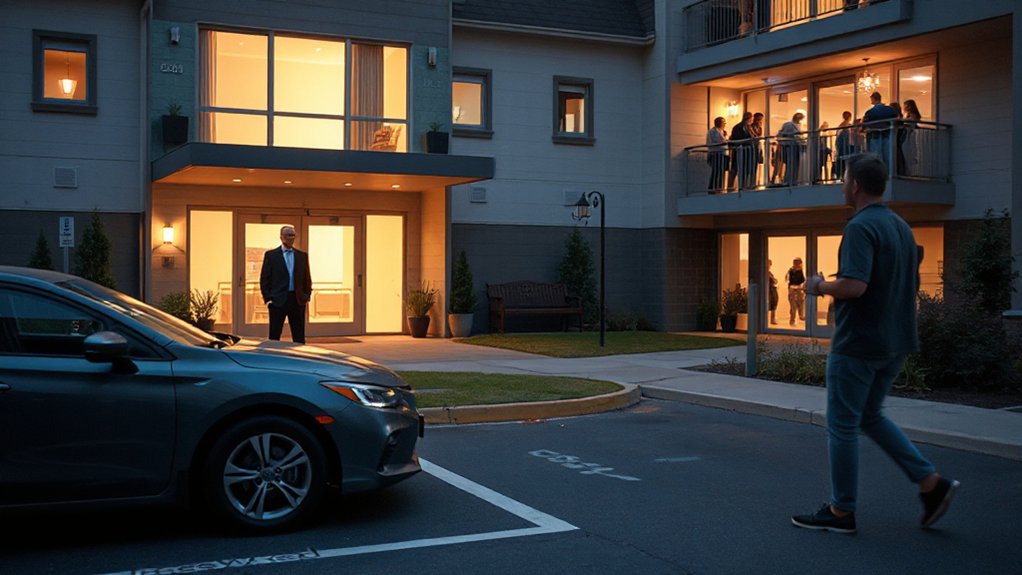
When minor conflicts pile up—late-night footsteps, “borrowed” parking spots, or hallway arguments—you can keep them from turning into formal complaints by using a repeatable, documented response process. Start by logging each report with time, unit, witnesses, and any media; you’ll spot patterns and avoid “he said, she said.” For Noise disturbances, issue a clear first notice, confirm quiet-hour standards, and schedule a follow-up check; escalate only after verified repeat incidents. For parking enforcement, post unambiguous signage, require visible permits, and apply towing and fines consistently, not emotionally. When neighbors clash, you should interview both sides separately, restate the rule, and offer a mediated agreement with specific behaviors and deadlines. Close every case in writing to prevent relapses.
Budgeting, Reserves, and Long-Term Capital Planning
Although day-to-day operations keep your building running, a disciplined budget and reserve strategy keeps it solvent. You can’t guess at expenses; you need Financial forecasting that ties rent assumptions to utilities, payroll, and service contracts, then stress-tests vacancy and delinquency scenarios. Professional management enforces spending controls, bids major work competitively, and reports variances monthly so you correct course fast. To protect owners and residents from sudden assessments, you’ll build capital reserves based on component life cycles and replacement costs. Focus your plan on:
- A 12–24 month operating budget with line-item benchmarks and escalation rates.
- A reserve study schedule for roofs, boilers, paving, and elevators.
- A rolling 5–10 year capital plan that sequences projects and smooths cash flow.
Staying Compliant With Housing Laws and Local Codes
Even if your property runs smoothly, compliance can unravel fast if you don’t track housing laws and local code requirements with the same rigor as your finances. You must monitor fair-housing updates, local rent rules, and notice periods, then bake them into Tenant screening and lease negotiations so your practices stay consistent and defensible. Use written criteria, document adverse actions, and retain records to prove non-discriminatory decisions.
On the building side, schedule inspections for fire alarms, egress lighting, elevators, lead-safe rules, and habitability standards. Keep permits current, log repairs, and respond within required timelines for safety issues. Post mandatory disclosures, maintain privacy standards for entry, and update leases when ordinances change. One missed posting or expired certificate can trigger fines, delays, and costly tenant disputes quickly.
When Professional Apartment Management Is Worth It
Once your building’s day-to-day demands start competing with your core job, family time, or other investments, professional apartment management stops looking like a luxury and starts functioning like risk control. You’ll know it’s worth it when operational complexity outpaces your bandwidth and mistakes get expensive. A qualified manager standardizes processes, documents decisions, and protects cash flow while keeping residents satisfied.
- Turnover and leasing pressure: You need consistent Tenant screening, faster showings, and tighter lease negotiations to reduce vacancy loss.
- Maintenance volume: Work orders, vendor oversight, and preventive schedules require same-day triage and clear service standards.
- Financial discipline: You want accurate ledgers, reserve planning, and enforced collections without personal friction.
If these points describe your reality, you’re already managing—just without leverage.
Frequently Asked Questions
How Do I Switch Management Companies Without Disrupting Tenants?
You switch by setting a clear handover timeline, notifying residents with proactive Tenant communication, and transferring leases, records, and vendor contracts. You coordinate Maintenance scheduling, keep payment channels stable, and run parallel operations briefly to prevent gaps.
Can Professional Management Improve Tenant Screening Beyond Background Checks?
Yes—you turn screening into a sieve, not a snapshot. You’ll verify income, employment, landlord history, behavior patterns, and fraud signals, aligning Rental marketing and Tenant retention goals. You’ll document decisions, reduce risk, and place reliable residents.
What Software Tools Do Managers Use to Track Property Performance Metrics?
You’ll use property management platforms like Yardi, AppFolio, or Buildium, plus BI dashboards, to track occupancy, NOI, delinquencies, and work orders. They integrate tenant engagement and maintenance scheduling, giving you real-time performance insights.
How Does Management Handle Insurance Claims After Property Damage?
You handle the Insurance process by documenting damage, notifying carriers immediately, securing temporary repairs, and compiling invoices, photos, and reports. You coordinate adjusters, track deadlines, and push Claim resolution through regular follow-ups and clear communication.
Will Professional Management Increase My Property’s Resale Value or Appraisal?
Yes—like fresh paint under bright sun, professional management can raise your appraisal. You’ll strengthen Property valuation through tighter finances, cleaner upkeep, and documented repairs, driving Marketability enhancement with fewer vacancies, better tenants, and confidence.
Conclusion
Professional apartment management keeps your building running like a well-tuned engine—every part checked before it fails. You don’t just get rent collection; you get consistent enforcement, documented processes, and faster maintenance triage that protects tenant satisfaction and unit value. You avoid cash-flow gaps with reliable systems, reduce liability through code and fair-housing compliance, and plan reserves for major repairs. When problems stack up, you’ll want a manager already holding the playbook.
About the Author