You probably don’t know that most “luxury” equestrian properties fail first at the chore path, not the finishes. If you want practical luxury, you’ll design from daily routines outward: smart site planning, a barn layout that shortens steps, safe circulation between stalls, arenas, and the house, and materials that handle moisture, impact, and sun without constant upkeep. Get these fundamentals right, and the refined details finally make sense—but one decision usually determines everything.
Key Takeaways
- Define practical luxury as durable, performance-first design that reduces labor, protects horses, and stays easy to clean.
- Start with a site plan optimizing sun, wind, drainage, access, and future expansion while separating horse traffic from vehicles and guests.
- Build barn layouts for chores: straight aisles, ventilated stalls, central feed storage, exterior-access manure room, and efficient wash and grooming zones.
- Plan safe circulation using dedicated horse lanes, one-way vehicle loops, correctly placed arena gates, and secure double-gate airlocks at crossings.
- Specify materials that age well: sealed concrete, honed stone, dense hardwoods, and corrosion-resistant hardware that hides wear and resists mud and moisture.
Define Practical Luxury in Equestrian Property Design
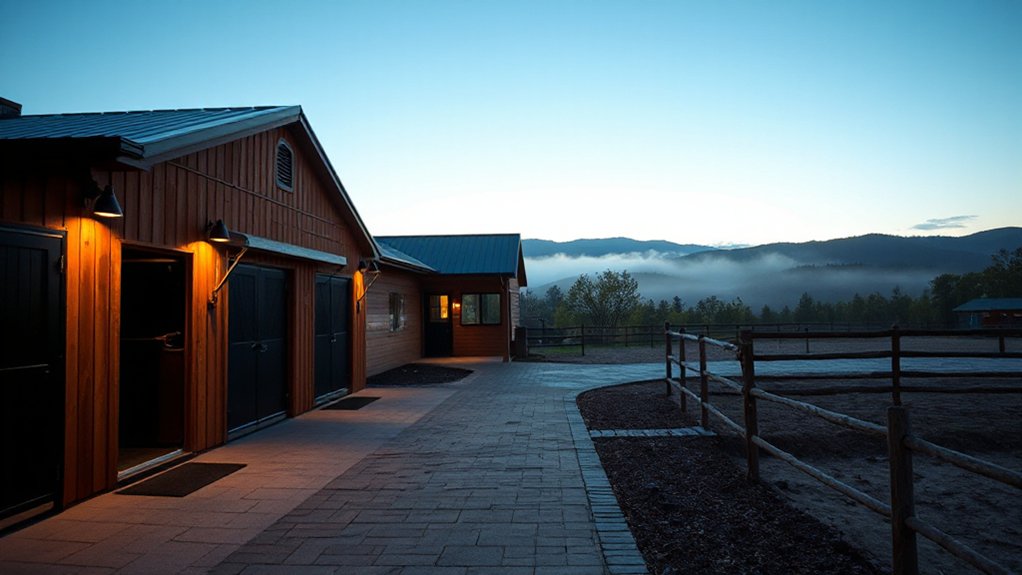
While “luxury” often brings to mind showpiece finishes and oversized amenities, practical luxury in equestrian property design prioritizes performance, durability, and daily ease without sacrificing beauty. You define it by asking what reduces labor, protects horses, and holds up under mud, weather, and constant use. You invest in smart circulation, well-ventilated stalls, resilient flooring, and hardware that won’t fail at 5 a.m. You specify materials that clean fast, resist corrosion, and age gracefully, so upkeep stays predictable. Luxury amenities earn their place when they improve function—efficient wash areas, heated tack drying, organized storage, and quiet lighting. Aesthetic enhancements should support the working look: cohesive barn architecture, balanced proportions, refined trim, and finishes that hide wear while elevating your property.
Start With the Equestrian Property Site Plan
Before you choose barn finishes or add amenities, lock in a site plan that makes the property work every day. Start by mapping solar exposure, prevailing winds, drainage patterns, and existing grades so you can place drives, arenas, and paddocks on stable, well-drained ground. Separate horse traffic from guest vehicles, and confirm emergency access and turning radii for trailers and service trucks. Protect neighbors and your own views by positioning structures to manage noise, lighting, and dust. Use Equestrian landscaping to control erosion, screen utilities, and guide circulation with durable plantings and fencing lines. Preserve tree stands, riparian buffers, and corridors that support Wildlife habitat, and coordinate them with manure management setbacks and stormwater plans. Then validate utilities, permitting constraints, and future expansion zones early.
Design a Barn Layout for Daily Chores and Turnout
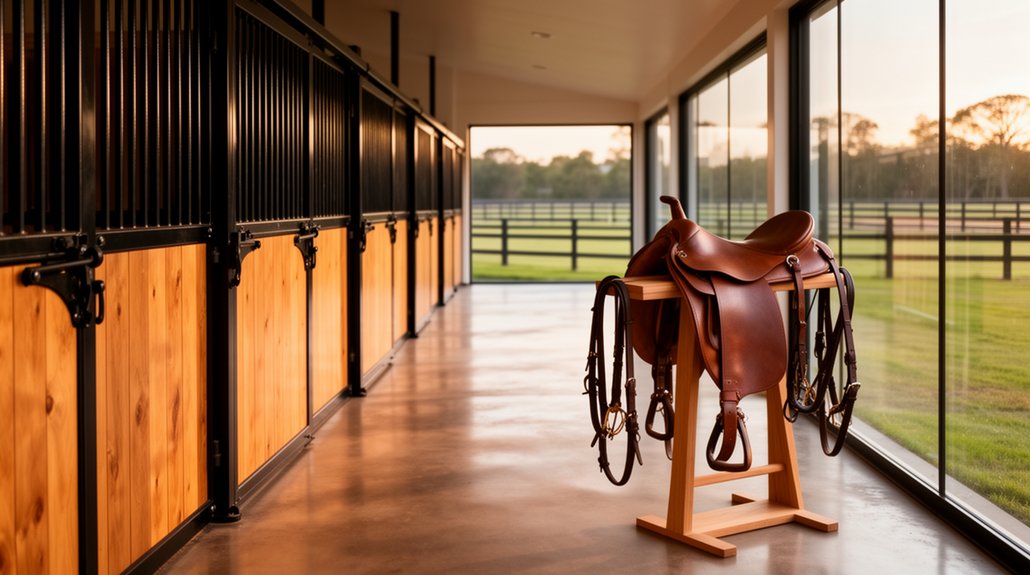
Once you’ve set the site plan, design the barn layout around the two things you’ll do most: chores and turnout. Put stall rows on a straight, well-lit aisle so you can muck, bed, and check water fast. Place Feed storage at the aisle midpoint with a dedicated scale counter, sealed bins, and rodent-resistant finishes to cut steps and waste. Create a separate, ventilated manure room with direct exterior access, so odors and traffic don’t invade the barn.
For horses, make turnout efficient: add end doors at both aisle ends, and position tack, wash bay, and Horse grooming area in a compact “working core.” Include cross-ties, hot/cold water, and hose reels. Add durable, non-slip flooring and clear sightlines for safer daily routines.
Plan Safe Circulation Between Barn, Arenas, and House
Because horses, people, and vehicles move at different speeds and with different risk profiles, you should design circulation between the barn, arenas, and house as a simple, separated system: a dedicated horse lane that never crosses driveways, a staff/service route for feed and manure traffic, and a clean guest path to the home and viewing areas. Keep horse lanes wide, straight, and visible from key work zones so handlers can manage spooks and passing distance. Place arena gates to support Horse training patterns without backing trailers or crossing pedestrians. Use one-way loops for vehicles, with turnaround heads sized for trucks, and keep delivery hours off peak riding times. Reinforce fencing security at every interface: double-gate “airlocks,” self-closing latches, and clear sightlines to prevent loose-horse incidents. Add wayfinding signs.
Choose Equestrian Property Materials That Age Well
You’ll get lasting luxury by specifying durable natural materials—stone, hardwood, and heavy-gauge metals—that stand up to moisture, grit, and daily hoof traffic. Choose patina-friendly finishes like oil-rubbed wood, honed stone, and sealed metals so inevitable wear reads as character, not damage. When you align these selections across barn, arenas, and the house, your property stays cohesive, low-maintenance, and refined for decades.
Durable Natural Materials
Even when your barns and living spaces look polished on day one, an equestrian property earns its elegance through materials that can take daily wear and still improve with time. Specify dense hardwoods for stall fronts and tack-room cabinetry; they resist dents from buckets, gates, and daily traffic. Use stone thresholds and pavers at wash racks and entries so hoof impact, water, and grit won’t cause premature failure. For Horse grooming areas, choose sealed concrete or clay brick floors with proper slope and drains; you’ll control moisture and minimize slipping without relying on delicate surfaces. In Riding arena design, invest in rot-resistant timber for kickboards and responsibly sourced stone for perimeter paths, reducing maintenance calls and replacement cycles. You’ll protect your budget and keep the property refined year after year.
Patina-Friendly Finishes
Durability sets the baseline, but lasting luxury on an equestrian property comes from finishes that wear gracefully instead of looking “tired” after a season. You’ll specify materials that accept scuffs, sun, and hose-downs as character, not damage, so your barn and main house stay cohesive year after year. Prioritize surfaces that can be cleaned hard without losing their story, and pair them with Vintage fixtures that feel intentional from day one.
- Oiled or wire-brushed oak that deepens with use
- Natural stone with honed edges and quiet variation
- Hand-troweled plaster that softens rather than chips
- Powder-coated metals in muted tones that resist corrosion
- Distressed finishes on doors and millwork to mask wear
You’ll get elegance that’s low-maintenance, not fragile, across all high-traffic zones.
Add Mudroom Entries, Tack Storage, and Safe Comfort Upgrades
Because an equestrian home lives at the intersection of refined entertaining and hard-working daily routines, your entry sequence needs to manage dirt, gear, and safety without sacrificing finish quality. You’ll get control fast with Mudroom organization that zones wet boots, helmets, and barn outerwear before they reach living spaces. Specify a sealed floor with a trench drain, a built-in bench, and tall lockers with ventilated doors for quick drying.
Integrate tack storage solutions near the stable-facing door: saddle racks at proper height, bridle hooks with labeled cubbies, and a lockable cabinet for medications and tools. Add low-glare LED task lighting, GFCI outlets, and slip-resistant thresholds. Radiant heat under tile, a dog-wash station, and a discreet handwash sink raise comfort while keeping traffic orderly year-round.
Frequently Asked Questions
How Much Does a Practical Luxury Equestrian Property Typically Cost per Acre?
You’ll typically pay $25,000–$150,000+ per acre, depending on region, zoning, and infrastructure. Luxury amenities and Landscaping aesthetics can push costs higher, especially with arenas, barns, utilities, drainage, and premium access roads.
Which Permits and Zoning Rules Affect Building Arenas, Barns, and Guest Houses?
Under open skies, you’ll face zoning restrictions on setbacks, height, use, and occupancy for arenas, barns, and guest houses. You’ll navigate permit processes for grading, septic, utilities, stormwater, fire access, and inspections.
How Do Insurance Requirements Change With Boarding, Lessons, or Public Events?
When you add boarding, lessons, or public events, you’ll need broader Equestrian insurance: higher general liability limits, care/custody/control, trainer’s liability, and spectator coverage. Boarding coverage expands for others’ horses and requires contracts, waivers, and inspections.
What Smart-Home and Barn Automation Features Offer the Best Return on Investment?
You’ll save a fortune with Smart lighting and Automated feeders. Add climate sensors, water-leak alerts, and camera analytics to cut waste and prevent losses. Choose systems with remote dashboards, battery backup, and service contracts.
How Can I Make the Property Accessible for Aging Owners and Disabled Riders?
You’ll prioritize Accessible pathways with gentle slopes, non-slip surfaces, wider gates, and clear lighting, then add Adaptive facilities like ramps, lift-ready mounting blocks, accessible restrooms, and tactile signage. You’ll guarantee handrails throughout, too.
Conclusion
You don’t achieve practical luxury by adding sparkle; you earn it through layouts, materials, and details that perform every day. Consider this: a typical horse produces about 50 pounds of manure daily, so your flooring, drainage, and circulation can’t be delicate—they’ve got to be engineered. When you plan smart stall ventilation, direct routes to turnout, durable finishes, and organized tack and wash zones, you reduce labor, protect horses, and keep the property looking refined for years.
About the Author