
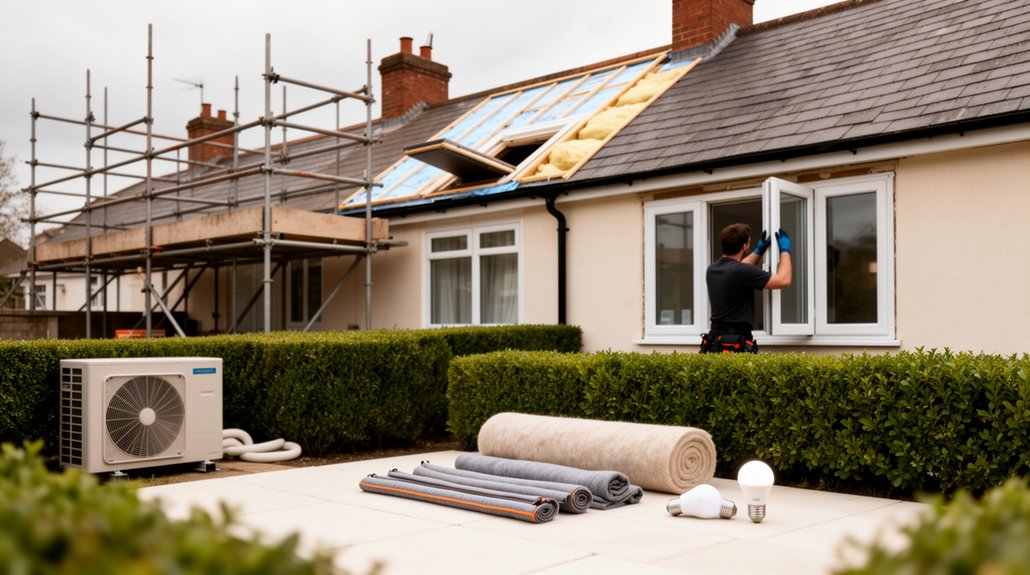
Start by checking whether the 2026 minimum EPC rating applies to your let, renewal, or existing tenancy, then confirm any exemptions, “all reasonable improvements” tests, and cost caps. Use your EPC’s recommendations in order: swap halogens for LEDs, add draught strips, radiator panels, and smart controls (programmable thermostat, TRVs, setbacks) while keeping receipts. Next, prioritise loft insulation to 270mm and suitable cavity wall insulation, and insulate cylinder/pipework. Grants, ECO4, and low-rate green finance can cut costs—more practical steps follow.
Key Takeaways
- Confirm your property’s EPC requirement for 2026, including tenancy type, deadlines, exemptions, and “all reasonable improvements” cost caps.
- Prioritise low-cost wins first: LEDs, draught-proofing, reflective radiator panels, and sealing leaks around doors, windows, and loft hatches.
- Maximise insulation impact on a budget: top up loft insulation to 270mm and add cavity wall insulation if the wall type is suitable.
- Improve heating efficiency cheaply: service the boiler, lower flow temperature, balance radiators, add TRVs, and install a programmable or smart thermostat.
- Use grants and finance wisely: check ECO4 and local schemes, get pre-approval, keep receipts, and stage upgrades to stack incentives compliantly.
Understand the 2026 EPC Rules for Your Property
Before you spend a penny on upgrades, you’ll need to understand what the 2026 EPC rules actually require for your specific property type and tenancy. Check whether the rules apply to new lets, renewals, or existing tenancies, and confirm the minimum rating targeted for your jurisdiction. Verify exemptions, “all reasonable improvements” tests, and any cost caps, because they define your legal compliance risk and your spending limit.
Next, map your building category (flat, house, HMO, listed, mixed-use) and heating fuel, since guidance can differ. Note deadlines, enforcement routes, and penalty levels so you can prioritise cashflow. Factor impacts on Property valuation: stronger ratings can protect rentability and resale, while non-compliance can reduce buyer demand and lending options.
Read Your EPC Report: Cheapest Fixes First
Begin with controls and lighting: swap remaining halogens for LEDs, add draught-proofing strips to external doors, and fit reflective radiator panels where gaps exist. Upgrade to smart home technology like programmable thermostats and TRVs, then set schedules and temperature setbacks to cut wasted heat.
When repairs are due, choose eco friendly materials (low-VOC sealants, recycled-content boards) so you don’t pay twice. Keep receipts; assessors can evidence upgrades.
Insulation Upgrades That Lift Your EPC Fastest
If you want the fastest EPC uplift for the least spend, you start with insulation because it cuts heat loss immediately and scores well in most assessments. You’ll usually get the quickest payback by topping up loft insulation to recommended depth, adding cavity wall insulation where your walls are suitable, and fitting draught-proofing seals around doors, windows, and loft hatches. You can price each measure per m², check for damp/ventilation risks first, and then prioritise the upgrades that deliver the biggest reduction in heating demand for your budget.
Loft Insulation Top-Up
Although it’s often overlooked, topping up your loft insulation is one of the quickest, cheapest ways to lift an EPC score because it cuts heat loss through the roof—typically a major weak spot in older homes. Aim for 270mm mineral wool (or equivalent) across the loft floor; many properties still sit nearer 100mm. You can DIY rolls cheaply, or pay modest labour for a neat, audit-friendly finish. Don’t compress insulation under stored items; raise boards on stilts so performance doesn’t drop. Keep Attic ventilation clear at eaves and around any vents to prevent condensation and timber decay. Before you insulate, fix leaks and sort basic Roof repair issues, or you’ll trap moisture. Seal the loft hatch and fit a draught strip for an extra small win.
Cavity Wall Insulation
Because uninsulated cavity walls can leak a large share of your home’s heat, filling the cavity is one of the fastest EPC wins for many UK properties built roughly between the 1920s and early 2000s. You’ll typically use blown mineral wool or polystyrene beads, installed through small mortar holes and completed in a few hours.
Before you commit, you should confirm the wall actually has a cavity, check exposure to wind-driven rain, and fix pointing, gutters, and cracks to avoid damp risk. Ask for a borescope survey and a guarantee. Target Thermal bridging by insulating reveals and addressing cold spots around lintels where feasible. If your cavity’s unsuitable, compare costs versus External cladding (EWI), which improves performance but costs more and needs planning checks.
Draught Proofing Seals
Once you’ve tackled big fabric losses like cavity walls, draught-proofing seals often deliver the cheapest, fastest EPC uplift by cutting uncontrolled air leakage that drives up space-heating demand. You’ll feel the impact quickly because less warm air escapes and your boiler cycles less. Focus on high-leakage points first, then verify improvements with a smoke pencil or a simple hand test on windy days.
- Fit window strips to opening sashes; choose brush or compression types that still let windows close tightly.
- Add letterbox brushes and keyhole covers; they’re low-cost fixes with measurable comfort gains.
- Install sealed doors using perimeter gaskets and a threshold drop seal to stop under-door drafts.
Expect materials to cost tens, not hundreds, per room, and DIY labour keeps payback short.
Draft-Proofing and Basic Ventilation (Avoid Damp)
You’ll lift comfort and EPC performance quickly by sealing draughts where they matter most—around doors, windows, loft hatches, and service penetrations—using low-cost strips, brush seals, and sealant. Don’t block airflow entirely: keep or add basic background ventilation (trickle vents, air bricks, or correctly sized extractor fans) so moisture can escape. That balance cuts heat loss without raising condensation risk, which helps you avoid damp-related repairs.
Seal Draughts Strategically
Even if you can’t afford major insulation upgrades yet, strategic draught-proofing can deliver one of the best “cost per comfort” gains for EPC improvement by cutting uncontrolled air leakage that drives heat loss. Focus on airtight barriers where you’ve got obvious gaps, then move room by room so you don’t waste sealant. Start with window sealing: fit stick-on compression strips to sashes, re-caulk failed frames, and add brush strips to letterboxes and keyholes. Check door thresholds and pipe penetrations, because small holes add up.
- Use a cheap smoke pencil or incense to find leaks on windy days
- Seal skirting and floorboard gaps with flexible filler, not brittle putty
- Fit a chimney balloon or draught excluder when the fireplace isn’t in use
Ventilate To Prevent Damp
Although sealing draughts helps your EPC and comfort, it can also trap moisture if you don’t replace that lost “background” airflow, so pair draft-proofing with low-cost, controlled ventilation to avoid damp and mould. Start by using extractor fans in kitchens and bathrooms, and run them for 15–20 minutes after cooking or showering; if yours are noisy or weak, swap to a humidistat model so it only boosts when needed. Open trickle vents (or fit them during window upgrades) to maintain Indoor air quality without leaving windows wide open. Keep air paths clear: undercut internal doors, don’t block vents, and avoid drying clothes on radiators. Monitor humidity with a £10–£15 hygrometer; aim for 40–60% for effective moisture control.
Budget Heating and Hot-Water Upgrades for EPC Gains
Because heating and hot water typically account for the largest share of a home’s energy use, targeted upgrades here can deliver some of the quickest EPC gains for the least spend. Start by servicing your boiler and balancing radiators; you’ll improve efficiency without replacing the system. Then reduce flow temperatures (where safe) and fit thermostatic radiator valves to cut wasted heat room by room. Add smart thermostats to tighten schedules, zoning, and setback temperatures—small controls changes often show up clearly in EPC recommendations. For hot water, insulate the cylinder, primary pipework, and any exposed valves; these low-cost wraps typically pay back fast.
- Fit a 60°C cylinder thermostat and timer
- Swap to low-flow showerheads and fix dripping taps
- Plan solar panels later to offset electric hot-water loads
Cut Upfront Costs With EPC Grants and Low-Cost Finance
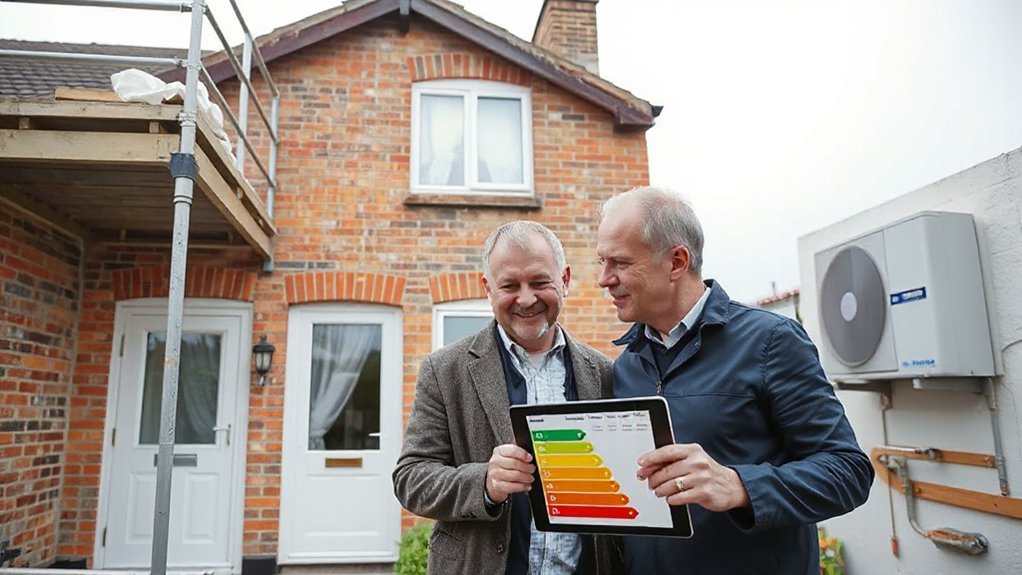
While you can make meaningful EPC gains with small DIY fixes, grants and low-cost finance often turn the “nice-to-have” measures—like insulation top-ups, heat-pump readiness work, or smarter controls—into upgrades you can do now without draining cashflow. Start by checking eligibility for schemes such as ECO4, local authority retrofit funds, and supplier obligations; these typically target measurable Energy efficiency improvements (loft/cavity insulation, draught-proofing, heating controls). Ask installers for itemised quotes and confirm paperwork: grant funding often requires pre-approval, specific products, and post-install evidence. If you don’t qualify, compare low-rate green loans, 0% credit offers, or “pay-as-you-save” plans where repayments track bill reductions. Stack financial incentives carefully, but avoid double-claim rules and hidden fees.
Frequently Asked Questions
Do I Need a New EPC After Completing Improvements?
Yes, you’ll need a new EPC to reflect changes; old ratings won’t update automatically. After insulation upgrades or energy efficient windows, book an accredited assessor. It’s usually low-cost and documents measurable efficiency gains for lenders.
How Long Does an EPC Assessment Take for an Average Home?
You can expect an EPC assessment to take about 45–60 minutes for an average home, depending on access and complexity. You’ll support accurate energy efficiency ratings and cost effective upgrades by providing heating, insulation, and glazing details.
Can Tenants Request Upgrades if the Property Fails Minimum EPC Standards?
Yes—you can request upgrades; Tenant rights let you ask your landlord to meet minimum EPC standards, though you can’t force immediate work. Use the Upgrade process: report in writing, cite regulations, involve council.
Will EPC Changes Affect My Property’s Market Value or Saleability?
Yes—EPC changes can affect your property’s market value and saleability. You’ll typically boost Property valuation with better Energy efficiency, while poor ratings reduce buyer demand. You can offset risk cheaply using insulation, draftproofing, LEDs.
What Penalties Apply if I Miss the 2026 EPC Compliance Deadline?
If you miss the 2026 deadline, you’ll likely face fines, potential letting or sale restrictions, and enforcement action under Legal obligations. You should also lose access to Financial incentives, increasing retrofit costs and delays.
Conclusion
Before you spend big, test the theory that “EPC gains cost a fortune.” Evidence from EPC recommendations shows the cheapest wins usually come first: seal drafts, top up loft insulation, and tune heating controls. You’ll often lift your score faster per pound than with major kit swaps. Then verify results: update your EPC after each round, not at the end. Use grants or 0% finance where available, and avoid damp by ventilating properly.
About the Author