
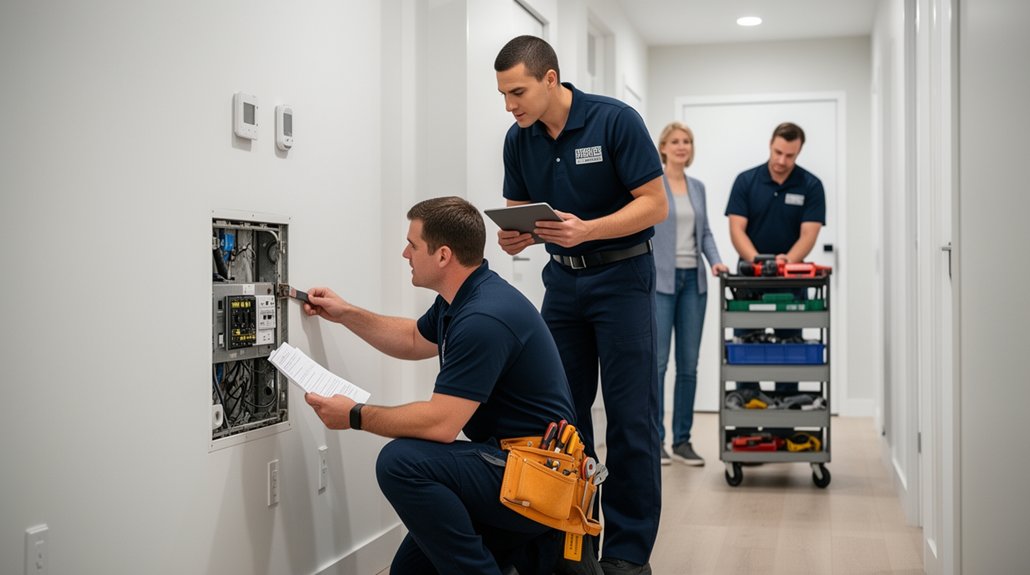
Like a well-run pit crew, you don’t wait for a breakdown to decide who does what. You route requests through a tracked workflow, capture photos and timestamps, and triage hazards to meet habitability and safety-code timelines. You dispatch licensed, insured vendors from a pre-vetted list, not whoever answers the phone. You confirm scope, pricing, and completion before you approve invoices. The real advantage shows up where DIY landlords usually lose days…
Key Takeaways
- They triage requests fast using habitability and safety rules, dispatching emergencies immediately while scheduling routine work into the next available window.
- They use standardized intake forms with photos, access details, and timestamps to reduce back-and-forth and scope repairs quickly.
- They rely on pre-vetted, licensed vendors with reserved capacity and predictable pricing, avoiding delays from searching and negotiating per job.
- They bundle similar jobs by location and trade, optimize routes, and pre-confirm access, parking, pets, and shutoffs to prevent missed visits.
- They follow repeatable workflows from work order to invoice, using documentation and quality checks to close jobs faster and avoid repeat repairs.
Why Property Managers Fix Repairs Faster
Because repair delays can quickly turn into habitability issues, property managers move fast by using established systems and vendor networks that most DIY landlords don’t have. You get pre-vetted contractors who already meet insurance, licensing, and safety requirements, so you don’t lose days calling around or risking noncompliant work. You also follow written standards for emergency vs. routine issues, helping you meet local repair-and-deduct rules, notice requirements, and implied warranty obligations. With strong Tenant communication, you set expectations, document access attempts, and reduce disputes that can trigger withholding or code complaints. You keep reserves and pricing benchmarks, so approvals don’t stall. Faster, compliant repairs protect resident satisfaction and support lease renewal decisions, keeping vacancy and turnover costs down for owners.
The Repair Workflow (From Request to Invoice)
When a tenant submits a maintenance request, a good manager runs it through a repeatable, documented workflow that protects habitability and keeps your paper trail clean. You log the request, time-stamp it, and triage by risk: safety, water intrusion, loss of heat, or code issues get same-day action, while minor items queue.
Next, you assign an approved vendor, issue a work order with scope and access instructions, and confirm entry notices comply with local requirements. You keep Tenant communication tight: acknowledgement, scheduling window, completion update, and closure confirmation.
You control Budget allocation by applying repair limits, pre-authorizations, and vendor rate checks before work starts. After completion, you verify notes and photos, match them to the invoice, code the expense, and store documents for audits and security-deposit disputes.
How Managers Collect Better Repair Details Fast
You collect better repair details fast by using a standardized intake that captures required fields upfront—location, urgency, access instructions, photos/video, and any safety or habitability concerns—so you can document compliance and route the job correctly. You don’t wait for vague tickets to bounce around; you ask targeted follow-up questions immediately (what’s leaking, when it started, breaker position, shutoff location, prior fixes) to narrow scope and parts. With complete, consistent info in hand, you can dispatch the right vendor on the first call and avoid delays, re-visits, and disputed invoices.
Standardized Repair Intake
Although repairs often feel urgent and chaotic, property managers speed them up by using a standardized repair intake process that captures complete, actionable details on the first report. You route every request through a single portal, form, or call script that requires unit, location, access instructions, urgency category, photos/video, and whether utilities are affected. You time-stamp submissions, log them for auditability, and flag habitability or safety issues to meet local code and lease obligations. You standardize Tenant communication with auto-confirmations, clear response windows, and entry notices that comply with required notice periods. You tie intake data to Budget allocation by mapping issues to preapproved spend limits and vendor tiers, so dispatch doesn’t stall for approvals. You also tag recurring problems to support preventive maintenance planning and reporting.
Targeted Follow-Up Questions
Standardized intake captures the basics, but managers keep repairs moving by asking targeted follow-up questions that eliminate guesswork before a tech ever rolls. You ask what’s failing, when it started, and whether it’s intermittent, then confirm exact location, access instructions, and photos or video. For leaks, you pin down source, active dripping, shutoff valve location, and any ceiling staining to prioritize water-mitigation and habitability duties. For electrical, you ask breaker status, outlets affected, smells, and sparking to manage safety and code risk. You verify tenant availability windows and permission-to-enter rules for compliant Tenant communication. Through consistent scripts and staff training, you capture parts needed, likely trade, and urgency level so dispatch happens once, not twice.
How Property Managers Triage: Emergency vs Routine
Once you’ve got solid repair details, you triage the request using clear emergency severity criteria—active water leaks, no heat in winter, gas odors, electrical hazards, or security breaches—and you document the decision for habitability and local code compliance. You treat true emergencies as immediate dispatch items with after-hours escalation and vendor authorization limits, not “next business day” tasks. You schedule routine repairs into the next available maintenance window, bundle similar work orders, and send the tenant firm timelines and access requirements so the fix happens efficiently without violating notice rules.
Emergency Severity Criteria
When a tenant calls in a problem, property managers don’t guess—they triage it against clear emergency criteria tied to habitability and safety rules. You classify issues as “emergency” when they threaten life, property, or legal compliance: active leaks, no heat in cold-weather thresholds, electrical arcing, gas odors, sewage backups, broken exterior locks, or fire-system faults. You document time, symptoms, and immediate hazards, then set Tenant communication expectations: what to shut off, when to evacuate, and when help arrives. You also confirm access and photos to reduce misdiagnosis. Next, you trigger Budget allocation rules—preapproved not-to-exceed limits, after-hours rates, and approved vendors—so you can dispatch immediately without waiting for owner sign-off. You log actions for auditability and fair billing.
Routine Repair Scheduling
Although emergencies jump the line, property managers still move routine requests quickly by routing them through a structured scheduling workflow that protects habitability and lease compliance. You log each ticket, verify whether it triggers local repair timelines (heat, plumbing, locks, pests), and assign a target date based on risk and access. You bundle similar tasks by building and trade, then reserve contractor slots in advance so small jobs don’t stall behind big projects. With clear Tenant communication, you confirm entry permissions, provide appointment windows, and document updates for your file. You also tie routine work to Budget forecasting: you track recurring components, set reserve thresholds, and pre-approve spend limits to avoid delays. If parts are needed, you order immediately and reschedule once.
Vendor Networks: Why PMs Don’t Scramble for Contractors
Because property managers maintain pre-vetted vendor networks—licensed, insured, and familiar with local code requirements—they don’t waste time cold-calling contractors every time a repair request comes in. You benefit from established Vendor relationships that prioritize your work, honor warranty terms, and document parts, labor, and permits. Through contractor vetting, you get confirmed licensing, COI tracking, background checks when required, and proof they follow OSHA and manufacturer specs. You also reduce liability: vendors understand lead-safe rules, habitability standards, and required notices for entry, so repairs stay compliant. When an issue hits—leak, electrical fault, HVAC outage—you authorize a known pro with predictable pricing, clear scope, and photo-based completion reports, not a stranger you hope shows up.
Scheduling Tricks Property Managers Use to Avoid Delays
If you want repairs done fast, you don’t “fit them in”—you run a schedule that removes bottlenecks before they start. You triage requests by habitability and safety codes first, then bundle similar work (plumbing, turns, punch lists) into route-based blocks so techs don’t lose hours driving. You pre-book access windows with Tenant communication: confirm entry permissions, pets, parking, and utility shutoffs, and send reminders that meet notice requirements. You keep a rolling calendar with buffer slots for emergencies and vendor no-shows, and you standardize start times, materials pickup, and photo documentation. You coordinate inspections when required and avoid rework by sequencing drying, electrical, then finishes. With Budget allocation, you align recurring maintenance days to predictable spend and avoid stop-and-start scheduling.
Approval Rules That Keep Work Moving

When you set clear approval rules upfront, repairs don’t stall in a text-message loop while damage spreads. Put thresholds in writing: what you’ll approve automatically, what requires photos, and what needs your sign-off. Require timestamped documentation and scope notes so you can make a same-day decision, not a back-and-forth.
Build a compliance checklist into your workflow: habitability issues get immediate authorization; entry notices go out within statutory timelines; and you log all permissions for audit trails. Standardize Tenant communication with templates that confirm access windows, temporary remedies, and follow-up inspections. You’ll also protect Lease renewals by showing residents you respond predictably and lawfully, even when you’re not available to answer every call. Keep your rules in the lease packet and owner file.
How Managers Control Cost (Rate Cards, Scopes, Bids)
Although speed matters, managers keep repair budgets predictable by pricing work before it starts: they use vendor rate cards (set hourly and trip charges by trade), require written scopes that spell out materials, code requirements, and access constraints, and trigger competitive bids above preset thresholds. You get Cost control because every work order ties to a preapproved unit price, so a plumber can’t swap “time and materials” for open-ended billing. You also reduce change orders by requiring photos, model numbers, and permit responsibility in the scope, aligned with local licensing and habitability rules. When the estimate exceeds your threshold, managers apply bidding strategies: invite qualified, insured vendors, compare apples-to-apples scopes, and reject exclusions that shift risk back to you.
How Property Managers Check Quality Before Closing
Predictable pricing only works if the finished repair meets code and actually solves the problem, so property managers verify quality before they approve the final invoice and close the work order. You get a defined scope, then you or your manager checks permits, trade licensing, and manufacturer requirements before sign-off. You confirm the fix addresses root cause, not symptoms, and you test operation under normal load (heat cycles, pressure, drainage, GFCI trip, leak checks). You also confirm jobsite safety, debris removal, and that no new hazards were created. Tenant communication matters: you schedule access, confirm completion with the resident, and respond fast if they report lingering issues. Budget allocation stays protected because you only pay for compliant, durable work.
- You avoid repeat failures.
- You protect tenant trust.
- You reduce emergency calls.
Documentation That Prevents Tenant and Vendor Disputes
You prevent repair disputes by using standardized work order records that capture the issue, access notes, scope, authorized spend, and required code or habitability compliance. You protect the timeline and responsibility trail with photo evidence and timestamps from pre-entry to final condition, which supports notice and security-deposit requirements. You close the loop with signed vendor completion forms that confirm materials used, warranties, and completion date, so you can enforce accountability and resolve tenant questions fast.
Standardized Work Order Records
When a repair request comes in, management companies don’t rely on texts, sticky notes, or memory—they log it in a standardized work order record that timestamps the complaint, captures photos, lists the unit/location, notes any safety habitability implications, and assigns a clear priority level. That structure drives Tenant communication and repair prioritization, so you don’t miss statutory deadlines or fair-housing consistency. You can route the ticket to approved vendors, attach access instructions, and document tenant notices, entry permissions, and completion terms in one place. Standard fields reduce “you said/I said” arguments and help you audit response times.
- You feel calm because every request has an owner and next step.
- Tenants feel respected because updates follow a predictable cadence.
- Vendors feel accountable because scope and materials are clearly defined.
Photo Evidence And Timestamps
Although a repair dispute can turn into a “who said what” problem overnight, management companies reduce that risk by anchoring every step to dated photos and system timestamps—request received, vendor assigned, access attempted, work started, and job closed. You get a verifiable chain of custody that supports habitability timelines, notice requirements, and fair charges.
You use before-and-after photos to document damage versus normal wear, plus access conditions and safety hazards. You log tenant messages, calls, and portal updates so Tenant communication stays consistent and defensible. If a tenant claims you ignored a leak, you can show when it was reported, when entry was attempted, and what was repaired. That record also helps during Lease renewals, because you can prove responsiveness and set expectations with evidence, not opinions.
Signed Vendor Completion Forms
Because work orders can get messy the moment a tenant disputes the fix or a vendor disputes the scope, management companies rely on signed vendor completion forms to lock in exactly what was authorized, what was performed, and the condition at handoff. You get signatures from the vendor and, when possible, the tenant or onsite rep, plus date/time, unit access notes, and any code-compliance observations. That paper trail protects Vendor relationships and helps you enforce repair warranties without finger-pointing. It also supports fair billing, deposit decisions, and audit-ready records if a complaint escalates. You feel relief because it:
- Stops “you never fixed it” spirals.
- Prevents surprise add-on invoices.
- Proves the property was left safe and secure.
Attach photos, parts lists, and warranty terms, then store it with the work order.
Preventive Maintenance That Reduces Repair Requests
If you want fewer urgent repair calls, you need a preventive maintenance plan that treats code compliance and habitability standards as nonnegotiable. Build a calendar for smoke/CO detector testing, GFCI checks, water-heater TPR valve inspection, HVAC filter changes, and roof/gutter clears, and document dates and findings. Use lease-aligned Tenant communication: give 24-hour entry notices, explain what you’ll test, and ask residents to report leaks, mold, or tripped breakers immediately. Do quarterly unit walks to catch minor plumbing seepage, loose handrails, and deteriorating caulk before they violate housing standards. Make budget allocation explicit by reserving funds for recurring tasks, parts, and licensed trades where required. Track trends, then adjust intervals based on failures and local climate.
When Property Management Pays Off for Maintenance
When maintenance starts triggering repeated habitability issues, code-driven deadlines, or after-hours emergencies, hiring a property manager usually pays off fast. You’re no longer guessing which repairs must be completed within 24–72 hours, which notices you must post, or how to document vendor access attempts to stay compliant.
A manager streamlines Tenant communication, schedules licensed pros, and keeps a repair log that supports inspections and insurance claims. You also reduce vacancy risk because maintenance quality influences Lease renewal decisions.
- You stop waking up to “no heat” calls at 2 a.m.
- You avoid fines when permits, smoke detectors, or mold protocols are missed.
- You protect your cash flow by fixing issues once, correctly, with warranties.
You’ll spend more monthly, but you’ll buy back time and predictability.
Frequently Asked Questions
Can Landlords Deduct Repair Costs on Taxes, and What Records Are Required?
You can usually deduct ordinary, necessary repair costs, but you can’t deduct capital improvements; you must depreciate them. Keep receipts, invoices, contracts, proof of payment, Maintenance scheduling logs, and Repair budgeting notes. Separate personal use.
What Insurance Coverage Applies if a Contractor Causes Damage During Repairs?
Like a loose wire sparking, you’ll lean on the contractor’s general liability for Contractor liability; file Insurance claims through their insurer. If they’re uninsured, use your landlord/property policy, then subrogate; confirm COI, endorsements, deductibles, limits.
How Do Local Habitability Laws Set Repair Deadlines for Landlords?
You’ll find local Habitability standards in your city/state code; they set Repair deadlines by issue severity (often 24–72 hours for heat/water, longer for minor items). You must document notice, schedule work, and meet inspection timelines.
Should Tenants Withhold Rent if Repairs Are Delayed, and When Is It Legal?
You shouldn’t withhold rent unless your state allows Rent withholding for serious repair delays after proper notice. You must document conditions, request repairs in writing, meet statutory deadlines, and escrow rent or follow court-approved procedures.
What Lease Clauses Best Define Tenant Responsibilities for Minor Repairs?
To keep you on the same page, include clauses requiring you to replace bulbs/batteries, unclog minor drains, keep filters clean, and report issues promptly for Tenant communication and Repair prioritization, while barring unlicensed work, code violations.
Conclusion
You can keep “DIY landlord” as your side hustle—right until a midnight leak auditions for *Flood Code: The Musical*. Property managers move faster because you’re not guessing: you get triage, pre-vetted licensed vendors, scheduled access, and photo‑timestamped documentation that satisfies habitability and safety requirements. Quality checks close the loop before invoices land. Add preventive maintenance, and fewer “urgent” texts appear. If compliance, uptime, and tenant peace matter, management pays.
About the Author