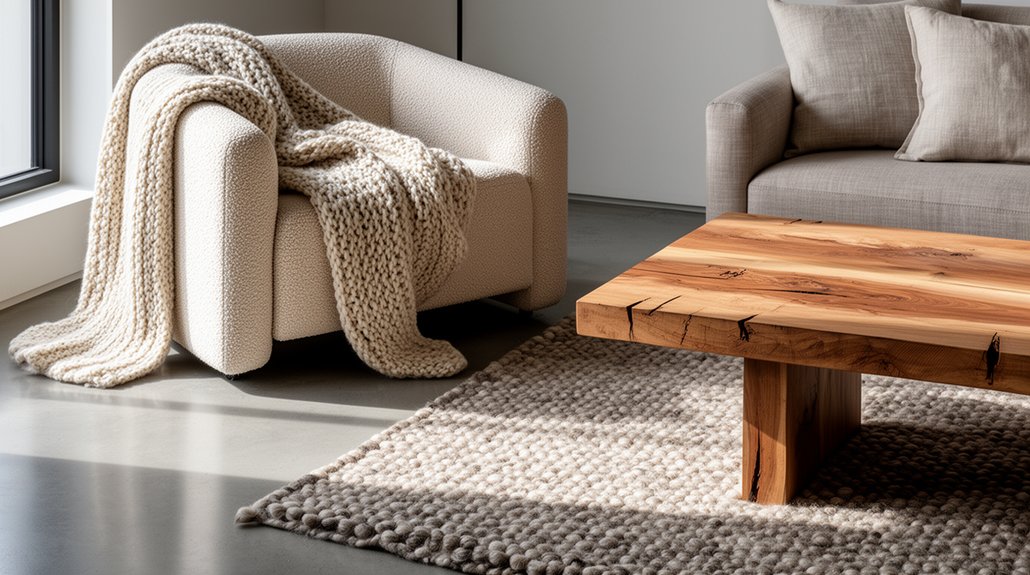
Start with one bouclé-and-raw-timber hero piece and give it breathing space, then keep the rest of the room calm with chalk, oat, stone, or mushroom tones. Match undertones: creamy bouclé suits warm oak, while white/grey bouclé works with ash or pale walnut. Choose rift- or quarter-sawn timber and seal it with a matte hardwax oil to cut glare. Balance bouclé with clean-lined furniture and smooth linen, wool, jute, or cotton accents. Keep going for finer texture repeats and common pitfalls.
Key Takeaways
- Start with one hero bouclé-and-timber piece, giving it breathing room so the textures read intentional, not cluttered.
- Keep a tight neutral palette (chalk, oat, stone) and match wood undertones to bouclé temperature for a cohesive, calm base.
- Limit dominant textures to two: one bouclé element and one raw timber element, with smoother supporting fabrics to balance tactility.
- Choose minimal, clean-lined furniture and restrained timber grain, using matte finishes like hardwax oil to reduce glare and fingerprints.
- Control contrast with a few dark accents and consistent lighting temperature, testing samples in-room to avoid unwanted warm/cool clashes.
Start With One Bouclé + Raw Timber “Hero” Piece
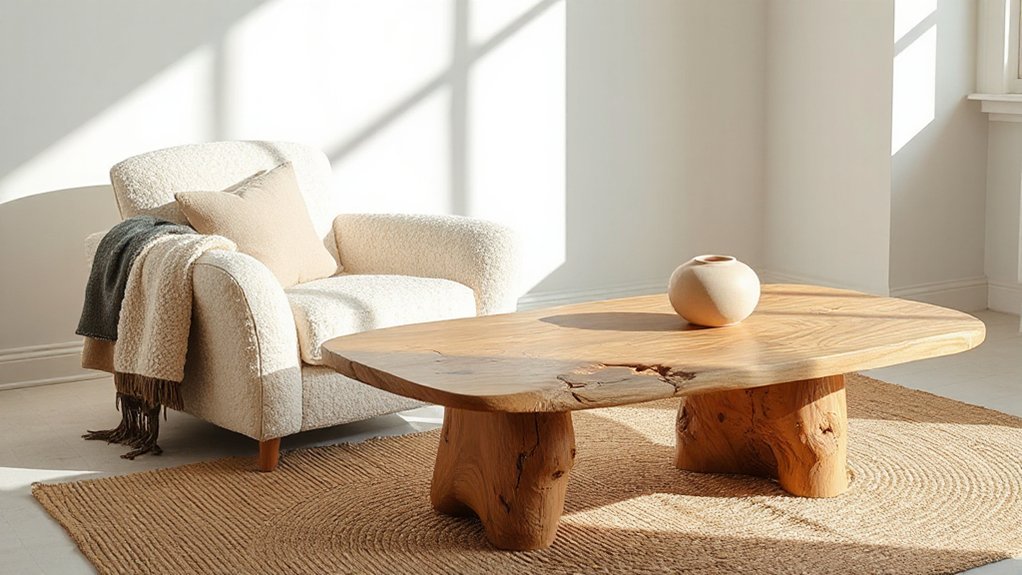
If you want the pairing to feel intentional rather than themed, start with a single bouclé-and-raw-timber hero piece that sets the tone for the whole room. Choose one anchor: a bouclé armchair with an unfinished oak frame, or a raw-timber bench topped with a bouclé cushion. Place it where it naturally draws the eye, then give it breathing space so the textures read clearly. Check proportions: chunky bouclé suits substantial grain; finer loops work with slimmer, cleaner timber lines for Textural harmony. Prioritise Material durability by specifying hardwearing bouclé (high rub count) and sealed timber edges that resist knocks and staining. Once that hero works, you can layer secondary pieces without losing focus elsewhere.
Pick a Calm Color Palette for Bouclé and Timber
Once you’ve chosen your hero piece, lock in a calm palette so the bouclé reads soft and the raw timber stays grounded rather than busy. Start with warm neutrals—chalk, oat, mushroom, stone—then repeat them across walls, rugs, and soft furnishings to build Color harmony.
Keep timber tones consistent: either lean honey and oak, or go cooler with ash and pale walnut, but don’t mix too many undertones. Use one darker anchor (charcoal, espresso, deep olive) in small doses for definition. Let Texture variation do the heavy lifting: pair matte paint with nubby bouclé, and balance with linen, brushed cotton, or a flatweave. If you add colour, choose muted shades—sage, clay, slate—and limit them to two accents max.
Use Clean-Lined Furniture to Balance Bouclé Texture
Although bouclé brings instant warmth and depth, it can quickly dominate a scheme unless you counter it with clean-lined furniture. Choose a sofa or armchair with straight arms, a tight silhouette, and slim legs to give the eye a break from the nubbly surface. Keep profiles low and proportions disciplined, so the texture reads intentional rather than messy.
Anchor the room with rectilinear pieces: a pared-back sideboard, a square coffee table, or a simple bench. Stick to crisp edges, flush fronts, and minimal hardware to support a Minimalist aesthetic. Then let bouclé act as the hero on one key item, not every seat. Repeat one smooth finish elsewhere—lacquer, glass, or powder-coated metal—to create Organic harmony without diluting the tactile contrast you want.
Choose Raw Timber Grain, Cut, and Finish (Matte Wins)
When you pair bouclé with timber, choose wood that shows honest grain and a restrained finish so the contrast feels deliberate. Prioritise grain selection that reads as natural, not busy, and pick a cut that supports the room’s lines. Aim for straight grain or subtle cathedrals on larger surfaces, and keep wilder figuring for small accents. Specify a matte finish: it reduces glare, hides fingerprints, and lets bouclé stay the tactile hero. Avoid heavy stain, high gloss lacquer, and thick varnish that looks plastic.
- Choose quarter-sawn boards for calm, linear patterning
- Use rift-sawn for consistent grain on legs and rails
- Keep knots minimal on tabletops to prevent visual noise
- Ask for a brushed or wire-brushed texture for grip
- Seal with hardwax oil in matte finish for durability
Mix Raw Timber Tones (Light, Medium, Dark) on Purpose
If you mix light, medium, and dark raw timbers with intent, the room reads layered rather than mismatched. Start by picking one dominant tone (often medium oak) for your largest piece, then use a lighter timber to lift the scheme and a darker one to ground it. Keep undertones consistent: warm with warm, cool with cool, and treat anything reddish as its own family. For Color pairing, echo each timber tone in small accents—handles, frames, or a tray—so nothing feels random. Use furniture placement to control contrast: put darker timber low (coffee table, sideboard base) and lighter timber higher (shelves, stools). Leave breathing space between similar tones to avoid a “matchy” run. Use a matt sealant for cohesion.
Layer Linen, Wool, Jute, and Cotton Around Bouclé
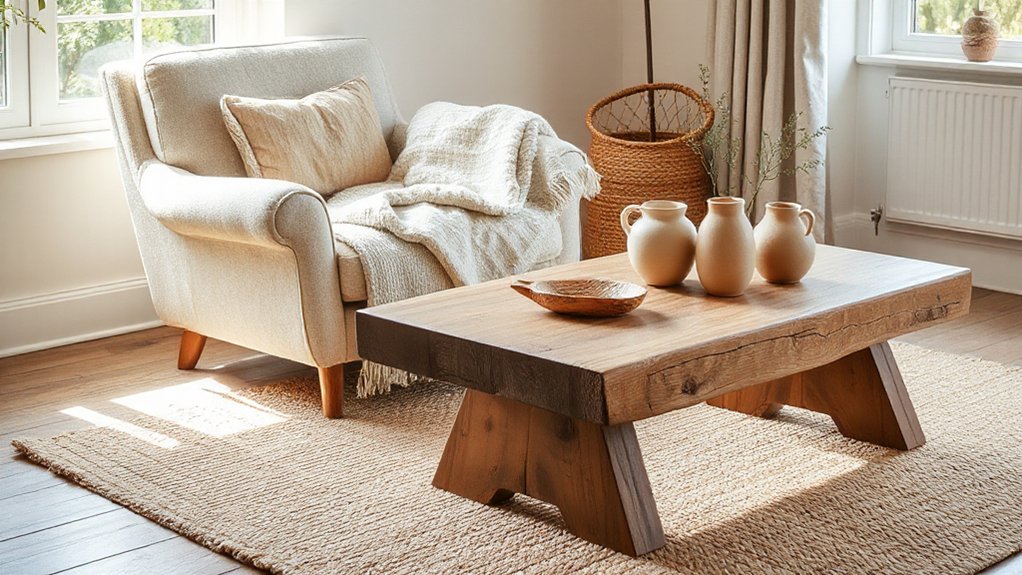
Because bouclé already brings a dense, nubby surface, you’ll get a more considered look by layering cleaner, flatter textiles around it: crisp linen for breathability, cotton for everyday softness, wool for warmth and structure, and jute for a dry, grounded note. Start with Linen layering: add a plain-weave linen cushion beside the bouclé, then repeat it on a relaxed curtain to calm the texture. Use cotton as the workhorse—percale or canvas—so the scheme feels lived-in, not precious. Bring in Wool accents with a fine-knit throw or tailored blanket; keep the gauge tight so it supports bouclé rather than competing.
- Mix one smooth, one textured item per seat
- Keep tones within one warm/cool family
- Use jute in a rug or basket for grit
- Add cotton covers for easy washing
- Repeat each fibre twice for cohesion
Add Contrast With Black Metal, Stone, or Leather
Although bouclé reads warm and tactile, you’ll sharpen the whole scheme by introducing one hard-edged counterpoint—black metal for crisp outlines, stone for cool weight, or leather for a smoother, darker surface. Use black metal frames on side tables, shelving, or a floor lamp to add Industrial accents without clutter. Keep the profile slim so the bouclé stays dominant, and choose matte or satin Metallic finishes to avoid glare. Bring in stone through a coffee table top, plinth, or hearth surround; its veining adds quiet movement while staying restrained. If you prefer leather, pick a mid-to-dark tone on a chair, bench, or handles for instant depth. Limit yourself to one contrast material per zone for a clean, intentional look.
Repeat Bouclé and Timber in Small Accents
Repeat the main materials in small doses so the scheme feels intentional, not one-off. Add bouclé accent touchpoints—cushions, a footstool, or a lampshade—and place them where you’ll actually sit and lean. Echo raw timber through micro-details like picture frames, tray edges, or cabinet pulls to keep the texture story consistent across the room.
Bouclé Accent Touchpoints
- Add a bouclé lumbar cushion on a plain sofa for a crisp contrast.
- Choose a bouclé footstool that tucks under a console when not in use.
- Wrap dining chair seats in bouclé to soften hard surfaces.
- Place a bouclé runner on a bench to prevent slipping.
- Introduce a bouclé lampshade to warm evening light without bulk.
Timber Micro-Details
Once you’ve introduced bouclé and raw timber in the key pieces, echo them in micro-details to keep the scheme cohesive without adding visual weight. Swap standard pulls for oak or ash knobs, and choose a raw-edged timber tray on the coffee table. Add bouclé in a small lumbar cushion, a lampshade wrap, or chair glides on a reading nook stool.
Keep the repeats tight: limit timber accents to two tones, and match undertones to your main joinery for material harmony. Use bouclé sparingly where hands land—armrests, bench pads, footstools—so it reads intentional, not scattered. Balance textural contrast by pairing one soft bouclé element with one crisp timber detail per zone. Finish with matte hardware and natural oils, avoiding high-gloss that breaks the tactile story.
Avoid These Bouclé + Raw Timber Styling Mistakes
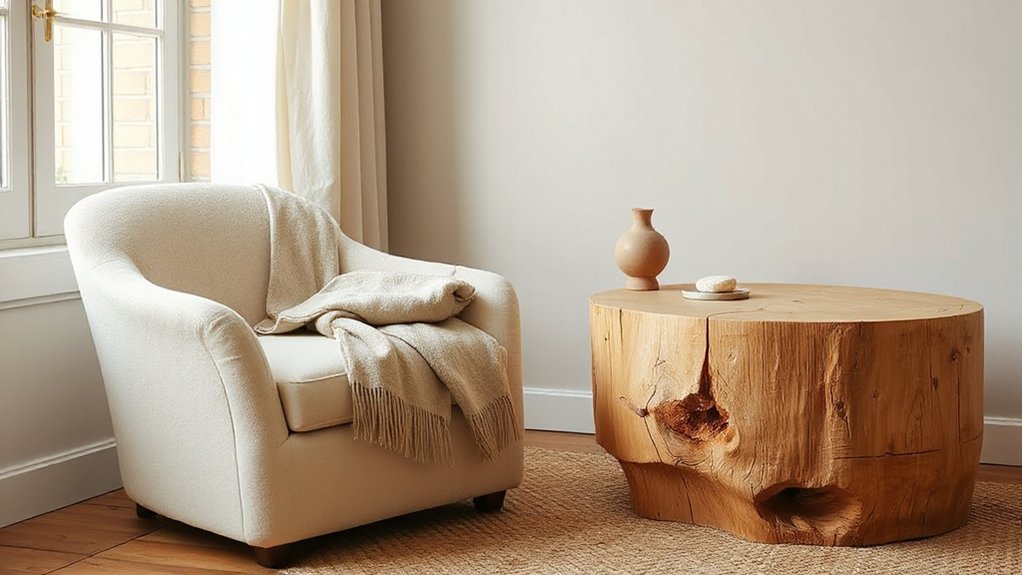
When you pair bouclé with raw timber, don’t push the contrast so far that the room feels fussy or unsettled. Keep the texture mix intentional by balancing nubby upholstery with smoother timber or simple accessories, not competing finishes everywhere. You also need to match colour temperature—warm oak and creamy bouclé sit naturally together, while cool ash and bright white can look stark unless you bridge them with a considered palette.
Overdoing Texture Contrast
Although bouclé and raw timber make a compelling duo, you’ll spoil the effect if you push the contrast too far. If every surface shouts—nubby upholstery against heavily grained slabs, plus chunky weaves and rough ceramics—you’ll create visual dissonance instead of depth. Aim for controlled variation so the room doesn’t swing between textural monotony and chaos.
- Limit “hero” textures to two: bouclé and one raw timber piece
- Keep supporting fabrics smooth (cotton, linen, leather)
- Choose one rugged element; keep the rest lightly finished
- Repeat a small texture elsewhere (a looped cushion, a timber tray)
- Add breathing space with plain walls and simple silhouettes
You’ll get a layered look that feels intentional, not overworked.
Ignoring Color Temperature
If you ignore colour temperature, bouclé and raw timber can look mismatched rather than layered. Bouclé often reads cool or neutral; raw timber can skew warm, pink, or golden. You’ll get a cleaner result by choosing one dominant direction and keeping the rest consistent. Pair creamy, oatmeal bouclé with oak, ash, or pine that has a similar warmth; match crisp white or grey bouclé with paler, less yellow timbers. Check undertones against a white card before you commit. Don’t forget lighting effects: warm bulbs amplify yellow timber, while daylight can flatten warmth and push fabrics blue. Use consistent lamp temperatures (2700K or 3000K) and test samples in situ. That’s how you build temperature harmony without repainting.
Frequently Asked Questions
Is Bouclé Pet-Friendly, and How Do You Remove Trapped Hair?
Bouclé can be pet-friendly, but it traps hair; you’ll need regular Pet hair removal. Use a rubber brush or vacuum upholstery tool weekly. For Bouclé cleaning tips, mist lightly, blot, then lint-roll. Avoid snagging.
How Do You Clean Bouclé Without Damaging the Loops or Matting?
You’ll clean bouclé by vacuuming gently with a soft brush, blotting spills (don’t rub), using cool water and mild detergent, then air-drying and fluffing loops. For Bouclé maintenance, avoid heat; Raw timber sealing prevents stains.
What Humidity Levels Prevent Raw Timber From Warping or Cracking Indoors?
You’ll prevent indoor raw timber warping or cracking by keeping relative humidity around 40–60%, ideally 45–55%. Use Humidity control: a hygrometer, dehumidifier or humidifier. Maintain steady temperatures, guarantee airflow, aiding Timber preservation.
How Can You Tell Solid Wood From Veneer When Buying Furniture?
You’ll spot solid wood by reading Wood grain like a map: it runs through edges and joints. For Veneer identification, check banding seams, mismatched end grain, and hollow sounds; weight and screw holes also reveal.
Are Bouclé and Raw Timber Suitable for High-Traffic Commercial Spaces?
Yes, you can use bouclé and raw timber in high-traffic commercial spaces, but you’ll manage Durability concerns with tight weaves, stain protection, and robust finishes. You’ll gain Aesthetic versatility across lobbies, cafés, and offices.
Conclusion
Layer bouclé and raw timber like you’re guiding two old friends through a forest: one softens the path, the other marks the way. Start with a hero piece, keep your palette calm, and let clean lines hold the scene together. Choose matte timber, mix tones deliberately, and cushion bouclé with linen, wool, jute, and cotton. Add black metal or stone for bite, repeat textures in accents, and don’t overcrowd the room.
About the Author