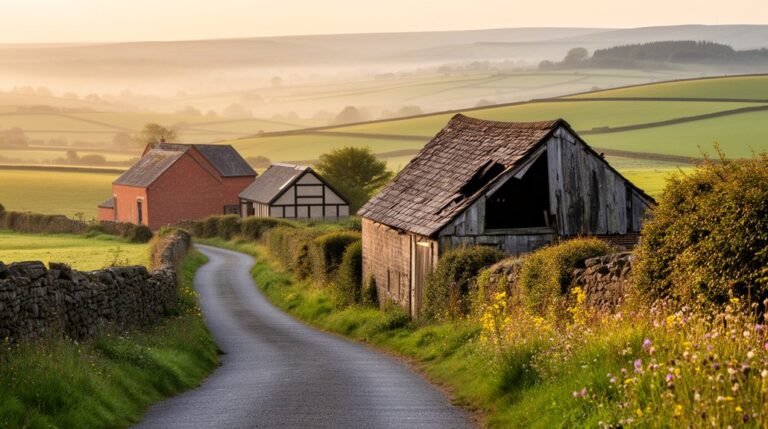
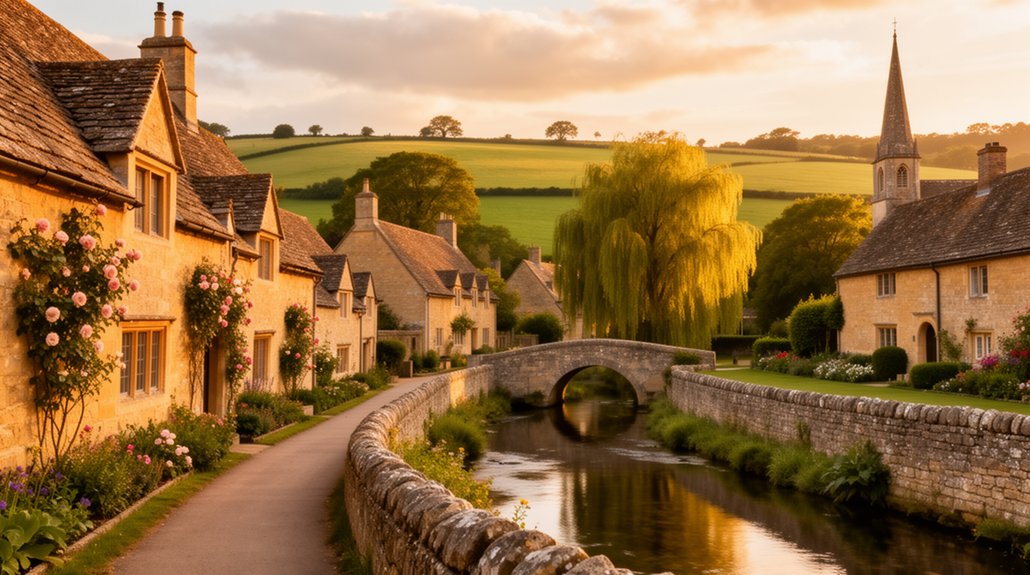
For quiet retirement in the Cotswolds, you’ll do best in villages with low through-traffic, thick honey-stone cottages, hedgerow-buffered lanes, and dark skies that keep nights genuinely calm. Put Blockley, Naunton, Guiting Power, Cold Aston, and Kineton on your list for birdsong mornings, walkable routines, and community pubs without the coach-bay bustle. Check midweek and peak-season noise, then match amenities to your car-free needs. Keep going to see how to shortlist fast.
Key Takeaways
- Choose villages with low through-traffic, no late-night venues, and sound-buffering stone walls, hedgerows, and footpaths for consistent calm.
- Prioritise liveable essentials nearby: a shop, pub/café, GP or easy access to one, plus reliable links to stations like Moreton-in-Marsh.
- Avoid tourist “honey-pots” with coach bays, big car parks, gift shops, and heavy signage; these typically bring noise and congestion.
- Visit midweek and in peak season; listen for traffic, bells, and pub noise, and test walking routes for gradients, stiles, benches, and winter conditions.
- Consider quieter Cotswolds options such as Blockley, Snowshill, Stanton, Guiting Power, or Naunton for tranquil lanes and strong community feel.
What Makes a Cotswolds Village Feel Quiet in Retirement?
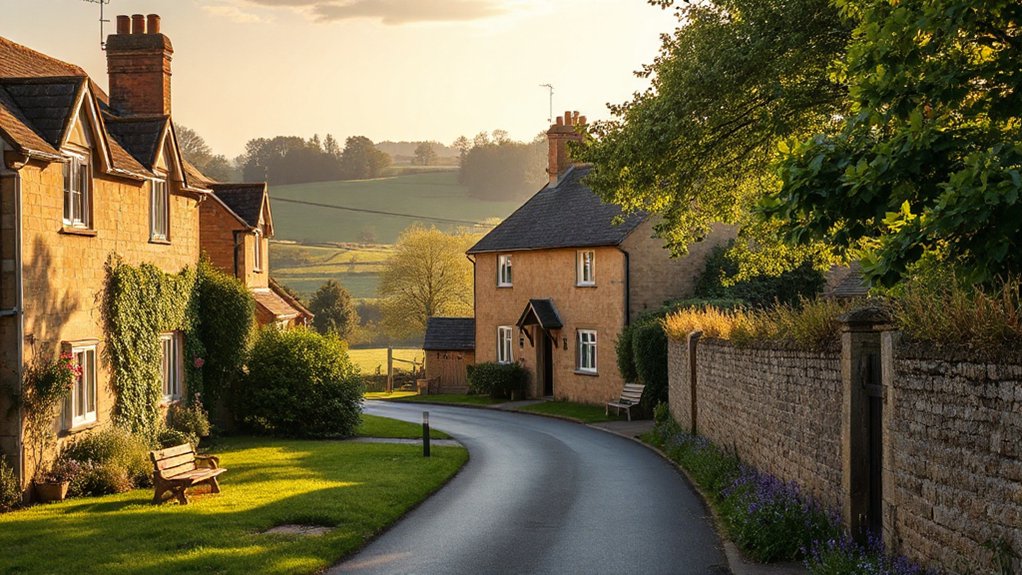
Although the Cotswolds is often marketed as “peaceful,” a village only feels genuinely quiet in retirement when its daily rhythm stays low-impact: minimal through‑traffic, no late-night venues, and a street layout that keeps cars moving slowly. You’ll notice it in the acoustics: thick stone walls, planted verges, and small greens that absorb sound rather than bounce it.
You feel calmer when boundaries are legible—hedges, dry-stone walls, and clear footpaths that separate walkers from vehicles. You’ll also read quiet in the landscape: Local wildlife thrives where lighting stays warm and discreet, and where lanes stay dark enough for owls and bats. Even Village festivals can stay low-noise when they’re daytime-led, sited on the green, and designed for strolling, not partying.
Which Amenities Matter Most in Quiet Cotswolds Villages?
Where do you feel the difference between “pretty” and genuinely liveable, quiet retirement? You feel it in amenities that keep life effortless, not busy. In the Cotswolds, the right village reads like good design: walkable, resilient, and calm, with services tucked behind honey-stone frontages and smart opening hours.
- A proper village shop and post office: daily essentials, friendly names, no long drives.
- A GP practice and pharmacy access: reassurance you’ll use, not just hope for.
- A warm pub and daytime café: sociable without pressure; you choose your pace.
- Local festivals and Community events: seasonal rhythm, low-stakes connection, a sense of belonging year-round.
How Do You Avoid Tourist Hotspots in the Cotswolds?
If you want a quiet Cotswolds retirement that stays quiet, you’ve got to choose villages the day-trippers don’t “do” in a loop. Skip honey-pot names and look for places without coach bays, big car parks, or rows of gift shops. Scan maps for single-road access, limited public loos, and no “Instagram bridge” nearby—these design cues shape footfall.
Time your scouting like a local: visit midweek, then again during peak seasonal tourism, and compare noise, parking churn, and café queues. Follow public footpaths at dawn to test peace levels and spot Local wildlife—owls, deer, and kingfishers don’t settle near constant traffic. Finally, pick edges: hamlets just off main routes, with discreet pubs and low-signage high streets.
What Do Quiet Cotswolds Villages Cost to Live In?
You’ll feel the price shift as soon as you swap honey-stone high streets for quieter lanes: typical home values still sit at a premium, but the spread widens by village and street. You’ll want to map your monthly living expenses—groceries, transport, and healthcare access—against the pace of rural life you’re buying. Then you’ll sanity-check council tax bands and utilities, where older cottages can mean higher heating bills unless you budget for upgrades.
Typical Home Prices
So, what do quiet Cotswolds villages actually cost when you start house-hunting in earnest? Expect £450k–£650k for a two-bedroom stone cottage, £700k–£1.1m for a three-bed with a garden, and £1.2m+ for immaculate family homes near golden-stone lanes. Prices jump for Historic architecture—original mullion windows, flagstone floors, and listed façades—especially where you can stroll to pubs that champion Local cuisine. You’ll pay a premium for south-facing plots, parking, and turnkey finishes; you’ll save by choosing edge-of-village addresses or homes needing sensitive upgrades.
- You picture morning light on honey limestone—then see the guide price.
- You fall for a walled garden—bids climb fast.
- You crave quiet lanes—availability tightens.
- You want “move-in ready”—competition turns fierce.
Monthly Living Expenses
How much does it really cost to settle into a quiet Cotswolds village once the keys are in your hand? Your monthly spend hinges on how you live: grocery choices, dining habits, transport, and how often you lean on local services. A smart Cost comparison starts with food and mobility—village shops carry a premium, while weekly market runs in nearby towns can trim your bill. If you keep a car, factor fuel, servicing, and parking when you venture to Cheltenham or Oxford for culture and clinics. Prefer walkable living? You’ll spend less getting around but more on curated local produce and cafés. Lifestyle adjustments—batch cooking, fewer long drives, and off-peak memberships—keep costs predictable while preserving that calm, design-led rhythm.
Council Tax And Utilities
While the lanes stay hushed, your fixed costs don’t: council tax and utilities set the baseline for what quiet Cotswolds living really runs each month. Local taxation varies by district and band, so a character cottage can cost more than a newer edge-of-village home—check the band before you fall for the facade. Utilities shift with insulation, oil vs mains gas, and how far you are from reliable utility providers and fast broadband.
- You’ll feel steadier when you budget council tax as a non-negotiable monthly line.
- You’ll sleep better after an EPC check confirms warmth without waste.
- You’ll breathe easier knowing who supplies water, waste, and electricity locally.
- You’ll enjoy winter more if you price oil deliveries before the first frost.
Blockley: Quiet Lanes Near Moreton-in-Marsh
In Blockley, you’ll trade traffic for peaceful back lanes framed by honey-stone cottages and soft, wooded edges. You can keep your day-to-day calm while staying minutes from Moreton-in-Marsh for the station, supermarkets, and quick London links. It’s the kind of village where your morning walk feels private, yet your errands stay efficient.
Peaceful Back Lanes
If you want Cotswolds calm without feeling cut off, Blockley’s back lanes deliver it: a tight network of hedged, low-traffic routes that let you walk or cycle straight from honey-stone cottages into open countryside, then slip back to a village high street with everyday essentials.
You’ll notice thoughtful details: soft verges for dogs, dry-stone boundaries that frame views, and gentle gradients that suit daily strolls. Morning light hits the limestone like a design brief—warm, flattering, unforced. Between lanes, you can dip into rural arts studios and browse local markets without turning the day into a project.
- Hear birdsong instead of engines.
- Find bench pauses with big-sky views.
- Take safe, sociable loops after supper.
- Feel grounded, every day, quietly.`
Moreton-in-Marsh Access
Blockley’s quiet lanes set the pace, but Moreton-in-Marsh keeps you connected: you can be at the station in minutes for direct trains to Oxford and London, with buses and taxis making the short hop easy when you don’t want to drive. You’ll plan days with a designer’s eye for flow—morning coffee in the village, afternoon appointments in town, and home again before the lanes fill. Parking and pick-up points feel practical, not stressful, and the route stays scenic with Local wildlife in the hedgerows and meadows. When you want culture without crowds, Moreton’s calendar syncs neatly with Blockley’s traditional festivals, so you can dip in, then retreat to calm. It’s connectivity without compromise, year-round.
Snowshill: Tiny Village, Very Low Footfall
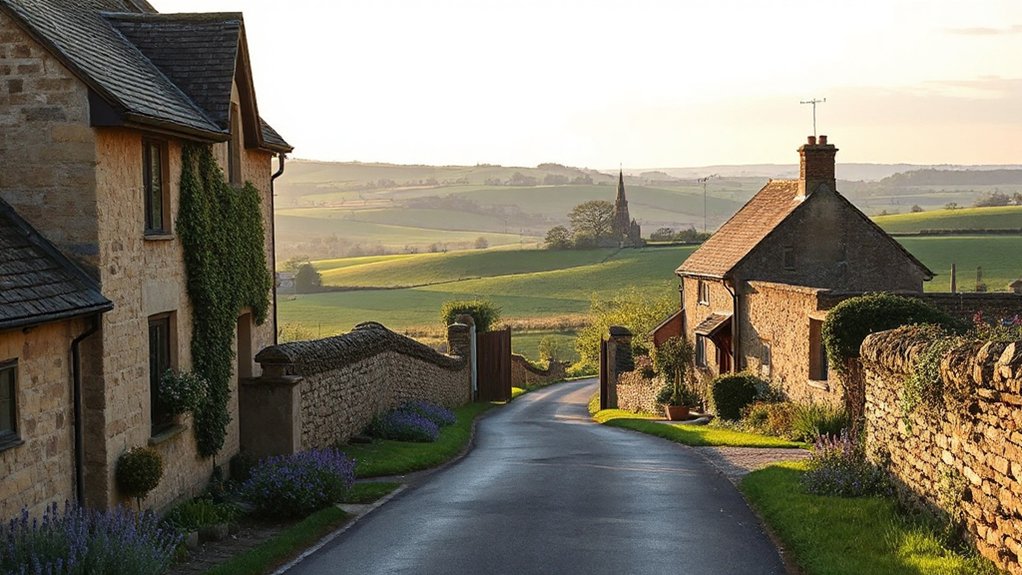
Although it sits just minutes from the better-known Cotswold circuit, Snowshill feels deliberately tucked away—a tiny ridge-top village where low footfall isn’t a drawback but a design feature. You’ll notice it in the softened soundscape: hedgerows buffering lanes, honey-stone cottages set back behind clipped yews, and a village rhythm that doesn’t perform for passers-by. Retiring here means trading buzz for intentional calm, while still feeling curated, not cut off.
- You step out to birdsong, not engines.
- You buy seasonal stems, eggs, and small-batch bakes without queues.
- You join Village festivals that feel intimate, never crowded.
- You collect local crafts with provenance, not souvenirs.
Stanton: Classic Cotswolds Calm, Minimal Traffic
Set just off the main Cotswold routes, Stanton delivers that postcard-grade calm without the constant through-traffic. You’ll notice it in the soundscape: birds, distant church bells, and the soft crunch of gravel rather than engines. The village streetscape feels curated—honey-stone cottages, clipped verges, and generous sightlines that keep everything visually tidy.
For retirement living, you get a low-friction routine: easy parking, minimal road noise, and lanes that stay civil even in peak season. You can dip into Village festivals without signing up for crowds, then browse local crafts that lean authentic, not touristy. Homes here reward buyers who value proportion, natural light, and outdoor rooms—courtyards, walled gardens, and terraces that feel private. It’s calm you can actually live in.
Guiting Power: Open Views and Easy Walking
If you want Cotswolds breathing space without feeling remote, Guiting Power lands the brief with broad valley views and a village layout that stays walkable. You’ll step out to honey-stone lanes, low hedgebanks, and long sightlines that make daily loops feel expansive, not effortful. The pace suits retirement: gentle gradients, clear footpaths, and quick access to open countryside without driving.
- Watch light move across the vale from a bench and feel your shoulders drop.
- Build Birdwatching opportunities into your morning route—skylarks, red kites, owls.
- Let Local wildlife sightings punctuate errands: hares in fields, deer at dusk.
- Choose a cottage with a south-facing garden and design your days around it.
Naunton: Riverside Peace With a Village Pub
In Naunton, you can trade big skies for the soft soundtrack of the River Windrush, with gentle paths that keep your daily walk effortless and scenic. You’ll like how the village layout stays compact and legible—stone cottages, neat verges, and footbridges that make the riverside feel stitched into everyday life. When you want a sociable finish, you’ve got The Black Horse pub: a warm, local hub where a pint and a plate turn an ordinary afternoon into a ritual.
Gentle River Windrush Walks
While the River Windrush threads quietly through Naunton’s stone cottages and low meadows, you can step straight into a gentle, level riverside walk that feels made for unhurried retirement days. You’ll follow soft grass paths and neat footbridges, with sightlines that stay open and calming—ideal if you value ease, safety, and simple daily rhythm. The route’s natural edges support Wildlife habitats, so you can linger without needing a “destination,” then settle on a sunny bend for riverbank picnics.
- Hear water hush under alder shade and let your shoulders drop.
- Watch wagtails skim the surface as dragonflies stitch blue light.
- Pause at wildflower verges where every season redraws the palette.
- Return home feeling quietly reset, not worn out by miles.
The Black Horse Pub
After you’ve drifted back from the Windrush footpaths, The Black Horse in Naunton gives your day a smart, low-effort anchor: a riverside village pub with polished Cotswold character, dependable service, and the kind of warm, settled atmosphere that suits retirement pacing. You’ll notice the design details—stone floors, soft lighting, well-spaced tables—so you can talk without competing with noise. Settle by the window and watch the water move while staff keep things brisk, not rushed. It works as your reliable local pub for weeknight suppers, Sunday roasts, or a quick pint after errands. You’ll also tap into community events that make Naunton feel stitched together: quizzes, seasonal gatherings, and charity nights. It’s sociable on your terms, never pushy. Always welcoming.
Cold Aston: Wide Skies and a Close Community
If you want the Cotswolds at its most open and unhurried, Cold Aston delivers wide skies, long sightlines, and a village rhythm that feels quietly confident. You’ll wake to clean horizons, limestone cottages with pared-back charm, and lanes that invite slow, steady walks. Life here feels curated without being precious: neighbours notice you, but they don’t crowd you.
- You’ll feel grounded by a close-knit parish, from coffee mornings to practical check-ins.
- You’ll stay inspired by Wildlife Conservation efforts that keep verges, hedgerows, and songbirds thriving.
- You’ll connect through Local Festivals that bring warm light, shared tables, and familiar faces.
- You’ll relax knowing the setting’s simple, elegant, and built for calm, day after day.
Kineton: Rural Quiet Within Reach of Stow
In Kineton, you get a calm, low-traffic village rhythm where stone cottages, tidy verges, and dark-sky evenings set the tone. You’ll still reach Stow-on-the-Wold quickly for markets, cafés, and day-to-day errands without sacrificing quiet at home. It’s a clean, practical balance: rural peace with a town centre close enough to use often.
Peaceful Village Atmosphere
How do you find true Cotswold quiet without feeling cut off? In Kineton, you’ll wake to birdsong and soft lane traffic, then step into honey-stone streets that feel curated, not staged. Gardens stay tidy, hedgerows frame long views, and neighbours keep the tone gentle.
- Settle into a fireside pub where local cuisine is seasonal, plated simply, and meant to linger over.
- Trace footpaths that stitch fields to village greens, giving you daily calm without planning.
- Pause by historical landmarks—old chapels, weathered stone walls, timeworn milestones—that anchor your days.
- End evenings with low-light skies, minimal noise, and a sense your pace finally fits.
You’ll feel protected by the landscape, not penned in.
Quick Access To Stow
Although Kineton feels tucked into the folds of the countryside, you’re never far from Stow-on-the-Wold’s weekly market energy, independent shops, and smart cafés—close enough for a quick errand run or lunch out, yet distant enough that the village stays calm when you return. You’ll hop in the car and be on the square in minutes, timing trips to avoid peak coach hours and parking near the Market Cross for easy level walking. When friends visit, you can plan a neat circuit: deli staples, gallery browsing, then a late coffee with a view. Stow’s calendar keeps life textured too—Local festivals, pop-up antiques, and workshops in Traditional crafts—so you can dip in, then retreat to Kineton’s quiet lanes.
Swinbrook: Low-Key Life Near Burford
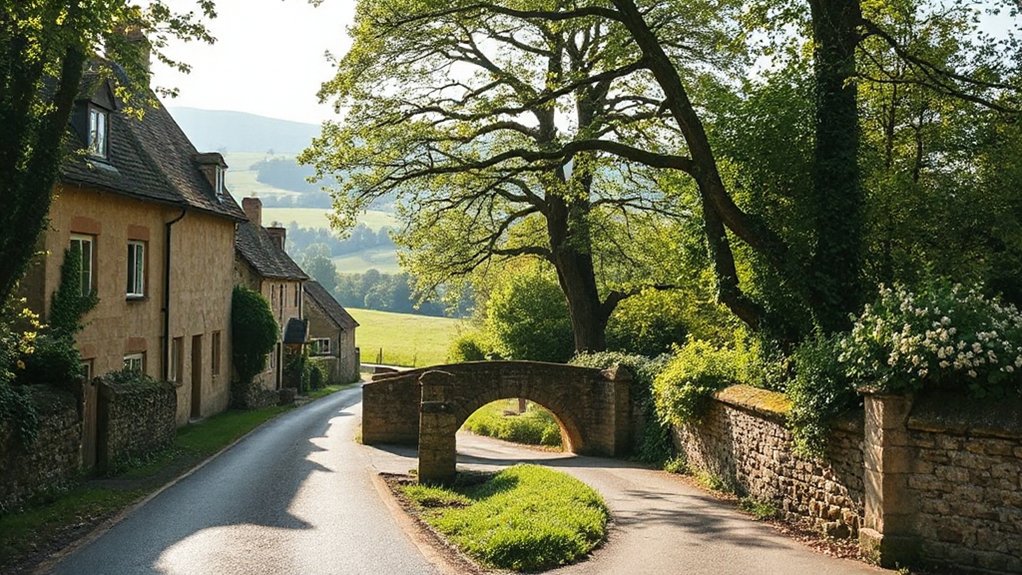
Set just a few minutes from Burford, Swinbrook gives you a quieter Cotswolds rhythm without losing easy access to shops, cafés, and practical services. You’ll trade bustle for honey-stone cottages, soft river meadows, and lanes that feel curated rather than crowded. Life here suits a design-minded retiree: clean village lines, restrained signage, and gardens that read like landscape plans. When you want community, you can dip into Village festivals and Local craft markets nearby, then come home to calm.
- Wake to birdsong and the River Windrush’s hush.
- Stroll to the church and feel time slow down.
- Choose a cottage with light, proportion, and privacy.
- End the day with a pint and a quieter sky.
Which Quiet Cotswolds Villages Work Without a Car?
Swinbrook’s calm works best when you can still step out for what you need, and that brings up the real retirement filter in the Cotswolds: can you live well without driving? You’ll want villages that pair quiet lanes with practical links, not postcard isolation.
Look to Bourton-on-the-Water, Stow-on-the-Wold, and Chipping Campden for walkable centres: pharmacy, GP access nearby, cafés, and weekly markets that keep daily errands compact. In Moreton-in-Marsh, the station turns Local transportation into a lifestyle—direct rail, reliable buses, and taxis that don’t feel like a splurge. Burford and Northleach suit you if you’ll trade rail for good bus routes and strong services. You’ll also find Community activities—book clubs, church fêtes, art groups—close enough to join on foot.
How to Shortlist the Best Village for You (5 Steps)
Once you’ve narrowed the Cotswolds to a handful of calm, connected places, you need a shortlist process that treats your retirement home like a long-term design brief—quiet, yes, but also workable day to day. Start by mapping your non-negotiables, then test each village like you’d test a floorplan: flow, light, access, and daily friction. Use sold-price trends and rental demand to sense long-term value, not hype.
- Walk it at 8am and 8pm; listen for traffic, pubs, and church bells.
- Time essentials: GP, pharmacy, groceries, bus stops—no wishful thinking.
- Audit community fit: clubs, volunteering, and the feel of a retirement community.
- Do a “scenic walking” loop; notice gradients, stiles, benches, and winter mud.
Frequently Asked Questions
What Are the Best GP and Dental Registration Options for New Residents?
You’ll register with a local NHS GP surgery online or in person; confirm catchment, ID, and proof of address. For dental, join NHS waiting lists or choose private with Health insurance. Know nearby Emergency services.
How Reliable Is Home Broadband and Mobile Signal in Quieter Villages?
Like a well-cut suit, it’s usually dependable but varies by lane. You’ll get solid Digital connectivity on fibre routes; elsewhere, copper slows. Check Signal strength per network, test indoors, and consider boosters or satellite.
Are There Flood Risks Near Rivers and How Can Retirees Check?
Yes—homes near rivers can face River flood risks. You’ll run a flood risk assessment by checking the Environment Agency map, past claims, and local history; you’ll also ask solicitors for searches before buying.
What Local Volunteer Groups and Clubs Help Newcomers Make Friends?
You’ll connect fast through Community events, local meetups, Women’s Institute, U3A, Rotary, church socials, walking and gardening clubs, arts workshops, and parish volunteering. Ask the village hall noticeboard and Facebook groups for curated listings.
How Do Council Tax Bands and Service Charges Vary Between Villages?
Before you spot it on the listing, bands shift by property valuation, so villages with pricier stock push you up. Service charges rise with managed estates. You’ll find tax incentive schemes vary by district—and timing matters.
Conclusion
If you’re craving a quieter Cotswolds retirement, you’ll find it by balancing hush with everyday ease. Choose villages like Blockley, Kineton, or Swinbrook for calmer lanes, softer footfall, and a more local rhythm—without losing access to shops, healthcare, and rail links. Watch pricing street by street, and treat parking, light levels, and walkability like design features, not afterthoughts. After all, isn’t peace the ultimate luxury you’re buying?
About the Author