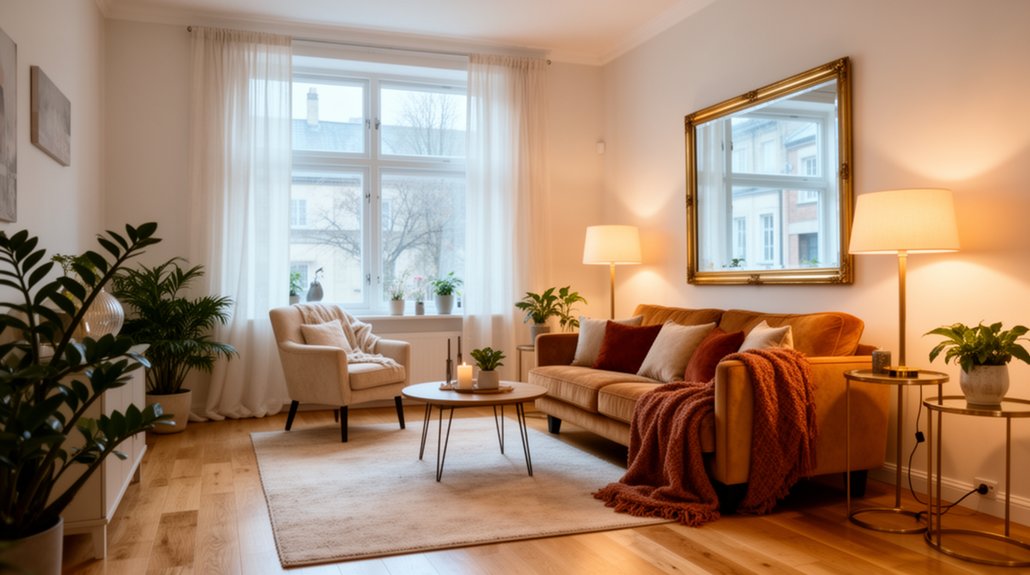
In a UK north-facing room, you’ll fight cool, blue skylight by choosing creamy warm whites or soft greige, blush, and buttery tones, and avoiding icy blues, cool greys, and stark whites that turn flat. Test big swatches on different walls throughout the day. Layer lighting with dimmable ceiling, table, and floor lamps using matching 2700K–3000K bulbs (CRI 90+). Add warm woods, woven textures, light-reflective finishes, and a bright rug—there’s more ahead.
Key Takeaways
- Choose warm, creamy paint tones (oat, biscuit, taupe, greige) to counter cool north light and avoid icy whites or blues.
- Test large paint swatches on multiple walls at different times, comparing to white paper to spot undertones and shadow shifts.
- Layer lighting with dimmable ambient, task, and accent lamps using consistent 2700K–3000K bulbs for an even, cozy glow.
- Maximize daylight with minimal sheer window treatments and mirrors placed opposite or beside windows to bounce light deeper into the room.
- Add warmth through honeyed woods, woven textures, and plush rugs/throws in rust, caramel, or ochre to restore depth and coziness.
Why Does North-Facing Light Look Cooler?
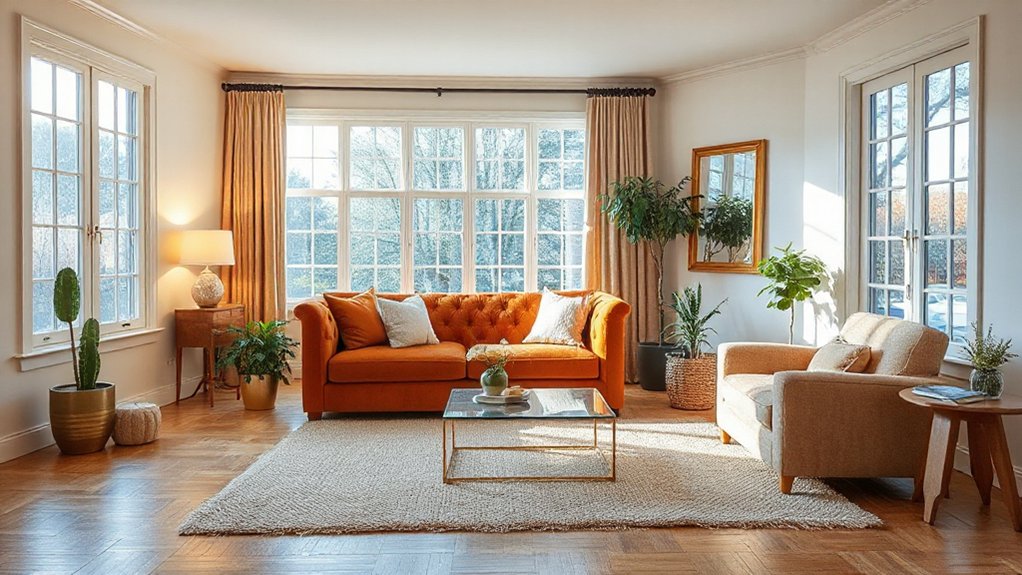
Because a north-facing window in the UK never gets direct sun, the room is lit mostly by reflected skylight, which has a bluer, cooler cast. You’re seeing north light that’s dominated by shorter wavelengths, so whites can read grey and skin tones can look slightly flat.
You’ll notice the effect more on overcast days, common in much of Britain, when the sky acts like a giant diffuser. That diffuse light raises the perceived color temperature compared with warm, low-angle sunlight from south or west aspects. It also reduces contrast, so textures and paint undertones show up differently: blue, green, and cool grey pigments jump forward, while creams and beiges can look dull. If your window faces a shaded garden or tall neighbouring houses, the cool bias increases further.
Three Fast Ways to Warm the Room Up
North light can leave your whites looking a bit grey and your neutrals feeling flat, especially on those bright-overcast UK days. First, layer your lighting: swap to 2700K warm LEDs, add a table lamp at eye level, and bounce light with a mirror opposite the window to lift mid-tones fast.
Second, use window treatments that soften and warm: hang curtains high and wide, choose lined linen or a pale oatmeal, and add a voile for daytime diffusion without losing privacy on a street-facing sash.
Third, lean on color psychology with quick textiles: rust cushions, ochre throws, and a terracotta rug signal warmth even under cool daylight. Keep metal accents to brass, and you’ll feel the difference immediately.
Choose a Warm White for North Light
North-facing light in the UK often reads cool, so you’ll notice grey, blue, or green undertones in many “white” paints. Choose a creamy warm white with a soft yellow or beige base to counter that chill without turning the room murky. Test large swatches on a few walls and check them morning, afternoon, and under your lamps in the evening before you commit.
Understand North Light Undertones
While the daylight in a north-facing room stays fairly consistent, it often reads cooler and can pull grey, blue, or green undertones from paint. Before you commit to any “warm” white, do an Undertone analysis in your actual space, not under shop lighting. Paint large test patches on two walls (one near the window, one opposite), then check them morning, midday, and after sunset with your lamps on. This shows the Light color influence: the same white can look crisp by the glass but murky in the back of the room. Compare against a true white sheet of paper to spot hidden tints. Also factor in your flooring, brick, and soft furnishings, as they’ll bounce colour back onto the walls too.
Pick Creamy Warm Whites
Because cool daylight can make “clean” whites look stark or slightly grey, you’ll usually get a more welcoming result by choosing a creamy warm white with a subtle yellow, beige, or pink base. Look for Creamy whites labelled “ivory”, “linen”, or “soft white”, and avoid anything described as “brilliant” or “pure”. In UK homes, pair that wall colour with warm neutrals like oat, biscuit, taupe, or a muted clay to keep the scheme cohesive. If your room has lots of blue-toned daylight, pick a white with a hint of pink to counter it; if it feels greenish, a beige-leaning white often steadies it. Match your trim and ceiling to the same family, just a shade lighter, so edges don’t read cold.
Test Paint Throughout Day
Once you’ve narrowed it down to a creamy warm white, test it on your actual walls before you commit, as north light can shift the same shade from cosy to muddy. For paint testing, put up A4 swatches on card (not straight on plaster), then move them around and live with them for a full day. You’ll make better choices with proper daylight observation than under a single ceiling fitting.
- Morning: check for grey/green cast near the window
- Midday: compare against white skirting and ceilings
- Late afternoon: watch warmth drop as light cools
- Evening: assess under your usual lamps (2700K warm bulbs)
- Next day: repeat on the darkest corner and chimney breast
Use tester pots from Dulux, Farrow & Ball, or Little Greene, and note undertones in photos.
Try Greige, Blush, or Buttery Wall Colors
If your north-facing room looks a bit flat or chilly, switch to a wall colour that adds gentle warmth without going murky. Greige works brilliantly in UK light because it balances beige warmth with grey softness, so your space still reads fresh.
For a subtle lift, try a blush tint with a beige base rather than a sugary pink; it reflects light and flatters skin tones in bedrooms and sitting rooms. Buttery off-whites (think cream with a yellow drop) brighten without feeling stark, especially with whitewood or oak. Build Color palettes around warm metals, natural linens, and camel or terracotta accents. For Mood enhancement, keep the ceiling a cleaner white and use the warm shade on walls and woodwork to wrap the room.
Avoid These Paint Shades in North Light
In north-facing rooms, you’ll want to steer clear of icy blues and greys because the cool daylight can make them read flat and chilly. Stark cool whites often turn dull and slightly blue, especially on overcast UK days, so they won’t feel crisp. Muddy yellow beiges can look drab and grubby in this light, so test a sample on a few walls before you commit.
Icy Blues And Grays
Although icy blues and cool greys look crisp on a sample card, north-facing light in UK homes tends to skew blue and flat, so those shades often turn harsh and chilly on the wall. If you’re set on Gray color schemes, you’ll need warmth elsewhere, or the room will read damp, like a winter morning.
- An ice-blue feature wall that shifts steely by mid-afternoon
- Pale grey paint that makes oak floors look ashy
- Blue-grey undertones that turn skin tones sallow in mirrors
- A cool slate sofa that feels heavy against low daylight
- Chrome and glass that amplify the cold cast
Instead, keep Ice blue accents to cushions, art, or ceramics, and choose greys with a subtle beige or taupe base for a softer look.
Stark Cool White Paints
A stark, cool white can look clean on a tester, but north-facing UK daylight drains its warmth and leaves you with a bluish, clinical finish that makes the whole room feel colder. In practice, cool white shades bounce the grey cast back at you, especially on plastered walls and ceilings, so the space reads flat rather than fresh.
Do proper paint undertone considerations before you commit: check the swatch against a true white sheet, then view it morning, midday, and under your actual bulbs. If it pulls blue, lilac, or green, it’ll feel harsher in north light. If you still want “white”, choose a soft off-white with a subtle warm or neutral undertone, and pair it with warm LED (2700–3000K) to keep it welcoming.
Muddy Yellow Beiges
Cool whites aren’t the only shades that misbehave in north-facing rooms; muddy yellow beiges can look just as wrong. In cool daylight they turn sallow, emphasise grey shadows, and make timber and cream fabrics appear tired. If you’re aiming for warm neutral palettes, skip anything that reads “custard” on a tester card and steer towards cleaner taupes, soft clay neutrals, or balanced greiges.
- A beige wall that shifts to nicotine yellow by 3pm
- Skirting and coving that look grubby against white satinwood
- Oak floors that suddenly seem orange and dated
- Cream sofas that take on a dingy, tea-stained cast
- Brass and oak accents that lose warmth, gaining a greenish tinge
Test samples on two walls for a full day, under your actual bulbs.
How to Test Paint Swatches in North Light
Because north light stays relatively consistent but can read grey and flat in the UK, you’ll want to test paint swatches in a way that mimics real life rather than relying on the shop card. Do your colour sampling on A4 lining paper or sample boards, not straight onto the wall, so you can move them.
Use proper paint application: two coats, with the same roller or brush you’ll use in the room, and let each coat dry fully. Place samples on the main wall, a side wall, and near the window reveal; north rooms shift with shadow. Check them morning, midday, and late afternoon, plus on an overcast day. Hold a white sheet next to each sample to judge undertones. Finally, view the colour beside your flooring and largest fabric.
Layer Lighting: Ambient, Task, and Accent
Even if you’ve nailed the paint colour, north-facing rooms can still feel dull unless you layer the lighting properly. Start with ambient light to lift the whole space, add task lighting where you work, then use accent light to create depth. This supports Color psychology: bright, even light makes cool-toned rooms feel calmer and more welcoming, while shadowy corners feel colder.
- Fit a central ceiling light on a dimmer for flexible ambient glow.
- Place a floor lamp beside the sofa to pool task light for reading.
- Add an adjustable desk lamp where you actually sit, not where it “looks right”.
- Use wall lights to wash light over curtains, art, or a bookcase.
- Tweak furniture placement so lamps aren’t blocked by tall backs or bulky cabinets.
Pick the Right Bulb Warmth (2700K–3000K)
Once you’ve got your ambient, task, and accent fittings in place, the bulb colour temperature is what stops a north-facing room feeling flat. Aim for bulb warmth in the 2700K–3000K range: 2700K gives a cosy, golden glow for lounges and bedrooms, while 3000K feels cleaner but still warm for kitchens and home offices. Check the Kelvin rating on the box, not “warm white” alone, as brands vary. Keep your light temperature consistent across the room so it doesn’t look patchy; mixing 2700K and 4000K will read cold by comparison. If you’ve got dimmers, choose dimmable LEDs that hold colour as they fade, and match bulb fittings (E27, E14, GU10).
Use Lampshades That Soften and Warm Light
If your north-facing room still feels a bit cool after you’ve nailed the bulb warmth, the lampshade is the next lever to pull. You’ll get a softer glow by choosing lamp shades that boost light diffusion and tint the output slightly warmer, without changing your fittings. In UK homes, lined fabric and parchment-style shades often beat bare metal for comfort, especially in the evening.
- Choose ivory, oatmeal, or blush linings to warm the cast
- Pick drum or empire shapes to spread light across seating areas
- Avoid stark white plastic; it can look bluish in cool daylight
- Use textured linen or silk blends to reduce glare on painted walls
- Size the shade: wide enough to cover the bulb, but not swamp the base
Add Mirrors to Spread Daylight Further
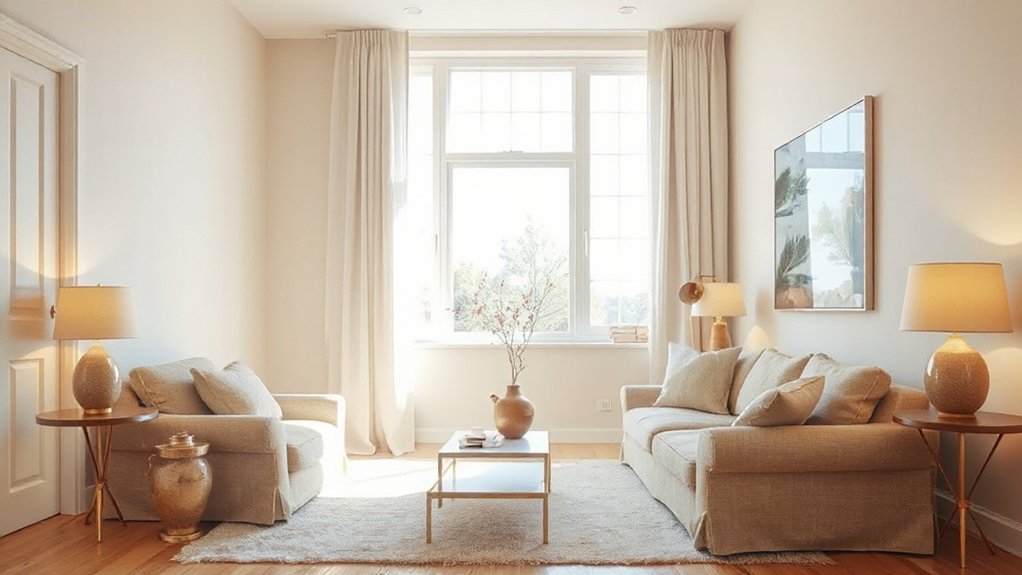
Because north-facing light arrives cooler and more directional, you can make it travel further by positioning mirrors to catch the brightest patch of daylight and bounce it back into the room. Start with mirror placement opposite or adjacent to the window, angled slightly to throw light onto the darkest wall rather than straight back outside. In UK terraces and flats, a tall mirror behind a sofa or near a chimney breast often works better than a small one over a mantel. Keep sightlines in mind: you want daylight reflection to land where you read, cook, or work. If privacy is an issue, avoid reflecting neighbouring windows directly. Choose a slim frame to maximise glass area, and group two narrow mirrors to brighten a long hallway without adding bulk.
Use Satin/Gloss Finishes to Reflect Light
Mirrors help daylight reach deeper into a north-facing room, but you’ll get an even bigger lift by choosing finishes that naturally bounce light around. Swap flat paint for Satin finishes on walls and woodwork; they hide minor lumps yet still brighten. Use Gloss reflection strategically where light hits, not everywhere, so the room feels crisp rather than clinical.
- Satin emulsion on the main walls to lift murky corners without glare
- High-gloss skirting, architraves, and internal doors to throw light back into the room
- Semi-gloss on radiators so they look cleaner and reflect more in winter light
- Lacquered or glass-topped side tables to add sparkle near seating areas
- Polished chrome or brushed brass lamps and picture frames to catch highlights at dusk
Keep Window Treatments Light and Minimal
Although north-facing windows rarely deliver strong, direct sun, you can still make the most of what you get by keeping window treatments light and minimal. Choose sheer voiles or light-filtering roller blinds in warm white, rather than heavy lined curtains that swallow daylight. If you need privacy, fit a top-down/bottom-up blind or a pale Roman with a modest lining, so you control glare without dimming the room. Mount your pole or track wider and higher than the frame to expose more glass when open, and keep the stackback slim. Skip busy patterns; they read murky in cool light. For evenings, layer simple, minimal drapes that just kiss the floor. Keep window coverings clean to maximise brightness too.
Add Warm Wood and Woven Natural Textures
When a north-facing room feels a bit flat, you can warm it up quickly by bringing in honeyed oak, walnut or teak and layering woven textures. You’ll bounce back some glow, add visual weight, and stop the space reading grey. Keep finishes matte or lightly oiled; high-gloss can look cold under UK daylight. Mix grain directions and scale so it feels considered, not cluttered.
- A solid wood console behind the sofa for subtle wood accents
- Rattan or cane dining chairs that break up hard lines
- A seagrass basket for throws and magazines by the radiator
- A jute runner to guide the eye from hall to living area
- A woven pendant shade to soften the ceiling’s shadow and spread light
Use Cozy Textiles to Fight the “Cold” Feel
In a north-facing room, you can take the edge off that “cold” feel by layering plush throws and blankets on the sofa and at the foot of the bed. Choose warm-toned fabrics—think rust, ochre, warm grey, or camel—in wool, boucle, or velvet to counteract the bluish light. Finish by adding a textured rug underfoot, ideally a thick pile or wool flatweave, to make the space feel instantly warmer.
Layer Plush Throws And Blankets
If your north-facing room feels a bit chilly, layer plush throws and blankets to add instant warmth and soften the light. Drape cozy blankets where you naturally pause—on the sofa arm, the reading chair, and the end of the bed—so you’ll actually use them when the temperature drops. Mix a couple of plush throws in different pile heights to stop the space feeling flat under cool daylight. Keep spares in an ottoman or lidded basket near the radiator, ready for evenings and draughty mornings. Choose machine-washable options for everyday life and pets.
- A chunky throw folded over the sofa back
- A fleece on your desk chair for WFH
- A knit blanket at the foot of the bed
- A small lap throw by the window seat
- A textured basket stacked neatly beside the hearth
Choose Warm-Toned Fabrics
Although north light can make textiles look a touch blue, you can warm the whole room up by choosing fabrics in honey, caramel, rust, terracotta, ochre, and soft blush. Use these shades on curtains, cushions, and upholstery so the warmth sits at eye level all day.
Lean into fabric textures that catch light: brushed cotton, velvet, bouclé, and wool blends read richer than flat linens in cool rooms. Keep colour coordination tight by repeating one warm tone across two or three items, then balancing it with creamy neutrals (oatmeal, ecru) rather than stark white. If you’ve got grey walls, shift to greige or add a camel cushion to stop the scheme feeling chilly. Check samples in morning and late afternoon.
Add Textured Rugs Underfoot
When north-facing light leaves your floor looking cooler than it should, a textured rug adds instant warmth underfoot and stops the room feeling flat. You’ll also soften echo and make the space feel more inviting, especially with cosy textiles layered in. Pick a pile that suits your lifestyle: loop for busy hallways, plush for bedrooms, and a flatweave under dining chairs. Size it generously so front legs of sofas and armchairs sit on it, anchoring the seating area and reducing that “cold” gap of bare floor.
- Chunky wool rug in oatmeal or camel
- Jute base with a softer wool top layer
- Deep-pile runner along draughty floorboards
- Flatweave kilim for easy hoovering
- Sheepskin throw rug beside the bed
Choose Brightening Rugs for North-Facing Rooms
Since north-facing rooms often read cooler and slightly dimmer, a brightening rug can quickly shift the whole space by reflecting more light back into the room. Go for pale neutrals (oat, stone, ivory) or a soft warm blush to counter blue-leaning daylight, and choose a low-to-mid pile that won’t swallow light.
Create smart color contrast: pair a light rug with deeper sofa upholstery, or flip it with a patterned rug that includes cream and honey tones. For furniture placement, keep front legs of your sofa and chairs on the rug to anchor the seating area, and leave a slim border of bare floor (especially with pale oak or light laminate) to keep edges crisp. In narrow UK terraces, runner rugs in hall-like rooms brighten sightlines.
Best Low-Light Plants + Easy Lighting Fixes
In a north-facing room, you’ll get better results if you choose low-light plants like snake plant, ZZ plant, cast-iron plant, or pothos, and place them a metre or two from the window. You can then layer your lighting with a ceiling fitting for overall light, a floor or table lamp for corners, and a task light where you read or work. Stick to warm-white bulbs around 2700–3000K for a cosy feel, or go 3500–4000K if you want it to look cleaner and brighter without turning harsh.
Low-Light Plant Picks
Although north-facing rooms don’t get much direct sun, you can still bring in greenery by choosing plants that genuinely cope with low light and pairing them with a couple of simple lighting tweaks. For Indoor gardening that won’t sulk, focus on tough species and smart plant placement: keep pots near the brightest window, rotate weekly, and wipe leaves so they photosynthesise efficiently. If your sill runs cold, lift pots on cork mats and avoid draughts from trickle vents. Use a simple timer plug for a small grow bulb in a desk lamp during dark afternoons.
- Snake plant in a tall ceramic pot by the bookcase
- ZZ plant on a sideboard, away from radiators
- Peace lily near the window, misted lightly
- Pothos trailing from a shelf, turned monthly
- Cast-iron plant in a hallway corner, unfussy
Layered Lighting Solutions
When daylight feels thin in a north-facing room, you can still make it work by layering three types of light: ambient for overall brightness, task for reading and worktops, and accent to lift corners and show off low-light plants. Start with a dimmable ceiling pendant or flush fitting, then add two table lamps on opposite sides to cut shadows. For task light, use an adjustable desk lamp or under-cabinet LED strip in kitchens. Aim accent light at a mirror, art, or a shelf of pothos, snake plant, or ZZ plant to create depth. Keep Decorative accessories reflective: glass, polished metal, pale ceramics. Refresh Window treatments with sheer voiles plus a lined Roman blind so you can bounce light while controlling glare.
Bulb Color Temperature Tips
Since north-facing light skews cooler and less intense, you’ll get a brighter, more flattering feel by choosing the right bulb colour temperature: aim for warm white (around 2700K–3000K) in living rooms and bedrooms, then use a slightly cooler neutral white (3500K–4000K) for kitchens and desks where you need clarity. Match bulb color across fittings so the room doesn’t look patchy, and pick LEDs with CRI 90+ for truer paints and skin tones. If you’ve got low-light plants, place them near the window and add a discreet grow bulb on a timer.
- A 2700K floor lamp by the sofa
- 3000K bedside lamps with linen shades
- 3500K under-cabinet strips for prep
- 4000K desk lamp for paperwork
- A warm uplighter washing the ceiling
Frequently Asked Questions
Do North-Facing Rooms Affect Mood and Productivity Over Time?
Yes, you can feel mood and productivity shifts over time in north-facing rooms, because you get less Natural light. You’ll need mood enhancement strategies: daylight bulbs, warm paints, mirrors, and midday outdoor breaks.
How Can I Warm a North-Facing Room on a Tight Budget?
Like a cosy jumper, you’ll warm it fast: layer rugs and throws, add Budget friendly accessories in brass or oak, and try DIY lighting solutions—warm LED bulbs, plug-in wall sconces, and reflective mirrors.
What Art Colors Look Best on Walls in Cool North Light?
You’ll get the best results with warm, saturated tones: terracotta, ochre, rust, blush, and deep greens. Choose an art palette with creamy whites and brass wall accents; avoid icy blues and cold greys.
How Do I Make North-Facing Rooms Feel Warmer for Video Calls?
You’ll look a million times warmer on video by facing a lamp with a warm LED bulb, using furniture placement to avoid backlight, and choosing creamy curtain choices; add a soft rug and peachy backdrop.
Should I Repaint Trim and Doors to Match Warmer Wall Colors?
Yes—if you want a cohesive, warmer look, repaint trim and doors in a softer warm white or matching tone. You’ll reduce harsh trim contrast; choose a slightly deeper door color for definition. Use durable eggshell.
Conclusion
North-facing light can make your room feel crisp, even chilly, but you can flip that into cosy and bright with a few smart tweaks. You’ve swapped stark whites for warm white, greige, blush, or buttery tones, and you’ve skipped the shades that turn gloomy at noon. Layer in oak, rattan, and woven textures; add thick throws and light-reflecting rugs. Finish with low-light plants and warm bulbs—suddenly, cool becomes welcoming.
About the Author