Around 20% of homes in England were built before 1919, and many Victorian town houses still hide expensive defects behind neat paintwork. You start by commissioning a proper survey, then you tackle damp and structural movement with breathable, lime-based repairs. You protect what gives the place its value—sash windows, plaster cornices, fireplaces, and original staircases—while upgrading wiring, plumbing, insulation, and low-temperature heating discreetly. But one early decision can save months, or cost you permissions…
Key Takeaways
- Start with a full exterior-to-interior survey, mapping movement, damp sources, structural cracks, floor bounce, and outdated services.
- Eliminate damp at the source by clearing gutters, fixing leaks, improving drainage, and restoring sub-floor ventilation before redecorating.
- Repair structure using compatible materials: lime mortar, matching bricks, crack stitching, and timber splices that preserve original fabric.
- Restore Victorian features sensitively by overhauling sash windows, repairing lime plaster, reopening fireplaces, and conserving stairs, cornices, and joinery.
- Upgrade electrics, plumbing, insulation, and heating discreetly, budgeting 15–25% contingency and confirming permissions for conservation or listed constraints.
Survey a Victorian Town House: Defects to Note
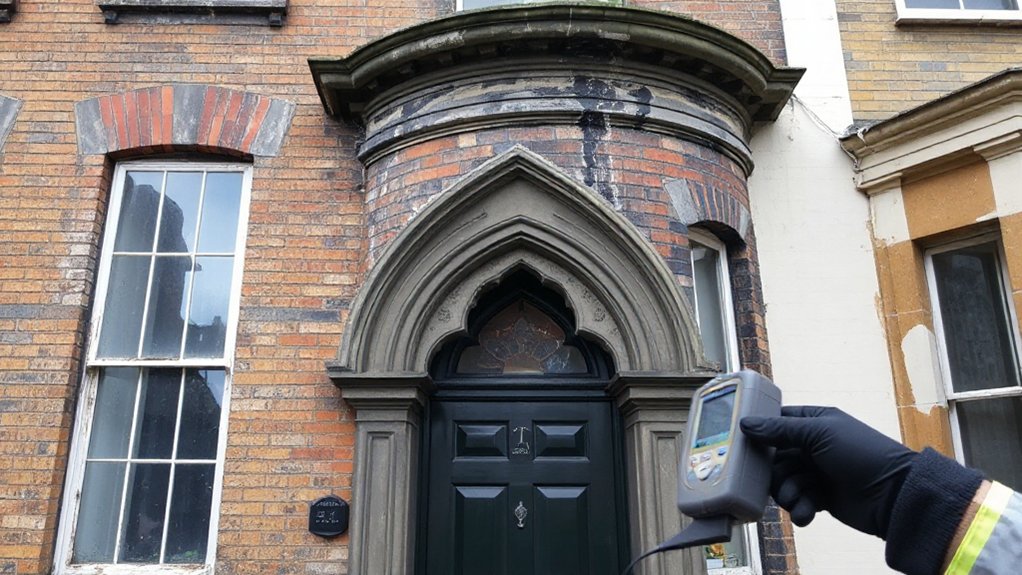
Before you lift a floorboard or book a builder, you should survey the whole house methodically, because Victorian construction hides common defects in predictable places. Start outside: check roof slates, lead flashings, gutter falls, and chimney stacks for movement, then note spalled bricks, failed pointing, and bulging bays. Inside, map cracks around window heads and stair cores, and test how doors latch to spot settlement. Inspect suspended floors for bounce and squeaks, and look for notched joists from old plumbing. Open up service runs: dated wiring, undersized consumer units, and mixed pipework need recording. In the cellar, check ventilation, salt lines, and previous tanking. Finally, photograph cornices, ceiling roses, joinery profiles, and original tiles so your Interior decor respects Victorian architecture.
Fix Damp and Structural Risks First (Breathable Repairs)
Once you’ve logged the defects, tackle damp and structural risk in tandem, because Victorian fabric relies on moisture moving through it rather than being trapped. In Victorian architecture, you’ll stabilise the building by removing moisture sources first, then repairing with breathable materials that match original performance. Use Preservation techniques that respect lime-based construction and avoid cement, injected DPCs, and impermeable paints that drive decay sideways.
- Clear gutters, downpipes, and gullies; fix leaks at once.
- Lower external ground levels and improve drainage to walls.
- Rake out and repoint in lime mortar; replace spalled bricks like-for-like.
- Improve sub-floor ventilation; clear airbricks and voids.
- Address movement: stitch cracks, check joist ends, and repair timbers with resin-free splices.
Recheck moisture readings after seasonal weather before decorating.
Restore Victorian Features: Sash, Plaster, Fireplaces, Stairs
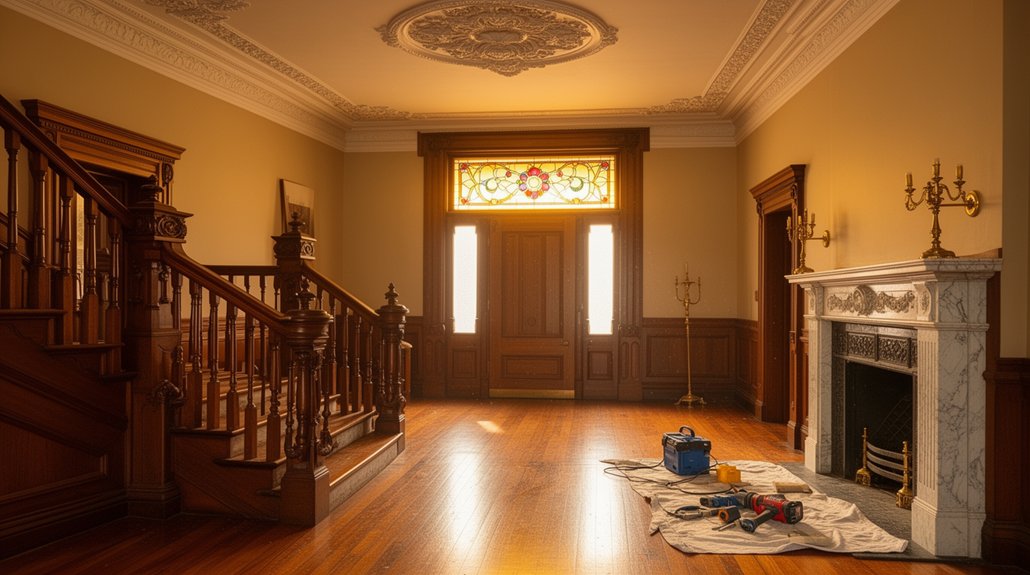
After you’ve stabilised damp and movement, you can turn to the details that give a Victorian town house its character: original sash windows, lime plaster, fireplaces, and timber stairs. Start with sashes: strip paint carefully, splice rotten timber, overhaul pulleys, and fit brush seals; keep slender glazing bars and use cylinder or restoration glass where appropriate. For walls and ceilings, match Victorian architecture by repairing with lime plaster, not gypsum; rake out cracks, secure laths, and finish with lime putty skim. Open fireplaces methodically: retain the surround, slate hearth, and cast-iron insert, then repoint with lime mortar and check the flue liner’s condition. Finally, treat stairs: tighten wedges, repair treads, conserve balusters, and wax or shellac for period sheen.
Upgrade Insulation, Electrics, Plumbing, and Heating Sympathetically
Although you’re keen to modernise, a Victorian town house responds best when you upgrade insulation, electrics, plumbing, and heating in a way that respects how the building breathes and how its fabric is put together. Aim for measures that protect Victorian craftsmanship and keep period authenticity intact, without trapping moisture or chasing cable routes through historic mouldings.
- Use breathable insulation (wood fibre, sheep’s wool) to solid walls; avoid impermeable foils.
- Improve draught-proofing to sash boxes and doors before over-insulating.
- Rewire with minimal chasing; surface-mount neatly in service voids where possible.
- Replace tired lead/galvanised runs; add isolation valves and accessible stopcocks.
- Choose efficient, low-temperature heating: condensing boiler or heat pump with careful emitter sizing.
Test ventilation, commission systems properly, and record what you’ve altered for future maintenance.
Budget, Permissions, and Timeline for Victorian Restoration
Sympathetic upgrades to insulation, wiring, plumbing, and heating only work if you’ve allowed for the real-world constraints that come with a Victorian house: costs stack up quickly, permissions can dictate what you’re allowed to change, and programme creep can undo your best intentions. Build a line-by-line budget with a 15–25% contingency for hidden defects, then price surveys, temporary protection, and skip hire. If it’s listed or in a conservation area, speak to the council early; you may need Listed Building Consent and planning permission, especially for windows, rooflines, chimneys, and extensions. Document Historic preservation choices so Building Control accepts them. Set a realistic programme: surveys first, structural repairs, then services, then finishes, so modern amenities don’t get ripped out twice.
Frequently Asked Questions
How Do I Research the House’s Original Colour Scheme and Wallpapers?
You’ll scrape small test patches to expose layers, photograph and log finds, then match pigments to Victorian paint palettes via heritage paint charts. You’ll check local archives and use Wallpaper restoration techniques to identify surviving patterns.
Where Can I Source Period-Appropriate Furniture and Soft Furnishings Locally?
You’ll source period-appropriate pieces at local auction houses, architectural salvage yards, and reputable antiques centres, then check nearby charity shops and dealers. Ask upholsterers for Antique textiles, and browse restoration suppliers for Vintage lighting.
What’s the Best Way to Improve Soundproofing Without Harming Historic Fabric?
To quieten life’s *livelier moments*, you’ll use reversible Soundproofing techniques: add secondary glazing, dense underlay, acoustic mats, and sealed skirtings. You’ll avoid foams and chasing walls, ensuring Historic fabric preservation through minimal fixings and breathable materials.
How Can I Make the House More Accessible While Keeping Victorian Character?
You’ll boost accessibility by adding a discreet ramp, handrails, and a compact platform lift, widening doors with reversible architraves, and installing a ground-floor WC. Prioritise Victorian architecture details and Historic preservation, using sympathetic, removable interventions.
Should I Insure the Property Differently During Renovation Works?
Yes—you should, even if you dread extra cost. You’ll need Insurance adjustments and specialist renovation coverage for unoccupied periods, structural works, and contractor liability. Tell your UK insurer and check conditions, alarms, and inspections.
Conclusion
You’ll bring your Victorian townhouse back to life by surveying properly, tackling damp and structural faults first with breathable lime-based repairs, then restoring sash windows, cornices, fireplaces, and stairs. Upgrade insulation, electrics, plumbing, and low-temperature heating discreetly, so you improve comfort without erasing character. Worried it’ll cost a fortune? It won’t if you budget realistically, phase the works, and secure listed building consent early—avoiding costly rework and enforcement headaches.
About the Author