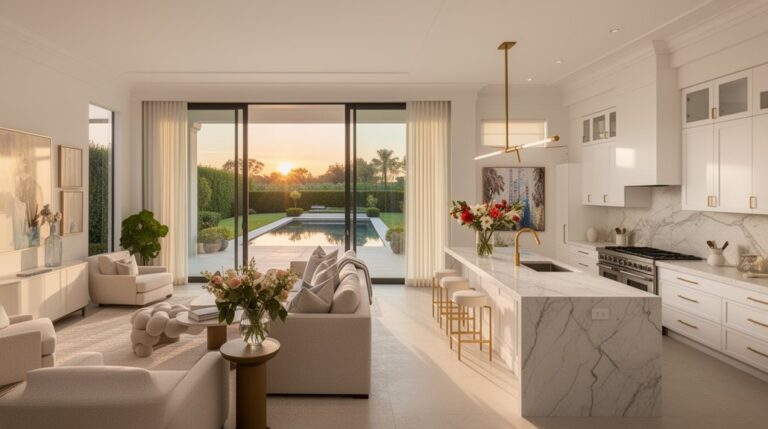
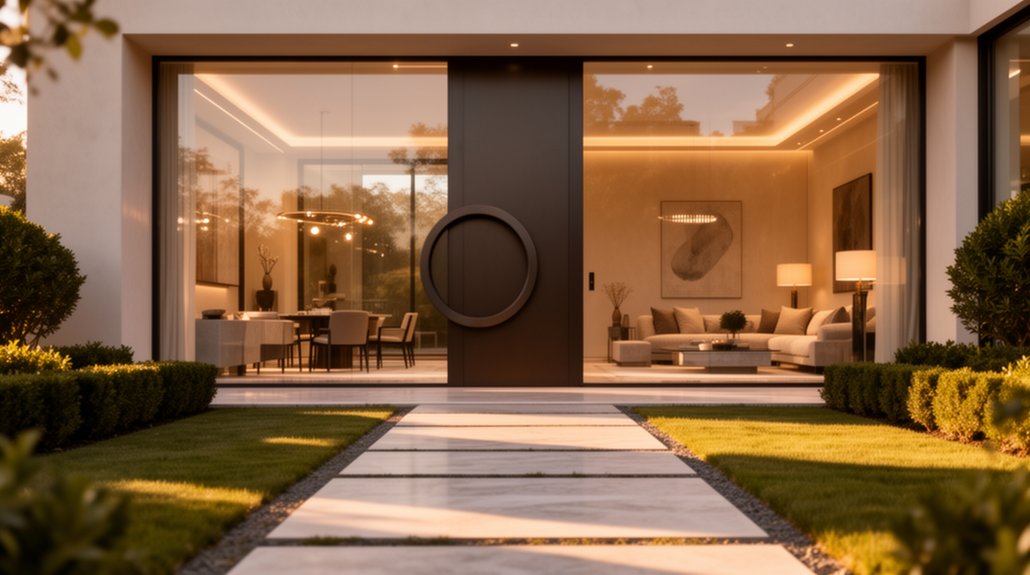
In premium real estate, you don’t find the market—you frame it. You start by defining what “premium” means on your block using recent closed comps, days-on-market, and buyer concessions. Then you justify a top bracket with scarcity signals like a corner lot, protected views, and turnkey condition, backed by upgrades buyers can price: high-end kitchens, efficient systems, and curated amenities. Get your staging and photography to match, because the next step determines whether qualified buyers lean in or move on…
Key Takeaways
- Confirm you’re truly in the top 10–20% by analyzing closed prices, days-on-market, inventory months, and offer activity in your micro-market.
- Price using tightly matched comps and one pending sale, then set a defensible bracket between the best comp and the next credible premium sale.
- Prioritize premium-buyer upgrades that signal quality—kitchen, primary bath, energy-efficient systems, and practical luxury amenities like EV charging.
- Stage and photograph for luxury standards: declutter, optimize lighting and temperature, elevate curb appeal, and use a consistent shot list.
- Market to qualified buyers through luxury agents and vetted channels, highlight measurable features, and adjust quickly if early-week showings underperform.
What “Premium” Means in Your Local Market
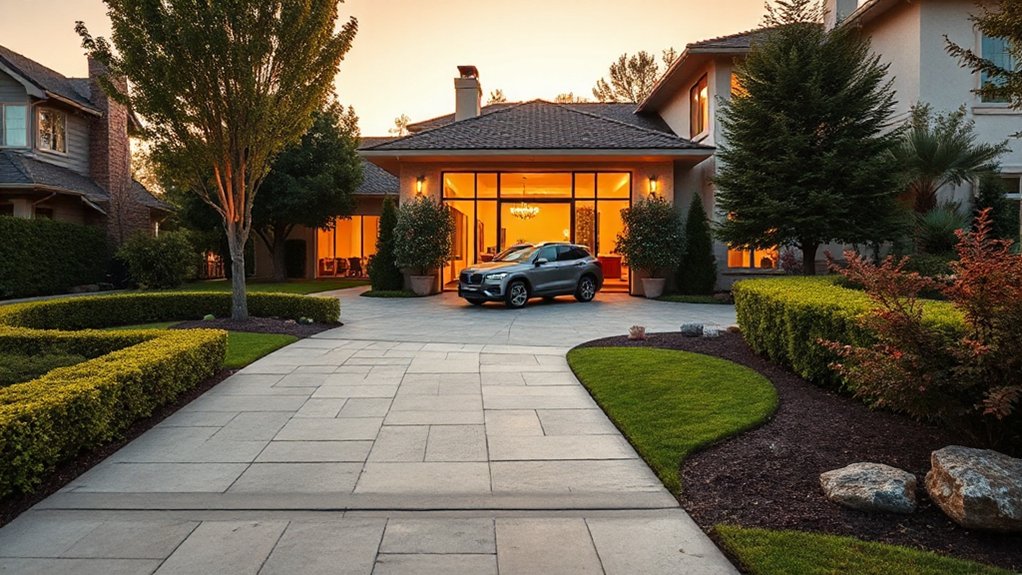
Where does “premium” actually start in your local market? You define it by measurable thresholds, not vibes: the top 10–20% of closed prices, the lowest months of inventory, and the fastest days-on-market within your zip code. Track how buyers pay for scarcity—corner lots, protected views, newer construction, or turnkey condition—and quantify the uplift those features command.
Next, map where the premium concentrates. A Luxury neighborhood isn’t just a label; it shows up in tighter spread between list and sale, higher cash share, and more repeat demand across seasons. Validate Market demand by monitoring showing volume, saved searches, and offer counts by price band. If demand holds while inventory thins, you’re in premium territory.
Set a Premium Price Using Comps and Brackets
Once you’ve pinned down what qualifies as premium in your zip code, you can price like the buyers who actually shop that tier—by anchoring to comps and then stress-testing the number inside a tight bracket. Pull 3–6 closed sales from the last 60–120 days with matching bed/bath count, lot, view, and condition, plus one pending to capture today’s demand. Separate comps in exclusive neighborhoods from “nearby but not equivalent” areas, and quantify differences in $/sq ft and days on market.
Build a bracket: your target price should sit between the best-supported comp and the next higher credible sale, adjusted for measurable features like parking count, HOA terms, and luxury amenities. If showings lag in week one, re-bracket fast.
Choose Upgrades Premium Buyers Will Pay For
How do you tell the difference between an upgrade that sells “premium” and one that just burns budget? You anchor every choice to buyer payoffs and resale math: lower risk, higher utility, and visible quality signals. Skip personal taste and fund upgrades that widen your buyer pool inside your target bracket.
- Kitchen + primary bath: Prioritize stone, premium fixtures, and integrated storage; these drive the highest perceived value per square foot and shorten decision time.
- Energy and systems: New HVAC, insulation, windows, and smart controls reduce operating costs—an underwriting metric for affluent buyers.
- Exclusive amenities: Add EV charging, whole-home water filtration, or a compact gym; they differentiate without costly layout changes.
Treat luxury renovations as a portfolio: invest where appraisers and buyers agree.
Stage for Premium Photos and Private Showings
Although premium buyers say they “feel” a home first, you control that feeling by staging for the camera and the private tour with the same goal: remove visual noise, spotlight materials, and telegraph low-risk ownership. Start with a shot list: hero exterior, kitchen, primary suite, bath, and one lifestyle vignette. Edit ruthlessly—clear counters, reduce furniture to show circulation, and align art at 57 inches for visual cadence. Use 2700–3000K bulbs, fix mixed temperatures, and photograph when indirect light is strongest. For private showings, pre-set HVAC to 70–72°F and eliminate odor sources. Invest in luxury landscaping: crisp edges, weed-free beds, and matte-black hardware. Use exclusive staging: fresh linens, neutral textiles, and one high-end focal object per room.
Market Your Home to Qualified Premium Buyers
Because premium buyers value privacy as much as polish, you’ll attract the right audience by running a targeted, permission-based campaign instead of blasting the listing everywhere. Start with buyer personas built from recent comps, showing-to-offer ratios, and agent network intel in Exclusive neighborhoods. Then match messaging to what converts: lifestyle, scarcity, and proof of value.
- Pre-qualify interest: require proof of funds or lender letters before releasing the full address, floor plan, or showing windows.
- Segment channels: prioritize top-producing luxury agents, vetted relocation firms, and invite-only platforms over mass portals.
- Quantify the story: highlight Luxury amenities with measurable specs—ceiling heights, smart-home systems, energy ratings, and recent capex.
Track click-through, inquiry quality, and time-to-offer weekly, then refine.
Frequently Asked Questions
Should I Sell Furnished or Remove All Furniture Before Listing?
Sell furnished only if your pieces support Furniture staging and match buyer demographics; otherwise, remove most items. You’ll boost perceived space and photos using decluttering strategies, and you can rent targeted staging for higher offers.
How Do Luxury Home Inspections Differ From Standard Inspections?
You’ll notice luxury inspections go deeper: by coincidence, the more you pay, the more they measure. You’ll get specialized reviews of architectural details, historical significance, smart systems, pools, roofs—plus documentation, valuations, repair ROI.
Will a Pre-Listing Appraisal Help Justify a Premium Asking Price?
Yes—you’ll justify a premium price with a pre-listing appraisal, if you pair it with Market trends and smart Pricing strategies. You’ll benchmark comps, adjust for upgrades, quantify demand, and defend value during negotiations.
Do Premium Buyers Prefer Smart-Home Systems or Traditional Features?
You can’t have it both ways: premium buyers want smart-home systems and traditional features. You’ll win by pairing luxury amenities with modern upgrades—security, climate, lighting—while preserving craftsmanship, timeless finishes, and strong mechanicals.
How Do I Protect Privacy and Security During Showings and Open Houses?
Lock away valuables, remove IDs, and disable personal devices; use timed-access codes and logged showings. Verify agents, limit attendee counts, and add Neighborhood safety signage plus Privacy fencing to reduce sightlines. Use cameras legally.
Conclusion
You position your home for the premium market by treating it like a blue-chip asset, not a yard-sale item. You define “premium” with local comps, then price inside the right bracket to attract—and filter—buyers. You install upgrades with provable ROI: chef-grade kitchens, efficient systems, signature amenities. You stage like a magazine spread for photos and private tours. Finally, you market to qualified buyers, tracking demand signals and adjusting fast.
About the Author