
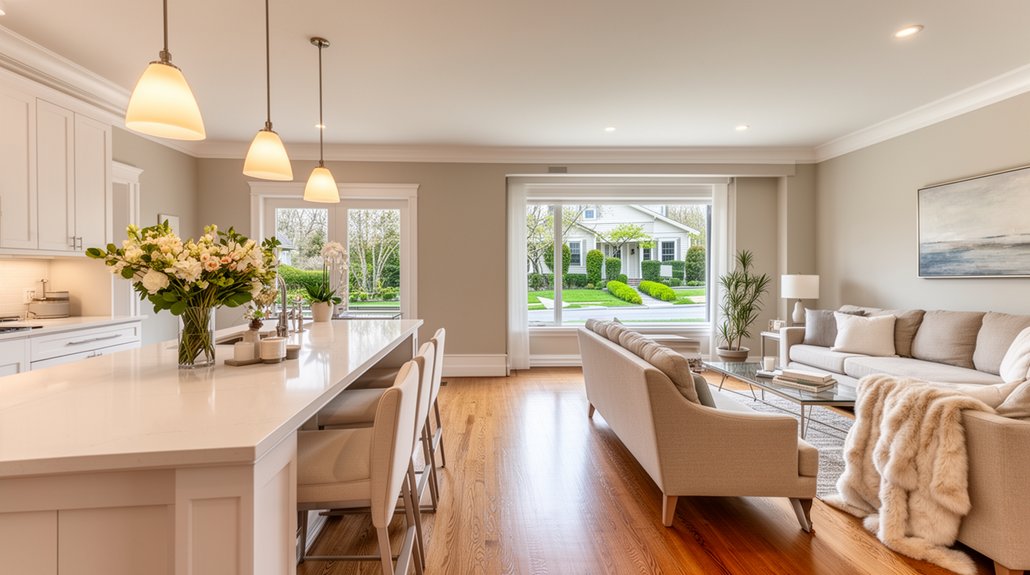
Selling your house without buyer filters is like casting a wide net in shallow water—you’ll catch noise, not results. You attract serious buyers when you define “qualified” up front: verified pre-approval, proof of funds, and a clear closing timeline. You price to recent comps, not wishful numbers, and you remove friction with flexible showings and secure access. Then you tighten the process with inspection-ready condition and firm deadlines, because the next step decides who commits…
Key Takeaways
- Price competitively using recent comps and strategic price bands that match buyer search filters and financing limits.
- Require lender pre-approval or proof of funds before showings to filter out unqualified buyers.
- Launch with maximum visibility: MLS syndication, professional photos, floor plan, and 3D tour during the first 7–14 days.
- Prepare the home thoroughly with deep cleaning, decluttering, staging key rooms, and strong curb appeal to signal move-in readiness.
- Create urgency and closing certainty with offer deadlines, clean submission requirements, limited contingencies, and clear timelines.
Define a “Qualified Buyer” for Your Sale
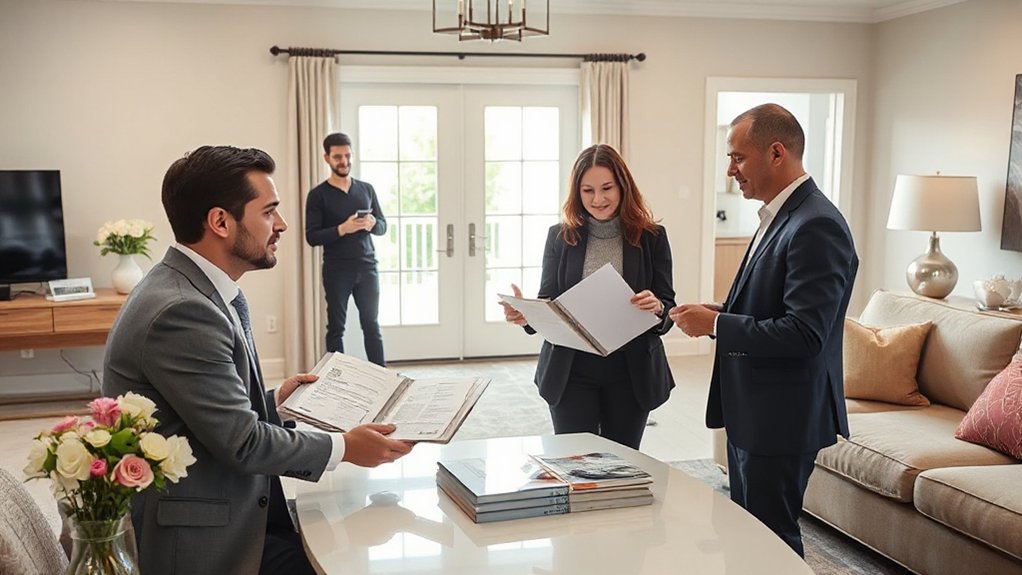
Before you spend a dollar on marketing or answer a single inquiry, define exactly what a “qualified buyer” looks like for your sale in measurable terms. Set Buyer qualification thresholds: minimum down payment percentage, verified funds for closing costs, and lender pre-approval dated within 30 days. Require proof of funds for any cash portion and a stated purchase timeline (for example, 0–45 days) to filter out browsers. Tie your Pricing strategy to the buyer profile: confirm your target segment can support your expected monthly payment at today’s rates and typical insurance/tax levels. Document nonfinancial criteria too—inspection expectations, appraisal-gap tolerance, and contingencies you’ll accept. Publish these requirements in your showing instructions so agents pre-screen before booking. You’ll protect time and reduce fall-through risk.
Price Your House to Attract Qualified Buyers
You’ll attract qualified buyers faster when you set a competitive market value based on recent sold comps, current active listings, and your home’s condition-adjusted features. You’ll also get more showings by pricing within strategic bands buyers actually search (for example, $499,000 vs. $510,000 to capture both “up to $500k” and “up to $525k” filters). When your price aligns with data and search behavior, you reduce lowball offers and increase the odds of strong, finance-ready interest.
Set Competitive Market Value
How do you attract serious buyers fast? You set a competitive market value grounded in evidence, not hope. Start with a tight Market analysis: pull 6–12 recent closed comps within 0.5 miles, matched for size, condition, lot, and updates. Adjust for differences using local $/sq ft and documented renovation costs, then cross-check against pending sales to gauge current demand. Verify the number with a pre-list appraisal or lender-style review to improve appraisal accuracy and reduce deal-killing renegotiations. Factor in days on market, list-to-sale ratios, and seasonal inventory to avoid overpricing. Finally, confirm your target price supports likely financing limits for your buyer pool and neighborhood norms.
Use Strategic Pricing Bands
Although your market value may land on a clean number, you’ll attract more qualified buyers by placing it inside the right pricing band where search filters, lender thresholds, and buyer psychology overlap. If comparable sales support $405,000, consider $399,900 to appear in more saved searches capped at $400K and to hit common mortgage pre-approval limits. If your area shows heavy demand in $450K–$500K, don’t price at $501K and lose that entire segment. Use Market segmentation: review portal filter counts, showing requests, and days-on-market for nearby listings by $25K bands. Apply pricing psychology: avoid round numbers above thresholds, and test a band that maximizes impressions without signaling “discounted.” Reassess weekly and adjust fast if traffic drops.
Time Your Listing Around Peak Buyer Demand
When you list during peak buyer demand, you stack the odds in your favor: more showings in the first 7–14 days, stronger competition, and a higher chance of receiving clean, time-bound offers. Use Market trends and seasonal timing to pick a launch window when active buyers outnumber fresh inventory, so your home doesn’t linger and invite discounts. Track local days-on-market, new listings, and pending-sales velocity, then align photography, marketing, and open houses to hit that surge.
- Watch weekly inventory changes in your ZIP code.
- Target weeks with rising pendings and stable pricing.
- Avoid holiday lulls and major local-event weekends.
- List midweek so you capture weekend tours plus Monday follow-ups.
Handle Repairs Buyers Flag in Inspections

Because inspection reports often trigger the biggest renegotiations, you need a fast, documented plan for any repairs buyers flag so you protect your price and keep the deal on schedule. Within 24 hours, request the full report and prioritize items by safety, water intrusion, and code exposure; these drive most lender and insurer refusals. Get two written bids per major issue and share a repair menu: fix, credit, or price adjustment, with line-item amounts. Keep repair negotiations anchored to receipts and contractor scopes, not opinions. If buyers cite inspection contingencies, set a firm response deadline and require re-inspection after completed work. For minor defects, offer a capped credit to prevent scope creep. Track every change in an addendum so appraisal and underwriting match.
Deep-Clean and Declutter for Move-in Readiness
Once you’ve locked down inspection-related repairs with bids and receipts, the fastest way to protect your price is to make the home feel truly move-in ready. Buyers notice odor, grime, and crowded closets in seconds, and those signals trigger lower offers. Use a Cleaning checklist and schedule tasks room by room, then measure progress: fewer surfaces, fewer smells, fewer distractions.
- Wash walls, baseboards, and vents; dust levels drop and photos look sharper.
- Degrease kitchens and descale baths; these are the two highest-scrutiny zones.
- Clear counters, floors, and closet fronts; aim for 50% open shelf space.
- Pack “non-daily” items into labeled bins; follow Decluttering tips: keep, donate, trash, store.
Finish with clean filters and fresh towels, not fragrance.
Stage Key Rooms to Win Qualified Buyers Fast
Although staging isn’t a renovation, it changes buyer behavior fast: well-staged listings can sell for up to 20% more and 88% faster than non-staged homes, so treat it as a high-ROI marketing step, not décor. Focus on the rooms that drive decisions: entry, living room, kitchen, primary bedroom, and main bath. Create a clear path, float furniture to show scale, and remove extra pieces so the room reads larger. Use Interior lighting strategically: 2700–3000K bulbs, matching color temps, bright but glare-free layers, and clean fixtures to eliminate “dim house” objections. In kitchens and baths, set out one neutral accent and hide counter clutter. Outside, elevate Landscaping aesthetics with crisp edging, fresh mulch, and a single focal planter to signal meticulous care.
Shoot Premium Listing Photos (and a Floor Plan)
If you want serious buyers to book a showing instead of scrolling past, you need premium listing photos and a clean floor plan, since buyers form a first impression in seconds and most of their decision-making happens online. Hire a pro who shoots HDR, corrects vertical lines, and delivers consistent color; phone photos and heavy filters signal “something to hide.” Pair images with an accurate, to-scale floor plan so buyers can confirm flow, room sizes, and furniture fit before they inquire. Use Virtual staging sparingly to show layout options, but disclose it and match lighting to the originals. Add Drone photography to document lot lines, parking, and proximity without guesswork. Focus on:
- Bright, even lighting
- Wide angles without distortion
- Full room coverage + key details
- Floor plan + aerials
Write a Listing Description Qualified Buyers Trust
Premium photos and a clear floor plan earn the click; your listing description earns trust and filters in qualified buyers. Lead with objective facts: total square footage, bed/bath count, year built, major upgrades with dates, and estimated utility costs. Use scannable bullets and specify what’s included (appliances, HOA fees, parking). Call out condition issues upfront; buyers who tolerate them will self-select, saving showings. Quantify lifestyle value with neighborhood amenities: walking distance to transit, parks, top-rated schools, and commute times at peak hours. If you use Virtual staging, disclose it and pair it with “as-is” photos so expectations match reality. End with clear next steps: required pre-approval, showing windows, offer deadline, and preferred closing timeline.
List Where Qualified Buyers Actually Search

Because most qualified buyers start online—and move fast—you need your home visible on the platforms they actually use: the local MLS (which syndicates to Zillow, Realtor.com, Redfin, and brokerage sites), plus any high-intent channels specific to your market such as LoopNet for small multifamily, Zillow/HotPads for rentals, and targeted social ads that drive directly to the listing page. Then optimize distribution with measurable signals:
- Match price bands and filters buyers use (beds, baths, school zones, commute time).
- Upload full media: 30+ photos, floor plan, 3D tour, and accurate map pin.
- Add Neighborhood demographics and Local amenities in structured fields and captions.
- Track views, saves, and click-through by channel, then reallocate ad spend weekly.
Pre-Screen Inquiries: Pre-Approval and Proof of Funds
Once your listing starts generating leads, you’ll protect your time (and your negotiating leverage) by pre-screening every inquiry for financing strength before you schedule a showing. Require Financial verification upfront: a current lender pre-approval letter (not just pre-qualification), the loan type, down payment range, and an estimated closing timeline. Ask the lender to confirm underwriting status, credit review completion, and any contingencies like sale-of-home. For cash buyers, request recent proof of funds covering purchase price plus closing costs, with account numbers redacted but the name and date visible. Standardize your Buyer qualification checklist so you can compare prospects consistently and document decisions. Track response time and completeness; serious buyers typically provide documents within 24 hours and answer direct questions accurately.
Make Showings Easy for Qualified Buyers
Once you’ve verified pre-approval or proof of funds, you’ll keep qualified buyers engaged by making showings fast and frictionless. Offer flexible scheduling—weeknights, weekends, and short-notice slots—and confirm times within an hour to reduce drop-off. Use streamlined access like a vetted showing service, clear instructions, and secure lockbox codes so agents can get in on time without back-and-forth.
Flexible Scheduling Options
When can a serious buyer actually get through your front door? If your answer is “only Saturday 1–3,” you’ll lose motivated buyers who tour after work, between meetings, or on short notice. Build flexible scheduling into your listing plan so agents can match buyers’ real timelines, not yours. Aim for showing flexibility that covers peak demand windows and reduces “couldn’t make it” cancellations.
- Offer weekday blocks (5–8 pm) plus one early-morning option.
- Keep at least a 2-hour notice window, not 24.
- Allow 15–30 minute appointment lengths to fit tight tours.
- Track requests weekly; expand hours where you see repeat demand.
You’ll capture more qualified showings and better offers without changing your price.
Streamlined Showing Access
Although you can’t control how many buyers book tours, you can control how fast qualified buyers get inside—because access friction kills showings. Set up a lockbox or smart lock with one-time codes, and authorize agents in advance so confirmations don’t stall. Require proof of funds or a pre-approval letter before sharing access details, then respond within 15 minutes during peak hours; speed correlates with more appointments. Publish clear showing windows, parking notes, pet instructions, and alarm steps in the MLS to reduce cancellations. Add a 3D virtual tours link so serious buyers pre-qualify themselves and arrive ready to write. Use open houses strategically: schedule them within the first 7–10 days, staff them well, and collect contact info for follow-up offers.
Use Offer Deadlines to Create Strong Competition
Because buyers act fastest under clear constraints, you can use a firm offer deadline to concentrate demand into a predictable window and increase the odds of multiple, stronger bids. When you pair streamlined access with time limited offers, you reduce “wait and see” behavior and keep attention on your listing, not the next one.
- Set a deadline 48–96 hours after list, aligned to peak showing traffic.
- Publish it everywhere: MLS remarks, agent notes, flyers, and showing confirmations.
- Require clean submission standards (proof of funds, lender letter, signed disclosures).
- Communicate updates on a schedule (e.g., daily at 5 p.m.) to support urgency tactics.
Track showing count, inquiry volume, and offer-to-showing ratio to calibrate future timelines.
Negotiate for Certainty: Terms, Timelines, and Risk
If you want a dependable closing, you should negotiate for certainty, not just price, since contract terms control the timeline, define who carries which risks, and determine how easily a deal can fall apart. Start by limiting contract contingencies: shorten inspection windows to 5–7 days, require immediate scheduling, and cap repair credits. Tighten financing terms by asking for a strong pre-approval, higher earnest money, and a lender call within 24 hours. Lock the closing date with clear milestones—appraisal ordered by day 3, underwriting submitted by day 10—and add per-diem penalties for seller-caused delays only. Reduce fall-through risk by requiring proof of funds for down payment and reserves. These specifics increase closing certainty and keep buyers accountable.
Frequently Asked Questions
Should I Sell First or Buy My Next Home Before Listing?
Sell first if you need certainty; buy first if you can carry two payments. Use market timing data and negotiation strategies: contingencies, rent-backs, and longer closes. Price-risk and inventory levels determine your safest sequence.
How Much Will Selling Costs and Commissions Reduce My Net Proceeds?
Selling costs typically cut your net 7%–10%: 5%–6% agent commissions plus 1%–4% closing fees. Home staging may add 0.5%–2% but lift price. Compare Mortgage options if proceeds fall short.
What Documents Should I Gather Before Listing to Prevent Closing Delays?
Gather your deed, recent title policy, mortgage payoff, HOA docs, permits, survey, utility bills, tax records, and repair receipts. You’ll reduce delays, align home staging, and support a pricing strategy with verified facts.
Is Offering a Home Warranty Worth It to Attract Serious Buyers?
Yes, it’s often worth it: you’ll deliver Home warranty benefits like capped repair costs and faster negotiation, Buyer confidence boosting by reducing perceived risk. You’ll typically pay $400–$700, which can prevent bigger concessions.
How Do I Handle Low Appraisals After Accepting an Offer?
Challenge the appraisal with comps and repair receipts, then apply appraisal strategies: split the gap, adjust price, or request lender review. Use negotiation tactics: extend closing, raise cash, or ask buyer concessions based on market data.
Conclusion
You’ll attract serious buyers when you run your listing like a tight process: price to recent comps, launch during peak demand, and present a move-in-ready home with clean, staged photos. Pre-screen every inquiry with verified pre-approval, proof of funds, and a clear closing timeline. Make showings frictionless, then set an offer deadline to drive competition. Negotiate for certainty—contingencies, escrow periods, and repair caps—so your deal doesn’t wobble like a loose hinge.
About the Author