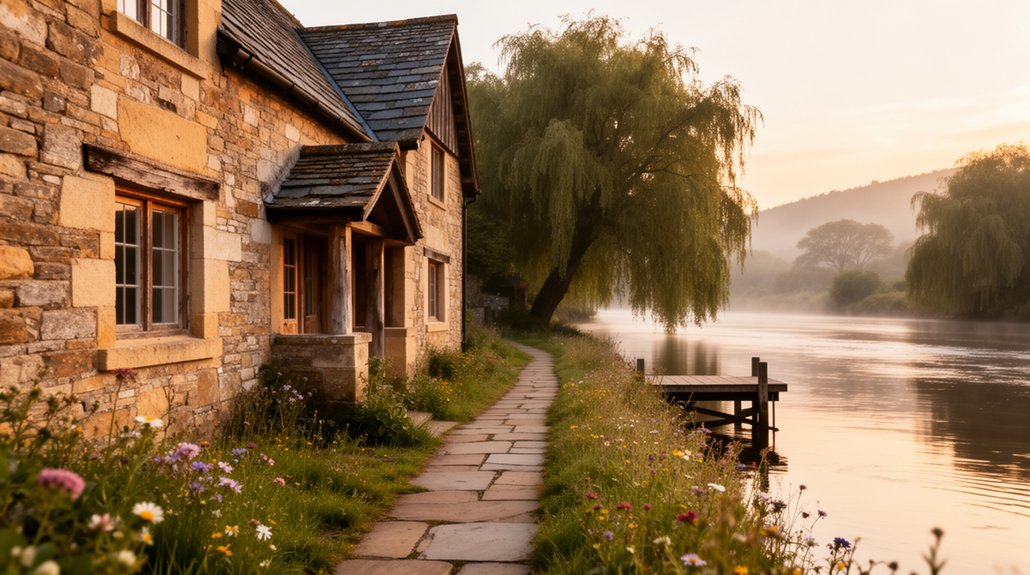
You probably don’t know that the biggest threat to a riverside cottage isn’t the river, but trapped moisture from modern “improvements”. You’ll need to work within listing constraints, heritage consent, and floodplain rules, so you can’t simply swap materials or seal surfaces. You start by surveying fabric, defects, and past repairs, then plan lime, timber, and breathable finishes with minimal intervention. But one overlooked detail will dictate every choice you make…
Key Takeaways
- Preserve historic character through minimal intervention, like-for-like repairs, and breathable materials such as lime mortar and traditional timber splices.
- Verify listing status and conservation controls, and obtain Listed Building Consent and planning approvals before altering any significant historic fabric.
- Complete a fabric-first survey documenting materials, defects, moisture pathways, and prior inappropriate repairs like cement pointing or tanking.
- Address structural movement early with engineer input, monitoring, and stabilization before finishes, prioritizing foundations, chimneys, roof structure, and timber ends.
- Improve comfort discreetly using draught-proofing, secondary glazing, and careful insulation, while documenting all works for future conservation.
What Is Sympathetic Restoration?
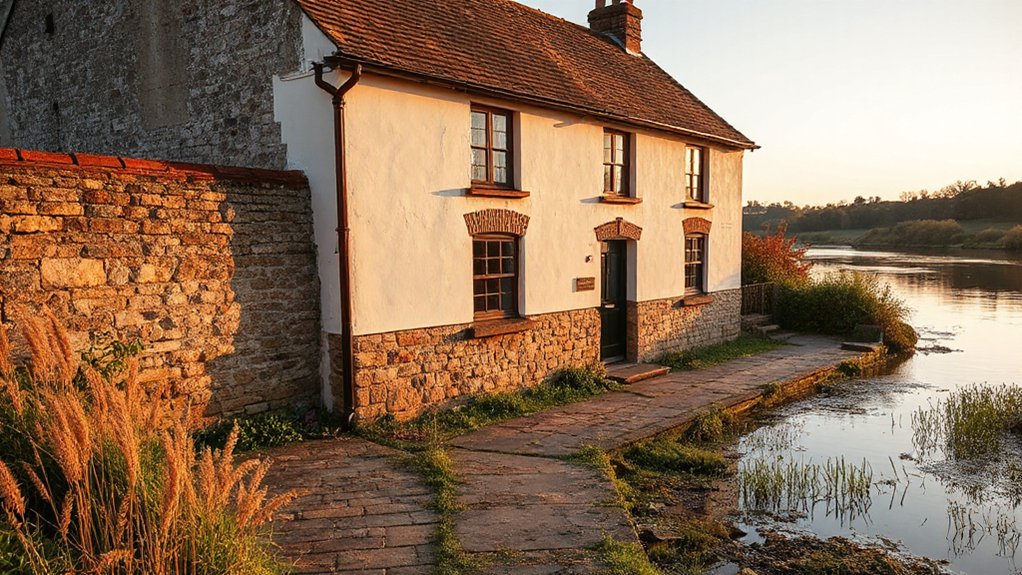
Although it can involve substantial repair work, sympathetic restoration focuses on preserving a historic building’s original character while making only the changes needed to keep it sound and usable. You begin by identifying what gives the riverside cottage its Historical significance: original plan form, local materials, and evidence of past use. You then repair rather than replace, using like-for-like lime mortar, timber splices, and breathable finishes so the fabric can manage moisture.
You protect Architectural authenticity by retaining irregular sash profiles, repairing wavy glass where safe, and matching joinery details instead of “upgrading” them away. You improve performance discreetly: draught-proofing, secondary glazing, and careful insulation that won’t trap damp. You document every intervention, so future caretakers understand what you’ve changed and why.
Define Constraints: Listing, Permits, Floodplain
Before you lift a chisel, map the legal and environmental constraints that will govern the cottage’s repair. Confirm the listing grade and read the listing description: it dictates what you can alter and which features need Listed Building Consent, even for Interior lighting changes, new cabling routes, or fittings fixed to historic fabric. Check whether the site sits within a Conservation Area and whether Article 4 directions remove permitted development rights.
Next, align planning permission, Building Regulations, and heritage consents; your local planning authority will expect method statements, drawings, and a clear Environmental impact rationale. If you’re in a floodplain, consult the Environment Agency flood maps and the council’s SFRA, then plan for Flood Risk Activity Permits, resilient services, and safe access/egress. Document all approvals and conditions before procurement.
Survey Materials, Defects, and Past Repairs
Once the paperwork’s in hand, you need a fabric-first survey that records what the cottage is actually made of, where it’s failing, and what earlier interventions have changed. Start by mapping masonry types, lime mortar, timber species, roof coverings, and joinery, noting hand-made versus modern components to protect Historic significance and Cultural context. Log damp patterns, salt efflorescence, timber decay, beetle activity, movement cracks, and failed flashings, and relate each defect to exposure, drainage, and ventilation. Identify past repairs: cement pointing, injected DPCs, resin patches, tanking, modern renders, and hard landscaping that traps moisture. Photograph, measure, and tag samples for lab confirmation where needed. Produce a schedule prioritising safety, weathering, and reversibility, with clear locations and severity ratings.
Research the Cottage’s History and Changes
Start by checking archival records and deeds so you can pin down original boundaries, ownership, and any legal constraints that still affect the cottage. Then map past renovations and additions against what you’ve surveyed, noting dates, materials, and junctions where new work meets old fabric. Finally, gather oral histories and dated photos to confirm timelines, identify lost features, and flag changes that might explain current defects.
Archival Records And Deeds
Although the cottage’s fabric tells part of its story, archival records and deeds let you trace who owned it, when alterations happened, and which rights still attach to the plot. Start with HM Land Registry title register and plan, then compare earlier conveyances, mortgages, and restrictive covenants to understand boundaries, access, and riverside obligations. Check whether easements cover a track, slipway, drainage outfall, or shared well, and confirm any riparian responsibilities.
Next, consult the local record office: tithe maps, enclosure awards, rate books, census returns, and historic OS sheets help you date occupation and plot evolution. Parish records and probate inventories can pinpoint fixtures, materials, and Architectural detailing, supporting assessments of Historical significance. Keep a source log so every claim is evidenced.
Past Renovations And Additions
When you map past renovations and additions, you’ll separate original fabric from later interventions and spot where earlier works may have introduced defects. Start by dating each phase against fabric clues: mortar colour, saw marks, nail types, and joist sizing. You’ll then judge how each change affects Historic significance and Architectural style, and where it’s reversible. Trace services too; poorly routed electrics and plumbing often cut through lath, weaken studs, and trap moisture behind impervious linings. Build a clear timeline that guides repair priorities and consent.
- Identify extensions, lean-tos, and infills, noting junctions, flashings, and settlement.
- Assess re-roofing, chimney alterations, and window replacements for ventilation loss.
- Record internal replans, plasterboard overlays, and concrete floors that drive damp.
Oral Histories And Photos
Your fabric timeline shows what changed and roughly when; oral histories and photographs then tell you why it changed, who carried out the work, and what was lost or concealed. Start with neighbours, former owners, boatmen, and local builders; record interviews, note dates, and capture exact phrases about materials, suppliers, and costs. Ask specifically about floods, damp repairs, chimney removal, and window swaps that may have softened Cottage charm.
Next, assemble dated prints, estate-agent particulars, and council archives; scan at high resolution and log provenance. Compare rooflines, brick bonds, rainwater goods, and garden levels to spot phased works affecting riverside serenity. Cross-check memories against images to avoid folklore. Finally, plot each testimony and photo onto your drawings so your conservation decisions stay evidence-led.
Set the Scope and Budget (Without Surprises)
You’ll set firm restoration boundaries upfront, specifying what you’ll repair, replace, or leave untouched so listed features, original fabric, and riverside constraints don’t trigger scope creep. You’ll then cost the works with itemised allowances for surveys, permissions, access, and specialist trades, not just materials and labour. You’ll also build in a clear contingency—typically 10–20%—to cover concealed rot, damp, or structural movement without blowing your budget.
Define Restoration Boundaries
Although the temptation is to “save everything,” a successful riverside cottage restoration starts by setting firm boundaries on what stays, what changes, and what gets deferred. You’ll protect historical significance by recording original fabric, mapping damp paths, and agreeing which features must remain untouched, such as sash windows, lime plaster, and roof pitch. You’ll also build community engagement early: speak with neighbours, the parish, and conservation officers so your intent is understood before you commit.
- Non-negotiables: list heritage elements to conserve, with photos and measured notes.
- Acceptable interventions: define upgrades you’ll allow, like discreet insulation, rewiring, and improved drainage.
- Deferred works: ring-fence lower-priority items and set review triggers, not vague promises.
Write these boundaries into your brief and contractor scope.
Build Contingency Into Budget
Once the surveyor’s report exposes what the river has been doing behind the scenes, set a budget that assumes surprises rather than pretending they won’t happen. Allow 15–20% for contingency planning on heritage work, and ring-fence it from finishes and furniture so it can’t be quietly spent. Build Budget flexibility by pricing repairs as ranges, not single figures: lime mortar repointing, timber splices, underpinning, and damp management can all expand once you open up walls. Break costs into enabling works, structure, services, and conservation joinery, then add provisional sums where access or river levels affect programme. Insist your contractor itemises unknowns and agrees triggers for variation orders in writing before any work proceeds.
Call in a Structural Engineer Early (If Needed)
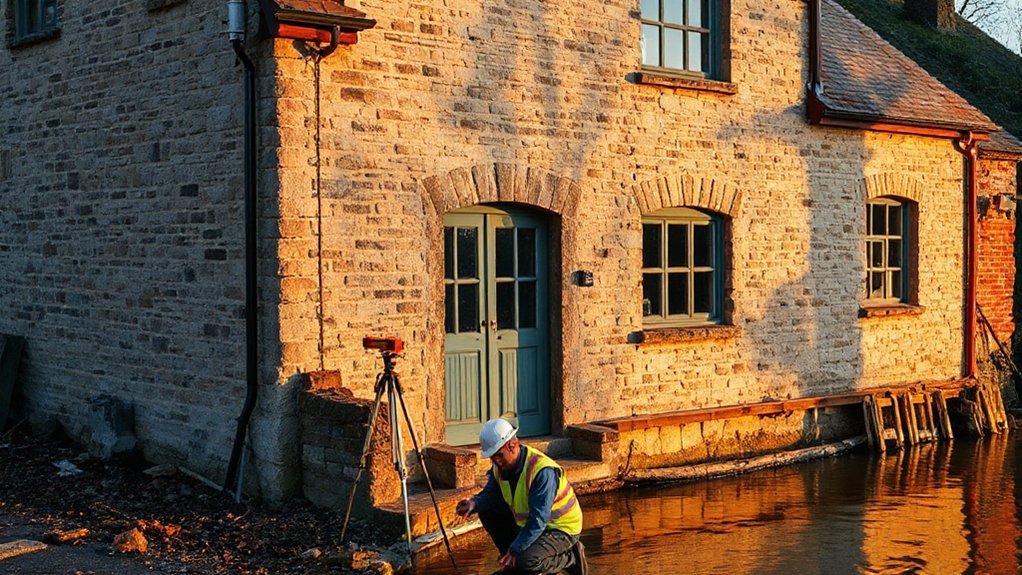
If the cottage shows signs of movement—stepped cracking in brickwork, sloping floors, sticking doors, or a bulging river-facing wall—bring in a structural engineer before you finalise designs or strip back finishes. You’ll get an evidence-led view of what’s cosmetic versus structural, and how proposals may affect the building’s Historic significance and architectural style. Ask for a written appraisal that you can share with your architect, conservation officer, and insurer, so decisions stay defensible and proportionate. Prioritise:
- A site inspection with crack monitoring strategy and simple level surveys.
- Review of past alterations, drains, nearby trees, flood history, and riverbank conditions.
- Recommendations for further investigation (trial pits, boroscope checks, moisture readings) where risk justifies it.
Stabilize Foundations, Chimneys, and Framing
Your engineer’s appraisal gives you the evidence to tackle the structure in the right order: start by stabilising foundations, chimneys, and the primary frame before you touch finishes. If settlement has racked openings, you’ll sequence temporary propping, localised underpinning, and stitching cracks with compatible lime-based mortars. You should rebuild failing chimney heads, renew lead flashings, and add discreet restraint straps where needed, keeping original brickwork and detailing for Exterior preservation. Check joist ends, wall plates, and tie beams for decay and deflection; you’ll splice repairs rather than wholesale replacement, and you’ll specify seasoned timber to match. For Roof conservation, you must stabilise rafters and purlins, repair trusses, and keep load paths continuous, so later repairs don’t reopen movement.
Stop Damp Without Sealing the Cottage
Although damp often looks like a single fault, you’ll only cure it in a riverside cottage by managing moisture sources while keeping the building breathable. Start outside: clear gutters, repair downpipes, and set splashback-free outlets into proper drains. Regrade soil so it falls away, and lower high ground bridging the damp course, keeping sub-floor vents unobstructed. Indoors, strip impermeable cement renders, gypsum plasters, and vinyl paints that trap salts; reinstate lime plaster and mineral finishes for Material compatibility and Historical authenticity. Target rain ingress around sills and chimneys with leadwork repairs and lime pointing, not silicone sealants. Use a moisture meter and salt testing to map patterns before treatment. Then prioritise: 1) water disposal, 2) capillary breaks at thresholds, 3) breathable finishes throughout.
Insulate and Ventilate in a Breathable Way
You’ll manage moisture by prioritising controlled vapour movement, targeted extraction in wet rooms, and consistent background heat rather than sealing up the fabric. You’ll reinstate natural ventilation pathways by keeping chimneys and air bricks functional, allowing a measured through-draught, and fitting discreet trickle vents where needed. You’ll insulate with breathable materials—wood fibre, sheep’s wool, cork, or lime-hemp—so walls can buffer humidity while you cut heat loss.
Moisture Management Strategies
Because riverside air carries persistent damp, moisture management needs to be designed in from the outset rather than patched in later. You’ll protect historic fabric by balancing Humidity control with breathable insulation, so vapour can move without trapping water in laths, joists, or lime plaster. Specify compatible materials and detail junctions carefully, especially at skirtings, hearths, and window reveals.
- Use hygroscopic insulation (woodfibre, hemp-lime) and vapour-open finishes (limewash) to buffer peaks and reduce interstitial condensation risk.
- Install moisture barriers only where truly required: capillary breaks at ground contact, and a discreet DPM beneath new slabs, never against solid stone walls.
- Manage liquid water: repair gutters, reinstate drips, repoint in lime mortar, and keep external ground levels below internal floors.
Natural Ventilation Pathways
When you add insulation to a riverside cottage, you must also map clear ventilation pathways so moisture-laden air can escape without chilling the building or forcing damp into timbers and lime plaster. You’ll start by tracing air movement from low-level inlets to high-level outlets, keeping routes continuous behind linings and within roof voids. Ensure eaves, ridges, and gable vents aren’t blocked, and maintain clear underfloor void ventilation with unobstructed air bricks.
Use Cross ventilation deliberately: openable windows on opposing elevations, plus trickle vents where appropriate, let you purge humid air quickly after cooking and bathing. Support natural airflow with internal transfer paths—undercut doors, discreet grilles, and clear stairwells—so air can move room to room without pressurising cold corners. Check performance seasonally and keep vents clear.
Breathable Insulation Materials
Although extra warmth matters on a riverside site, your insulation choice has to keep the cottage’s fabric vapour-open so moisture can move outwards rather than condensing in studs, joist ends, and lime plaster. You’ll get the best results by pairing capillary-active, Eco friendly materials with careful detailing at junctions and service runs, then verifying performance through breathability testing, not guesswork.
- Wood fibre boards: use internally with lime plaster or clay finish; tape joints, keep edges dry, and avoid foil facings.
- Hemp–lime or hemp batts: suit uneven studs; fit snugly, maintain a ventilated cavity where needed, and protect from bulk water.
- Sheep’s wool: handles humidity swings; pair with a smart vapour control layer, and keep eaves ventilation clear.
Repair Windows, Then Improve Performance
Before you think about replacement units, repair the existing sash windows so you preserve the cottage’s character and stop the most common failure points—loose joints, rot at the cill, failed putty, and worn cords. Strip back paint carefully, splice in matching timber, and re-pin mortice-and-tenon joints. Re-bed panes with linseed-oil putty, renew parting and staff beads, and fit new sash cords and pulleys so the sashes run true and lock tight. If you need glass replacement, choose slim-profile cylinder or restoration glass to keep window aesthetics consistent. Then improve performance: brush draught-proofing in the beads, a discreet secondary glazing panel, and upgraded fasteners to pull meeting rails together. You’ll cut rattles, reduce heat loss, and keep original sightlines.
Restore Walls With Lime Plaster and Paint
Once you’ve got the structure dry and stable, strip back any gypsum patching and cement-rich paint so the walls can breathe, then reinstate a traditional lime plaster build-up that suits the cottage’s original fabric. You’ll match aggregates and hair to the existing work, keeping coats thin and well-keyed to reduce cracking. Allow proper carbonation between coats; don’t rush drying with forced heat or draughts, as you’ll weaken the set and invite shrinkage. Finish with Traditional paints that remain vapour-open, so moisture can migrate harmlessly.
- Rake out loose material, then dub out hollows with coarse Lime plaster and sharp sand.
- Apply a floating coat, straighten with a darby, and scratch for a firm key.
- Lay a fine skim and seal with limewash or casein, not vinyl.
Add Discreet Heating, Wiring, and Plumbing
With breathable lime finishes back on the walls, plan your services so you don’t undermine that work with chased channels, impermeable fillers, or heat build-up. Route hidden wiring through existing voids, floor zones, and cupboards, and use surface-mounted brass or painted conduit where exposure is unavoidable. Keep junction boxes accessible and avoid cutting historic studs or lintels.
For discreet heating, favour low-temperature wet systems: slimline radiators, cast-iron refurbs, or underfloor on breathable build-ups with edge insulation. Control moisture by using thermostatic radiator valves and zoned timers rather than aggressive bursts. Update plumbing with barrier pipe and demountable fittings, run within service cavities, and sleeve penetrations. Fit isolation valves, pressure-test thoroughly, and record routes for future maintenance. Use certified electricians and Gas Safe engineers throughout.
Landscape for Drainage and Riverbank Stability
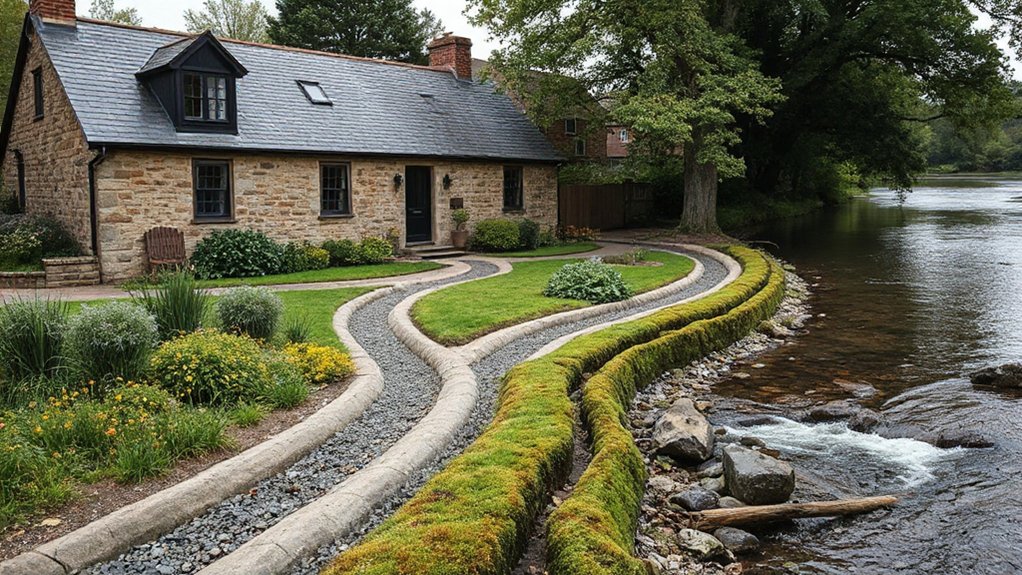
Although the cottage sits close to the water, you can’t treat the garden as decoration—its grading, surfacing, and planting directly control damp risk and whether the riverbank holds firm. Set falls away from walls, keep splash zones in gravel, and use permeable paths so rainfall infiltrates rather than racing to the river. Manage surface water with discreet channels and soakaways where ground conditions allow, and clear gullies before winter spates. To reduce Riverbank erosion without harsh engineering, you should:
- Regrade gently and install coir rolls or willow spilling to bind the toe.
- Plant native sedges, reeds, and shrubs for deep roots and Wildlife habitats.
- Keep mowers and foot traffic back with a low post-and-rail buffer.
Frequently Asked Questions
How Do You Source Reclaimed Materials That Match the Cottage’s Original Fabric?
Start with a fabric survey, then use vintage sourcing via salvage yards, reclamation merchants, and online auctions. Prioritise material matching by checking species, profiles, patina, and dimensions. Get samples, verify provenance, and document everything.
Will Restoring the Cottage Increase Its Insurance Premiums Near the River?
Yes, it can increase premiums if works raise insured value or alter Flood risk. You’ll often face higher insurance costs near rivers, but you can offset them by resilience measures, surveys, and insurers’ approvals.
How Can You Protect Original Features During Construction and Contractor Access?
Treat original features like fine china: you’ll shield them during works. Use Historic preservation method statements, insist on Material authenticity, fit protective wraps, ply sheets, and hoardings, control access routes, and supervise daily.
What Maintenance Schedule Keeps Traditional Materials Performing Long-Term?
You’ll keep traditional materials performing by scheduling quarterly inspections, annual cleaning, and five-year condition surveys. Recoat Historical paint every 5–7 years, maintain gutters twice yearly, and prioritise Timber preservation with biannual moisture checks, prompt repairs.
How Do You Choose Contractors Experienced in Listed Riverside Heritage Work?
Choose contractors with proven listed riverside projects, conservation accreditations, and strong references. You’ll review method statements, flood-risk experience, and lime skills. Prioritise Architectural authenticity and Heritage conservation, insisting on Historic England-aligned approach and staged sign-offs.
Conclusion
You don’t “do up” a historic riverside cottage; you negotiate with it—politely, and in triplicate. You’ve checked listing constraints, courted permissions, and accepted that floodwater doesn’t respect your programme. You’ve surveyed defects, unpicked botched cement, and returned to lime, timber, and breathable finishes. You’ve upgraded windows, then performance, without vandalising character. Services go in quietly; drainage and riverbank planting do the heavy lifting. Authenticity wins, not ego.
About the Author