Plan your bantry around a store–prep–clean workflow, then choose a single-wall, galley, or L-shape layout that keeps a 900mm passage and clears door swings, radiators, and sockets. You’ll get the best prep space with a 600mm-deep worktop (450–500mm only if tight) and a 50–70mm overhang, plus 600mm landing space by the sink or hob. Add adjustable shelves, drawers, high-CRI task lighting, and RCD-protected outlets for appliances and charging—next you’ll see how to zone it for food, drinks, and kit.
Key Takeaways
- Choose a single-wall, galley, or L-shape layout, keeping 900mm passage clearance and checking door swings, radiators, and sockets.
- Size the prep worktop for comfort: 600mm deep, 50–70mm overhang, and 900–1800mm long depending on prep needs.
- Organize workflow zones: store, prep, and clean, with a landing zone by the fridge and at least 600mm clear beside sink or hob.
- Use adjustable shelves and drawers sized to items, storing heavy goods low, staples at eye level, and appliances in a ventilated garage.
- Plan lighting and electrics: high-CRI task LEDs, 3000–3500K, ample outlets with cable management, and RCD/Part P compliance in the UK.
Pick a Bantry Layout (Single, Galley, L-Shape)
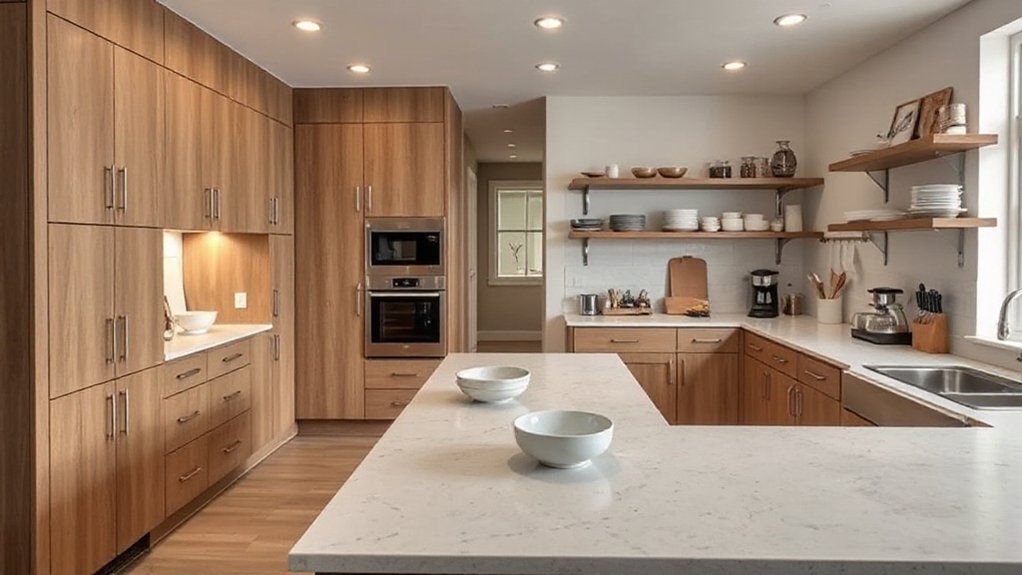
Before you buy a single shelf or storage box, decide on a bantry layout that fits your space and how you’ll use it day to day: single-wall if you’re working with a narrow UK utility room or under-stairs run, galley if you’ve got two opposing walls and want clear zones for food, small appliances, and cleaning supplies, and L-shape if you need extra corner capacity without blocking walkways. Measure door swings, radiator positions, and plug sockets, then keep 900mm clear for passage where possible. In a galley, aim for 1,000–1,200mm between runs so drawers open comfortably. For L-shapes, plan the corner with a carousel or blind-corner pull-out. Review Bantry design options alongside aesthetic considerations: match cabinet fronts to your kitchen, and use consistent handles for a built-in look.
Define Your Bantry Workflow: Store, Prep, Clean
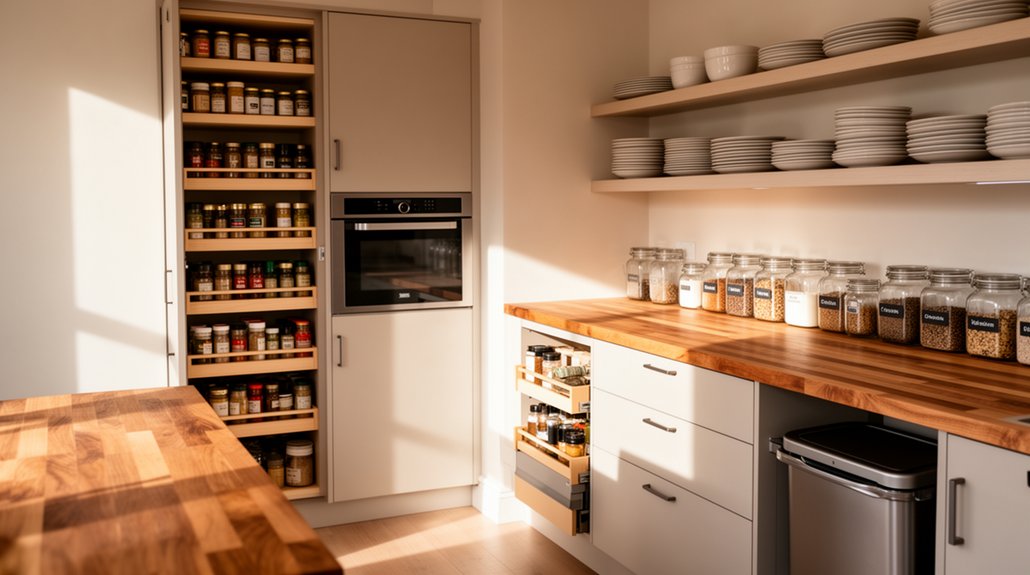
Although your bantry might double as a utility space, it works best when you map a simple workflow—store, prep, clean—and assign each step a clear zone. Put bulk goods, tins, and small appliances in the “store” area, using labelled clear canisters and pull-out crates so you can spot stock at a glance. Keep heavier items low and everyday staples at eye level.
In the “prep” zone, plan a continuous worktop with power for a kettle, toaster, or mixer, plus task lighting for winter afternoons. Choose wipeable splashbacks and consider bantry aesthetics, so jars, baskets, and appliances look intentional.
Finish with “clean”: a compact sink, a drying rack, and bins for recycling and food waste. Your material choices should handle steam, spills, and frequent wiping.
Measure Bantry Aisles, Door Swing, and Clearances
Once you’ve set your store–prep–clean zones, check that you can move between them without snagging on doors or cramped pinch points. Start by marking your layout on the floor with masking tape, including cabinet fronts and appliance handles, then walk it like you’ll use it daily.
Aim for an aisle width of 1,000mm in a working bantry; 900mm is workable if only one person uses it, while 1,100–1,200mm suits two people passing. Measure door swing arcs and allow door clearance so doors and drawers can open fully without hitting each other or blocking the route. If space is tight, choose pocket, sliding, or outward-opening doors. Leave 600mm clear in front of under-counter appliances for loading and access.
Set Up Bantry Zones for Food, Drinks, and Appliances
Once you’ve confirmed your aisle widths and door swings, you can zone your bantry so everything lands where you’ll use it. Define clear food storage zones (everyday staples at eye level, bulk goods lower down), set up a dedicated drinks station near a socket and water point, and keep mugs and supplies within arm’s reach. Then organise an appliance garage with ventilated space, cable management, and a clear worktop run so you can use the kit without dragging it out.
Define Food Storage Zones
Start by splitting your bantry into three clear zones—food, drinks, and appliances—so everything has a logical home and you don’t waste time hunting. For the food zone, focus on pantry organization and tight food categorization, using shelf height and container choice to keep everyday items within easy reach.
- Put breakfast staples at eye level (cereal, porridge oats, jam).
- Group baking together: flour, sugar, bicarbonate of soda, toppings.
- Store tins and jars low and forward; label spines for quick scanning.
- Keep snacks in a pull-out crate, portioned for lunchboxes and after-school grabs.
- Create an “open now” basket for half-used packets, clipped and dated.
Rotate stock weekly, bring newer items to the back, and use clear boxes sized to UK shelves.
Create Beverage Station Area
Because you’ll make hot and cold drinks multiple times a day, give the drinks zone a dedicated beverage station so everything you need sits together and you don’t trail back and forth across the bantry. Place it near the sink and a power point, with a wipe-clean worktop for spills and spoons.
For Beverage station organization, group tea bags, coffee, sugar, sweeteners, and hot chocolate in labelled caddies; keep syrups and squash in a small tray to stop drips. Store UHT milk, spare pods, and biscuits on the shelf above, and keep a bin for empty sachets below. Plan a clear drinkware display: hang mugs on hooks or stack cups in one cupboard, and store glasses together at eye level for safe, quick grabbing.
Organize Appliance Garage Space
While small appliances make a bantry more useful, they can quickly clutter the worktop, so give them an “appliance garage” zone where you can plug in, use, and stash them in one place. Keep it beside your prep run, not in the main traffic line, and plan proper garage integration: a tambour or lift-up door, heat-safe backing, and a dedicated socket strip. Aim for tidy appliance organization by giving each item a footprint and a home.
- Measure kettle, toaster, air fryer heights before choosing cabinet internals
- Fit LED strip lighting so you can see controls and crumbs
- Add a pull-out shelf for heavy mixers and safer lifting
- Use cable clips and a grommeted hole to route leads neatly
- Store accessories in labelled boxes above, within easy reach
Choose Bantry Shelving Depths for Real Items
Once you measure what you actually store—cereal boxes, pasta jars, tins, spices, and small appliances—you can set shelf depths that fit your items neatly without wasting space or blocking access. Aim for 250–300mm deep shelves for jars, tins, and packets; go 320–350mm for cereal boxes and small appliances, but keep heavier kit lower. Use 100–120mm for spice ledges so labels stay visible and nothing disappears at the back. If you’re tight on space, step depths: shallow top shelves, deeper mid-shelves, and a robust base shelf. Choose shelving materials that won’t sag in humid UK kitchens; sealed plywood or powder-coated steel performs well. Fit adjustable shelves on 32mm system holes so you can re-space as your shopping habits change.
Use Bantry Drawers vs Cabinets (and Where Each Wins)
Even if you’ve nailed your shelf depths, the choice between drawers and cabinets will make or break how usable your bantry feels day to day. Drawers bring everything to you, which boosts drawer organization and cuts rummaging, especially in narrow UK kitchens. Cabinets still earn their place when you need height, awkward shapes, or want doors to hide visual clutter.
- Use deep drawers for tins, packets, and small appliances; add dividers and labels.
- Choose shallow drawers for spices, baking bits, and tea/coffee so you don’t stack.
- Fit pull-out trays inside base cabinets to improve cabinet accessibility on a budget.
- Keep tall cabinets for trays, chopping boards, and bottles that won’t lie flat.
- Put heavy items in drawers low down; reserve upper cabinets for light, infrequent stock.
Size the Bantry Countertop for Daily Prep
You’ll get more day-to-day use from your bantry if you right-size the prep depth, so it stays workable without turning into a dumping ledge. Aim for enough front-to-back space for a chopping board and small appliances, while keeping reach to shelves and sockets comfortable. Then optimise the counter length to suit your routine—tea and toast needs less run than batch cooking, but you’ll still want clear landing space by the hob, sink, or fridge.
Right-Size Prep Depth
If your bantry counter’s too shallow, everyday tasks spill into the main kitchen; too deep, and it becomes wasted reach and clutter. Aim for a prep depth that suits how you actually work, while keeping Counter height comfortable and preserving storage capacity below. In most UK homes, 600mm works well for mixing, slicing, and setting small appliances without forcing you to lean. If you’re tight on space, 450–500mm still handles a chopping board and scales, especially with wall storage above.
- Target 600mm depth for general prep
- Use 450–500mm in narrow rooms
- Keep 50–70mm overhang for knuckles
- Leave 100mm clear behind taps/plugs
- Check drawer pull-outs don’t foul your stance
Optimize Counter Length
While depth decides what fits on the surface, counter length determines whether prep stays in the bantry or migrates back into the main kitchen. Aim for a clear run that matches your daily tasks: 900–1200mm suits coffee, toast, and plating; 1500–1800mm lets you chop, mix, and park a tray; 2000mm+ supports batch cooking or baking. Keep at least 600mm uninterrupted beside the sink or hob, and leave a landing zone near the fridge or larder pull-outs. Choose counter material that tolerates heat and knives; compact laminate or quartz works well in busy UK homes. Use countertop color to boost visibility—mid-tone matt hides crumbs, while pale shades show spills fast. Add shallow overhang for stools if space allows.
Plan Bantry Lighting: Task, Ambient, and Inside-Cabinet
Because a bantry often sits away from the main kitchen run, lighting needs planning rather than guesswork: combine bright task light for prep and label-reading, softer ambient light for safe navigation, and discreet inside-cabinet lighting so shelves and deep corners stay usable. Choose fittings that suit UK ceilings and cabinetry, and place controls where you’ll actually reach them with arms full.
- Fit high-CRI LED strips or a slim batten over the worktop for task lighting.
- Add dimmable downlights or a wall sconce for Ambient lighting at night.
- Use PIR sensor LEDs inside tall cupboards so doors trigger light instantly.
- Pick 3000–3500K colour temperature to keep food colours true, not harsh.
- Angle lights to avoid shadows from open doors and your own body.
Add Bantry Outlets, Charging, and Appliance “Parking
Since small appliances tend to migrate to the nearest clear surface, plan your bantry’s sockets and “parking” spots so you can plug in, charge, and stow kit without trailing leads across walkways. Position electrical outlets above the worktop and inside an appliance garage for the kettle, toaster, air fryer, or mixer, so cords stay hidden and reachable. Include a dedicated charging shelf with USB-A/USB-C, or a slim power strip fixed to the back panel, to support strong device organization for phones, tablets, and timers. Allow airflow around warm appliances and leave headroom for lifting. Add cable grommets through shelves so you can route leads neatly. If you’re in the UK, specify RCD protection and guarantee Part P compliance with a qualified electrician.
Bantry Mistakes to Avoid (and Quick Fixes)
Outlets, charging shelves, and appliance garages only work if the layout around them doesn’t create daily annoyances, so it’s worth spotting the common bantry mistakes before you fix the units in place. Avoid these pitfalls and you’ll save time, money, and needless rework later.
- Skimping on worktop depth: allow 600mm so a kettle and chopping board fit comfortably.
- Poor lighting: add under-shelf LEDs (warm white) to stop shadowy prep zones.
- Door clashes: check clearances against fridge/freezer and kitchen walkways; use bi-folds or pocket doors.
- Ignoring airflow: vent tall units around microwaves and coffee machines to meet UK guidance.
- Overstyling: keep bantry color schemes calm, then add bantry decorative accents on open shelves, not the worktop.
Label shelves and keep a pull-out bin nearby.
Frequently Asked Questions
What Permits or Building Codes Apply to Adding a Bantry?
You’ll usually need Building Control approval if you alter structure, electrics, plumbing, or ventilation; otherwise it’s often exempt. Check local zoning restrictions, fire escape widths, and Part P. Follow your council’s permit application process.
How Much Does a Functional Bantry Typically Cost to Build?
Almost by coincidence, you’ll typically spend £1,500–£6,000 to build a functional bantry in the UK. Costs rise with Custom storage, Bantry lighting, electrics, and joinery; you’ll cut spend by choosing flat-pack units.
What Materials Hold up Best for Bantry Countertops and Shelving?
You’ll get best results with compact laminate or quartz for countertop durability; both resist stains and heat. For shelving, use 18mm moisture‑resistant plywood or melamine with solid edging; add steel brackets to boost shelf weight capacity.
Can a Bantry Increase Home Value or Appeal to Future Buyers?
Like a well-tailored suit, yes—a bantry can boost value and buyer appeal. You’ll attract UK purchasers with Custom cabinetry, smart layouts, and Decorative accents. Keep finishes durable, match existing kitchen style, and add lighting.
How Do You Control Humidity, Odors, and Pests in a Bantry?
You control humidity, odours, and pests by using ventilation strategies like an extractor or trickle vent, adding odor absorption with charcoal sachets, keeping airtight containers, fixing damp, fitting door seals, and setting discreet traps.
Conclusion
When you design your bantry with purpose, it starts to feel like a quiet, well-run corner of the kitchen: jars lined up like books, a clear counter ready for chopping, and a kettle parked by its own socket. You’ll move smoothly from storing to prepping to cleaning because you’ve sized aisles, door swings, and shelves for real UK staples. Add layered lighting and enough outlets, and you’ll stop fighting clutter and start enjoying the space.
About the Author