
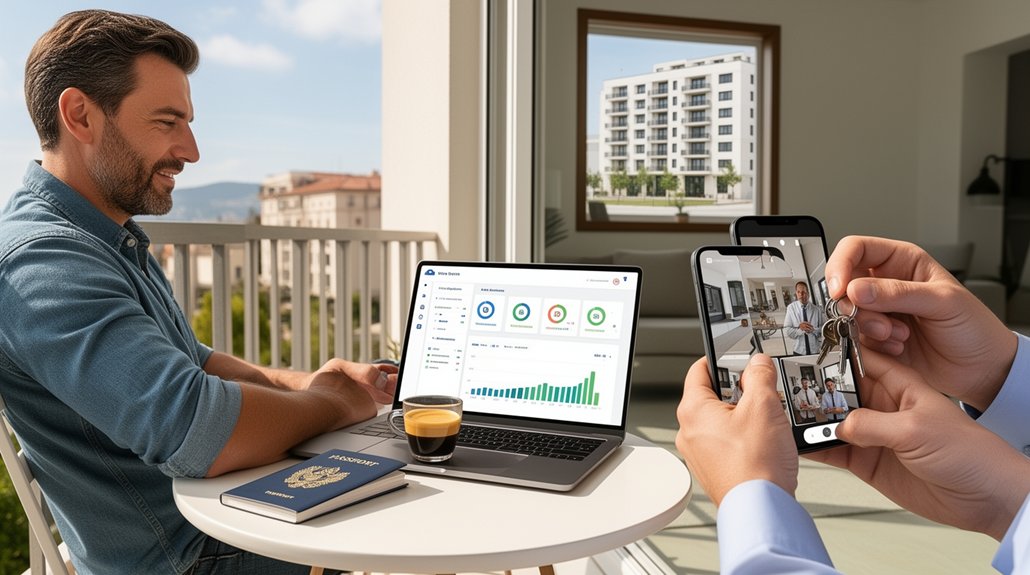
When you live abroad, hands-off investing isn’t about ignoring your rental—it’s about controlling it through systems and a trusted team. You set clear standards for your property manager, lock in vendor response times, and automate rent tracking, inspections, and compliance reminders across time zones. That structure protects cash flow and reduces avoidable disputes. But the real advantage shows up when something breaks at 2 a.m. your time…
Key Takeaways
- Remote systems and delegated vendors let landlords abroad operate properties without daily involvement while retaining strategic control.
- A vetted local team and clear service standards deliver faster repairs, fewer emergencies, and better tenant satisfaction from any time zone.
- Third-party tenant screening and standardized leases reduce bad tenants, vacancies, and compliance mistakes across jurisdictions.
- Automated reporting and variance alerts improve cash-flow visibility, enabling quick decisions on rent shortfalls, fees, and maintenance spikes.
- Centralized documentation and compliance workflows simplify cross-border tax, legal, and audit readiness, making it easier to scale a portfolio remotely.
What “Hands-Off” Means for Overseas Landlords

If you’re managing rental property from another country, “hands-off” doesn’t mean you stop making decisions—it means you set up systems and delegate execution so the business runs without your day-to-day involvement. You stay accountable for strategy, risk, and outcomes while others handle routine tasks.
You define performance standards, approve budgets, and control cash flow through scheduled reporting and clear escalation thresholds. You monitor Property valuation with periodic comps, rent-roll reviews, and disciplined capex planning, so equity doesn’t drift unnoticed. You track local market trends—vacancy rates, rent growth, permitting activity, employer moves—to decide when to raise rents, renew, or sell. You also maintain compliance visibility: lease terms, insurance limits, safety inspections, and tax deadlines. Hands-off succeeds when you make fewer, better decisions on a set cadence.
Set Up Your Remote Rental Management Team
Because distance turns small issues into expensive surprises, you need a remote management team that’s structured, vetted, and accountable long before the next tenant request hits your inbox. Start by lining up core vendors: a licensed plumber, electrician, HVAC tech, and handyman who’ll accept work orders, provide photos, and quote in writing. Add a local cleaner and landscaper for routine Property maintenance with documented checklists. Build a leasing support bench: a notary, locksmith, and photographer to speed turnovers. For tenant screening, use a third-party service for credit, criminal, eviction, and income verification, and require consistent criteria you can audit. Set communication rules: one shared ticketing channel, 24-hour response standards, and pre-approved spend limits by repair type. Require monthly reporting and receipts.
Choose a Property Manager (and Set Expectations)
With your vendors and communication channels in place, a property manager becomes the single point of control that keeps standards consistent and decisions documented while you’re overseas. Vet managers like you’d vet an employee: verify licensing, fee structure, portfolio size, and owner references, and review sample reports. Require clear service standards in writing—response times, spending limits, and when they must request approval. Specify how often they’ll perform a Property inspection, what the checklist covers, and how photos and findings get delivered. Define your tenant screening criteria up front: income verification, credit thresholds, rental history, and fraud controls. Align on lease enforcement, renewal strategy, and when they should initiate notices. When expectations are explicit, you’ll get predictable performance and fewer surprises.
Systems That Reduce Stress Across Time Zones
Even when you’ve hired a strong manager, time zones can turn small questions into day-long delays unless you run the property on repeatable systems. Set decision thresholds in writing: dollar limits for repairs, pre-approved vendors, and photo requirements before work begins. Use Virtual communication standards—one shared inbox, a ticketing board, and a weekly standing call with a fixed agenda—so nothing gets lost in chat threads. Create templated responses for common tenant issues, plus an emergency playbook that defines who calls you and when. Maintain a centralized cloud folder for leases, warranties, and contacts, with version control. Finally, build cultural adaptation into scripts and notices, aligning tone, holidays, and service expectations to local norms.
Protect Overseas Rental Cash Flow With Reporting
You can’t protect overseas rental cash flow if you only review numbers after the month closes, so you’ll set up automated income and expense reports that reconcile rent received, fees, and payables on a fixed schedule. You’ll track budget-to-actual performance by category and property so you can see where cash is leaking, not just that it’s down. You’ll also enable variance alerts for rent shortfalls, rising utilities, or maintenance spikes, so you can act fast before small issues become missed distributions.
Automated Income And Expense Reports
Because overseas rentals can drift off course without timely visibility, automated income and expense reports give you a reliable, month-by-month view of rent collected, fees charged, vendor payments, and reserve balances—all tied back to the lease and the property. You’ll see each line item coded consistently, so you can reconcile deposits, confirm management charges, and verify that maintenance invoices match approved work. Clean categorization also simplifies tax prep and supports your CPA with exportable summaries and receipts. When you treat your property as a Digital investment, these reports let you measure performance like any other asset: net operating income, cash-on-cash return, and trends in operating costs. With dependable reporting, you can plan capital improvements, maintain reserves, and protect long-term Equity growth while you live abroad.
Variance Alerts For Cash Flow
While monthly statements tell you what happened, variance alerts tell you what’s changing—fast enough to protect cash flow before a small leak becomes a missed mortgage payment. You set thresholds for rent shortfalls, late fees waived, repairs exceeding budget, or utilities spiking, and your manager’s system pings you the same day. That lets you approve a fix, tighten vendor scope, or trigger a rent reminder before arrears grow. You also catch pattern shifts: higher vacancy days, recurring maintenance on one unit, or a sudden dip in net operating income. With variance alerts, you don’t manage by calendar—you manage by exception. That’s how you stay hands-off abroad while keeping cash flow predictable, auditable, and resilient across time zones and banking delays.
Faster Repairs: Vendor Networks and Approvals
When time zones and distance complicate maintenance, a pre-vetted vendor network paired with clear repair-approval rules keeps small issues from becoming expensive emergencies. You don’t want to wake up to a burst pipe, a flooded unit, and a frantic tenant. With established vendor relationships, your manager can dispatch licensed plumbers, electricians, and HVAC techs immediately, not after days of quote-chasing and availability checks.
You set the guardrails through tight approval processes: dollar thresholds for routine fixes, mandatory photos or videos, and written scope-of-work notes before any non-emergency spend. You’ll also require itemized invoices, warranty terms, and completion timestamps so you can audit quality remotely. The result is faster response, controlled costs, and fewer surprise capital repairs.
Keep Tenants Longer With Proactive Management
How do you keep a good tenant renewing even if you live an ocean away? You win Tenant retention by running the property like a service business: communicate early, act fast, and remove friction. Set clear response times, provide a single point of contact, and send brief updates after every maintenance visit so tenants feel heard. Use scheduled check-ins at 30, 90, and 180 days to catch small issues before they become move-out reasons. Track recurring complaints, then fix root causes—drafty windows, noisy appliances, lighting, or pests. Offer convenient payment options and confirm receipts immediately. Sixty days before lease end, start lease renewal outreach, review market rents, and present options with a clear timeline. A proactive manager keeps you distant, not absent.
Stay Compliant and Scale Your Rental Portfolio Abroad
Once you manage tenant retention, you’ve got to protect your overseas cash flow by staying compliant across borders. You’ll align leases, registrations, safety standards, and data/privacy rules, then automate income tracking, expense categorization, and tax filings so reporting stays audit-ready. With standardized vendor playbooks, approval workflows, and portfolio dashboards, you can scale remotely without losing control.
Cross-Border Compliance Essentials
Although buying rentals overseas can diversify your income fast, you can’t scale confidently until you’ve locked down cross-border compliance—tax filing and withholding rules, local licensing and registration requirements, lease and tenant-law standards, and bank/FX reporting obligations that vary by country and sometimes by city. Start with a jurisdiction-by-jurisdiction checklist that flags Tax implications and legal considerations before you close. Confirm whether you must appoint a local representative, register as a nonresident landlord, or obtain short-term rental permits. Standardize lease templates to match mandatory disclosures, security-deposit handling, notice periods, and eviction timelines. Align your property manager’s procedures with consumer-privacy, AML/KYC, and remittance controls, and guarantee your bank accounts support compliant inbound rents and outbound payments. Review requirements annually and whenever you change strategy.
Automated Reporting And Taxes
Compliance checklists keep you legal at purchase, but automated reporting and tax workflows keep you compliant at scale across time zones and tax years. You’ll want rent ledgers, expense categorization, and document capture to sync automatically so every invoice, receipt, and bank transaction posts to the correct property and period. That gives you audit-ready books and faster close each month.
For taxes, automation should map income and deductible expenses to the right forms, track depreciation schedules, and flag withholding or filing deadlines in both jurisdictions. You can run Tax optimization scenarios—entity choice, expense timing, and capital improvements—without hunting spreadsheets. Just as important, your system should surface legal considerations, like local registration fees, VAT/GST exposure, and required tenant notices, so you don’t miss compliance triggers abroad.
Scalable Remote Portfolio Systems
How do you scale a rental portfolio abroad without creating a bigger compliance burden every time you add a door? You build repeatable, auditable systems that standardize leasing, approvals, and documentation across markets while staying flexible for local rules. Your stack should track International legalities, renewals, licensing, and data retention automatically, so growth doesn’t mean guesswork.
- Centralize entity, lease, and vendor records in one secure repository.
- Use templated workflows for onboarding, inspections, and rent escalations.
- Automate compliance alerts for registrations, safety checks, and tax filings.
- Localize communication scripts to respect Cultural considerations and avoid tenant friction.
When every property follows the same playbook, you can add units remotely, delegate confidently, and prove compliance on demand quickly.
Frequently Asked Questions
What Are the Tax Implications of Rental Income Earned While Living Abroad?
You’ll typically owe tax where the property sits and may also report it at home; tax treaties can reduce double taxation, and you can claim Foreign tax credits. Track expenses, depreciation, and filing deadlines carefully.
How Do Foreign Currency Exchange Rates Affect My Rental Returns?
Like a tide, Currency fluctuations can lift or sink your rental returns when you convert rent to your home currency. You face Exchange rate risk on income and sale proceeds; hedge, price leases, diversify.
Can I Refinance or Get a Mortgage on a U.S. Rental From Overseas?
Yes, you can refinance or get a U.S. mortgage from overseas if you use lenders accepting nonresident borrowers. You’ll need strong documentation, solid rental valuation, and property management records, plus U.S. banking, tax compliance.
How Do I Handle Eviction Proceedings if I’M Not in the Country?
You handle eviction by hiring Property management to serve notices, file in court, and attend hearings; you stay remote, review documents, and sign digitally. You guarantee Legal compliance by using local counsel and strict timelines.
What Insurance Coverage Do I Need as an Overseas Landlord?
You’ll need landlord property insurance covering building, liability, loss of rent, and legal expenses; add contents, flood, and vacant-property endorsements if needed. Insurers may require documented Property maintenance and Tenant screening to keep coverage valid.
Conclusion
When you live abroad, hands-off investing lets you run rentals without living on your inbox. You set clear expectations with a property manager, lock in vendor response times, and automate rent collection, updates, and compliance checks. With consistent reporting, you spot cash-flow issues early and approve repairs fast, even across time zones. Tenants stay longer when maintenance is proactive. Done right, your portfolio can feel practically self-managing—like it runs itself a million miles away.
About the Author