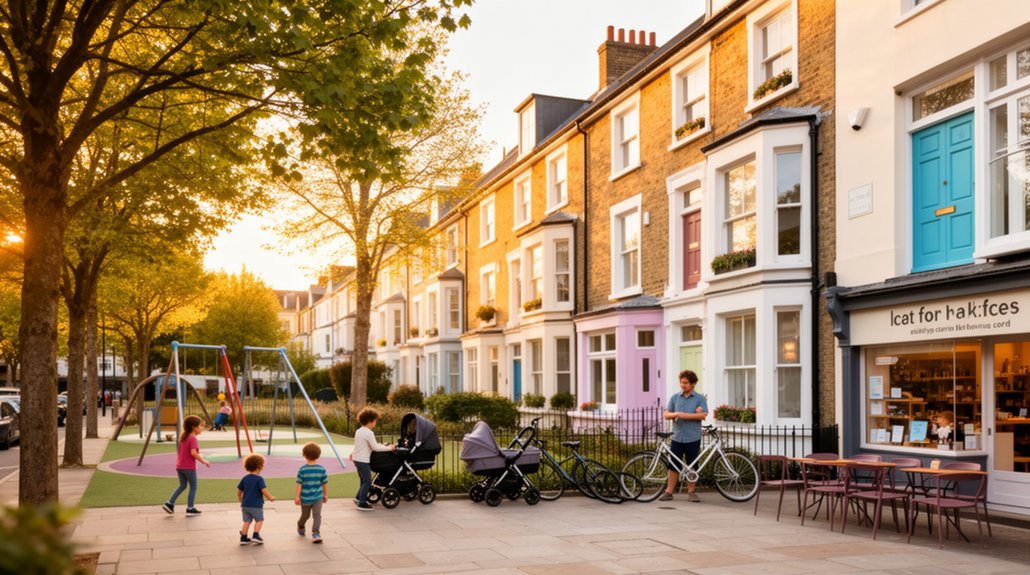
You’ll find Cardiff’s best up-and-coming family areas where school and park walks stay under 10–15 minutes, transport to the centre runs frequently, and day-to-day amenities cluster nearby. Start with Canton for walkable “weekend loops” of parks, cafés, and shops, or Grangetown for bigger 3-beds and fast Central links. Choose Pontcanna/Llandaff North for Bute Park and Taff Trail access, North Roath for calmer period streets, and Penarth for quick coastal trains. Keep going to see which streets best fit your routine.
Key Takeaways
- Canton offers walkable streets, parks, cafés, and clustered amenities, making day-to-day family routines easy without relying on a car.
- Grangetown provides strong value with larger homes, fast rail and bus links to the centre, and improving local amenities for families.
- Pontcanna and Llandaff North suit outdoor-focused families with quick access to Bute Park, Llandaff Fields, and the Taff Trail.
- North Roath and Penarth combine family-friendly terraces, community hubs, parks, and reliable rail access into Cardiff for commuting parents.
- Splott and Tremorfa are rising picks where regeneration is improving streets and amenities, while homes remain cheaper and often larger.
How to Spot Family-Friendly Cardiff Areas?
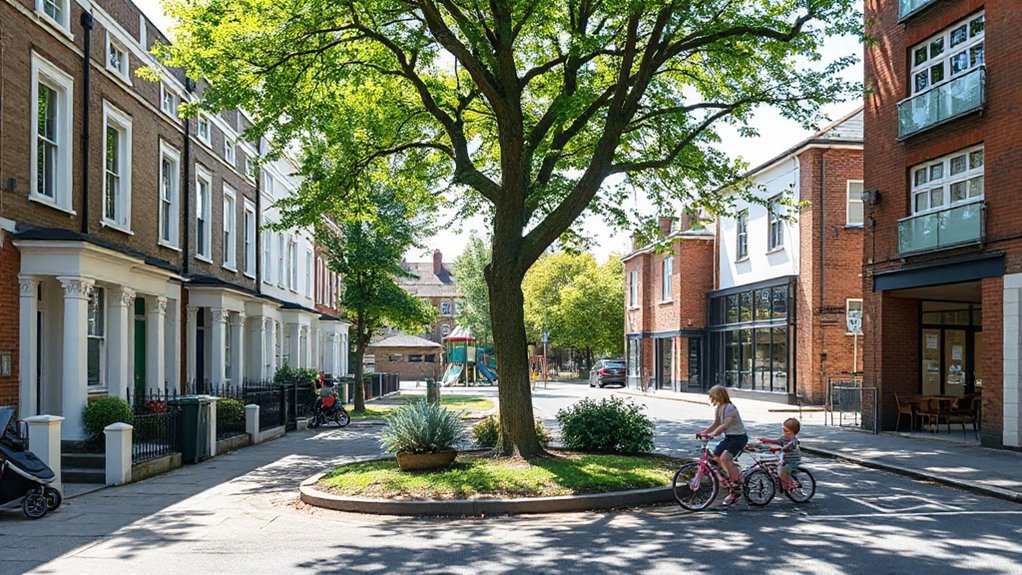
While glossy listings can make any street look ideal, you can spot a truly family-friendly Cardiff area by checking a few measurable signals: walk times to primary schools and parks, bus and rail frequency to the city centre, and everyday amenities (GPs, pharmacies, supermarkets) within a 10–15 minute radius. Next, sanity-check neighborhood safety with recent police.uk incident maps and daytime/evening site visits; you’re looking for consistent footfall, clear sightlines, and well-lit routes home. Use a simple scorecard: 0–10 for lighting coverage, crossing quality, and pavement width for pushchairs. Test local amenities by timing a pram-friendly loop to childcare, a corner shop, and a library. Finally, review planning applications for upcoming density, traffic changes, or new community facilities.
Canton Cardiff: Parks, Schools, Walkable Weekends
Once you’ve used walk-time, safety, and amenity checks to shortlist areas, Canton tends to score well because its weekend routine works on foot. You can link parks, cafés, and shops in a simple loop, reducing car trips and keeping errands predictable. Green space is close enough for quick play breaks, and wider pavements around key routes make buggy navigation easier.
For schools, you’ll want to map catchments and walking routes rather than rely on postcode assumptions; Canton’s compact grid helps you keep the school run under 20 minutes. Track crossings, traffic-calmed streets, and lighting for winter afternoons. You’ll also find local amenities clustered near everyday needs, so your “top-up shop” doesn’t become a drive. Add Community events in parks and halls, and you’ve got built-in, low-effort family social time.
Grangetown Cardiff: Best Value for City Commutes
In Grangetown, you can cut weekday friction with fast links to Cardiff Central via Grangetown station, frequent bus routes, and direct cycle paths into the city. You’ll typically get more square footage for your budget here than in pricier inner-west postcodes, making family layouts and storage upgrades easier to plan. If you want a commute-first neighborhood without sacrificing home value, Grangetown gives you a practical, numbers-led shortlist.
Commute Links And Transit
Because Grangetown sits just south of the city centre, you can keep commute times short without paying central postcodes’ premiums: Cardiff Central is a quick hop by bus or bike, and Grangetown station provides direct, low-friction rail access for city and Bay-side trips. You’ll benefit from public transport frequency that supports school runs and split shifts, plus transit infrastructure that’s easy to read and navigate. For day-to-day reliability, plan around these practical links:
- Rail: Grangetown station’s simple platforms keep transfers fast and predictable.
- Bus: Multiple routes run north–south, giving you fallback options when traffic spikes.
- Active travel: Flat streets and signed cycle corridors let you time-box commutes and errands.
You’ll spend less time in-car, cut parking friction, and keep your week’s logistics tighter.
Family Homes And Pricing
A typical Grangetown family home gives you more space per pound than central Cardiff, especially if you prioritise a short, predictable commute over a prestige postcode. You’ll mainly compare Victorian terraces, 1930s semis, and newer infill builds, so check floorplans, not photos. Aim for 3-bed layouts with a separate kitchen-diner and a usable rear garden; that configuration supports school runs, home working, and storage.
Pricing stays sharper because you’re minutes from the Bay and city centre without paying waterfront premiums. You can start with Affordable apartments for first-time budgets, then step up to modern townhouses that add parking, higher EPC ratings, and lower maintenance. Focus on build quality: insulation, window spec, and roof condition drive running costs more than street name.
Pontcanna & Llandaff North: Homes by Parks and Trails
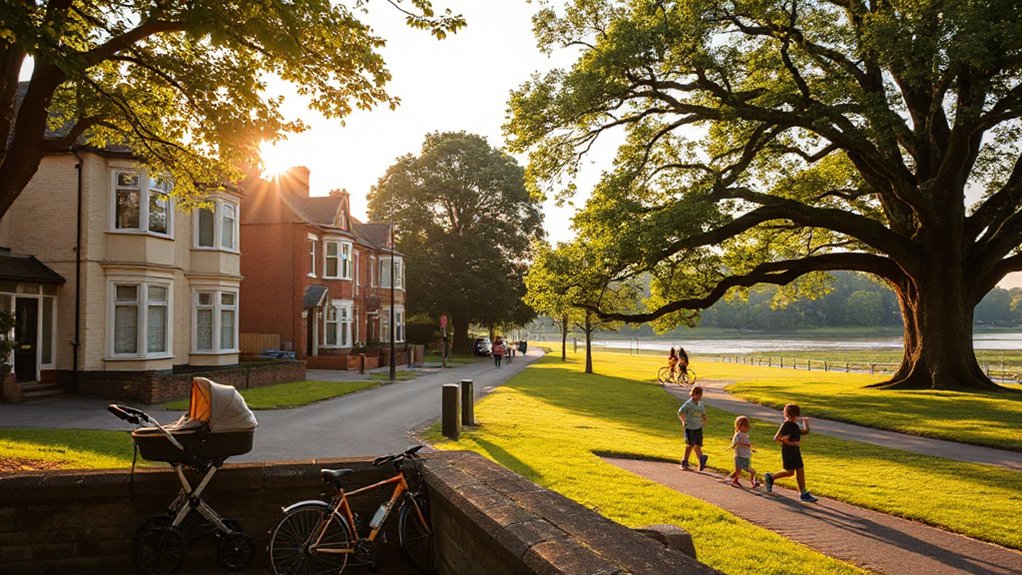
While central Cardiff keeps getting pricier, Pontcanna and Llandaff North still give families a high “green space per postcode” feel, with quick access to Bute Park, Llandaff Fields, and the Taff Trail for walking, cycling, and buggy-friendly routes. You’ll notice streets laid out for easy pram navigation, with wide pavements, tree cover, and direct park cut-throughs that reduce car crossings and shorten school-run time.
- Pick homes within a 10-minute walk of trail access to lock in daily Local outdoor activities.
- Look for period-meets-modern renovations: open-plan kitchens, insulated lofts, and bike storage.
- Plug into community safety initiatives like neighbourhood watch groups, better lighting requests, and school-gate patrols.
You get weekend-ready green space without sacrificing cafés, clinics, and quick bus links into town.
North Roath Cardiff: Calmer Streets, Period Houses
North Roath gives you a similar family-friendly, low-stress layout to Pontcanna and Llandaff North, but with more intact Victorian and Edwardian terraces and a noticeably calmer residential grid. You’ll find wider pavements, consistent frontage lines, and rear lanes that simplify bins, bikes, and prams. Typical terraces offer two reception rooms and three bedrooms, so you can zone homework, play, and quiet time without major reconfiguration.
Design-wise, you’ll benefit from bay windows, high ceilings, and original joinery that boosts daylight and storage potential. Local heritage shows up in preserved façades and mature street trees, while community events cluster around schools, churches, and small parks, helping you build routines fast. For commuting, direct bus corridors keep trips predictable and walkable.
Penarth Near Cardiff: Seaside Living, Quick Trains
In Penarth, you get a seafront routine that’s easy to use: promenades, parks, and playgrounds laid out for pushchairs and weekend time outdoors. You can keep your Cardiff commute tight with frequent, fast rail links into the city, so you don’t trade lifestyle for access. If you’re balancing family-friendly design with travel efficiency, Penarth puts both within a short walk and a short train ride.
Seafront Family Lifestyle
If seaside air and a fast commute sit high on your checklist, Penarth delivers both with a tight, walkable layout built around the Esplanade, parks, and family-friendly streets. You’ll get Seafront amenities within a 10–15 minute stroll: cafés, ice cream kiosks, toilets, and benches that make buggy logistics simple. Design-wise, the promenade prioritises wide paths, clear sightlines, and frequent crossings, so you can supervise kids without hovering. Weekends feel planned-in, not bolted-on, thanks to coastal activities that work year-round and cost little.
- Flat seafront loops for scooters, bikes, and prams
- Playgrounds and green buffers that reduce road exposure
- Tide-timed beach sessions plus sheltered spots for windy days
Fast Rail To Cardiff
Seafront routines stay easy when you can pair them with a quick, predictable commute, and Penarth’s rail link does exactly that. You can reach Cardiff Central in roughly 15 minutes, with frequent peak services that fit school drop-offs and 9-to-5 starts. Stations are walkable from core residential streets, so you’ll design your day around steps, not car seats.
For families, that time certainty matters: you can plan clubs, childcare, and supermarket runs with less buffer. You’ll also keep weekends flexible—ride in for museums, then return for the pier, Vintage markets, and local festivals without parking stress. If you’re comparing neighborhoods, benchmark door-to-door time, not miles; Penarth wins on reliable rail plus seaside daily living.
Splott & Tremorfa Cardiff: Regeneration, Prices, Watch-Outs
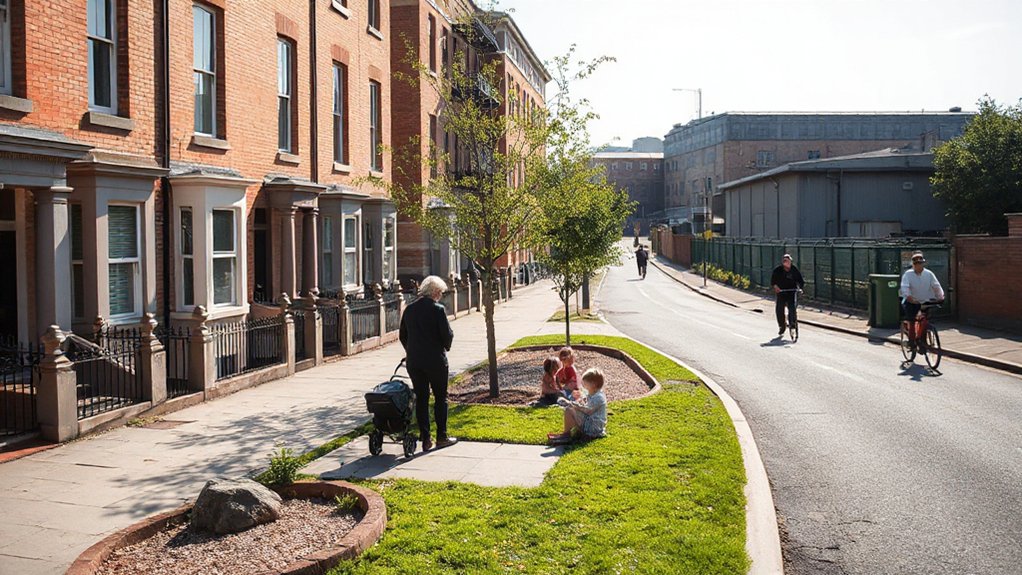
While Cardiff’s east side keeps absorbing investment, Splott and Tremorfa stand out for family buyers because regeneration projects around the city centre and Cardiff Bay are pushing demand outward—yet typical sale prices here still sit below trendier nearby postcodes, so you can often trade a slightly rougher streetscape for more space and better value. Urban revitalization is showing up in smarter shopfronts, upgraded pavements, and better community amenities within walking distance of schools, parks, and bus corridors. Focus on homes with solid Victorian terraces or post-war semis; you’ll get flexible layouts for WFH and extensions.
- Compare sold prices street-by-street; values vary fast.
- Check flood risk and traffic noise near main routes.
- Inspect insulation, roofs, and damp; budget for retrofits.
Frequently Asked Questions
What Are the Council Tax Bands Like in These Neighborhoods?
You’ll typically find council tax bands A–D in most streets, with newer builds edging into E–F. Check each listing’s band, then weigh school quality and safety statistics; both correlate with higher bands.
How Long Are Typical NHS GP and Dentist Waiting Lists Locally?
You’ll wait—and wait—and wait: for NHS appointment availability, expect 1–3 weeks for routine GP, same-day for urgent triage. For Dental practice wait times, you’re looking at 3–12+ months; call multiple practices, join lists.
Which Areas Have the Best Mobile Signal and Broadband Speeds?
You’ll find the best mobile signal and broadband in Cardiff city centre, Cardiff Bay, and Pontcanna, where Mobile coverage is strongest and Broadband providers offer gigabit. Check Ofcom maps and Openreach/CityFibre availability per postcode.
Are There Community Centers With Affordable Kids’ Activities Year-Round?
Yes—you’ll find community centers offering affordable, year-round kids’ activities. You can book community event venues for classes, and join kids’ sports clubs. You’ll keep costs predictable with low fees, clear schedules, and accessible layouts.
What Are the Local Flood-Risk Zones and Insurance Cost Impacts?
Sure, pick low ground: flood-risk clusters sit along the Taff, Ely, Rhymney, and bay flats; premiums can jump 20–50%. Check NRW maps, prioritize Flood prevention measures, and model quotes early for Insurance affordability.
Conclusion
You’ll spot family-friendly Cardiff areas by tracking school catchments, park access within a 10-minute walk, and commute times under 20 minutes. Canton and Pontcanna/Llandaff North balance green space with high-performing primaries; Grangetown and Splott/Tremorfa can stretch your budget as regeneration lifts amenities—just audit noise, traffic, and flood risk. North Roath adds calmer streets and period layouts, while Penarth delivers seaside air plus fast trains. Keep a spreadsheet like it’s 1999, and choose confidently.
About the Author