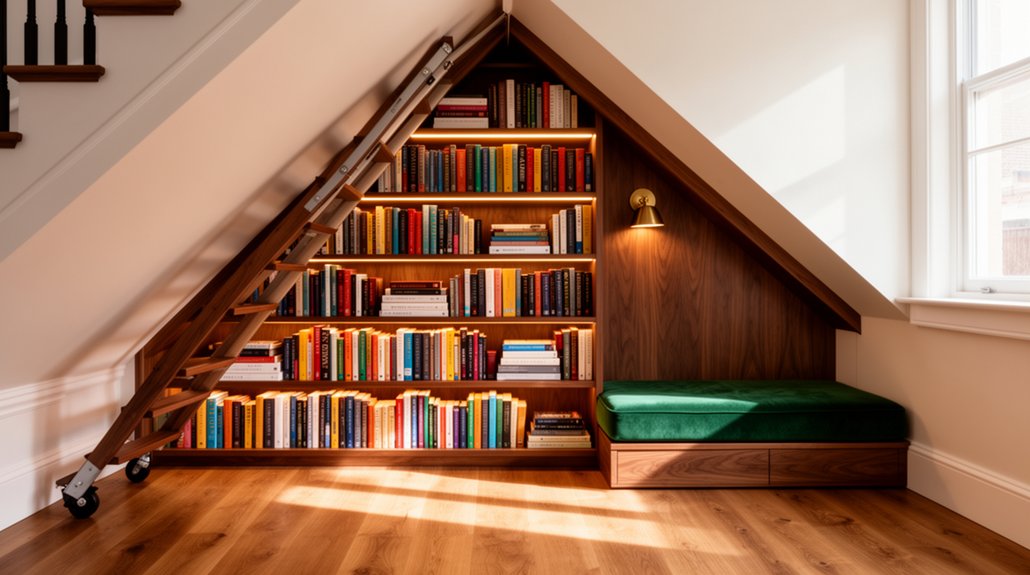
Turn the awkward wedge under your stairs into a mini-library by choosing DIY cubes for flexibility or built-ins for a seamless, resale-friendly look. Measure height at multiple slope points, plus usable depth, trim, and headroom, then tape out shelf lines to spot pinch points. Follow the stair pitch with stepped shelving and reserve one tall bay for oversized books. Add warm dimmable LED strips or shallow puck lights, and hide clutter in matching lidded baskets with consistent labels. Keep going for extra layout and styling ideas.
Key Takeaways
- Measure slope height at multiple points, width, and usable depth; tape shelf lines to spot pinch points before building.
- Choose DIY modular cubes for flexibility or custom angled built-ins for a seamless, resale-friendly fit that follows the stair pitch.
- Use stepped shelving with adjustable pin holes, reserving the tallest bay for oversized art books and deeper cubbies for large formats.
- Add layered warm, dimmable LED lighting—tape under shelves or shallow puck lights—to keep spines readable and the nook cozy.
- Mix open shelves with lidded, labeled baskets that taper to the slope, keeping frequently used items at arm level for easy access.
Pick Your Under-Stairs Mini-Library Layout (DIY vs Built-In)
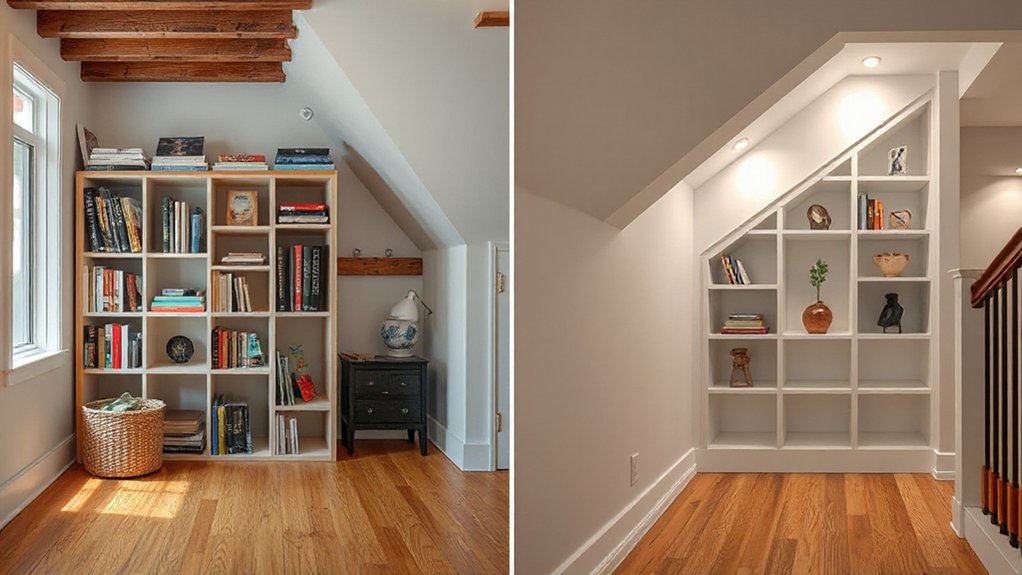
Whether you’re carving out a cozy reading nook or just trying to tame book clutter, your first decision is the layout—and that usually comes down to DIY vs built-in. If you go DIY, you’ll save cash and keep flexibility: try modular cubes, wall-mounted ledges, or a rolling book cart that slides under the slope. Expect DIY challenges like uneven walls, fussy trim lines, and keeping shelves square without pro-grade tools, so plan for sanding, shimming, and paint touch-ups. Built-ins look seamless and resale-friendly, especially with hidden toe-kicks, integrated lighting, and push-latch doors for a clean “library wall” vibe. But Built in costs climb fast with carpentry labor, custom doors, and finish matching. Choose based on your skills, timeline, and how permanent you want it.
Measure the Stair Nook for Shelf Depth and Clearance
Before you buy lumber or baskets, map the under-stairs nook like a tiny room: measure height at several points along the slope, the full width between walls/trim, and the usable depth from the front edge to the back wall. Sketch the staircase geometry on graph paper or a phone note, then label every dimension. Next, take clearance measurements for how you’ll access books: allow enough front-to-back space for spines plus finger room, and check that your head won’t hit the underside when you crouch. Measure any baseboards, handrail posts, or HVAC returns that steal inches. Use painter’s tape to mark your proposed shelf line on the wall and floor so you can see pinch points before you commit.
Choose Shelving That Follows the Stair Slope
Match your shelving to the stair slope so you don’t waste that upper triangle: choose custom angled built-ins for a seamless, architect-grade look or modular slope-fit cubes for a flexible, renter-friendly setup. Keep each bay stepping down with the treads, and size openings for what you’ll actually store (books, baskets, shoes). Finish it with clean trim, consistent reveals, and a paint or veneer line that tracks the angle to make the whole run look intentional.
Custom Angled Built-Ins
How do you turn that awkward triangle under the stairs into storage that looks intentional? Go custom with angled built-ins that trace the stair pitch exactly. Start by templating the slope with cardboard, then transfer it to side panels so every shelf line stays parallel and tight. This angle customization maximizes cubic inches while keeping spines readable and dust gaps minimal.
For aesthetic integration, match the casing profile and paint sheen to your existing trim, or veneer panels in the same wood tone as nearby floors. Keep shelf depths varied: 8–9 inches for paperbacks, 10–11 for hardcovers, and a few taller bays for art books. Add concealed LED strips on the underside of each run, plus a toe-kick to protect corners and hide wiring cleanly.
Modular Slope-Fit Cubes
Custom angled built-ins look seamless, but you can get a similar slope-hugging effect faster with modular cubes that step up along the stair pitch. Start by measuring the rise/run so each cube stacks like a staircase, keeping the top line aligned with the underside stringer for clean slope integration. Choose a modular design with identical units so you can reconfigure later, and mix open cubes with a few door-front boxes to hide chargers, bookmarks, and kids’ paperbacks. Anchor the base row to studs, then interlock upper cubes with brackets to prevent racking. Vary cube depths: deeper at the tall end for art books, slimmer near the low end for paperbacks. Leave a toe-kick gap so you won’t scuff spines. Add thin felt pads for quiet sliding.
Trim And Finish Lines
Even if you’re using off-the-shelf units, you can make under-stairs shelving look built-in by letting every trim and finish line track the stair slope. Scribe side panels to the stringer, then cap gaps with slim fillers so the reveal stays consistent. That clean geometry boosts space optimization and keeps sightlines calm for aesthetic harmony.
- Run a continuous face frame or edge banding that angles with the slope, not against it.
- Align shelf fronts, baseboards, and crown returns to the same pitch, then sand flush before paint.
- Use one sheen level (matte is trending) across trim, panels, and toe-kicks so seams disappear.
Finish with caulk and a single-color paint wrap; you’ll get a tailored look that reads custom and organized.
Add Lighting for Reading (Plug-In or Hardwired)
Because under-stairs nooks often sit in shadow, adding dedicated reading light turns the space from “storage-adjacent” to genuinely usable. Start with layered Ambient illumination plus focused task lighting so spines read clearly and pages don’t glare. For plug-in options, mount a slim LED picture light above shelves, run the cord through adhesive raceway, and plug into a switched outlet or smart plug for app control. Prefer hardwired? Install a recessed puck or mini-can on a dimmer, or tuck LED tape under each shelf with a concealed driver in an access panel. Aim for 2700–3000K for warmth, 90+ CRI for true color, and keep fixtures shallow to protect headroom. Add motion sensors for hands-free convenience.
Build a Cozy Reading Nook Under the Stairs
You can turn that under-stairs void into a reading nook by starting with a built-in bench or compact chair and layering on thick seat foam, a back cushion, and a washable throw. Add built-in lighting layers—an LED strip for ambient glow plus a focused sconce or mini pendant for pages—so it works day or night without glare. Finish with storage that looks intentional, like flush drawers, open cubbies for current reads, and a slim ledge for a mug and charging.
Seating And Cushioning
- Choose a firm seat cushion and a softer back bolster for posture-friendly lounging.
- Use a waterfall front cushion to soften the edge and look tailored.
- Add a thin seat pad liner and removable covers for easy cleaning.
Built-In Lighting Layers
Once the seating feels dialed in, set the mood with built-in lighting layers that make the under-stairs nook usable at any hour. Start with a dimmable ceiling downlight or slim recessed puck to create soft ambient accent without glare. Then add task illumination right where your eyes need it: a hardwired swing-arm sconce above shoulder height, or an integrated LED reading strip tucked under the stair stringer. Aim for 2700K–3000K warm white so pages look creamy, not blue. Put each layer on separate switches, or use a smart dimmer with scenes for “Browse,” “Read,” and “Night.” If wiring’s tricky, route low-voltage LED tape through a hidden channel and use a plug-in transformer nearby.
Storage With Style
Because an under-stairs nook can turn cluttered fast, build storage into the seating so the reading spot stays calm and styled. Choose a bench with lift-up lids or deep drawers to hide throws, chargers, and kids’ books while keeping your best spines on open shelves. Use eco friendly materials like FSC plywood, cork, or reclaimed oak, and finish with low-VOC paint for a cleaner feel. Add a slim ledge for your current reads and a cup, so nothing drifts onto the floor. Keep it tailored with:
- Drawer dividers and labeled bins that fit the stair angle
- A pull-out step stool tucked beside the bench
- Creative wall art that doubles as a pinboard or picture ledge for rotating covers
Hide Clutter With Closed Storage and Baskets
Even if your under-stairs nook is small, you can make it look instantly calmer by swapping open piles for closed storage and a few well-chosen baskets. Use door-front base cabinets or drawer units to hide chargers, bookmarks, and kid gear while keeping your books display-ready. Choose matte fronts or wood veneer for subtle aesthetic enhancements that still feel current.
Add lidded baskets on lower shelves for grab-and-go corralling: one for magazines, one for craft supplies, one for throws. Stick to two materials—woven seagrass and felt read sleek together—and repeat a single label style to nail decor organization. Measure the stair slope and buy baskets that taper, so you use every inch without visual clutter. Keep frequently used items at arm level.
Avoid Common Under-Stairs Library Mistakes (and Fixes)
Closed storage and matching baskets clean up the under-stairs nook fast, but a library setup can still feel awkward if you repeat a few common mistakes—like forcing full-height shelves under the slope, ignoring lighting, or leaving no plan for oversized books. Fix it by sizing shelving to the pitch: go stepped, add adjustable pin holes, and reserve the tallest bay for art books. Then layer light so spines don’t disappear at dusk; a low-profile LED strip with a warm dimmer looks current and feels intentional. Keep your styling edited so it reads like a mini-library, not a dumping zone:
- Anchor with cohesive color schemes and one bold backdrop panel.
- Use Decorative accents sparingly: bookends, a small framed print, one sculptural vase.
- Add toe-kick vents and clearance so doors and drawers don’t bind.
Frequently Asked Questions
Do I Need a Permit to Add Built-In Shelves Under Stairs?
You’ll often need a permit if you modify structure, wiring, or egress; if you’re just adding Custom shelving, you might not. Check your local building office. Lighting design with new circuits usually triggers permits.
How Do I Prevent Moisture and Mold From Damaging Books?
Verily, you’ll stop moisture damage by managing Humidity control: keep RH 40–55% with a small dehumidifier, add vents, seal gaps, avoid exterior walls, elevate books, use silica packs, and inspect monthly for Mold prevention.
What Paint or Finish Is Best for High-Traffic Stairway Mini-Libraries?
Choose a scrub-resistant, low-VOC acrylic enamel in satin or semi-gloss for paint durability in high-traffic areas. For finish options, add a clear water-based polyurethane on shelves, and use scuff-resistant trim paint.
How Can I Childproof an Under-Stairs Library to Prevent Tip-Overs?
Anchor every bookcase to studs with anti-tip brackets, then add Shelf reinforcement using L-brackets and a back panel. Install wall-to-wall base trim, use shatterproof bins low, and add soft-close latches for Child safety.
What Are Budget-Friendly Ways to Soundproof a Reading Nook Under Stairs?
Hard surfaces echo; soft layers hush. You can soundproof on a budget using Affordable materials: thick rug, heavy curtains, book-filled shelves, and foam weatherstripping. Add DIY techniques like felt pads, sealing gaps, and fabric wall panels.
Conclusion
Turn that under-stairs void into your own secret stack, like a small lighthouse tucked beneath a cliff: you’re guiding daily chaos into calm. You’ve picked a layout, measured depth and clearance, and let shelves climb the slope without wasted inches. You’ve added warm, focused light—plug-in or hardwired—so titles don’t disappear at dusk. Tuck baskets and closed doors below, and you’ll dodge cramped seating and awkward head bumps.
About the Author