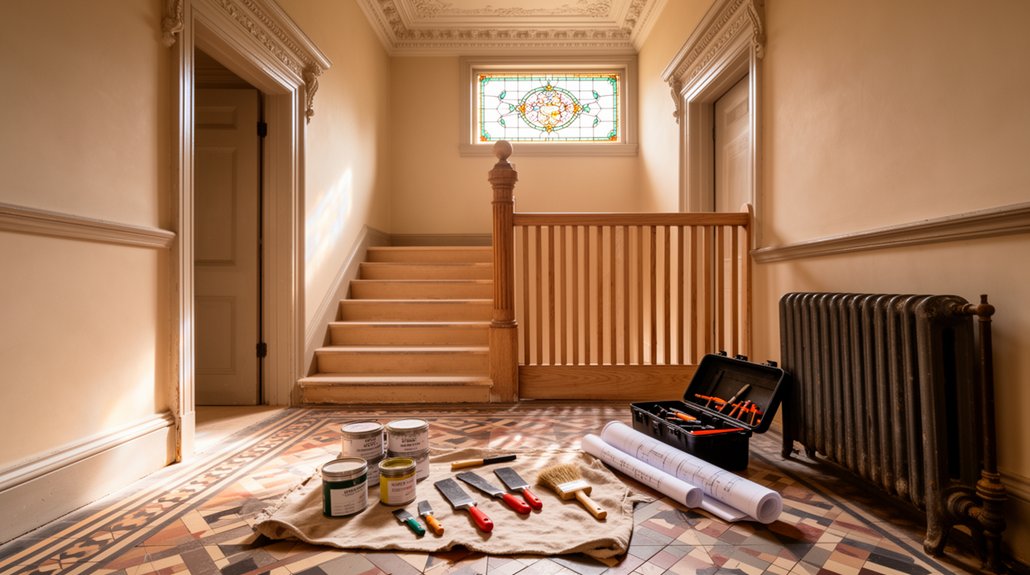
Thinking of reviving a Victorian town house, as your next project? When you buy an 1880s London townhouse with a patched slate roof, blown lime plaster, and a musty rear wing, you can’t start with finishes. You survey roof timbers, party walls, and suspended floors, then map salts, moisture paths, and hairline cracking to separate leak-driven damp from rising damp and movement. You trace later chimney removals, altered joists, and buried services before you set a layout, budget, and approvals strategy—because the first decision you make will determine everything that follows.
Key Takeaways
- Survey roof spans, joists, openings, and chimney stacks to trace load paths and create an accurate measured CAD base.
- Diagnose damp, rot, and movement by mapping moisture routes, taking readings, probing timbers, and monitoring cracks for seasonal versus structural change.
- Identify historic fabric and past alterations using trial holes, plaster edges, and archival records to guide sensitive layout and structural decisions.
- Restore windows, lime plaster, cornices, and floorboards with repair-first methods, vapour-open materials, and detailing that matches original sightlines and profiles.
- Plan modern rewiring, plumbing, heating, and breathable insulation using safe zones and existing voids, minimizing damage while meeting performance and testing requirements.
Survey the Structure: Roof, Walls, Floors
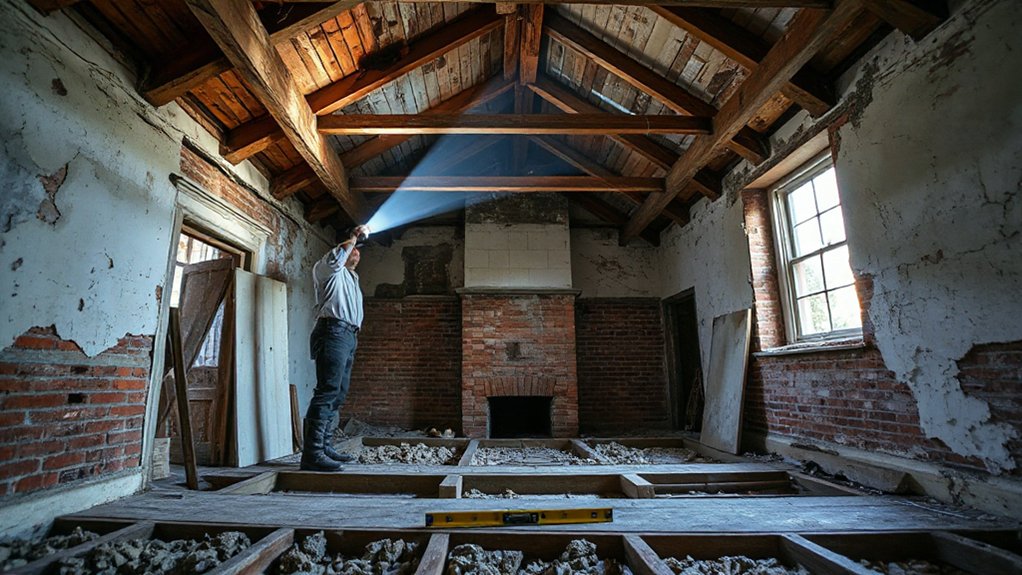
Before you sketch plans or strip finishes, you’ll need to survey the townhouse’s structure methodically—starting at the roof and working down through load-bearing walls to the floors—because Victorian fabric often hides progressive failure behind cosmetic repairs. At roof level, map spans, purlins, and party-wall junctions; note chimney stack alignment, valley geometry, and any historic alterations to rafters. In walls, trace load paths around openings, bay projections, and stair cores; confirm lintel types, pocket bearings, and where later services chased masonry. At floor level, lift selective boards to record joist direction, trimming around fireplaces, and bearing onto sleeper walls or ledgers. Photograph dimensions for your CAD base. This structural narrative should steer interior decoration layouts and Garden landscaping levels so new loads and thresholds stay coherent.
Stop the Big Risks: Damp, Rot, Movement
You’ll start by diagnosing damp and rot with evidence, not assumptions: map moisture paths from roof and rainwater goods to sub-floor voids, then confirm with moisture readings, salt deposits, and timber probing at skirting lines and joist ends. You’ll separate condensation from ingress and rising damp by checking ventilation rates, cold-bridge junctions, ground levels, and the condition of breathable finishes. You’ll then monitor movement—crack gauges, dated photos, and level checks across floors and openings—so any structural intervention is targeted, minimal, and reversible.
Diagnose Damp And Rot
Although Victorian town houses breathe better than many modern builds, damp and rot still thrive wherever moisture lingers in enclosed timber or porous masonry. Start with Damp detection: map staining, salt efflorescence, musty odour, and peeling finishes; then confirm with a capacitance meter and, where needed, carbide testing to separate surface humidity from true saturation. Check external rain goods, parapet flashings, and bridged airbricks; inside, inspect chimney breasts and party walls for hygroscopic salts. Open up selectively at skirtings and joist ends; probe timber with an awl for softness and cuboidal cracking. For Rot prevention, lower moisture at source: reinstate ventilation paths, repair gutters, repoint in lime, and avoid impermeable paints. Specify treated replacement timber only after drying.
Monitor Structural Movement
Where’s the building moving—and is it still active or already stabilised? Start by mapping cracks, out-of-plumb walls, and sticking joinery on plan elevations, then date-stamp photos for comparison. Install tell-tales across key fissures, set a consistent gauge length, and log readings weekly, then monthly, so you can separate seasonal shrink-swell from true settlement affecting Foundation stability.
- Place crack monitors at corners of openings, chimney breasts, and party-wall junctions
- Use precise floor level surveys and plumb checks to track differential movement
- Review drainage, leaking downpipes, and nearby tree influence before design changes
If trends steepen, commission an engineer to specify Structural reinforcement: local lintel upgrades, helical bars, or underpinning—sized to preserve original fabric and your intended layouts.
Trace Past Alterations and Plan the Layout
You start by mapping every past intervention—blocked fireplaces, shifted partitions, lowered ceilings, altered stair runs—by cross-checking fabric clues against measured surveys. You then distinguish original load paths from later infill so you can decide what stays, what’s reversed, and what’s structurally compensated. With that evidence, you set a layout that improves circulation and daylight lines while keeping room proportions, door alignments, and service routes logically coordinated.
Identify Historical Modifications
Start with two parallel investigations—fabric forensics and documentary research—to map every alteration your Victorian town house has absorbed and to prevent the next layout decision from fighting the building’s logic. Open up selective trial holes, lift a floorboard at thresholds, and read plaster edges to date partitions. Cross-check with rate books, sale particulars, and old fire-insurance plans, then annotate a measured survey with confidence levels.
- Track material junctions: brick bonds, joist directions, lath types, and nail patterns.
- Log Architectural detailing shifts: skirting profiles, architraves, cornice runs, and door furniture.
- Reconstruct Interior lighting intent: blocked fanlights, enlarged sash boxes, relocated gas/electric drops.
Finally, mark “heritage-critical” elements versus later infill, and note where services chased walls have weakened structure or erased moldings.
Optimize Floor Plan Flow
With your alteration map pinned to the measured survey, use it to drive plan flow decisions that respect the house’s original circulation while correcting later, awkward edits. Reinstate the primary hall-to-stair sequence, then test every doorway on a 900–1000 mm clear path so movement reads intuitive, not improvised. Remove dead-end corridors created by subdivided parlours; where structure prevents removal, convert pinch points into storage or a cloak niche.
Place high-use rooms on the natural route: kitchen to dining to garden, without crossing formal reception. Align new openings with existing joist directions and chimney masses to minimise steel. Specify Modern insulation to deepened stud linings, but keep service voids continuous for Smart technology cabling, sensors, and zoned controls. Validate clearances against furniture and escape requirements.
Get Approvals: Listed Consent, Regs, Party Wall
Where do approvals bite hardest on a Victorian town house revival? They hit when your design alters fabric, structure, or shared boundaries. If you’re listed, draft a heritage impact statement that proves Historical preservation: retain stair geometry, cornices, sash profiles, and repair-first specifications. Build Community engagement early—show neighbours and officers your elevations, sightlines, and materials schedule before you submit.
- Listed Building Consent: document significance, propose reversible details, and reference like-for-like repairs.
- Building Regulations: coordinate structure, fire strategy, ventilation, insulation, and drainage with drawings that match site conditions.
- Party Wall matters: serve notices, agree method statements, and record a schedule of condition to de-risk cracking claims.
Sequence submissions, lock in drawings, then issue coordinated packages to consultants and surveyors.
Set a Victorian Townhouse Budget and Contingency
Although you can’t price every hidden defect in a Victorian townhouse upfront, you can build a budget that stays stable by tying costs to scope, risk, and sequencing. Start with a measured survey, then break the design into work packages: structure, envelope, services, interiors, and finishes aligned to Victorian architecture. Price each package with drawings, schedules, and specification notes so contractors can’t pad unknowns. Add preliminaries for access, protection, and temporary support, plus professional fees, testing, and statutory charges. Set contingency by risk: 5–10% for defined work, 15–25% where investigations remain. Hold a separate Heritage preservation allowance for like-for-like materials, specialist labour, and sample approvals. Sequence cashflow to critical path, and lock decisions early to avoid variations.
Windows and Doors: Repair vs Replace Sashes
Because sash windows and panelled doors control both heat loss and the building’s visual rhythm, you should decide early whether you’ll repair existing joinery or replace it with new sashes. Start with a condition survey: probe cills for rot, check stile-to-rail joints, and measure sash-to-frame gaps. If timber is largely sound, Window restoration preserves original glazing bars and sightlines; you’ll splice repairs, rebalance weights, and fit brush seals for tighter performance. Choose Sash replacement when rails are deeply decayed, frames are distorted, or previous alterations have ruined proportions; specify matching horn profiles, putty lines, and slim double glazing where permitted. Prioritise:
- draught-proofing and parting beads
- reglazing strategy and U-values
- secure ironmongery and door thresholds
Plasterwork: Lime Plaster, Cornices, Roses
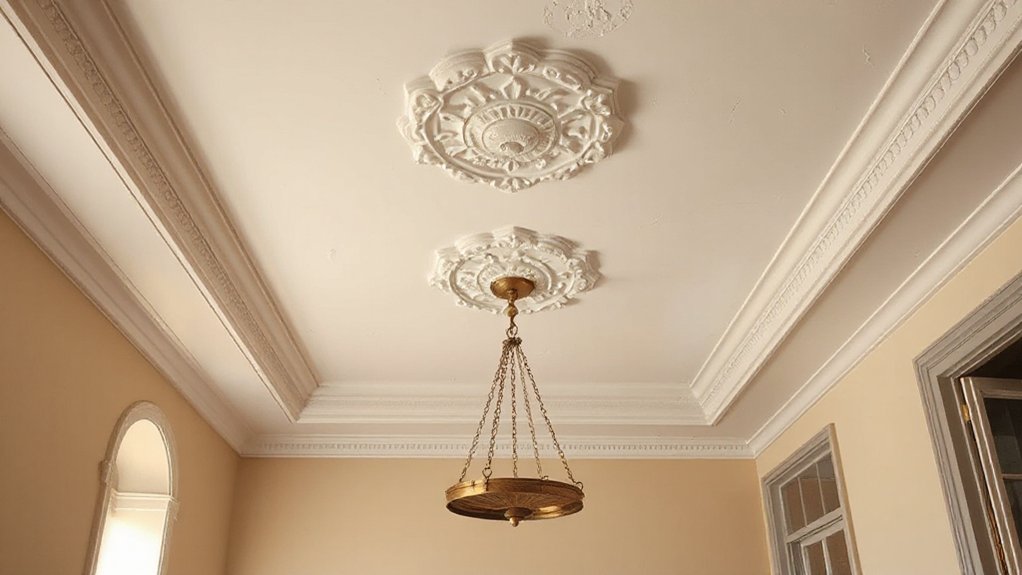
Once you’ve stabilised the envelope with sound sashes, tight doors, and controlled draught paths, turn to the internal plasterwork that manages vapour movement and sets the house’s architectural grammar. Survey for hollow drummy areas, salt bloom, and hairline cracks that track joists or chimneys; you’ll fix causes before finishes. Use Lime plaster techniques: scratch coat with hair, well-keyed to lath or masonry; float coat ruled true; finish coat trowelled tight, then lightly sponged for paint. Keep mixes vapour-open and avoid gypsum patches that trap moisture. For Decorative cornices and ceiling roses, take profiles, run repairs with a zinc template, and cast missing sections in lime putty with fine aggregate. Pin back loose runs, align mitres, and rebed with lime gauging.
Floorboards: Lift, Repair, Finish, and Seal
Before you seal in a room’s patina with oil or varnish, lift and inspect the floorboards so you can correct movement, decay, and draught routes at their source. Number boards, pull cut nails with pincers, and check joist ends for softness; treat minor rot with consolidant and splice like-for-like timber where needed. Re-fix boards with lost-head nails or screws and pellets, and pack gaps with tapered slivers, not filler, to keep seasonal movement honest. For Floorboard restoration, you’ll sand diagonally then with the grain, stopping at 120–150 grit to preserve figure.
- Punch fixings, replace split tongues, and re-seat squeaks.
- Vacuum dust, then tack-cloth before surface finishing.
- Seal edges, then apply hardwax oil or low-sheen varnish.
Rewire Safely With Minimal Plaster Damage
Although a full rewire tempts you to chase new cables through every wall, you’ll get a cleaner result by designing the circuit layout first and cutting only where the fabric demands it. Map loads, zones, and accessory heights, then agree routes that follow joists, corners, and existing chases. Isolate and prove dead at the consumer unit, lock off, and label—Electrical safety starts before you lift a tool. Pull new Wiring materials through floor voids and stud bays, using grommets, capping, and nail plates to protect sheaths. Keep chases vertical or horizontal, shallow, and within safe zones; avoid hacking ornate cornices and lath. Use surface mini‑trunking discreetly in cupboards where plaster is fragile. Photograph runs, test continuity, insulation resistance, RCD trip times, and document circuits for future work.
Plumbing and Heating That Suit Period Homes
You’ll upgrade period-appropriate pipework by rerouting services through existing risers, floor voids, and chimney breasts where safe, then specifying copper or cast-iron-look finishes on any exposed runs to keep the Victorian read. You’ll protect fabric with selective lifting of boards, isolation valves at zone branches, and pressure-tested joints that won’t stress aged plaster and lath. For efficient heating that suits heritage constraints, you’ll size emitters to the room heat loss and pair column radiators or discreet underfloor zones with weather-compensated controls and low-flow temperatures where the building envelope allows.
Period-Appropriate Pipework Upgrades
How do you upgrade pipework in a Victorian town house without stripping out the very fabric that makes it work? You start by surveying voids, chimney breasts, and existing chases, then route new services along original paths to preserve plasterwork and skirtings. Specify materials that balance Vintage aesthetics with Modern amenities: copper where it’s visible, multilayer or barrier PEX where it’s concealed, all with accessible isolation. Keep penetrations minimal, sleeve through joists, and fit grommets to protect timber and reduce noise.
- Use press-fit copper in cupboards; keep soldering away from lath-and-plaster.
- Add discreet manifolds to shorten runs and simplify future maintenance.
- Install leak-detection shutoff valves and labeled stopcocks at logical zones.
You’ll gain reliability while keeping details intact and serviceable.
Efficient Heating For Heritage Homes
Where do you begin when a Victorian town house demands comfort without surrendering its proportions, plasterwork, or joinery? Start by sizing heat loss room by room, then choose emitters that respect Victorian aesthetics: column radiators, low-profile convectors behind grilles, or discreet fan-coils in cupboards. You’ll route new flow-and-return lines through floor voids, chimney breasts, or service risers to avoid chasing corniced walls.
Pair a modulating condensing boiler or air-source heat pump with weather compensation, hydraulic separation, and zoned TRVs. You’ll balance the system, set low flow temperatures where possible, and add smart setback schedules. Specify magnetic filtration, inhibitor dosing, and accessible valves so maintenance won’t damage Historic craftsmanship. Insulate beneath boards, draft-seal sashes, and retain ventilation paths to prevent damp.
Insulate With Breathable, Low-Risk Systems
Although a Victorian town house may feel drafty, insulation has to work with its original moisture pathways rather than trap them, so choose breathable, low-risk systems that limit condensation at joist ends, party walls, and window reveals. Start with a hygrothermal assessment, then detail junctions so vapour can diffuse while airtight layers stop driven drafts. Use Breathable insulation where it can dry to the inside or outside, and keep Low risk systems continuous across thermal bridges without sealing in wet masonry. Prioritise:
- Wood-fibre or hemp-lime internal wall build-ups with variable vapour control membranes
- Insulated lime plaster to moderate humidity at reveals and cornice lines
- Underfloor quilt between joists with ventilated voids and taped airtightness at skirtings
Finish by commissioning blower-door testing and moisture monitoring to validate performance seasonally.
Source Reclaimed Features That Match the Era
Once you’ve stabilised heat loss and moisture behaviour with breathable insulation, you can reinstate the townhouse’s character by sourcing reclaimed features that match its build date and detailing logic. Start by mapping original joinery profiles: architrave thickness, skirting height, bolection depth, and quirk lines. Use that schedule to buy Reclaimed fixtures—panel doors, sash fasteners, rim locks, fanlight ironmongery—then verify dimensions against your openings to avoid invasive trimming. Prioritise timber species typical to the house (often pine, sometimes oak) and check moisture content before installation. For tiles and grates, confirm gauge, glaze, and casting marks consistent with a matching period. Strip paint with low-alkali methods, repair with like-for-like sections, and prime with breathable systems. Keep patina; avoid over-restoration.
Frequently Asked Questions
How Do I Manage Neighbours During Noisy Restoration Work?
You manage neighbours by prioritising neighbourly communication: issue a schedule, share contacts, and seek consent for high-impact tasks. Apply noise mitigation strategies—acoustic sheeting, vibration isolation, daytime windows, quieter tools—and document compliance with local ordinances.
What Insurance Should I Have During a Major Townhouse Renovation?
Under scaffolding’s shadow, you’ll carry builders’ risk, general liability, and renovation-specific homeowners coverage; require contractor liability and Builder warranties. Document finishes, photos, and schedules so you’ll streamline insurance claims for design-critical detailing, defects.
How Can I Live in the House While Renovations Are Underway?
You can live onsite by zoning work into sealed phases, maintaining one dust-controlled room, kitchen, and bath. Use negative-air containment, protect historic preservation elements, and coordinate interior design decisions weekly. You’ll schedule utilities shutdowns.
Where Can I Safely Store Furniture and Valuables During the Project?
Use a climate-controlled, insured storage unit for Valuables storage, and stage essential pieces in a locked, dust-sealed room on-site. Apply Furniture protection with padded covers, pallets, silica packs, and full inventory photos.
How Do I Choose a Period-Appropriate Exterior Paint Colour Scheme?
You choose a period-appropriate scheme like a conductor: study historic color palettes, match undertones to brick/stone, and test large swatches in changing light. Then specify authentic sheen levels and paint application techniques for crisp trim lines.
Conclusion
You’ve surveyed roof lines, party walls, and springy joists, then chased damp like it’s a polite houseguest (it isn’t). You’ve stabilised movement, mapped every “modern improvement,” and navigated consent, regs, and neighbours with clipboards. Budgeted, you rewire through existing chases, route plumbing with minimal boxing, and spec breathable insulation so brick can exhale. Finally, you fit reclaimed sash furniture—because nothing says “authentic Victorian” like paying extra for scratches.
About the Author