You’ll start by surveying the cottage like a building scientist: check roof spread, chimney stability, subfloor ventilation, and salt-laden damp at the base of walls. You can’t plan insulation or a new kitchen run until you’ve confirmed listing constraints, drainage routes, and access for materials. Then you’ll reshape circulation, add breathable thermal upgrades, and specify off-grid-ready heat and hot water—yet one early decision will dictate everything that follows…
Key Takeaways
- Survey structure, damp, and drainage early, mapping cracks, rafter decay, chimney stability, and moisture sources before design decisions.
- Confirm listing status and protected fabric, then secure Listed Building Consent, planning, ecology, and highways approvals before committing costs.
- Replan circulation with 900–1000 mm clear routes, flush thresholds, and clustered wet areas to simplify plumbing and everyday rural use.
- Upgrade comfort with breathable insulation and lime finishes, detailing vapour-open junctions to prevent trapped moisture, salts, mould, and decay.
- Improve services with room-by-room heat-loss sizing, low-temperature emitters, thermal store systems, and discreet electrical/plumbing routes respecting heritage fabric.
Survey the Cottage: Structure, Damp, Constraints
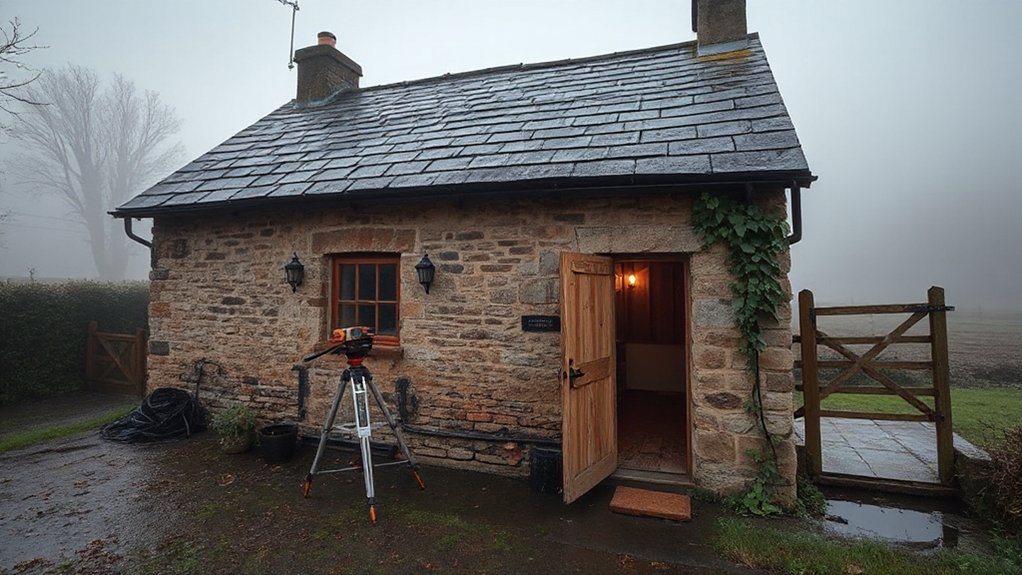
Before you draw up plans or specify materials, you’ll need a hard survey that separates cosmetic issues from structural risk. Start with a measured inspection: roof spread, rafter decay, chimney stability, and wall plumb. Probe stone or brick with a borescope, map cracks, and confirm floor void ventilation. Use moisture profiling, salts testing, and thermal imaging to distinguish rising damp from condensation and bridged plaster; then specify breathable lime, not cement, for Historical preservation. Check drainage falls, gutters, and splashback zones; improve ground levels without trapping moisture. Record constraints: low head heights, narrow stairs, irregular bays, and out-of-square openings that affect joinery tolerances. Align interventions with Landscape integration by noting prevailing winds, solar gain, and shading for future comfort.
Check Listing, Permissions, and Access Early
Before you design anything, you’ll confirm the cottage’s listing status (grade, curtilage, and setting) and map what that means for windows, rooflines, and services. You’ll secure the right consents early—listed building consent, planning permission, and any ecology/highways approvals—so your spec and programme don’t get reset midstream. At the same time, you’ll assess site access now (track width, turning radii, crane reach, and utility connections) because logistics and constraints increasingly drive cost, carbon, and buildability.
Confirm Listing Status
One early check can save you months: confirm whether the former gamekeeper’s cottage is listed (and at what grade) and map that status to the exact consents you’ll need—Listed Building Consent, planning permission, and any conservation area constraints. Start with listing verification on the National Heritage List for England (or the relevant national register) and pull the official list entry description, curtilage notes, and boundary mapping.
Then test what’s actually protected: exterior, interior plan form, fireplaces, stair joinery, roof structure, outbuildings, and attached walls can all be implicated. Cross-check the Local Planning Authority’s constraints layers (conservation area, Article 4, TPOs) and flag any previous approvals. Record photos and measured notes now so you can evidence heritage compliance before you sketch changes.
Secure Required Consents
Once you’ve pinned down the cottage’s listing grade and what fabric falls under protection, lock in the consents and access routes that’ll govern your design programme: confirm whether you need Listed Building Consent alongside planning permission, check conservation area and Article 4 constraints that remove permitted development, and line up early pre-app advice with the LPA conservation officer to validate your approach to plan-form changes, services upgrades, insulation strategy, and any alterations to openings. Prepare a scoped Heritage Impact Assessment and method statements so Heritage preservation sits inside an auditable, low-risk workflow. Align drawings to BS 7913 principles, specify reversible details, and evidence moisture-safe upgrades with hygrothermal modelling where needed. Map statutory consultees, neighbours, and conditions early, then programme approvals into procurement to avoid variation claims. Keep a consent tracker to prove legal compliance at handover.
Assess Site Access Early
Although the cottage may sit on a quiet track, you should treat access as a design constraint from day one: verify legal rights of way, title plan boundaries, and any ransom strips, then cross-check what the listing and conservation controls allow you to change to enable deliveries, scaffolding, waste skips, and welfare. Map Site accessibility against vehicle types (7.5t lorry, telehandler, concrete wagon), turning radii, and seasonal ground bearing capacity. If surfacing upgrades are needed, specify permeable, heritage-appropriate finishes and confirm drainage outfalls. Lock down legal considerations with your solicitor: easements, maintenance liabilities, shared drives, and gates. Then plan a logistics strategy: timed deliveries, modular components, and smaller vehicles to reduce track damage and neighbour disruption. Pre-agree temporary compounds and protection mats.
Fix the Layout: Kitchen, Bath, Circulation
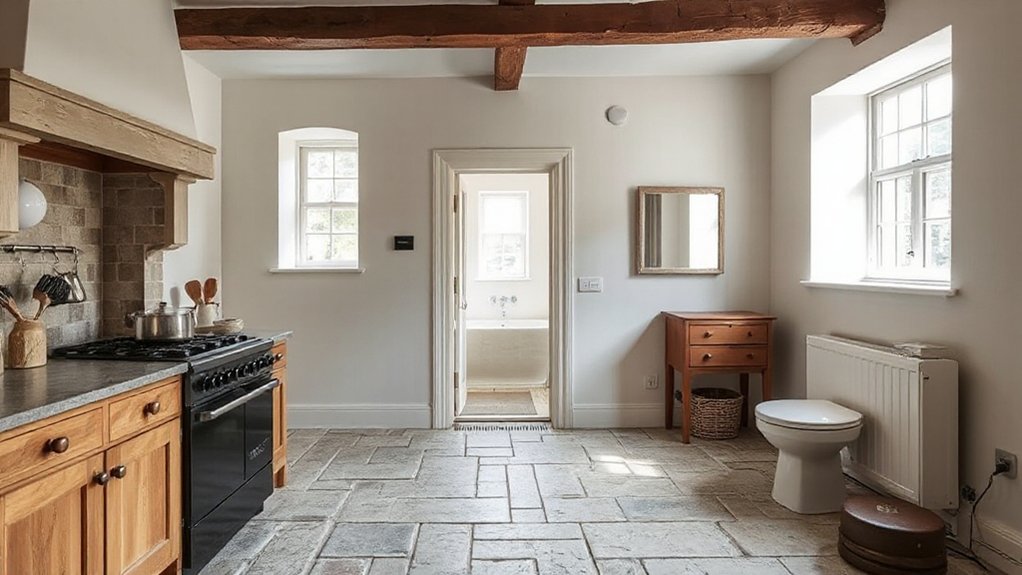
Before you touch finishes or furniture, you’ll want to correct the plan so the kitchen, bath, and circulation work like a modern micro-home rather than a patched-together cottage. Start by mapping desire lines from entry to hearth, garden door, and stair; then clear a 900–1000 mm route with no pinch points at door swings. Consolidate wet functions: put bath, laundry, and cylinder back-to-back to shorten runs and free perimeter walls for storage. In the kitchen, run tall units on the coldest wall, keep the hob external-vented, and size the aisle to 1000–1100 mm for two-person use. Let Furniture arrangement set socket and switch heights, then layer Interior lighting: task under-cabinet, glare-controlled pendants, and low-level night guidance. Keep thresholds flush.
Insulate Without Trapping Damp (Breathable Upgrades)
You start by diagnosing moisture pathways and hygroscopic salts—use moisture mapping, salt tests, and a ventilation check so you don’t “insulate” a damp problem into the fabric. Then you specify breathable systems (wood fibre, hemp-lime, calcium silicate, or aerogel blankets where thickness is tight) paired with lime-based plasters and capillary-active adhesives rather than impermeable foams. Finally, you detail vapour-open junctions at floor-to-wall, window reveals, and eaves with continuous airtightness on the warm side that still allows outward drying, avoiding sealed membranes that trap interstitial condensation.
Diagnose Moisture And Salts
When the walls in a former gamekeeper’s cottage start showing tide marks, flaking paint, or a persistent musty edge, treat moisture and salts as a diagnostic problem, not a cosmetic one. You’ll map symptoms room by room, then log ventilation patterns, heating cycles, and weather exposure to frame Moisture management decisions.
Start with non-destructive checks: hygrometer readings, thermal imaging for cold bridges, and a capacitance meter to compare like-for-like zones (don’t rely on one absolute number). Identify the source—rising damp, driving rain, plumbing leaks, or condensation—by correlating moisture gradients with external ground levels and rain goods.
Then assess Salt mitigation. You’ll take a small plaster sample for nitrate/chloride/sulphate indication, as salts can mimic “damp” and keep finishes failing even after drying.
Choose Breathable Insulation Systems
How do you add insulation to a former gamekeeper’s cottage without turning the walls into a moisture trap? Start by matching the build-up to the cottage’s hygroscopic masonry, so it can buffer humidity and dry safely. Specify breathable insulation such as woodfibre boards, hemp-lime, cork, or mineral wool paired with lime plaster, rather than foil-faced PIR that blocks drying. Aim for capillary-active, vapour-open layers that support moisture management through seasonal wetting and drying cycles. Keep performance realistic: target modest U-value improvements while protecting fabric durability, and prioritise airtightness from compatible plasters and tapes that don’t create impermeable skins. Choose systems with verified vapour resistance data, and allow drying time after wet trades before closing up.
Detail Vapour-Open Junctions
Where do breathable retrofits usually fail in a former gamekeeper’s cottage? At the junctions: eaves, window reveals, floor-to-wall edges, and service penetrations. If you let airtightness die there, warm indoor air convects into cold fabric, condensation spikes, and your “breathable” build-up becomes a mould risk.
Prioritise vapour-open continuity with smart membranes and taped laps that still allow seasonal drying. Avoid polyethylene vapour barriers unless you’ve modelled moisture; they often trap damp in solid stone. Do rigorous junction detailing: return insulation into reveals, capillary-break at timber ends, and use compressible seals at skirtings and sole plates. Keep thermal bridges low with insulated cavity closers and eaves baffles. Finally, specify vapour-permeable plasters and paints so the whole assembly can buffer humidity without sacrificing airtightness.
Upgrade Heating and Hot Water for Off-Grid Living
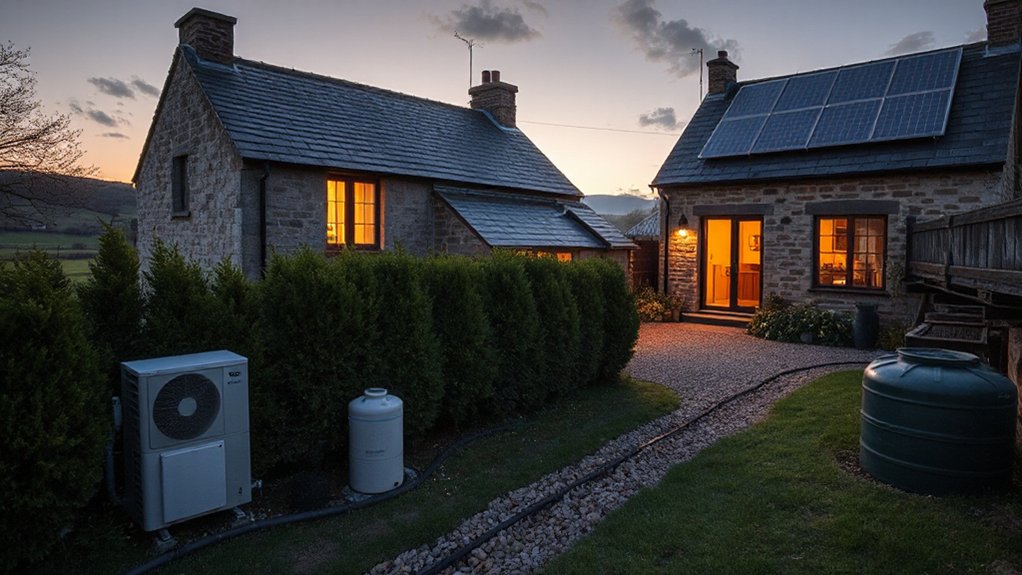
Although the cottage once relied on a simple solid-fuel setup, off-grid comfort now depends on a heating-and-hot-water system you can control, service, and power without mains support. Start with a room-by-room heat-loss check so you can size plant correctly and avoid short-cycling. A modern wood-gasification boiler or compact biomass stove can feed a thermal store, giving stable space heat and DHW. Add solar-thermal collectors for summer hot water and treat them as renewable energy with high seasonal efficiency. Use weather-compensated mixing valves, thermostatic zoning, and low-temperature emitters to cut fuel demand. Choose stainless unvented cylinders or vented stores as needed, and fit legionella-safe pasteurisation cycles. Keep flues, hearths, and external penetrations aligned with Historic preservation constraints and planning guidance.
Update Electrics and Plumbing With Minimal Disruption
Before you start lifting boards or chasing walls, map the cottage’s existing cable and pipe runs and plan a “least-regret” upgrade path that preserves original fabric while meeting modern load, pressure, and safety requirements. Use a circuit survey to prioritise rewiring high-risk spurs, adding RCD/RCBO protection, upgrading the consumer unit, and bonding services for Electrical safety. Route new cabling through cupboards, voids, and skirtings; use surface-mounted heritage trunking where you can’t conceal runs without loss. For plumbing, pressure-test first, then replace only failing sections with barrier PEX or copper, keeping isolation valves accessible. Add leak detection and smart shutoff to reduce callouts. Schedule plumbing maintenance with filters, strainers, and inspection hatches, so future servicing doesn’t mean reopening floors. Coordinate trades to minimise rework and downtime.
Add Daylight Discreetly: Windows, Rooflights, Finishes
If you want more light without turning a former gamekeeper’s cottage into a glass box, treat daylighting as a controlled intervention: improve window performance with like-for-like timber sashes or slimline double glazing, add rooflights only where the roofscape can absorb them, and use finishes that lift lux levels without erasing patina. Prioritise Natural light from existing elevations by lowering sills only where structure allows, and keep reveal depths to preserve shadow lines. Specify rooflights with low-profile frames, solar-control glass, and blackout blinds, aligning them between rafters to avoid visible trimmers. Use limewashed or mineral-matt paints to increase reflectance, and choose pale, matte ceilings to reduce glare. Add privacy screens—reeded glazing, shear curtains, or external timber slats—so you can brighten rooms without opening views to tracks or neighbours.
Choose Characterful Materials That Suit the Cottage
Once you’ve lifted daylight levels, the materials you put in its path decide whether the cottage reads authentic or over-refreshed. You’ll get the best results by matching vapour permeability, texture, and tooling marks to the original fabric, then letting new elements sit quietly beside it. Aim for Historical authenticity without freezing the building in time: modern durability can coexist with patina if you specify intelligently and detail junctions cleanly.
- Use lime plaster and mineral paint so walls breathe; avoid acrylics that trap moisture and telegraph repairs.
- Choose wide, knotty oak or Douglas fir boards, wire-brushed and oiled; keep skirtings slim and shadow-gapped where new meets old.
- Specify reclaimed stone, handmade brick slips, or local slate with Sustainable sourcing certifications, and fix with lime-based mortars, not cement.
Frequently Asked Questions
How Do I Secure Affordable Rural Home Insurance for a Historic Cottage?
You’ll secure affordable rural home insurance by documenting Historic preservation upgrades, comparing specialist underwriters, bundling excesses, and installing monitored alarms. You’ll model rebuild costs, disclose risks, keep maintenance logs, and track insurance claims to negotiate premiums.
What Ongoing Maintenance Schedule Suits Stone Walls, Slate Roofs, and Timber Windows?
You’ll follow a seasonal schedule: quarterly Roof inspection, biannual slate fixings/flashings, annual gutter clear, and five-year ridge overhaul. For Stone preservation, repoint lime mortar every 10–20 years. Maintain timber windows yearly: paint, seal, and reglaze.
How Can I Improve Mobile Signal and Broadband Reliability in Remote Locations?
Like Odysseus steering by stars, you’ll map coverage, then mount a high-gain antenna and Cell signal boosters with proper grounding. You’ll add dual-WAN failover, QoS, and consider Satellite internet (LEO) plus mesh Wi‑Fi.
What Are the Best Strategies for Managing Wildlife and Pests Humanely?
You manage wildlife and pests humanely by prioritizing Wildlife conservation: audit habitats, remove attractants, secure feed, and use Pest deterrents like fencing, scent repellents, and motion lights; apply exclusion first, then licensed relocation, monitor outcomes.
How Do I Budget Realistically for Furnishings and Rural Outbuildings Storage?
Treat your budget like a compass: set a total cap, then allocate 60/30/10 for Furniture selection, Interior decor, and contingency. Price storage by cubic-metre, include foundations, locks, electrics, and inflation; compare modular sheds.
Conclusion
Just as you lift a floorboard to trace a damp line, you’ll find the old hearth flue perfectly placed for a modern stove—coincidence that guides smart intervention. You’ve surveyed structure, permissions, and access, then refined circulation so kitchen and bath work harder in less space. You’ve insulated with breathable layers, upgraded off-grid heat and hot water, and threaded new electrics and plumbing with minimal chasing. Now daylight lands softly through discreet rooflights, and lime, timber, and ironmongery keep the cottage honest.
About the Author