Like a scene from Dickens with Wi‑Fi, your Victorian townhouse can keep its character while performing like a modern home. You start by checking structure and permissions, then you tackle drafts, insulation, and glazing before touching finishes. Next, you upgrade wiring, heating, and smart controls discreetly, and only then adjust the layout to improve light and flow without losing period proportions. The real challenge is blending new materials with original details—especially when you plan an extension…
Key Takeaways
- Start with a structural survey to identify roof, damp, joist, and planning constraints before designing or budgeting.
- Improve comfort fast by draft-proofing floors, doors, sashes, and chimneys, then add breathable insulation to lofts, walls, and floors.
- Upgrade glazing with secondary or slim double glazing to boost efficiency while preserving Victorian window proportions.
- Modernise services by rewiring, adding data cabling, and installing efficient heating with smart zoning controls, all professionally certified.
- Refresh layout and finishes by enhancing flow and light, keeping original features, and using an honest, cohesive material palette in any extension.
Assess Your Victorian Townhouse and Constraints
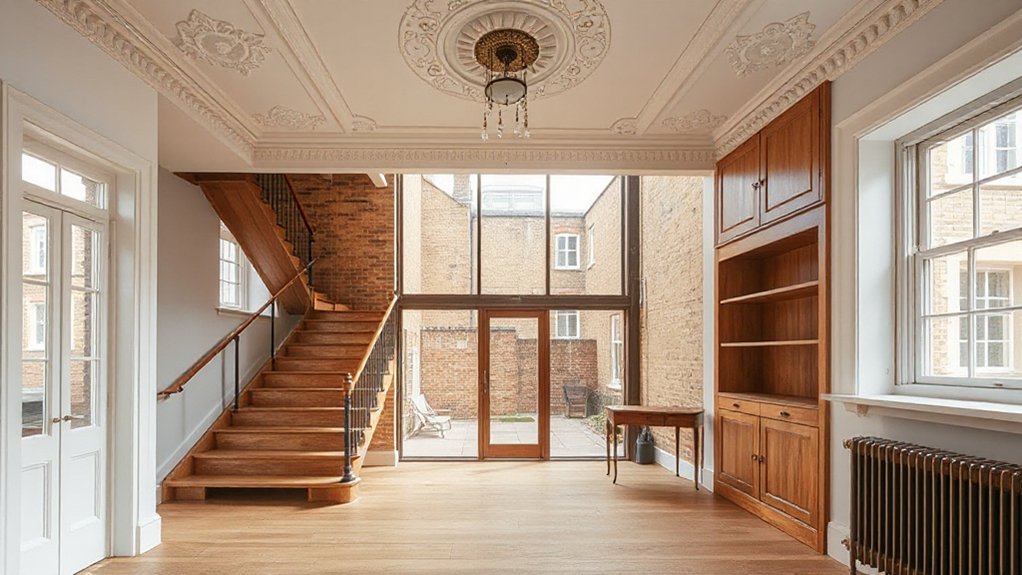
Before you pick finishes or knock through walls, you need a clear read on what you’ve actually got—and what you’re allowed to change. Start with a Structural assessment: check rooflines, party walls, sagging joists, damp, and any past alterations that may’ve compromised load paths. Bring in a surveyor or structural engineer early so you don’t design around wishful thinking.
Next, map constraints. If you’re in a conservation area or the house is listed, Historical preservation rules can dictate what stays, from sash windows to stair balustrades and front elevations. Photograph details, pull planning history, and confirm permitted development limits. Finally, locate services—gas, electrics, drains—and note access routes for upgrades. This groundwork keeps your modernisation compliant and buildable.
Plan Your Victorian Townhouse Renovation Budget and Order
Now you’ve sized up the house and its constraints, you’ve got to set a realistic budget that covers essentials, compliance, and a contingency for Victorian surprises. You’ll get better value when you sequence the work for efficiency—start with structure and services, then insulation and plastering, and finish with kitchens, bathrooms, and joinery. Plan the order upfront so trades don’t undo each other’s work and your spend stays controlled.
Set A Realistic Budget
Although it’s tempting to dive straight into finishes and fittings, you’ll get a better result if you set a realistic renovation budget that reflects Victorian townhouse realities—hidden defects, specialist trades, and period-appropriate materials. Start with a measured survey, then price essentials: roof, damp, structure, electrics, plumbing, and insulation upgrades that won’t trap moisture in solid walls. Ring-fence funds for Historical accuracy and Exterior preservation—timber sash repairs, lime pointing, slate, cast-iron, and heritage-approved paint can cost more but protect value. Add professional fees (architect, engineer, planning), temporary accommodation, and waste removal. Build in a 10–20% contingency for surprises behind lath-and-plaster. Finally, prioritise spending where you’ll feel it daily: light, warmth, storage, and robust flooring.
Sequence Works For Efficiency
If you sequence your works like a build programme rather than a Pinterest board, you’ll save time, reduce rework, and stop budget creep. Start with surveys, party-wall matters, and Historic preservation decisions so you don’t rip out original plaster or cornices later. Next, tackle structure, damp, roof, and insulation, then run first-fix electrics, plumbing, and ventilation before you close walls and floors. Only then should you fit windows, repair joinery, and set airtightness details, protecting the home’s Cultural significance while meeting modern comfort targets. Follow with plastering, second-fix, kitchens, bathrooms, and final decorations. Schedule long-lead items early (bespoke sash repairs, stone, tiles) and lock in access routes, waste skips, and storage. You’ll keep trades flowing, minimise downtime, and control variations.
Fix Drafts, Insulation, and Glazing First
Before you chase open-plan layouts or smart tech, you’ll get the biggest comfort upgrade by sealing drafts and gaps around floors, skirtings, doors, and sash windows. Next, you’ll boost performance fast with insulation upgrades in the loft, under floors, and on party walls where practical. Finish by improving glazing—secondary glazing or slim-profile double glazing—so you cut heat loss without sacrificing period character.
Seal Drafts And Gaps
Once you’ve tackled the big-ticket upgrades like insulation and glazing, sealing drafts and gaps becomes the fastest way to make a Victorian townhouse feel quieter, warmer, and noticeably more efficient. Start with a room-by-room check on a windy day: feel around sash frames, skirting boards, floorboard joints, loft hatches, and letter plates.
Use draft proofing strips on doors and operable windows, and fit a brush or hinged flap to the letterbox. For gap sealing, run paintable caulk along trim-to-wall cracks and around pipe penetrations; use expanding foam only where it won’t distort timber. Add chimney balloons or caps to unused flues, and seal floorboard edges with flexible filler. Finish by verifying extractor fans vent outside, not into voids.
Upgrade Insulation And Glazing
Although new kitchens and smart lighting grab attention, you’ll feel the biggest day-to-day upgrade in a Victorian townhouse when you tackle insulation and glazing first—because they cut heat loss, calm street noise, and stop condensation at the source. After you’ve sealed drafts, upgrade the fabric so your heating actually stays indoors and your rooms feel evenly warm. Choose breathable, heritage-friendly insulation materials and avoid trapping moisture behind impermeable layers.
- Loft/roof: top up insulation, keep eaves ventilation clear.
- Walls: add wood fibre or mineral wool where appropriate; use vapour-open finishes.
- Floors: insulate between joists, then fit underlay that doesn’t block airflow.
- Windows: weigh double glazing benefits against conservation rules; consider slimline units or secondary glazing.
Update Victorian Townhouse Heating, Wiring, and Controls
If you want your Victorian townhouse to feel genuinely modern, start by bringing its heating, wiring, and controls up to today’s standards. Replace ageing boilers with an efficient heat pump or high-performance combi, and zone rooms with smart TRVs so you only heat what you use. If underfloor heating isn’t viable, upgrade radiators and balance the system for faster warm-up and lower bills.
Next, rewire for capacity and safety: new consumer unit with RCD/AFDD protection, properly earthed circuits, and enough sockets where you actually need them. Add data cabling for reliable streaming and home working. Finish with discreet smart switches, dimmable LED lighting, and app-based schedules that preserve Victorian aesthetics while delivering Modern comfort. Get certified electricians and gas/heat-pump engineers to sign everything off properly.
Improve the Layout Without Losing Period Flow
Because Victorian townhouses were designed as a sequence of rooms rather than one big open plan, you’ll get the best results by improving sightlines and circulation without erasing the original rhythm. Keep doorways doing the work, but make flows feel lighter and more intuitive while protecting period features and delivering modern comforts.
- Rehang or reglaze internal doors to borrow light and extend views without removing walls.
- Widen key openings between high-traffic rooms, using slim structural support where needed.
- Create a clear route to the garden by aligning furniture, storage, and door swings to cut pinch points.
- Zone spaces with joinery (banquette, cupboards, or a utility wall) so each room stays distinct yet functional.
Test layouts with tape before you build.
Choose Finishes That Highlight Original Features
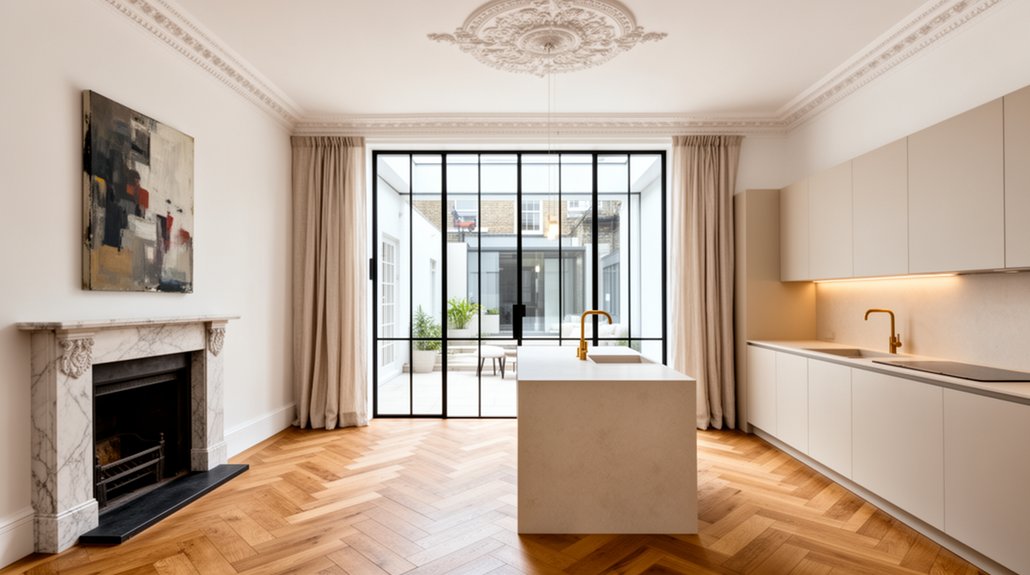
Once you’ve improved the flow, let your finishes do the heavy lifting by making original details—cornices, ceiling roses, skirtings, fireplaces, and sash windows—read as intentional “hero” elements rather than background. Choose a calm, modern wall colour (warm white, clay, soft green) to sharpen shadows and profiles, and keep ceilings slightly lighter to lift height. Restore timber rather than replacing it; a matte oil or low-sheen lacquer shows Victorian craftsmanship without looking glossy. Where you need paint, pick a heritage-leaning palette and crisp lines to protect period authenticity. Use stone, marble, or tiled hearths with simple veining, not busy patterns. Swap brassy gold for aged brass, blackened steel, or nickel so old joinery still leads.
Extend a Victorian Townhouse Without Clashing
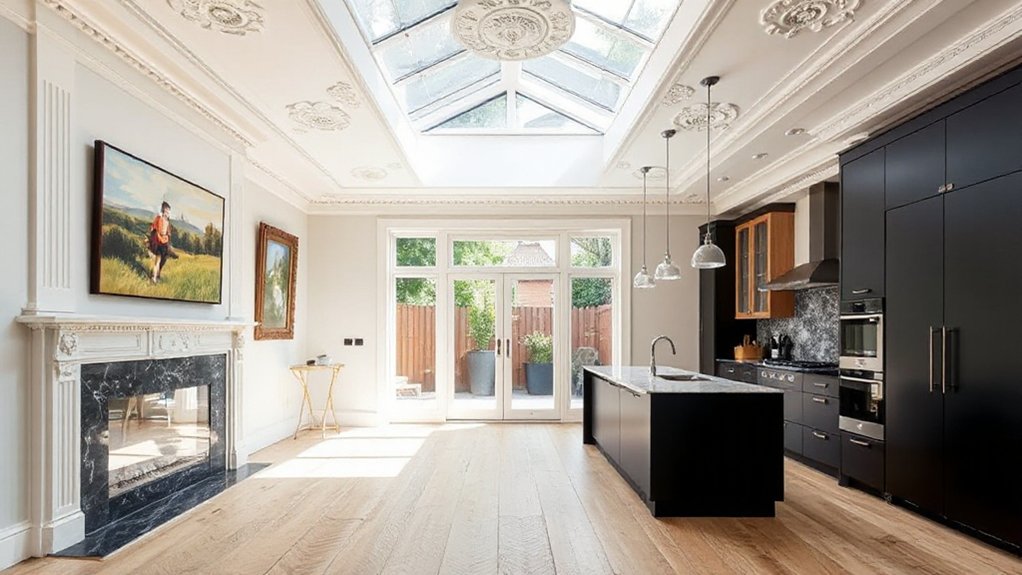
Finishes can make your original detailing sing, but an extension decides whether the whole townhouse feels cohesive or cobbled together. Respect Victorian architecture by keeping the street-facing facade intact, then push contemporary moves to the rear or side return where they read as clearly new, not faux-old. You’ll satisfy historical preservation goals and still gain light, space, and performance.
- Match proportions, not pastiche: align sill and lintel heights, keep rooflines calm.
- Use a crisp “junction”: a shadow gap or glazed link signals old-to-new honestly.
- Choose complementary materials: brick slips, zinc, and slim-frame glazing age well.
- Control views: frame original cornices and stairwells, hide bulky structure, keep services tidy.
Frequently Asked Questions
What Planning Permissions Are Needed to Modernise a Victorian Townhouse?
You’ll need planning permission for extensions, roof changes, new windows, or major façade alterations; listed or conservation areas require historical preservation consent. You must also comply with building regulations; your local planning authority confirms specifics.
How Can I Make a Victorian Townhouse More Soundproof?
You hush your home like drawing velvet curtains: seal gaps, add dense insulation, and hang acoustic panels. Use Soundproofing techniques—floating floors, secondary glazing, solid-core doors—while balancing Historic preservation with reversible fixes and discreet, modern materials.
Which Smart Home Upgrades Suit Victorian Properties Best?
You’ll get the best results with discreet, retrofit tech: Smart lighting (wireless switches, dimmers), Automated heating (smart TRVs, zoned controls), door/window sensors, smart locks, and mesh Wi‑Fi—keeping period features while adding control, security.
How Do I Manage Damp and Mould in Older Victorian Walls?
You manage damp and mould by fixing leaks, improving drainage, and keeping air moving with Ventilation improvements like extractor fans and trickle vents. Use breathable Wall insulation techniques, avoid vinyl paints, and dehumidify.
Will Modernising Reduce or Increase My Townhouse’s Resale Value?
Modernising usually increases resale value, unless you erase period charm—let’s test that theory. You’ll win buyers by pairing Historic preservation with smart interior renovation, upgrading systems, fixing damp, and keeping authentic details, proportions.
Conclusion
Modernising your Victorian townhouse isn’t about sanding off its soul; it’s about letting it breathe in today’s world. Start with the bones—structure, drafts, insulation, glazing—then upgrade heating, wiring, and smart controls discreetly. Rework the layout like editing a classic novel: tighten what drags, keep the period rhythm. Choose finishes that spotlight cornices, sash windows, and floorboards. If you extend, let new lines whisper, not shout, beside the old.
About the Author