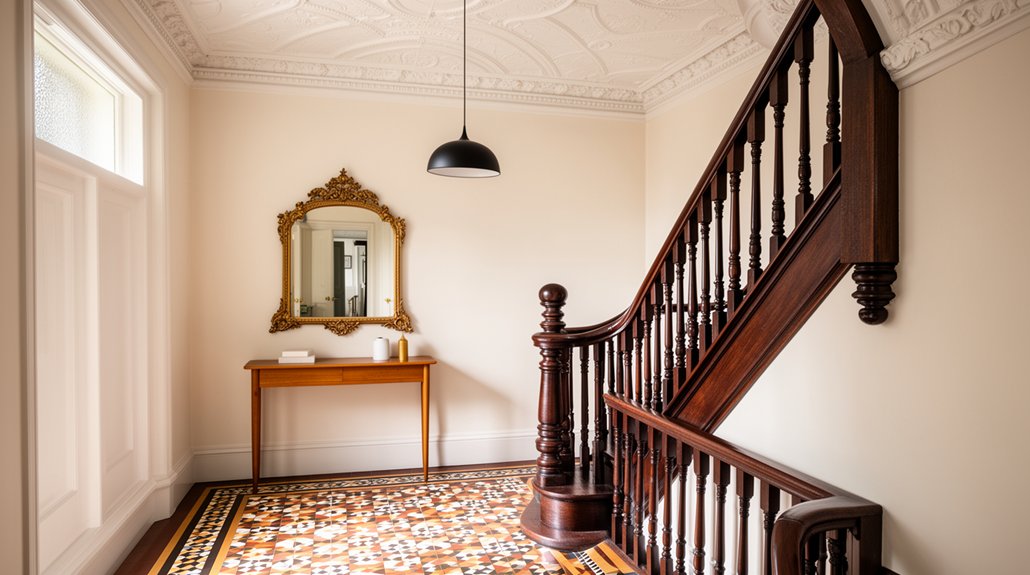
Start by restoring what you’ve got: repair skirting, architraves, stair parts, panelled doors, and original floorboards or encaustic tiles with like-for-like splices and breathable sealers. Brighten the space with high-LRV warm off-whites or soft greiges, then add heritage accents on dado rails or doors. Layer lighting with a period-scale pendant plus slim wall sconces on separate dimmers. Add a wool runner with brass rods, and fit shallow storage below dado height—you’ll soon see what to tackle next.
Key Takeaways
- Repair and retain original joinery, doors, stairs, and tiles using like-for-like splices, gentle stripping, and breathable materials.
- Brighten with high-LRV neutrals on ceilings and upper walls, adding heritage accents on doors, dado rails, or spindles.
- Restore floors then finish with matte oil or breathable sealers; add a slim wool runner with brass rods for comfort and grip.
- Layer lighting using period-style pendants and slim wall sconces on separate dimmable circuits for flexible, warm illumination.
- Add discreet modern storage below dado height and upgrade hardware with period-appropriate brass, keeping changes reversible and sympathetic.
Keep the Best Victorian Hallway Features (Quick Checklist)
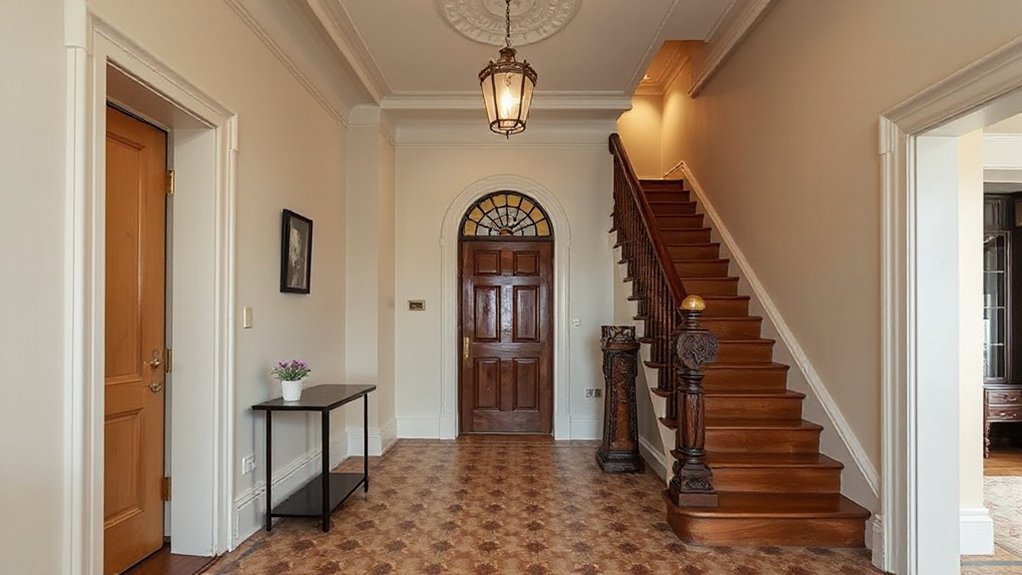
Before you start swapping finishes or chasing the latest hallway trend, lock in the Victorian details that give the space its identity—and protect them early. Use this quick checklist to keep what matters in Victorian architecture while still modernising confidently.
- Original skirting boards, architraves, and dado rails: repair, don’t replace; splice like-for-like profiles.
- Ceiling cornices and roses: consolidate cracks, then re-fix with appropriate plaster.
- Stair parts: retain newel posts, balusters, and handrails; strip carefully, avoid aggressive sanding.
- Floorboards or encaustic tiles: lift and relay, then seal; match salvage for missing sections.
- Doors and fanlights: keep panelled doors, rehang square, upgrade locks discreetly.
- Glazing and hardware: preserve etched glass, knobs, and letterplates for Historical preservation compliance.
Best Paint Colours to Brighten a Victorian Hallway
To brighten a Victorian hallway without flattening its character, you should start with light-reflective neutrals—warm off-whites, soft greiges, and pale stone tones—that bounce limited natural light and sharpen plasterwork, corbels, and architraves. Then you can layer in heritage-inspired colour accents, such as muted sage, inky blue, or oxblood, to frame dado rails, doors, or stair balusters with period-credible contrast. The aim is a modern, cleaner palette that still respects original proportions and craftsmanship.
Light-Reflective Neutral Shades
Although Victorian hallways often feel dim thanks to narrow footprints and high, shadowy ceilings, you can lift the space instantly with light-reflective neutral shades that bounce daylight (and lamp light) around without erasing period character. Choose soft whites with a warm undertone, pale greige, or mushroom taupe to flatter aged timber, encaustic tiles, and ornate plasterwork while keeping the palette calm.
Use color psychology: warmer neutrals feel welcoming and reduce the “tunnel” effect, while cooler off-whites read crisp and architectural. Prioritise higher LRV paints in eggshell for walls and satin for woodwork to catch light without highlighting flaws. Pair your paint with smart lighting placement—uplighters near cornices and a shallow ceiling pendant—so the finish reads luminous, not flat.
Heritage-Inspired Colour Accents
While neutrals set a calm, light-boosting base, heritage-inspired colour accents add the depth Victorian hallways were built to carry—without tipping into “period drama.” Think saturated, historically plausible shades used with restraint: deep Brunswick or bottle green on dado rails and stair spindles, inky navy on panelled doors, oxblood or claret on a front door (or inner porch), and smoky teal or muted aubergine to sharpen plasterwork detail. Keep the ceiling and upper walls pale to bounce daylight, then anchor with colour below the sightline. Choose modern, low-sheen finishes (eggshell or satin) so woodwork reads crisp, not heavy. If your hall’s narrow, limit to one statement shade and repeat it in a runner or framed prints for cohesion. This keeps Victorian colour palettes relevant and controlled.
Layered Lighting: Fixtures That Suit Victorian Hallways
You’ll modernise a Victorian hallway fastest by layering light, starting with a period-style ceiling pendant that echoes the home’s original proportions and metalwork. Then you’ll add subtle wall sconces to wash the corridor in soft, glare-free light and highlight details like cornices, arches, and dado rails. Keep finishes cohesive—aged brass, bronze, or opaline glass—and use warm LEDs so the scheme feels authentic yet current.
Period-Style Ceiling Pendants
Because a Victorian hallway often has generous ceiling height and strong architectural lines, a period-style ceiling pendant gives you a central anchor that feels authentic while improving everyday lighting. Choose a pendant that respects proportion: in narrow halls, go slimmer; in wider entrances, scale up and hang higher to preserve sightlines. If you’ve got Victorian ceiling medallions, use them as the visual frame—clean, repair, and centre the drop so the detail reads as intentional, not busy. Prioritise finishes that nod to heritage yet feel current, and specify dimmable, warm LEDs to avoid a cold, modern glare.
- Opal or prismatic glass for soft diffusion
- Aged brass or bronzed nickel for trend-proof warmth
- Chain or rod drops to suit ceiling height
- Shaded lantern forms for period accuracy
- Statement scale without blocking doors
Subtle Wall Sconces Layering
If your pendant sets the centrepiece, subtle wall sconces deliver the layers that make a Victorian hallway feel polished rather than harsh. Choose slim profiles that sit close to the wall so you don’t fight narrow proportions, and place them at roughly eye level to flatter faces and artwork.
Prioritise warm, dimmable LEDs (2700K) and a soft opal diffuser to avoid glare on glossy paint and emphasise plasterwork. For Vintage lighting without pastiche, pair aged brass, bronze, or blackened steel with simple shades and minimal ornament. Use pairs to frame a mirror, arch, or staircase turn, and stagger circuits so you can run sconces alone for evening ambience. Aim them slightly upward to graze Wall texture and add depth.
Restore Victorian Hallway Floors and Add a Runner
While paint colours and lighting grab attention fast, the floor sets the tone in a Victorian hallway—so restore what’s there before you add anything new. If you’ve got original boards or encaustic tiles, repair rather than replace: it’s the quickest route to authentic character with a modern finish. Sand gently, fill splits with tinted resin, and seal with a hardwearing matte oil for a current, low-sheen look that suits Victorian flooring.
Then introduce hallway runners to soften acoustics and add pattern without hiding craftsmanship. Choose wool or flatweave, keep it narrow to show borders, and use brass stair rods for period-correct polish.
- Lift old carpet carefully
- Fix squeaks, loose tiles
- Clean, sand, and seal
- Pick a durable runner
- Add underlay, rods, grips
Slim Hallway Storage That Won’t Hide Period Details
With the floor restored and a runner in place, you can tackle hallway storage without smothering the cornicing, dado rails, or original skirting. Choose slim, wall-hugging pieces that sit below the dado line, so plasterwork stays the star. A 20–25cm-deep console gives drop-zone function without narrowing the walkway; pick one with drawers for Hidden storage of keys, gloves, and post.
Use space efficient furniture like a narrow shoe cabinet with tilt-out fronts, or a shallow bench with lift-up seat for bags. Mount a picture ledge or rail-height shelf for baskets rather than bulky cupboards. If you need hooks, keep them on a freestanding coat stand or a short peg rail that doesn’t climb to the cornice. Match finishes to existing wood tones to keep it cohesive.
Update Victorian Doors and Hardware Without Losing Character
Because Victorian joinery carries so much of the hallway’s character, you’ll get the best “modern” result by upgrading doors and hardware through restoration-first tweaks rather than wholesale replacement. Start by stripping paint carefully, repairing splits, and easing sticking edges so the door shuts with a crisp click. Then modernise the touchpoints: keep proportions, upgrade performance, and choose finishes that feel current.
- Reuse original Victorian hardware; clean, wax, and re-screw into plugged holes
- Swap missing pieces for period-correct replicas with tighter tolerances
- Add discreet latch and hinge shims to stop rattle and draughts
- Choose Modern door finishes like soft-matte off-white, inky charcoal, or satin stained oak
- Replace knob spindles with solid brass and fit escutcheons for a sharp outline
Hallway-Safe Modern Materials for Victorian Homes
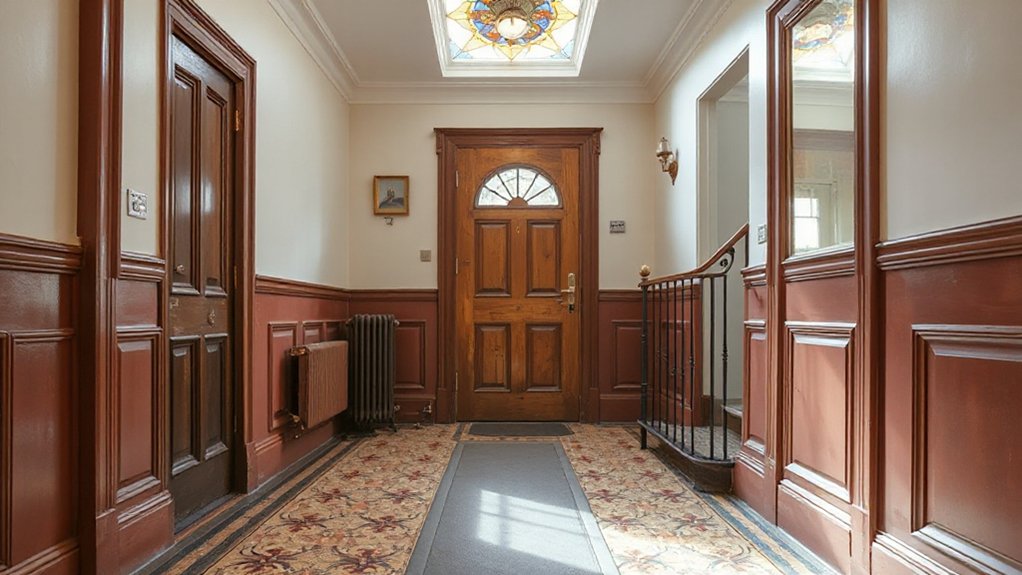
If you choose modern materials that can handle wet shoes, grit, and daily knocks, you’ll keep a Victorian hallway looking sharp without babying it. Start underfoot: specify Modern safety flooring like slip-rated LVT or rubber with an R10+ rating, sealed edges, and acoustic backing so footsteps don’t boom. If you’re keeping encaustic tiles, use a breathable penetrating sealer and a washable runner with bound edges. For walls, use scrubbable, low-sheen mineral paint over lime-compatible filler to avoid trapping moisture in solid brick. Where you’re tackling Victorian wallpaper restoration, protect repaired sections with a clear, matte conservation varnish on high-touch zones, or add a painted dado rail to take bag scuffs. Finish with durable, satinwood trim paint.
Frequently Asked Questions
Do I Need Planning Permission to Change My Victorian Hallway?
You usually don’t need planning permission for internal Victorian hallway changes, but you’ll need consent if it’s listed or in a conservation area. Prioritise Historic preservation while updating a Modern interior; check your council’s guidance.
How Can I Reduce Draughts Without Replacing Original Doors?
You can hush those sneaky breezes by fitting discreet brush strips, keyhole covers, and compressible seals—top Draft proofing techniques—plus adding secondary glazing film and thermal curtains for Window insulation. You’ll keep doors intact, improve comfort, cut bills.
What’s the Best Way to Remove Lead Paint Safely?
You’ll get the safest results by hiring a certified contractor; if you DIY, you must contain dust, wear a P100 respirator, wet-sand or use infrared/chemical Lead paint removal methods for Safe stripping, and HEPA-vacuum.
How Do I Soundproof a Victorian Hallway Without Altering Features?
Sure, because Victorian hallways never echo: you’ll tame noise with reversible soundproofing techniques—thick wool runners with underlay, brush door seals, lined curtains, and acoustic panels on picture rails—prioritising historical preservation, no drilling, no feature loss.
How Can I Improve Ventilation to Prevent Damp in the Hallway?
Improve ventilation by fitting discreet trickle vents, a humidity-sensing extractor, and undercutting internal doors; you’ll boost airflow without visual impact. Combine ventilation options with breathable paints, clear airbricks, and moisture monitoring for damp prevention.
Conclusion
You don’t need to strip your Victorian hallway back to bare bones to make it feel current. Keep the cornicing, archways, and original joinery, then let soft, light-reflecting paint lift the space like morning mist. Layer period-friendly lighting to erase shadowy corners. Restore timber or tile floors and lay a runner as a quiet red carpet. Add slim storage and upgraded hardware that whispers, not shouts. Choose durable modern finishes that play nicely with heritage.
About the Author