Walk your terraced house morning to late afternoon to spot where light’s blocked by fences, trees, or bulky furniture, then clear sills, radiators, and the main front‑to‑back sightline. Pull curtains wide, fit pale adjustable blinds, and use soft whites or light greys in matt finishes to bounce daylight. Add a big mirror near a window and swap solid internal doors for slim glazed ones to borrow light. Next, you’ll find which window and rooflight upgrades pay off most.
Key Takeaways
- Walk the house at different times to map external obstructions, then trim greenery and brighten masonry around windows to boost daylight.
- Declutter windowsills and move bulky furniture away from glazing to improve sightlines and let light travel deeper into rooms.
- Use high-reflectance finishes: soft whites on walls, off-white frames and reveals, and large mirrors opposite windows to bounce light.
- Upgrade glazing by replacing failed units, choosing slim frames and low-iron glass for brighter, clearer daylight.
- Add light-sharing elements like glazed internal doors, overlights, and rooflights with splayed, white-painted lightwells to brighten dark cores.
Spot Where Natural Light Gets Blocked
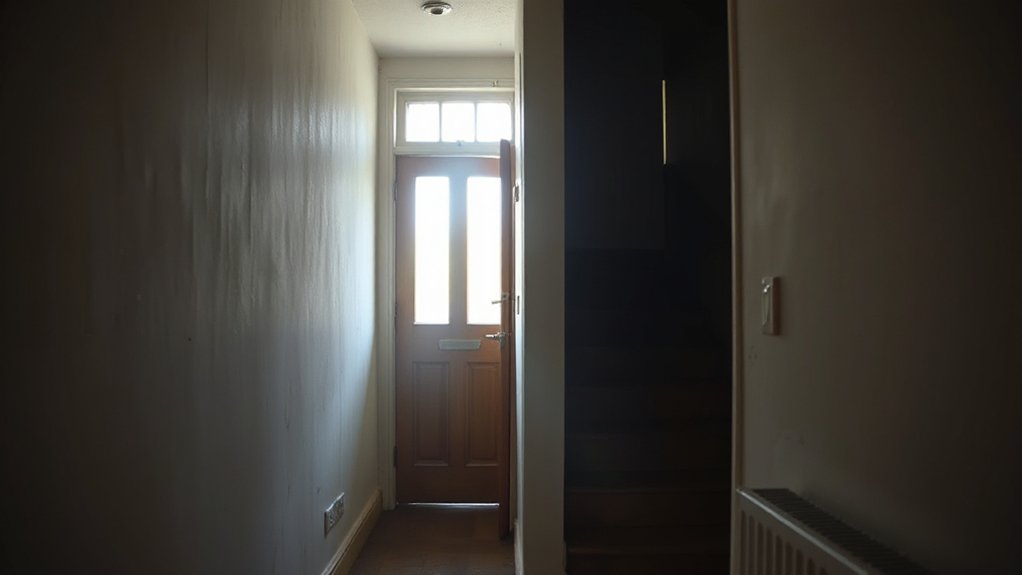
Before you add skylights or swap out windows, you need to work out exactly where daylight stops in your terrace. Walk the house at three times: morning, midday, and late afternoon, and note how the sun moves front-to-back. Stand in each room and trace sightlines from window to floor: alcoves, chimney breasts, stairwells, and party walls often create Blocked zones. Check the hall and middle reception first; in UK terraces these are typically light-starved because rear extensions, high fences, or neighbouring elevations cut the sky view. Look up: deep reveals, heavy lintels, or over-sized bays can cast Shadowed corners. Outside, assess obstructions: conservatory roofs, pergolas, trees, and close-set outbuildings. Map findings on a simple floor plan.
Start With Quick Wins (Declutter and Re-Layout)
Once you’ve mapped where daylight gets blocked, tackle the fixes that cost little or nothing: decluttering and a smarter layout. In a narrow UK terrace, every surface either helps or hinders light, so treat clutter like a physical shade. Start at your windows and work inward, keeping Window placement in mind when you decide what earns prime spots.
- Clear window sills and radiators; heat and light need space to circulate.
- Swap bulky bookcases near windows for low storage or open shelving.
- Pull sofas and dining tables away from glazing to stop light being “absorbed” behind them.
- Use pale, matt finishes on large items; glossy can cause glare and poor Lighting control.
- Reposition lamps so they complement daylight at dusk, not compete with it.
Open Sightlines to Move Natural Light Further
Although you can’t widen a typical UK terrace, you can push daylight deeper into it by opening up sightlines so light travels in straighter, longer runs. Stand at the brightest window and look for blockers: tall bookcases, bulky sofas, high-backed dining chairs, or a crowded hall console. Move these to side walls and keep the centre line clear from front to back. Swap solid, heavy furniture for leggy pieces that let light pass underneath, and choose low storage in through-living rooms. If you can, widen internal openings or align doorways during refurb work to create direct visual corridors. Use Indoor plants sparingly—cluster them by windows, not in walkways. Add reflective Art installations opposite glazing to bounce light inward. Avoid dark rugs.
Use Internal Glass Doors to Borrow Daylight
Swap solid internal doors for glazed ones and you’ll pull daylight from brighter rooms into darker hallways and middle spaces. Choose the right glazing—clear for maximum transfer, or reeded/frosted with proper safety glass where you need it. You can still keep privacy and reduce noise by using obscured panels in key sightlines and well-fitted frames with decent seals.
Maximise Light Transfer
One of the quickest ways to brighten a narrow terraced house is to maximise light transfer between rooms by fitting internal glass doors. You’ll pull daylight from the front reception through to the hallway and back rooms without losing privacy or layout. Choose designs that suit UK terraces and keep circulation simple so light can travel further.
- Fit glazed doors between hallway and front room to share street-facing daylight.
- Use glazed panels to keep sightlines open while controlling noise.
- Add overlights above existing doors to push light deeper.
- Pair doors with fanlights or opening sections for Natural ventilation.
- Keep frames slim and seals tight to support Energy efficiency and comfort.
Install where doors already exist to limit disruption, and keep walls and floors uncluttered so borrowed light isn’t blocked.
Choose Right Glazing
Once you’ve decided where internal glass doors will share light between rooms, the glazing choice determines how much daylight you actually borrow and how comfortable the space feels day to day. Go for clear, low-iron toughened glass if you want the brightest transfer and truer colour, especially between a rear kitchen and a darker hallway. In UK refurb jobs, specify a slim-profile system so the door’s Window framing doesn’t steal valuable glass area; look for narrow stiles and rails in aluminium or engineered timber. Choose laminated glass where you need a sturdier, more stable panel in busy circulation routes. Keep ironmongery minimal and avoid heavy glazing bars. If you’re upgrading electrics, add daylight sensors to adjacent lighting circuits so borrowed light reduces artificial use.
Maintain Privacy And Quiet
Although internal glass doors brighten up a narrow terrace by sharing daylight, you still need to control sightlines and noise so the house feels comfortable. Choose Privacy options that keep light moving while stopping direct views from the hall into living spaces, especially in Victorian and Edwardian layouts. Then specify soundproofing solutions so the door doesn’t turn the ground floor into one echoing room.
- Use reeded, fluted, or satin glass to blur views without losing brightness.
- Fit a solid-core glazed door with acoustic seals and a drop-down threshold.
- Add curtains or a voile on a discreet track for evening privacy.
- Position doors to screen the WC, stairs, and front door sightlines.
- Specify soft-close hinges and quality latches to cut slam noise.
Choose Paint Colours and Finishes That Reflect Light
Because narrow terraced rooms often struggle to bounce daylight beyond the window wall, your paint choices matter as much as your glazing. Start with high light-reflectance shades: soft warm whites, pale greys, or gentle stone tones that suit UK daylight and avoid a cold cast. Use Color psychology to steer mood—warm neutrals feel welcoming in north-facing rooms, while crisp off-whites keep south-facing spaces calm and bright.
Choose finishes strategically. Put a durable, wipeable matt (or “flat” washable) on busy walls to limit glare yet keep them clean; upgrade to eggshell or satin on woodwork and skirting to lift light without looking shiny. Prioritise paint durability in hallways and kitchens, and patch-test under morning and evening light before committing.
Bounce Daylight With Mirrors and Reflective Surfaces
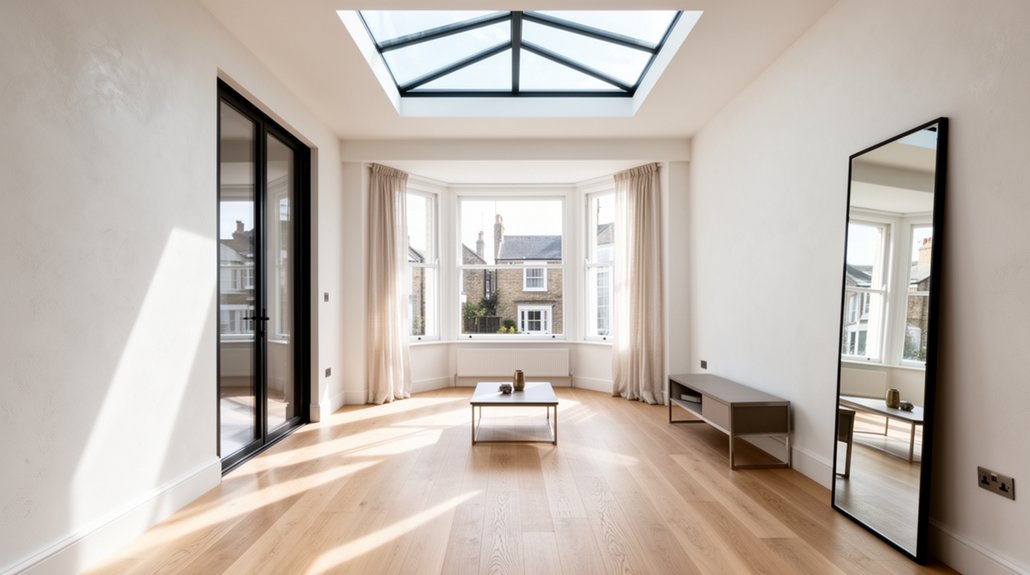
- Hang a large mirror opposite, or 90° to, the main window to redirect sun.
- Place a mirror at the end of a hallway to pull light forward.
- Choose glazed tiles or a glossy splashback in galley kitchens.
- Add a glass-topped console or acrylic side table near the entrance.
- Use satin-finish metals (brass, chrome) on lamps and handles to sparkle.
Pick Window Coverings That Let Natural Light In
You’ll get more daylight in a narrow terraced house by choosing window coverings that filter light rather than block it. Pick sheer, light fabrics that soften glare but still keep rooms bright, especially on front and rear elevations. For privacy and control, opt for adjustable blinds so you can tilt or raise them to let in maximum natural light throughout the day.
Choose Sheer, Light Fabrics
Wondering why your narrow terraced house still feels dim even on a bright day? Heavy linings and dark Window treatments can swallow daylight. Switch to sheer, light fabric and you’ll soften glare while letting more sun reach the hall and back rooms. In UK terraces, where windows often face close neighbours, translucency gives privacy without blocking brightness.
- Choose voiles or muslin in white, ivory, or pale grey
- Skip blackout linings unless you need them in bedrooms
- Hang curtains high and wide so glass stays exposed
- Pick lightweight headings (eyelets or simple pencil pleats)
- Keep hems off radiators to prevent heat-baked discolouring
You’ll notice rooms feel taller and airier, and colours read truer even on overcast days. It’s a quick win with minimal disruption.
Opt For Adjustable Blinds
Even if your terrace only gets a slim slice of sky, adjustable blinds let you control privacy and daylight without sacrificing either. Choose slimline Venetian or day-and-night roller styles, so you can tilt or layer them to bounce light deeper into a narrow plan.
Fit blinds inside the recess to keep the glass area clear and stop bulky curtains narrowing the opening. Go for pale, matte slats or light-filtering fabrics; they soften glare while maintaining brightness, especially on south-facing front rooms. In overlooked streets, angle the slats up to block sightlines while still pulling in daylight. For bay windows, use individual units on each pane for consistent Light control. Add top-down/bottom-up options in bathrooms and landings, giving privacy at eye level while keeping the top open.
Upgrade Terraced House Windows for More Daylight
If your narrow terraced house still feels dim during the day, the windows are usually the fastest place to win back natural light. Start by checking what you’ve got: many UK terraces were built with small panes and deep reveals, so you’ll gain most by improving glass area and clarity while respecting Historical window styles in conservation areas.
- Replace tired, cloudy units and failed seals
- Choose slimline double glazing for sash frames
- Specify low-iron glass for truer, brighter daylight
- Use Modern glazing options like acoustic or solar-control where needed
- Paint frames and reveals in off-white to bounce light
You’ll also want to clean and brighten external masonry around openings, and keep curtains pulled wide. If you’re changing sizes, confirm planning rules and Building Regs early.
Add Rooflights to Brighten Dark Hallways and Stairs
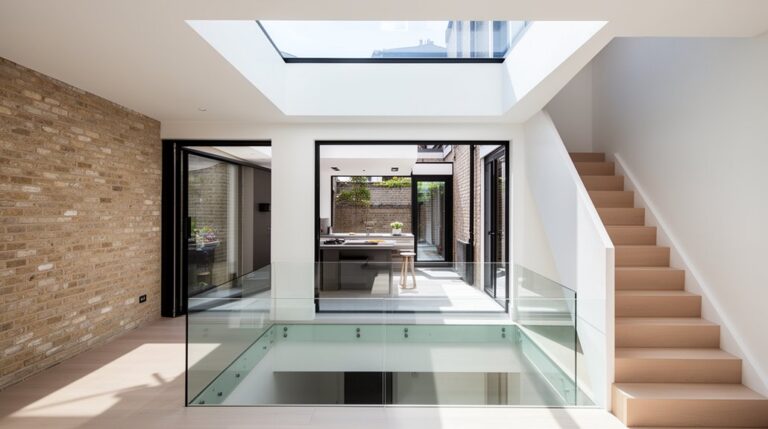
Where does daylight disappear first in a narrow terraced house? Usually the central hall and stairwell, boxed in by party walls and internal doors. Add rooflights above the stair flight or at the top landing and you’ll pull daylight deep into the plan, delivering reliable dark hallway illumination without stealing wall space.
Plan Rooflight installation with structure and compliance in mind. Place units between rafters where possible, or budget for trimming around cut rafters and relocating services. In the UK, choose thermally efficient, low‑U-value rooflights with trickle ventilation, and specify obscured glazing if you’re overlooked. Use white reveals, a lightwell with splayed sides, and matte paint to bounce light down the stairs. Fit blinds for summer glare control too.
Frequently Asked Questions
Do I Need Planning Permission to Add Rooflights in a Terraced House?
You usually don’t need planning permission for rooflights if you follow permitted development and Rooflight regulations. Check Planning permission requirements if you’re in a conservation area, flat, or altering the roof’s shape/materials. Ask your council.
How Can I Improve Natural Light While Keeping Privacy From Neighbours?
Let daylight spill in like quiet rain while you block prying eyes: you’ll use Window treatments such as top-down blinds or frosted film, add Interior plantings on sills, and choose sheer curtains for UK terraces.
What’s the Best Glazing Type for More Light and Less Heat Loss?
Choose low-iron, argon-filled double or triple glazing with warm-edge spacers and a low‑E coating; it maximises daylight while boosting heat retention. Compare glazing options by U‑value and g‑value, and guarantee quality installation.
How Do I Reduce Overheating and Glare After Increasing Daylight?
You can cut overheating and glare by fitting external solar shading and using window tinting plus blinds. In UK homes, overheating risk could affect 90% by 2050—act now with low‑g glass, ventilation, and reflective films.
What Are Typical Costs for Daylight-Improving Renovations in Terraced Houses?
You’ll typically pay £500–£2,000 for new glazing, £1,500–£3,500 for a rooflight, £10,000–£25,000 for a rear extension. Interior layout tweaks cost £500–£5,000; Window placement changes run £2,000–£12,000.
Conclusion
Once you’ve cleared sightlines, added glass, chosen reflective finishes, and upgraded windows or rooflights, your narrow terraced house won’t just look brighter—it’ll feel bigger and calmer. That matters: the UK has around 2.7 million terraced homes, and many share the same deep, light-starved layouts. Start with the quick wins, then invest where daylight will travel furthest—hallways, stairs, and rear rooms. You’ll cut reliance on lamps and enjoy every room more.
About the Author