You’ll get the best kitchen cabinet colour by starting with your light, not a paint chart. Check whether the room faces north or south, note how big it feels at dusk, and decide if you want crisp contrast or a softer, heritage look. Whites, greiges, and muted greens can all work, but only if they suit your worktops and handles—so what should you match first?
Key Takeaways
- Choose cabinet colors based on light direction: warmer tones for north-facing rooms, cooler shades for bright south-facing kitchens.
- White cabinets suit most styles; pick warm off-whites for heritage spaces and crisp whites for modern quartz and stainless steel.
- Grey and greige add depth; cooler greys feel architectural, while warm greiges soften concrete, brass, and timber elements.
- Muted greens and blues add character without overpowering; sage, olive, duck-egg, and navy work well across classic and new-build kitchens.
- Test large swatches on primed doors against worktops, splashbacks, and flooring in daylight and evening light before choosing eggshell or satin.
How to Choose Kitchen Cabinet Paint Colors
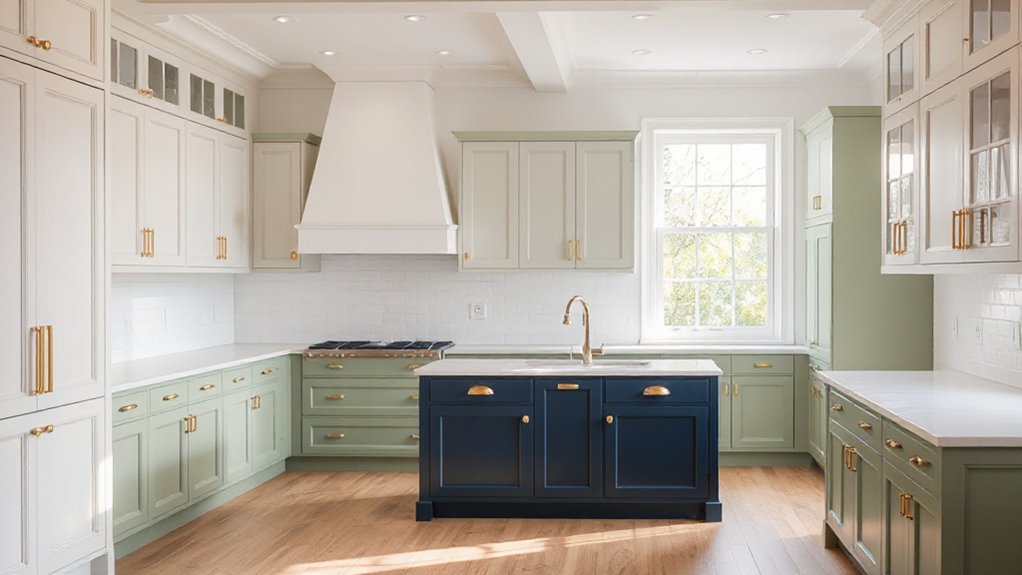
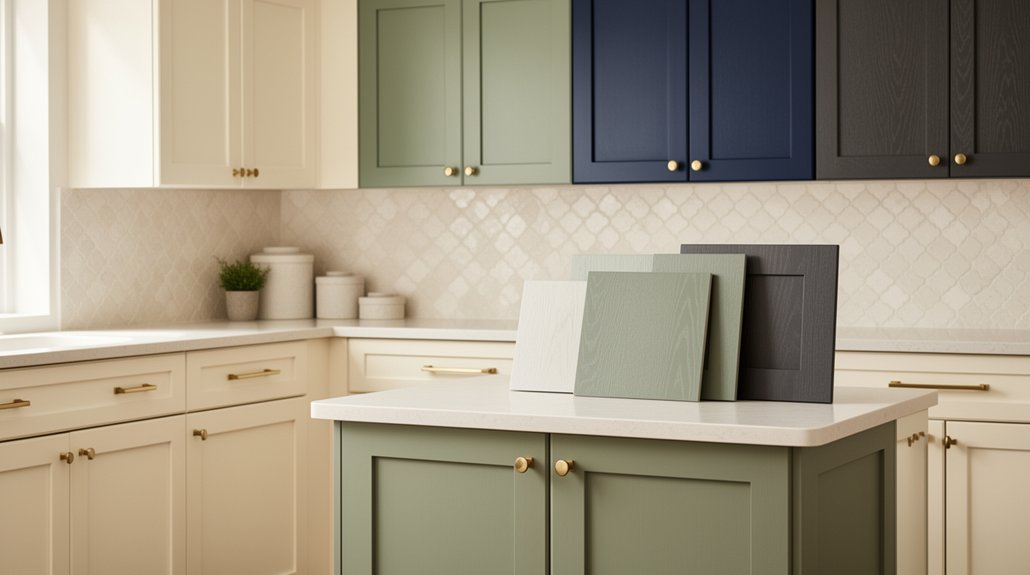
Whether you’re revitalizing a tired kitchen or planning a full refit, start by choosing a cabinet colour that suits the room’s light, scale, and finishes. In north-facing spaces, lean warmer to avoid a flat cast; in bright south-facing rooms, you can handle cooler tones confidently. Check the undertone against worktops, splashback tiles, and flooring, then test large swatches on doors at different times of day. Use Color pairing suggestions: deep green with brass and pale oak, navy with white quartz, or putty with black hardware for contrast. Decide paint finish options early—eggshell for a smart, wipeable sheen, satin for durability, or matt if you’ll accept more marking. Match trims and walls for cohesion.
Best White Kitchen Cabinet Paint Colors
Once you’ve weighed light levels, undertones, and finishes, white cabinet paint becomes the most forgiving way to sharpen a kitchen and let worktops, splashbacks, and hardware do the talking. For a crisp, modern look, choose a clean, bright white; it suits quartz and stainless steel and keeps small UK kitchens feeling open. If your room faces north, pick a softer, warmer white so cabinetry doesn’t read stark under overcast daylight and cool LEDs. For heritage homes, an off-white with a gentle creamy base flatters timber floors and traditional ironmongery. Use Color coordination tips: match the cabinet white to the palest note in your tiles, then echo it in skirting or architraves. Explore paint finish options: satinwood hides marks, while eggshell feels premium.
Best Gray and Greige Kitchen Cabinet Paint Colors
Because grey and greige sit between stark white and full colour, they give your kitchen cabinets depth without stealing the show from stone worktops, brass taps, or patterned tiles. Use Color psychology: cooler greys feel crisp and architectural; warmer greiges read calm and welcoming, especially under UK’s flatter daylight. Aim for mid-tones if you’ve got an open-plan kitchen-diner; they hide scuffs better than pale shades without turning gloomy. Keep undertones consistent with your flooring and splashback, and always test on primed doors.
- Choose a neutral mid-grey for modern Shaker or slab fronts.
- Pick a warm greige to soften stainless steel and concrete.
- Use Paint finish options: satinwood for durability, eggshell for a softer sheen.
- Balance with matte walls and brighter worktops.
Best Green and Blue Kitchen Cabinet Paint Colors
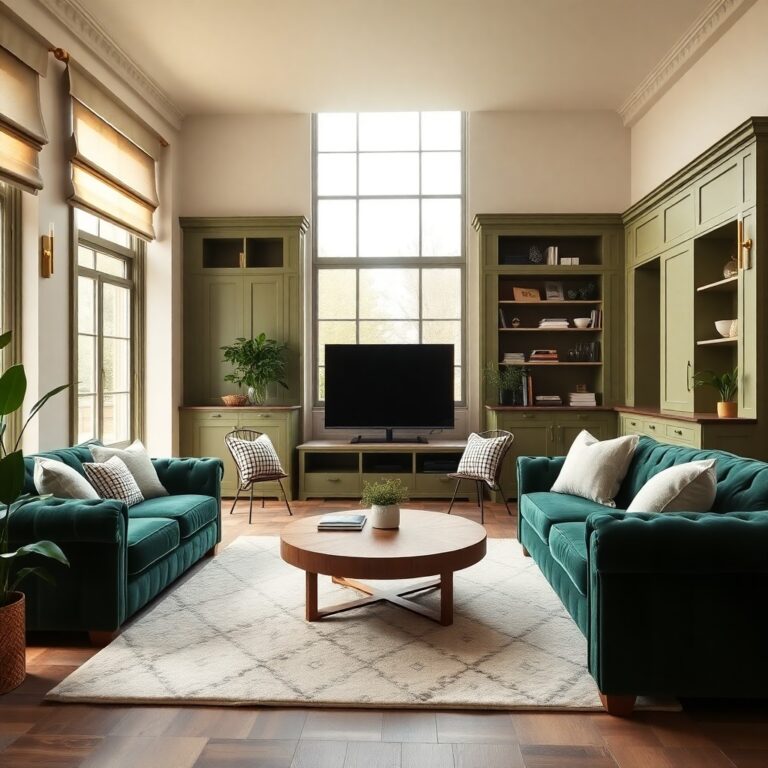
If you want kitchen cabinets with more personality than neutrals but still easy to live with, green and blue paint colours deliver depth, calm, and a designer finish that suits everything from Victorian terraces to new-build open-plan spaces. Choose a muted sage or olive if you want a grounded, heritage feel; it flatters shaker doors and works brilliantly in north-facing kitchens. For a fresher look, go for sea-glass green or a soft duck-egg, keeping the overall mood light. Blue offers instant polish: inky navy reads tailored and architectural, while smoky denim feels relaxed but still premium. Ask for Eco friendly finishes with low-VOC formulas, especially for busy family homes. Lean into Vintage inspired palettes with slightly greyed tones rather than bright primaries.
Match Kitchen Cabinet Colors to Counters and Hardware
Green and blue cabinets bring character, but they only look properly bespoke when they sit comfortably with your worktop and hardware. Start by reading the undertone: warm greens suit oak and brass; cooler blues sharpen quartz and chrome. Use Cabinet paint finishes to control contrast—eggshell softens veining, while satin highlights crisp edges and modern handles. Follow these Kitchen color pairing tips to keep it cohesive:
- Pair dark cabinets with pale worktops to avoid a heavy run of colour.
- Echo worktop flecks in your knob or pull finish (brass, nickel, matt black).
- Match tap and handle metals; mixing works only when one is dominant.
- Test swatches against worktop offcuts in daylight and under warm LEDs.
Frequently Asked Questions
What Sheen Is Best for Painting Kitchen Cabinets?
Choose satin or semi-gloss for kitchen cabinets; you’ll get wipeable durability and a refined look. Compare cabinet finish options against lighting and colour coordination with worktops. You’ll avoid chalky matt, which marks easily.
How Long Should Cabinet Paint Cure Before Heavy Use?
You should wait 7–14 days before heavy use, as Cabinet paint drying happens fast but furniture finish curing takes longer. Use cupboards gently for 48 hours, avoid harsh cleaners, and fit soft-close bumpers.
Do I Need to Prime Cabinets Before Painting?
Yes, you’ll usually need primer; it’s the keel that keeps your finish steady. After cabinet cleaning, focus on surface preparation: degrease, sand, then apply stain-blocking primer for MDF, oak, or laminate, ensuring lasting, design-sharp results.
Can I Paint Over Stained or Previously Varnished Cabinets?
Yes, you can, but you’ll need thorough prep. Use stain removal techniques and varnish stripping methods, then sand, degrease, and apply a high-adhesion primer. You’ll achieve a crisp, design-led finish with durable topcoat.
What’s the Most Durable Paint Type for Kitchen Cabinets?
You’ll get the best durability from a water-based acrylic-urethane cabinet enamel or a two-pack polyurethane system. You’ll balance colour coordination with sheen, and factor budget considerations, as two-pack costs more and needs ventilation.
Conclusion
Choose your kitchen cabinet colour like you’re casting the lead in a West End classic: it must suit the light, the set, and the supporting roles. Test generous swatches from morning to evening, then commit. Crisp whites keep things tailored, greiges and soft greys ground busy worktops, and muted sages or inky blues add quiet drama without shouting. Tie it together with your handles, tap finish, and splashback for a cohesive, design-led scheme.
About the Author