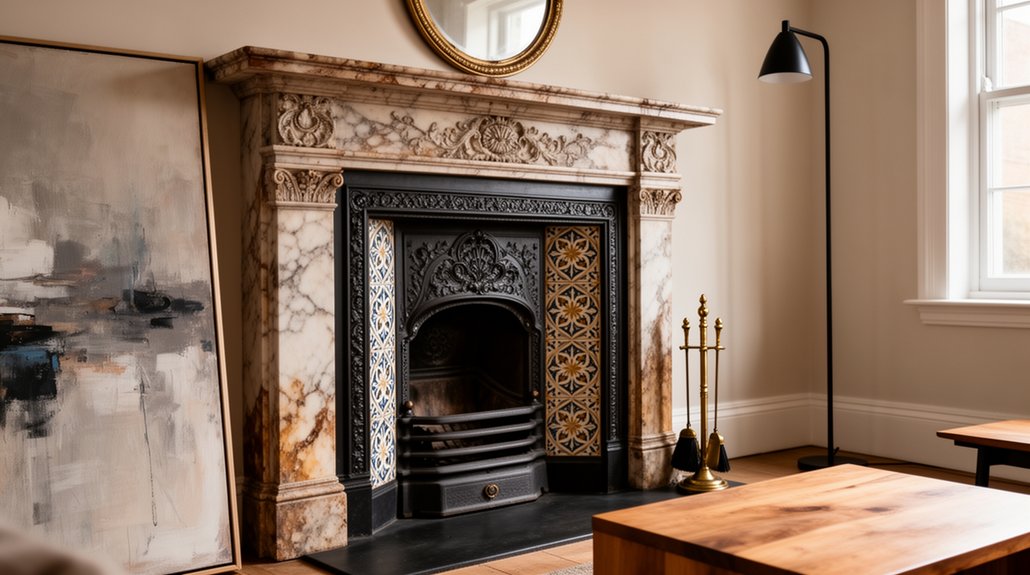
You don’t have to choose between preserving a Victorian fireplace and keeping your space modern. Start by keeping the original cast-iron insert, tiled surround, and mantel proportions intact, then sharpen the look with low-sheen paint in warm neutrals or inky blues. On the mantel, use a tight edit—one large mirror or artwork, a sculptural object, and a restrained stack of books—then the finishing choices make or break it…
Key Takeaways
- Preserve original features: cast-iron insert, tiled surround, and timber or marble mantel; document makers’ marks and crisp detailing.
- Refresh with modern paint that suits light levels, matches material undertones, and stays low-sheen; use heat-rated paint on metal.
- Style the mantel with disciplined layering: one hero piece, one sculptural object, and one low horizontal element in a restrained palette.
- Hang a mirror or art at proper scale: about two-thirds to three-quarters mantel width and 4–8 inches above the shelf.
- Finish with period-appropriate lighting and accessories in antique brass or blackened iron, sized to the opening and lit with warm dimmable bulbs.
Identify Original Victorian Features Worth Keeping
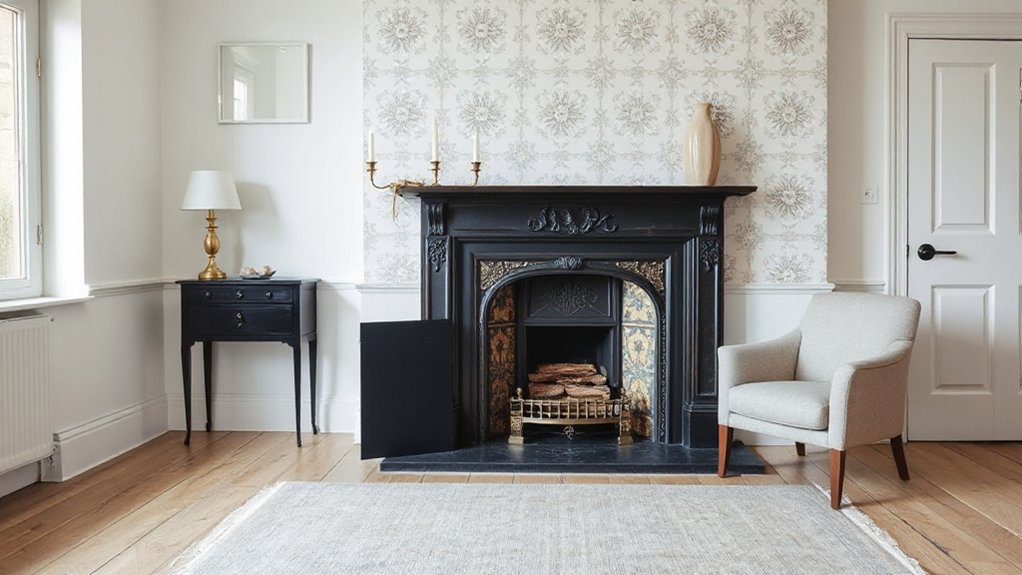
Before you change a thing, take stock of the original Victorian details that give your fireplace its value and character: look for an intact cast-iron insert with crisp patterning, a tiled surround (often encaustic or transfer-printed) with minimal cracking, and a solid timber or marble mantel that still has sharp moulding lines. Next, check proportions: the opening size, frieze depth, and mantel shelf projection should read as balanced, not hacked back. Inspect for makers’ marks, hand-cut tile edges, and fine screw heads—small tells of period craftsmanship. Keep original grates, ash pans, and decorative cheeks if they’re present; you can service them without swapping them out. In Victorian architecture, authenticity sells, so document what you’ve got and preserve patina where it’s stable.
Choose Modern Paint Colours That Suit the Fireplace
Although Victorian fireplaces come with strong built-in character, modern paint can sharpen their presence without erasing the period feel—if you choose colours that respect the room’s light and the surround’s materials. Start by identifying what you’re painting: cast iron, timber, plaster, or tile. In darker rooms, choose soft warm whites, putty, or light greige to lift detail; in bright rooms, try inky charcoal, deep green, or midnight blue for confident Color contrast. Match undertones to existing stone or tile: pinky limestone likes warm neutrals, while bluish slate prefers cooler greys. Keep sheen low (matte or eggshell) to avoid highlighting imperfections, and use heat-rated paint on metal. Add controlled accent hues only on trim lines or recessed moulding.
Style a Victorian Mantel With Simple, Modern Pieces
Three modern pieces can make a Victorian mantel feel current without stripping its heritage: a large, clean-lined mirror or artwork as the anchor, a sculptural object (ceramic, stone, or blackened metal) for form, and a restrained stack of books or a low tray to create a base. Keep proportions disciplined: choose one hero object, one supporting form, and one horizontal layer, then stop. You’ll get Decorative mantels that read intentional, not cluttered. Stick to Minimalist accessories in a tight palette—chalky white, warm greige, smoky black, or muted brass—to complement ornate corbels and carving. Vary heights subtly, leave negative space, and align edges so the composition feels architectural. If you add a candle, pick one oversized pillar or a pair, never a crowd.
Hang the Right Mirror or Art Above the Fireplace
Once you’ve kept the mantel edit tight, the piece above it becomes the focal point that tells the whole fireplace how to behave. Start with scale: your mirror or frame should span roughly two-thirds to three-quarters of the mantel width, so it feels anchored to the surround. For mirror placement, hang it 4–8 inches above the shelf and keep it centered on the firebox, not the wall. Choose slim metal, ebonised wood, or an aged gilt frame that nods to Victorian detail without looking fussy. If you prefer art, treat artwork selection like architecture: pick one strong piece or a tight pair, with a calm palette and bold negative space. Avoid tiny clusters; they fight the fireplace’s proportions.
Finish With Period-Style Lighting and Hearth Accessories
When you finish a Victorian fireplace with period-style lighting and the right hearth accessories, you lock in the era without tipping into theme-park décor. Keep metals consistent—antique brass with brass, blackened iron with iron—and scale everything to the opening so it looks intentional, not cluttered. Use warm, dimmable bulbs to mimic gaslight and let the surround’s detailing read at night. Then edit accessories like you’d style a console: a few strong pieces, well-spaced.
- A pair of matching wall sconces flanking the chimney breast
- An opaline glass table lamp on a nearby side table
- A cast-iron companion set with slim, turned handles
- A tidy coal scuttle (even if it’s purely decorative)
- A low fender or fireguard that echoes the grate’s finish
Frequently Asked Questions
How Can I Safely Clean Soot From Victorian Fireplace Tiles?
You can safely clean soot from Victorian fireplace tiles by dry-brushing, then doing gentle tile cleaning with pH-neutral soap and distilled water. For stubborn soot removal, apply baking-soda paste briefly, rinse, dry; don’t use acids.
Do I Need Planning Permission or Listed Building Consent to Alter It?
You might need permission: if it’s listed, you’ll usually need Listed Building Consent; if not, planning permission’s rarely required unless you change structure or external vents. Prioritise historical significance and proven preservation techniques.
What’s the Best Way to Block a Fireplace While Keeping Ventilation?
Block it with a removable, insulated register plate and a snug hearth infill, but keep a vented air brick or grille to the room—classic nod, modern. You’ll protect Fireplace aesthetics while ensuring Ventilation solutions work.
How Can I Draught-Proof a Victorian Fireplace Without Damaging Original Features?
You can draught-proof it with a removable chimney balloon or top-sealing damper, plus a brush-strip fireguard. Use non-invasive Fireplace accessories that clip on, and avoid drilling into Victorian mantels; keep vents clear.
Should I Restore the Fireplace Myself or Hire a Specialist?
Hire a specialist if you’ve got cracking, loose tiles, or flue issues; choose DIY restoration only for gentle cleaning and cosmetic touch-ups. You’ll protect originals, meet safety norms, and reserve Professional repair for structural work.
Conclusion
If you treat your Victorian fireplace as the room’s anchor, you’ll get a look that feels intentional, not themed. Keep the cast iron, tiles, and mantel proportions, then modernise with low-sheen warm neutrals or inky blue and restrained styling. Add one bold mirror or artwork, not clutter. Finish with antique-metal lighting and tools. Interestingly, 80% of UK homebuyers say period features boost a home’s appeal—so you’re styling smart, too.
About the Author