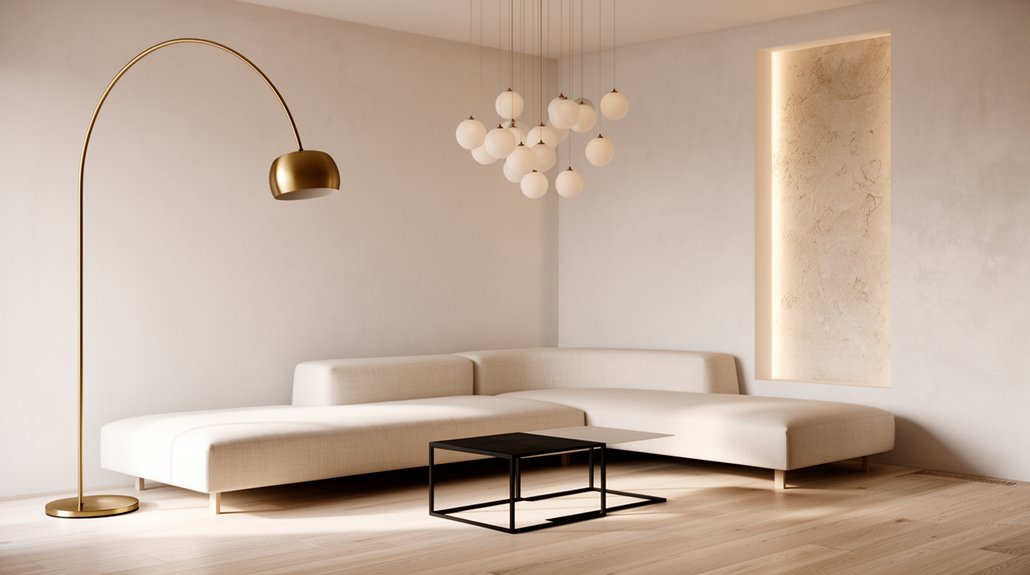
Integrate sculptural lighting by choosing one clean-lined statement fixture that fits your room’s scale and ceiling height, then keep surrounding décor quiet so its silhouette leads. Match the finish to your minimalist palette and repeat that metal in a few small touchpoints for cohesion. Use warm, dimmable ambient light for evenings, and reserve cooler task light for work zones. Add concealed, low-lumen accents to wash textures and shelves without clutter. Keep going for a few smart layout and layering moves.
Key Takeaways
- Choose one sculptural statement fixture with a clean geometric silhouette, scaled to ceiling height and furniture footprint.
- Match finishes to a minimalist palette by repeating one dominant metal and keeping undertones consistent across hardware and décor.
- Layer warm, dimmable ambient light with focused task lighting, reserving cooler brightness for work zones only.
- Use negative space intentionally by selecting slim-profile fixtures and placing pendants and arcs to preserve clear sightlines and walkways.
- Support the focal light with discreet accents like hidden LED strips or low-lumen wall washers that highlight textures without adding visual clutter.
Choose the Right Sculptural Light Type
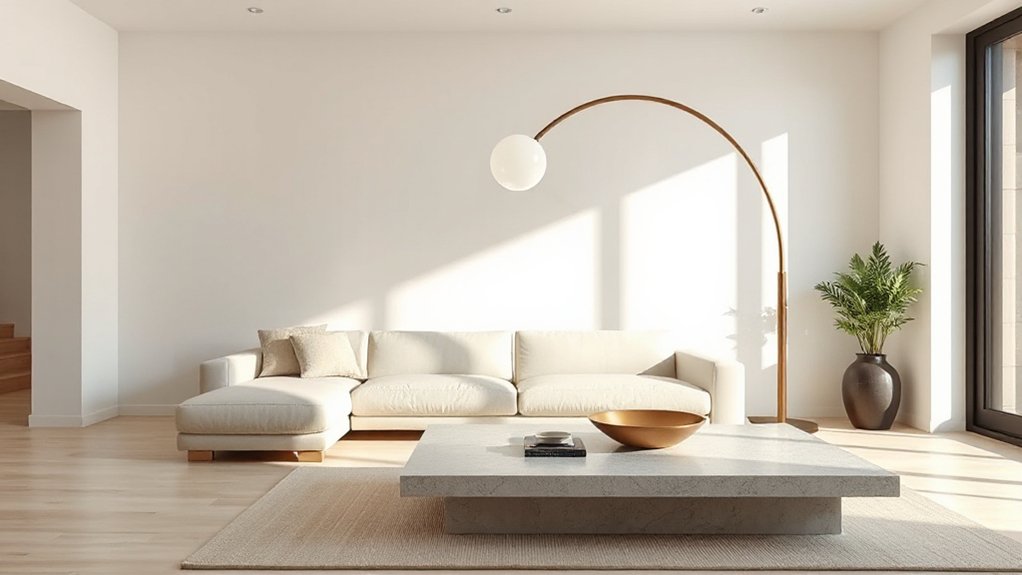
If you want sculptural lighting to elevate a minimalist living room without adding visual clutter, start by choosing a fixture type that fits the room’s function and scale. Use a floor lamp to anchor a reading chair, a pendant to define a conversation zone, or a wall sconce to free up side tables and keep circulation clear.
Match output to tasks: pick dimmable ambient lighting for evenings, focused downlight for coffee-table activities, and adjustable heads for artwork. Calibrate size by ceiling height and furniture footprint, so the piece feels intentional, not oversized. Choose finishes that echo your ambient textures—wood grain, boucle, plaster—while maintaining color harmony with metals, paint, and textiles. Finally, plan switch placement and cord routing early, so the installation stays quiet and clean.
Pick Clean-Lined Sculptural Lighting Forms
To keep a minimalist living room crisp, you’ll want sculptural lighting with clean geometry—think spheres, rings, arcs, or straight-line frames. Choose a geometric silhouette that echoes your room’s dominant shapes so the fixture reads intentional, not busy. Then favor slim-profile statements with tight joints, thin stems, and minimal hardware to deliver impact without visual weight.
Geometric Silhouette Choices
When you keep the rest of the room pared back, geometric silhouettes in sculptural lighting deliver impact without visual noise. Choose fixtures built from clear primitives—sphere, cube, ring, or cone—so the form reads instantly from the doorway. Aim for one dominant geometry and repeat it subtly in a side table base or wall art to keep the composition coherent.
Prioritize crisp edges or smooth continuous curves, and let negative space do the work. A halo pendant casts abstract shadows that add depth on blank walls, while a faceted shade creates controlled patterning across a ceiling. If the room already has many right angles, introduce a single circle or arc; if it’s soft, anchor it with a clean square. Avoid mixing too many organic shapes at once.
Slim Profile Statements
One slim-profile fixture can give a minimalist living room a strong focal point without crowding the sightlines. Choose clean-lined forms—linear pendants, narrow ring chandeliers, or arched floor lamps with thin stems—that read as sculptural, not bulky. Keep finishes restrained: matte black, brushed nickel, or warm brass, and let the silhouette do the work.
Plan your lighting installation around negative space. Center a slim pendant over a coffee table, or run a linear suspension parallel to a sofa to emphasize length. Use dimmable LEDs and a tight beam angle to avoid glare on pale walls. Treat the piece as one of your artistic accents: pair it with low-profile furniture, then repeat its metal tone in a tray or frame for cohesion.
Match Finishes to Your Minimalist Palette
Although sculptural lighting can steal the spotlight, its finish should still echo your minimalist palette so the room feels intentional, not busy. Start with Color coordination: pull one dominant metal from the room—blackened steel, brushed brass, or soft nickel—and repeat it in two to three touchpoints like hardware, table legs, or frames. If you’re mixing metals, keep undertones aligned (warm with warm, cool with cool) and limit contrast to one accent piece. Prioritize material consistency by pairing finishes with what’s already present: matte metals with honed stone, satin brass with warm oak, polished chrome with lacquer. Watch reflectivity; high-gloss surfaces multiply visual noise under light. Finally, match shade and diffuser materials to your textiles—linen, opal glass, or paper—to keep the glow cohesive.
Balance Fixture Scale and Negative Space
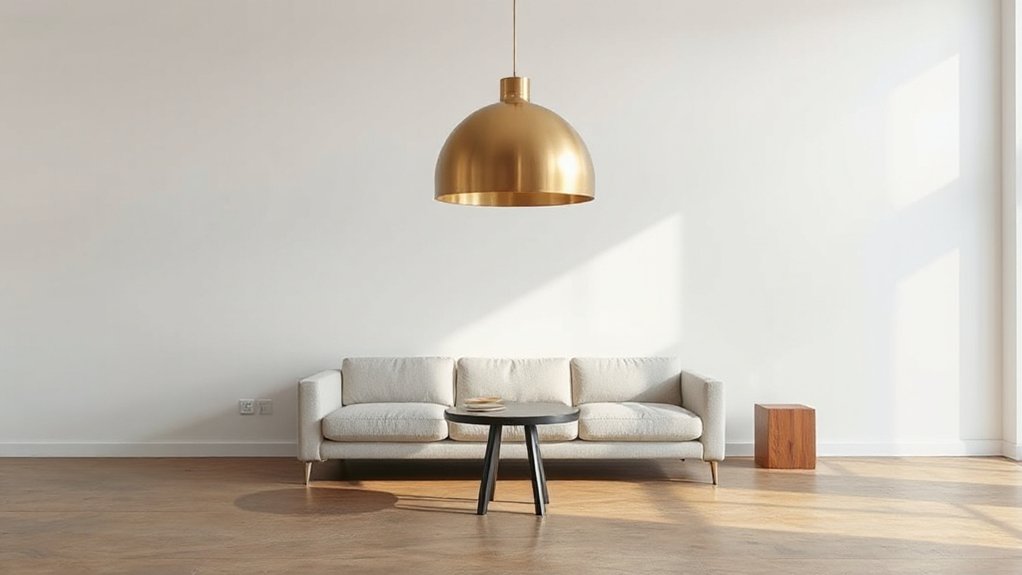
Once you’ve aligned finishes with your minimalist palette, let the fixture’s scale do the heavy lifting—without eating up the room’s calm. Start by measuring ceiling height, seating footprint, and sightlines from entry to sofa; then choose a form that reads clearly at distance yet leaves breathable margins around it. Keep negative space intentional: you’re composing volume and void, not filling air.
- Over a low sofa, hang a linear pendant high enough to clear views, wide enough to echo the seating.
- In a corner, use a slender arc floor lamp that traces light without crowding the walkway.
- Above a spare coffee table, pick a compact cluster that adds texture contrast while maintaining material harmony.
Aim for proportion, clean clearance, and balanced weight.
Make One Sculptural Fixture the Focal Point
Choose one sculptural light as your statement piece, and let it carry the room’s visual weight. Anchor it with clean-lined furniture and restrained finishes so the silhouette reads crisp, not chaotic. Then balance scale and space by giving it breathing room and keeping surrounding lighting and décor intentionally quiet.
Choose A Statement Piece
One sculptural fixture can do the heavy lifting in a minimalist living room, anchoring the space without adding clutter. Choose a piece with a clear silhouette and enough scale to command attention from the main seating view. Prioritize Color coordination so the finish ties into your palette, then use Material contrast to add depth without extra objects.
- A matte-black arc floor lamp hovering over a pale sofa, echoing dark window frames
- A warm brass pendant centered above a low oak coffee table, reflecting softly off cream walls
- A hand-blown glass globe sconce beside a textured linen chair, catching light like a small sculpture
Keep surrounding décor quiet, and let the fixture’s form and finish do the talking.
Anchor With Clean Lines
Two clean lines can anchor your minimalist living room: the fixture’s silhouette and the way it traces light through the space. Choose one sculptural light with a crisp outline—an arc, ring, or linear bar—and let it read like functional art against quiet walls. Keep surrounding shapes disciplined: low-profile seating, simple tables, and uncluttered sightlines that point back to the fixture.
Refine the focal point through material contrasts. Pair matte plaster, linen, or oak with a single polished metal, hand-blown glass, or blackened steel finish. Then tune the glow so it reveals ambient textures without visual noise: warm LEDs, a frosted diffuser, and a dimmer for controlled highlights. Center the fixture’s placement with intention, aligned to your primary seating axis.
Balance Scale And Space
Because minimalist rooms rely on negative space as much as furniture, you’ll get the cleanest impact when a single sculptural fixture claims the visual hierarchy and everything else supports it. Choose a scale that relates to the room’s longest sightline: a low, wide pendant over a slim coffee table, or an arched floor lamp that spans a sofa without crowding the walkway. Keep surrounding pieces quieter, then refine with texture contrast and color harmony so the light reads intentional, not loud. Aim for one statement, one axis, one calm perimeter.
- Float the fixture over open floor area, not above cluttered shelving.
- Echo its finish in one small accent (tray, frame, or vase).
- Leave breathing room: 18–24 inches from walls and tall furniture edges.
Layer Light (Dimmers, Bulbs, and Subtle Accents)
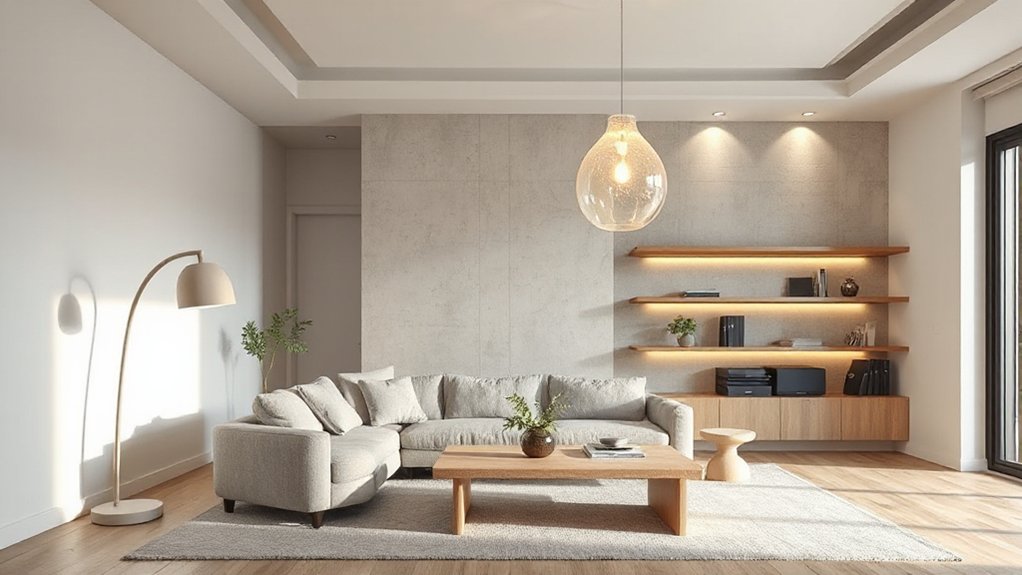
While sculptural lighting can read as a single statement piece, it looks and functions best when you layer it with dimmers, the right bulb choice, and a few subtle accent sources. Add a quality dimmer so you can shift from task light to an Ambient glow without changing fixtures, and prioritize flicker-free, high-CRI LEDs to keep finishes and art true. Choose warm temperatures (2700–3000K) for Mood enhancement, then reserve cooler light only for focused work zones.
Support the sculpture with discreet sources: a slim floor lamp behind a chair, an LED strip under a floating shelf, or a small wall washer aimed at texture. Keep accents low-lumen and hidden, so the sculptural piece stays dominant while the room feels evenly lit.
Frequently Asked Questions
How Do I Safely Install a Heavy Sculptural Light in a Rental?
Get landlord approval, locate studs, and use rated anchors or mounting plates. Choose wall mounted options or temporary fixtures when possible. Hire a licensed electrician for wiring, then document everything and restore holes on move-out.
What Ceiling Height Is Required for Sculptural Pendants in Minimalist Rooms?
You’ll want 8–10 ft ceilings for most sculptural pendants; 10+ ft handles larger forms. For Ceiling height considerations, keep 7 ft clearance below. Use pendant size proportions: diameter about one-third table width.
How Do I Prevent Glare and Eye Strain From Exposed Sculptural Bulbs?
To prevent harsh sparkle yet keep sculptural drama, choose frosted or filament-shielded bulbs, add a dimmer, and aim fixtures off sightlines. You’ll get glare reduction and steady eye comfort; use warm 2700K, lower lumens.
Are Sculptural Lights Energy-Efficient, and Which Smart Controls Work Best?
Yes—you can make sculptural lights energy-efficient by choosing LED modules or high-lumen-per-watt bulbs for real Energy savings. For smart lighting, use dimmers, schedules, and occupancy sensors via Zigbee, Matter, or Lutron Caséta systems.
How Do I Clean Delicate Sculptural Fixtures Without Damaging Finishes?
Like polishing a knight’s helm, you’ll dust with a soft microfiber, power off, and use distilled water with mild soap. For fixture maintenance, avoid abrasives, ammonia, and sprays; delicate cleaning means blotting, not rubbing.
Conclusion
When you integrate sculptural lighting into a minimalist living room, you’re not adding clutter—you’re giving the space a quiet handshake. Choose a light type that suits how you live, then favor clean-lined forms and finishes that stay in your palette’s lane. Keep scale honest, let negative space do its job, and crown one fixture as the room’s main voice. Layer dimmers, warm bulbs, and discreet accents, so everything lands softly.
About the Author