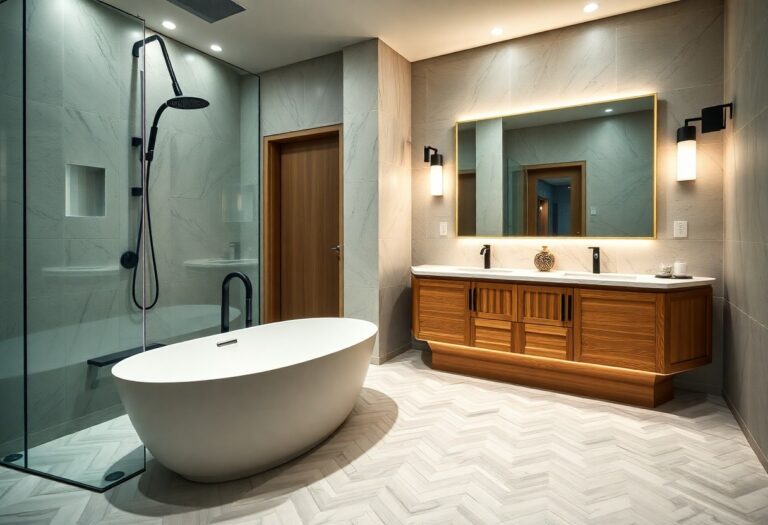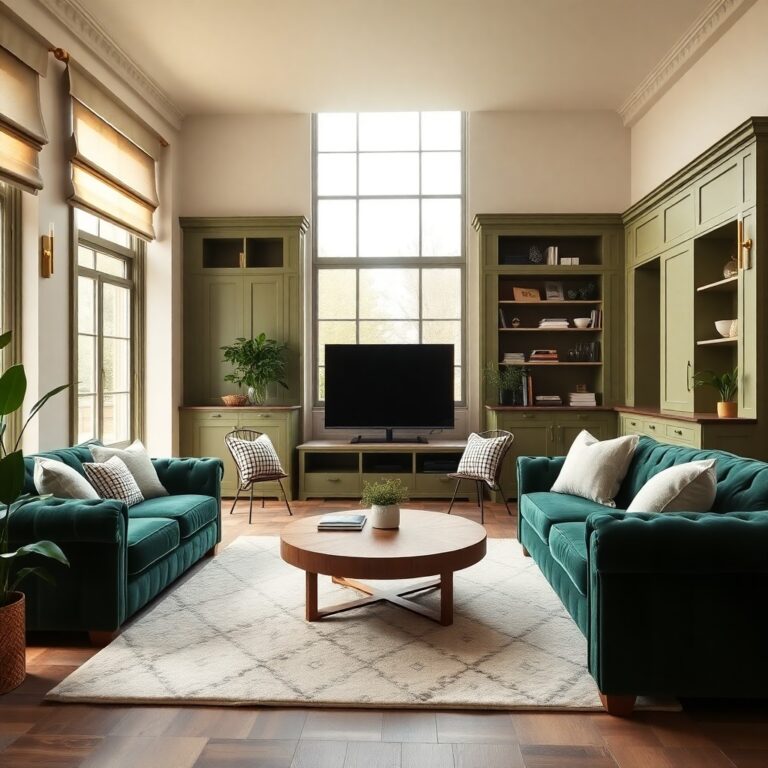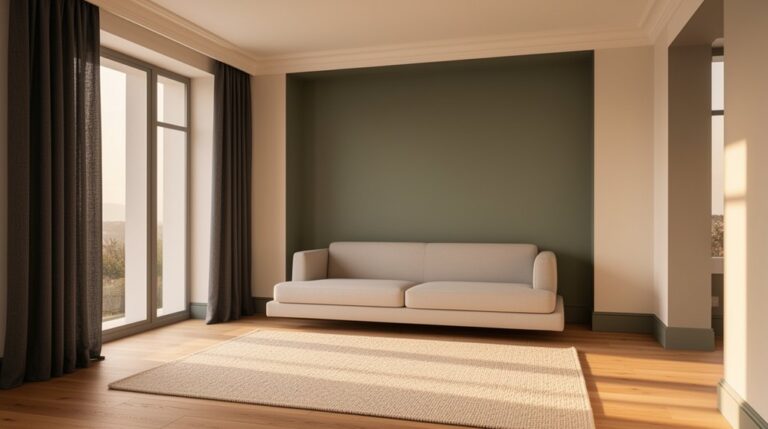
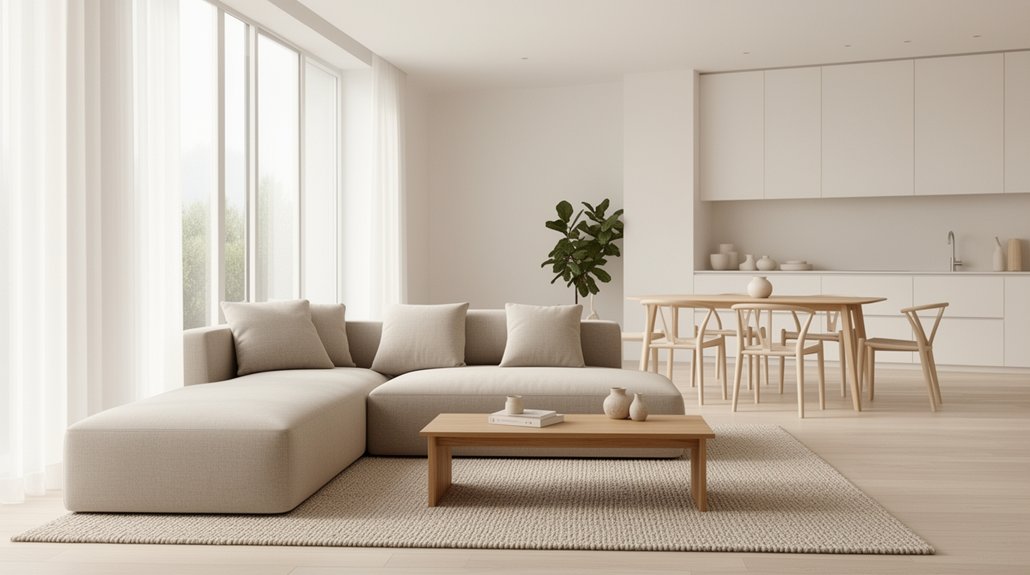
Start by sketching your open-plan and marking lounge, dining and work zones, then keep 90–110cm walkways clear from the entrance to each area. Choose a layout that suits the footprint: run seating along the long wall in narrow rooms, centre it in square spaces, and use a “hinge” sofa in L-shapes. Put the dining table near the kitchen, off the main route. Define zones with rugs, layered lighting and closed storage—there’s more to refine it.
Key Takeaways
- Map zones for lounge, dining, and work, then keep 90–110cm walkways clear for smooth, calmer circulation.
- Choose a layout that matches the room shape—long, square, L-shaped, or bay—rather than forcing a one-size plan.
- Place the dining table near the kitchen, off main routes, with enough chair clearance to prevent traffic bottlenecks.
- Anchor seating to one strong focal point and form a conversation triangle, leaving a consistent circulation path behind furniture.
- Define zones with rugs and layered lighting, and add closed-front storage at edges to reduce visual clutter.
Map Zones, Walkways, and Focal Points First
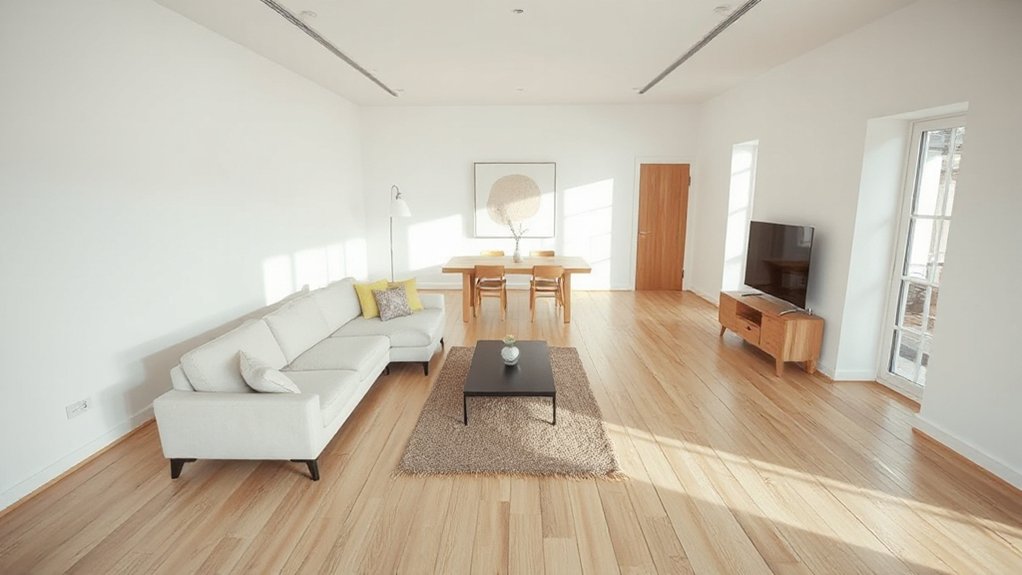
Before you buy furniture or tweak the décor, sketch your open-plan space and mark out clear zones for lounging, dining, and working, then draw the main walkways you’ll use every day (typically from entrance to kitchen, and through to doors or windows). Keep these routes 90–110cm wide so you’re not squeezing past chairs. Next, pin down focal points: a fireplace, media wall, picture window, or a single statement artwork. Face your main seating to that anchor, and place the dining table where it won’t interrupt circulation. Use rugs or pendant lighting to “underline” each zone without adding clutter. Lock in Color palettes per zone, then repeat a restrained set of decorative accents across areas for cohesion.
Pick a Midimalist Layout by Room Shape
Once you’ve mapped your zones and routes, choose a midimalist layout that suits your room’s footprint rather than forcing a “one size fits all” plan. In a long, narrow Room shape, run seating parallel to the longest wall and keep a clear central walkway to stop it feeling like a corridor. In a square plan, aim for layout symmetry: centre the main seating group on the focal point, then balance it with a single storage run or occasional chair opposite. L‑shaped rooms work best with a “hinge” piece, such as a sofa or low shelving, that turns the corner and visually links both legs. If you’ve got bay windows, treat the bay as a calm reading nook and keep larger pieces outside the recess.
Place the Dining Table Where It “Belongs
Place your dining table where it works hardest: close to the kitchen for quick serving and easy clearing. Set it so it sits naturally on the main circulation route, leaving clear walkways to the lounge and garden doors. If you’ve got to squeeze past chairs to move through the space, you’ve put it in the wrong spot.
Anchor It Near Kitchen
Because an open-plan room can blur your daily routines, anchor the dining table close to the kitchen so it clearly reads as the eating zone. Keep it within a few steps of the sink and hob so serving feels effortless and clutter doesn’t migrate into the lounge. If you’ve got kitchen islands, position the table off one side rather than behind stools; that way, the island stays for prep, not overflow dining. Check appliance placement before you commit: you need clear door swings for the fridge, oven, and dishwasher, plus enough landing space for hot dishes. Use one simple pendant and a tight rug size to “box” the area, then store tableware in the nearest cupboard for calm, quick resets.
Align With Circulation Paths
Keeping the table near the kitchen sets the zone, but it won’t feel right unless it also sits out of the main traffic lines. Map how you actually move: front door to sofa, kitchen to patio doors, hallway to loo. Then shift the table so you’re not squeezing past chair backs every time you cross the room.
Aim for clear routes of at least 900mm, more if you’ve got kids or a dog. Keep one long edge parallel to the busiest path, so people glide by rather than cutting through. Use a rug or pendant to lock the position without adding bulk, and align it with your island or sideboard for cleaner visual flow. Good furniture placement makes the dining area feel inevitable, not obstructive.
Anchor Open-Plan Seating With One Strong Focal Point
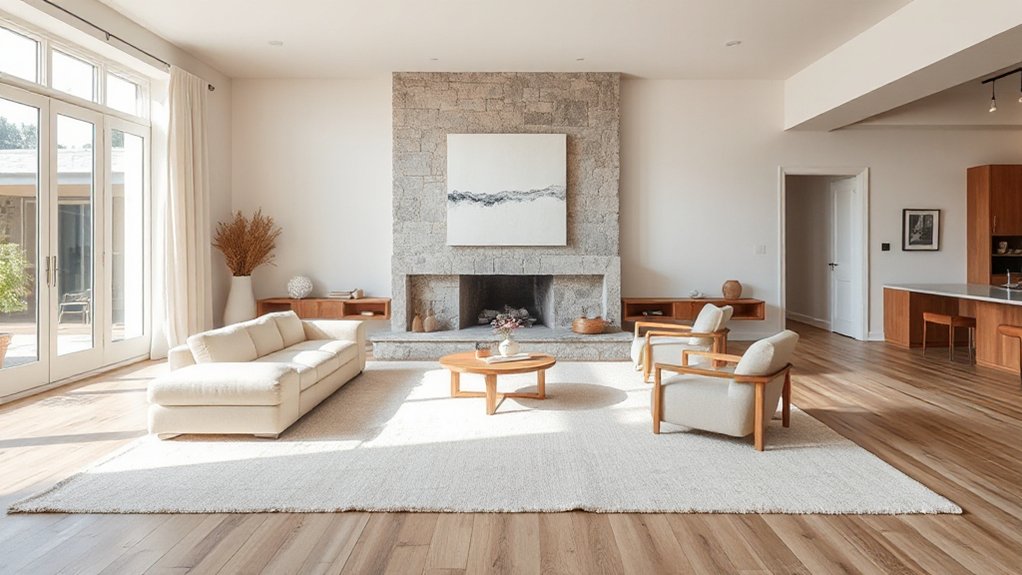
When your living, dining and kitchen areas flow into one another, a single strong focal point stops the seating from feeling like it’s drifting. Choose one anchor: a fireplace, statement media wall, large artwork, or a picture window, then commit to it. Get focal point placement right by centring it on the main sightline from the entry and the kitchen island, not the TV cabinet’s current position.
Build the seating arrangement around that anchor: float the sofa to face it, keep chairs angled in to form a clear conversation triangle, and leave a consistent walkway behind. Use one substantial coffee table to lock the group together. If you need extra seats, add a slim bench or pouffe that tucks away.
Zone the Open-Plan With Rugs and Layered Lighting
Although open-plan rooms look calm on paper, they’ll feel muddled in real life unless you zone them with clear cues. Use area rugs to “draw” rooms on the floor: one under the sofa and coffee table, another under the dining set, leaving a clear strip of bare flooring as a walkway. Keep rug edges aligned with key furniture legs so zones read intentional, not accidental.
Reinforce each zone with layered lighting. Hang a pendant centred over the dining table, then add a floor lamp by the sofa and a table lamp on a side table for softer evenings. Put everything on dimmers, and choose matching bulb temperatures (warm white) so the whole space feels cohesive while each area stays distinct.
Build In Hidden Storage at the Zone Edges
If you build storage right where one zone meets the next, you’ll keep the open-plan feeling while stopping clutter from drifting across the room. Treat boundaries as working edges: a low sideboard behind the sofa, a banquette under the dining table, or a run of cabinetry beside the kitchen peninsular.
Choose pieces with hidden compartments so everyday bits vanish fast—remote controls, chargers, paperwork, dog leads. Fit drawers that open towards the zone that uses them, and label the inside for quick resets. Add a slim broom cupboard near the kitchen entry, and a shoe bench by the hallway line. Prioritise closed fronts in calm finishes to reduce visual noise. Done well, these storage solutions make tidying automatic and keep each area purpose-led.
Keep Breathing Room With Simple Spacing Rules
In your open-plan space, keep clear walkways first—aim for a straight, uncluttered route between the kitchen, dining area, and seating zone. Then set consistent gaps between key pieces (sofa to coffee table, chairs to sideboard) and stick to them to maintain calm, usable breathing room. If a piece breaks the line or squeezes the gap, shift it or scale it down rather than letting the layout tighten up.
Preserve Clear Walkways
To make an open-plan space feel calm rather than chaotic, you’ve got to protect the main walkways first. Mark the routes you use most—front door to kitchen, sofa to dining table, stairs to loo—and keep them unobstructed. Aim for at least 90cm clearance so two people can pass without sidestepping. Use Focal point placement to anchor each zone: face seating to the fireplace, telly unit, or window, not across the traffic line. Then check Visual balance: don’t pile tall storage on one side of a passage and low pieces on the other. If a chair back or sideboard clips the route, rotate it, swap for a slimmer piece, or move it to the perimeter. Keep cables and rugs out of the lanes too.
Use Consistent Furniture Gaps
A calm open-plan layout depends on repeating the same “breathing gaps” between pieces, so your eye reads the space as organised rather than cluttered. Set one measurement and stick to it across zones; it’s the quickest upgrade you can make to Furniture placement without buying anything. Use a tape measure and keep gaps consistent from sofa to side table, dining chairs to wall, and around storage.
- Leave a 45cm gap between coffee table and sofa so knees and hoovers pass easily.
- Keep 75–90cm behind dining chairs for pulling out without snagging.
- Hold 10–15cm between furniture and walls for lighter, cleaner sightlines.
Tie it together with colour coordination: repeat one timber tone and one accent across each zone.
Frequently Asked Questions
How Do I Soundproof an Open-Plan Space Without Adding Visual Clutter?
Add Acoustic panels in matching wall tones, and layer Soft furnishings like thick curtains, rugs, and upholstered seating. You’ll reduce echo with ceiling baffles and bookcases. Seal gaps around doors and windows. Use felt pads.
What Colors Best Support a Calm Midimalist Open-Plan Atmosphere?
Choose warm off-whites, stone greys, muted sage, and soft clay tones; they’re proven in colour psychology to lower visual noise. Stick to minimalist palettes, keep saturation low, and repeat one accent across zones for cohesion.
Which Low-Maintenance Plants Suit Midimalist Open-Plan Living Areas?
Choose snake plant, ZZ plant, pothos, and spider plant; like quiet scaffolding, they steady your space. Add succulent arrangements in minimalist planters. You’ll water fortnightly, rotate quarterly for even growth, and wipe leaves.
How Can I Keep Cooking Smells From Spreading Into the Living Zone?
Stop cooking smells spreading by running your extractor hood on boost, opening a window for air circulation, and closing internal doors. Simmer with lids on, clean filters weekly, and use bicarbonate of soda for odour absorption.
What Budget-Friendly Upgrades Make the Biggest Impact in Open-Plan Layouts?
You’ll see the biggest impact by steering your ship with Minimal furniture, Neutral palettes, zoned rugs, and better lighting. Swap bulbs, add dimmers, thrift cohesive storage, hang full-length curtains, and reorient seating. It won’t cost much.
Conclusion
You’ll get a calmer open-plan the moment you map zones, routes, and a clear focal point — like laying tracks before the train runs. Choose a midimalist layout that suits your room’s shape, then park the dining table where it naturally gravitates. Ground seating with one hero feature, soften edges with rugs and layered lighting, and tuck storage into the margins. Leave breathing space: keep walkways clear, and let furniture float, not crowd.
About the Author