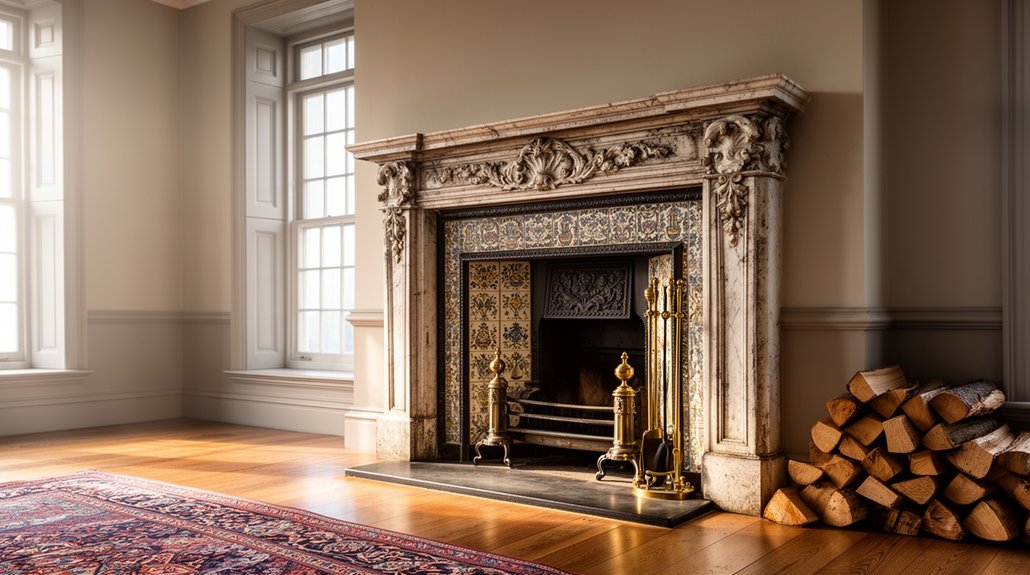
You’ll find that buyers love these historic features in older homes. You might not realise that, in many UK period homes, an original fireplace can influence a valuer’s judgement even before square footage is weighed. You’re not just adding a decorative focal point; you’re signalling authenticity, craftsmanship, and a coherent historic scheme that buyers often pay a premium for. But not every “antique” feature helps, and the difference hinges on style, provenance, and compliance—so what should you look for first?
Key Takeaways
- Antique fireplaces add most value when they match the home’s period, proportions, and local buyer expectations, especially in Victorian and Georgian properties.
- Buyers pay premiums for authentic materials—marble, slate, cast iron, and original tiles—kept intact without modern alterations.
- Provenance boosts confidence: photos, receipts, and expert notes help buyers trust the feature’s history and quality.
- A safe, compliant fireplace sells faster; HETAS or Gas Safe certification and Part J compliance reassure buyers and surveyors.
- Gentle restoration and smart staging—clean finish, subtle period accessories, and good lighting—turn the fireplace into a memorable focal point.
Do Antique Fireplaces Add Resale Value?
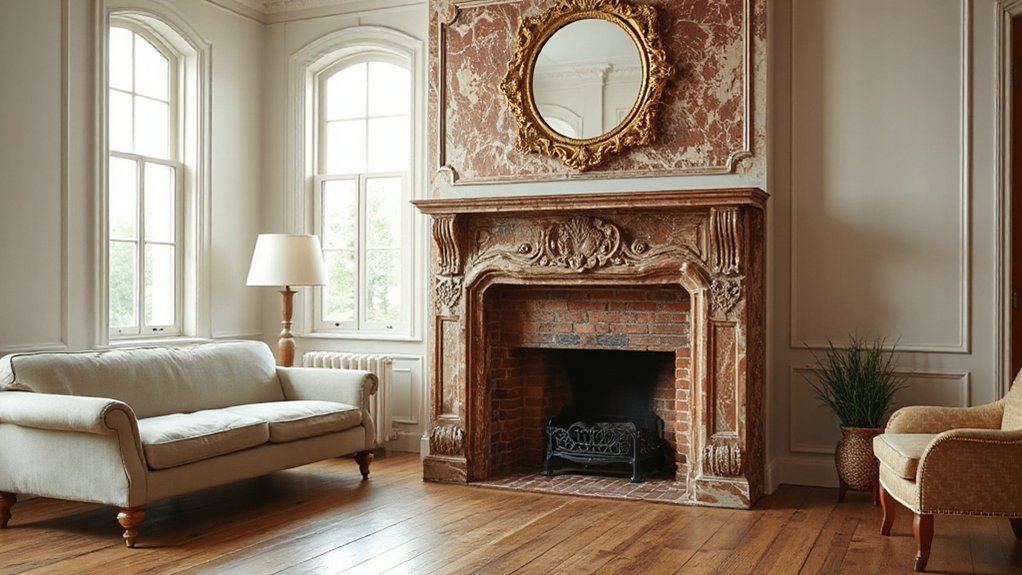
An antique fireplace can add resale value, but only when it aligns with the property’s period, condition, and local buyer expectations. You’ll see the strongest uplift in UK markets where heritage details influence decisions, particularly in Victorian and Georgian housing stock.
You should prioritise Historical significance and document provenance where possible, as buyers and surveyors respond to verifiable context. You must also protect Material authenticity: retain original stone, marble, cast iron, or tiles, and avoid aggressive sanding, modern coatings, or mismatched inserts. You’ll add confidence by commissioning a HETAS or Gas Safe assessment, confirming safe operation, ventilation, and compliance. If the fireplace is purely decorative, you can still benefit, but you should present it as a restored feature rather than a heat source.
Antique Fireplace Styles Buyers Pay More For
Because buyers often pay a premium for period coherence over sheer ornament, you’ll see the strongest uplift from antique fireplaces that match the home’s architectural era and read as original or correctly reinstated. In UK terraces, a Georgian or Regency hob grate with a restrained surround signals authenticity and suits current Design trends favouring calm symmetry. For Victorian and Edwardian houses, you’ll command more with boldly profiled timber or cast-iron combinations, especially where tiling complements original joinery and cornices. In Arts and Crafts homes, buyers pay for simple stone or brick inglenooks that emphasise craftsmanship, not gloss. Across periods, choose proven materials—marble, slate, and cast iron—for material durability and long-term serviceability. If you align scale, proportion, and finish with the room, you’ll protect value.
A well‑designed room doesn’t always need a full renovation; sometimes it just needs a focal point with a bit of soul. That’s why so many homeowners are rediscovering the charm of reclaimed & antique fireplaces, not as museum pieces but as character‑rich anchors for modern living spaces.
How to Spot a Real Antique Fireplace (Mantel, Tile, Insert)
Buyers will pay more for a fireplace that looks convincingly original, so you need to tell a true antique from a later reproduction or a modern “antiqued” set. Start with proportion and tooling: authentic Georgian and Victorian surrounds show crisp, hand-cut details and slight asymmetry that machine routing can’t mimic. Examine Mantel craftsmanship at joints and returns; older pieces often use tight mitres and traditional fixing points rather than uniform modern screws. For tile, read the Tile patterns closely: period encaustic and Art Nouveau tiles carry depth of glaze, fine crazing, and subtly irregular registration, not flat digital repeats. Finally, check the cast-iron insert: genuine examples feel weighty, show foundry marks, and have consistent wear on high points, not contrived distressing.
Antique Fireplace Red Flags: Safety, Code, Damage
While an antique fireplace can look immaculate in a showroom, you should treat safety, Building Regulations compliance, and hidden damage as non‑negotiable checks before you buy or install. Commission a HETAS-registered engineer or Gas Safe (for gas) to inspect the flue, chimney integrity, and ventilation, and confirm the hearth and clearances meet Part J. Walk away if you see spalled brickwork, damp staining, sulphate deposits, warped cast iron, loose tiles, or hairline cracks through marble—these often signal heat stress or prior chimney fires. Verify any listed-building constraints and demand provenance to protect Historical authenticity. For Modern integration, ensure liners, registers, and surrounds haven’t been bodged, and insist on test certificates and a full sweep report before exchange.
How to Stage an Antique Fireplace for Showings
Even if the fireplace itself is the hero feature, you’ll sell it faster by staging it as a safe, working focal point rather than a dusty relic. Begin by ensuring the hearth, surround, and grate look clean and orderly, and remove soot-stained items from view. If it’s non-operational, state this plainly and keep it unlit; if it’s usable, present it as ready, not in use. Style Decorative mantels sparingly: one scaled mirror or artwork, plus two balanced objects, keeps period character without clutter. Add Fireplace accessories that signal care—matching fireside tools, a tidy log basket, and a simple fender. Light the room to highlight tilework or carved stone, and keep nearby furnishings pulled back to show proportions and allow safe access.
Restore an Antique Fireplace Without Hurting Value
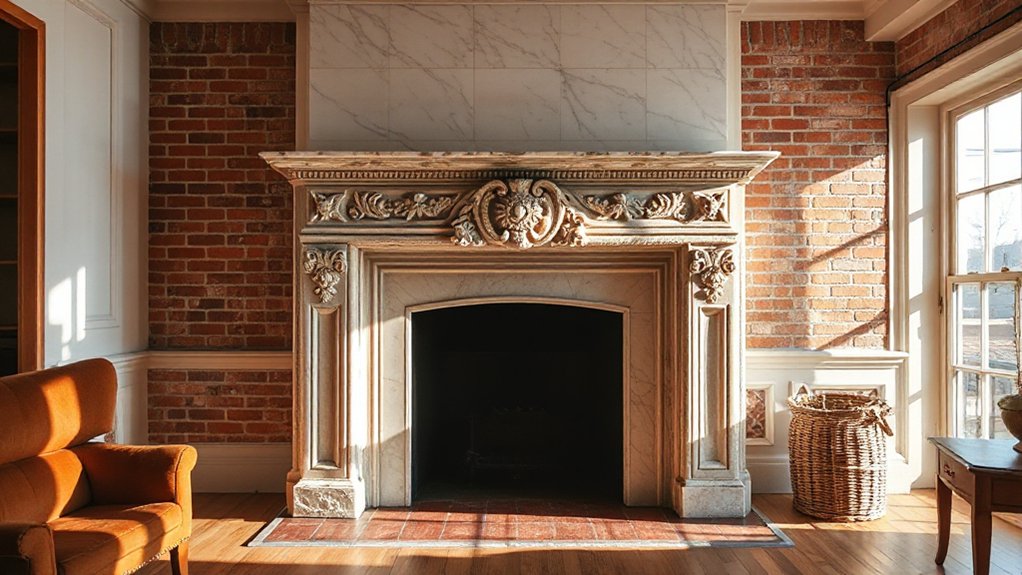
A well-staged antique fireplace may photograph beautifully, but any restoration you carry out will ultimately determine whether it remains a period asset or becomes a value risk. Start by commissioning a HETAS-registered installer or Gas Safe engineer to assess the flue, hearth, and compliance with current UK Building Regulations. You’ll protect value by keeping original surrounds, tiles, and grates, and by repairing rather than replacing where possible. Avoid harsh sandblasting; choose gentle cleaning and breathable lime-based mortars that suit period masonry. If you need Modern heating, integrate a reversible stove or insert that doesn’t cut historic fabric and can be removed later. Limit DIY restoration to cosmetic tasks, document every change, and retain receipts, photos, and any removed components for provenance.
Frequently Asked Questions
What Does It Cost to Ship and Install an Antique Fireplace Surround?
In the UK, you’ll typically pay £150–£600 in Shipping costs and £300–£1,200 in installation expenses, depending on weight, distance, condition, and hearth alterations. You’ll reduce risk by using specialist couriers and HETAS-aligned installers.
Can Antique Fireplaces Be Converted to Gas or Electric Inserts?
Yes, you can convert antique fireplaces to gas or electric inserts; in the UK, about 1.7 million homes use gas fires. Use restoration techniques, follow safety considerations, and hire Gas Safe installers to assess flues.
Do Antique Fireplaces Increase Homeowners Insurance Premiums?
They can, but you won’t always pay more; premiums rise if fire safety concerns increase. Insurers apply insurance valuation methods, factoring chimney condition, usage, and compliance. You’ll often reduce costs through inspections, liners, and certificates.
Which Woods or Stones in Mantels Are Most Allergy-Friendly?
Like clean air through open sash windows, you’ll favour sealed oak or maple among Wood types; for stone options, choose honed granite or slate. You’ll avoid porous limestone and rough reclaimed timber, which trap UK allergens.
How Do You Document Provenance for an Antique Fireplace in a Home Sale?
You’ll compile Provenance documentation by gathering dated invoices, salvage certificates, restoration reports, and high-resolution photos; then you’ll obtain a specialist’s UK heritage appraisal, cross-check archival listings, and file everything with your conveyancer, proving Historical authenticity.
Conclusion
When you choose an antique fireplace, you’re not just adding a fixture—you’re revealing a cornerstone of British heritage that buyers can’t easily replicate. Treat it like a listed treasure: verify provenance, respect period details, and resolve safety and Building Regulations issues before viewings. Stage it as the room’s north star, with restrained styling that lets craftsmanship speak. Restore with a light touch, and you’ll turn history into headline value at sale time.
About the Author