You choose aluminium and composite window frames for durability because they resist moisture damage and stay dimensionally stable through heat, cold, and wet-dry cycles. Aluminium won’t swell, rot, or soften, and with anodising or quality powder/PVDF coatings it resists corrosion and fading. Composites absorb little water and hold seals tighter, reducing warping and air leaks. With proven joinery, good drainage, and high-cycle hardware, both can last decades—keep going to see how climate, finishes, and maintenance affect lifespan.
Key Takeaways
- Aluminum and composites can last decades when paired with proven joinery, proper drainage, compatible gaskets, and high-cycle hardware.
- Aluminum won’t absorb moisture, so it resists swelling, rot, and geometry changes through heat, rain, and freeze-thaw cycles.
- Composites offer low water absorption and controlled thermal expansion, helping frames stay straight, tight, and warp-resistant over time.
- Both can achieve strong wind and impact ratings with reinforced profiles, with aluminum often leading for coastal and high-rise durability.
- High-quality finishes like PVDF or powder coating reduce corrosion, fading, and chalking, lowering maintenance and extending service life.
Aluminium Vs Composite Windows: Which Lasts Longer?
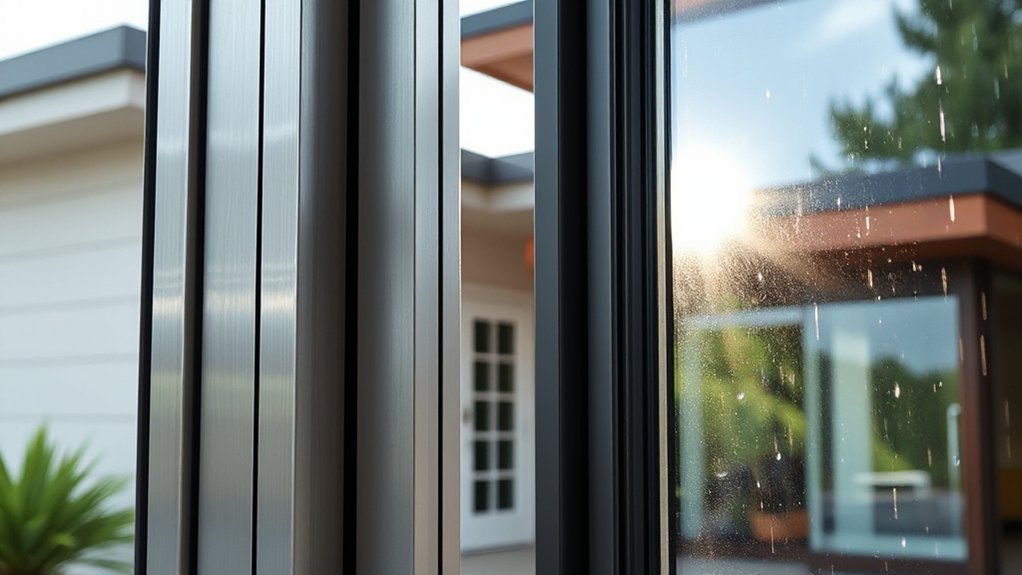
Although both aluminium and composite frames can deliver decades of service, their real-world lifespan depends on how they handle corrosion, UV exposure, thermal cycling, and joint fatigue in your climate and installation. Choose aluminium if you need maximum structural stability and crisp, narrow sightlines that protect Glass clarity and maintain modern aesthetic appeal. Specify powder-coated or anodised finishes and compatible fasteners, or you’ll accelerate galvanic corrosion in coastal or industrial air. Choose composite if you want superior dimensional stability against temperature swings and better resistance to surface chalking; it typically keeps seal compression more consistent, reducing water ingress that can haze Glass clarity. However, you must verify resin quality and reinforcement design, because poorly engineered composites creep and loosen hardware. In practice, longevity tracks specification discipline more than material alone.
What Makes a Window Frame Truly Durable?
What actually makes a window frame truly durable isn’t a single material choice—it’s how well the full system resists moisture, UV, temperature cycling, and mechanical fatigue over time. You’ll get longevity when profiles maintain dimensional stability, seals stay elastic, and corner joints hold fast under racking loads and wind pressure.
You should check coating quality, gasket chemistry, and drainage paths that prevent standing water and freeze-thaw damage. Specify hardware rated for high cycle counts, because sash alignment and locking loads drive wear. Verify thermal breaks and reinforcement strategies that limit stress concentration at fasteners and joints. Historical applications show that proven joining methods and protective finishes outperform novelty. You also need to consider Environmental impact: durable frames reduce replacement frequency, lowering embodied carbon and landfill waste over decades of service.
Why Aluminium Windows Don’t Warp or Rot
You don’t have to worry about rot with aluminium because it doesn’t absorb moisture, so the frame won’t swell, soften, or support fungal decay. You also get reliable geometry in harsh weather since aluminium maintains dimensional stability under heat far better than moisture-sensitive materials. Together, moisture resistance and thermal stability keep your sash alignment, seals, and hardware operation consistent over time.
Moisture And Rot Resistance
When moisture cycles through a window opening, aluminium frames hold their geometry because the metal doesn’t absorb water or support fungal decay. You won’t see swelling, checking, or fibre breakdown that can open gaps and compromise weather seals. That stability keeps sash alignment consistent, so locking points engage cleanly and drainage paths keep working.
You also benefit from Rust prevention built into modern aluminium systems: anodised or powder-coated finishes isolate the substrate, and compatible fasteners and isolation pads reduce galvanic action at joints. Maintenance stays simple—wash off salts and grime, inspect corner seals, and clear weep holes. UV resistance in these coatings limits surface chalking and colour fade, so the protective layer keeps doing its job rather than degrading and exposing the frame.
Thermal Stability Under Heat
Moisture resistance keeps seals tight over time, and that same dimensional stability matters on hot days when frames face strong thermal loads. Aluminium’s engineered profiles expand predictably, so you don’t get twisted sashes or binding hardware. Unlike timber, it won’t dry, cup, or rot when temperatures swing. With the right finish, you can manage Solar reflection and limit Heat absorption, cutting surface temperature and reducing stress on gaskets.
- Choose thermally broken frames to isolate indoor/outdoor heat paths
- Specify low-emissivity coatings to control radiative gain
- Use powder coatings tuned for Solar reflection in exposed elevations
- Detail continuous seals that tolerate controlled expansion cycles
- Pair composite breaks with aluminium skins for stiffness without warping
You’ll keep sightlines true, locks aligned, and performance stable season after season.
How Composite Windows Handle Moisture and Heat
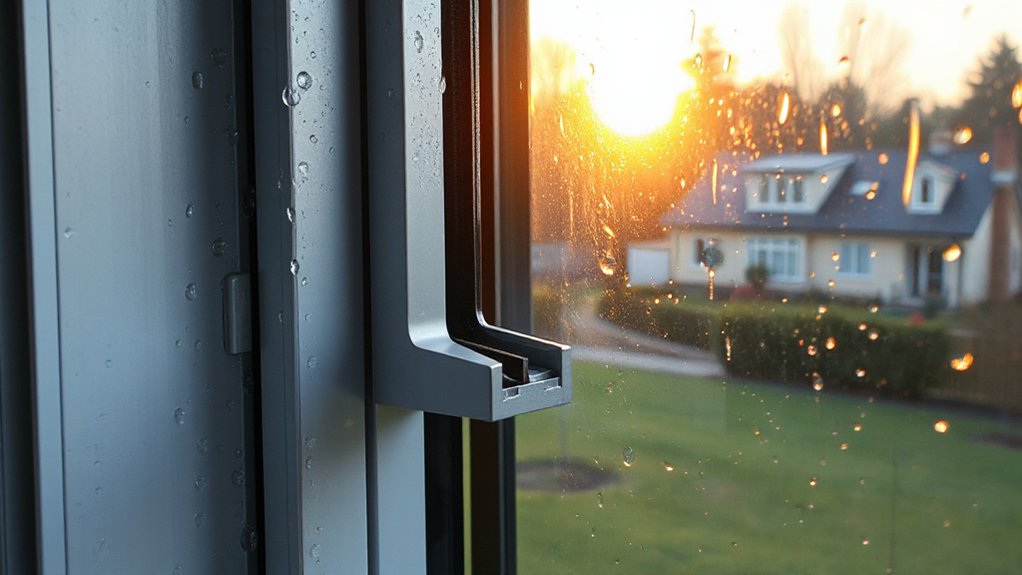
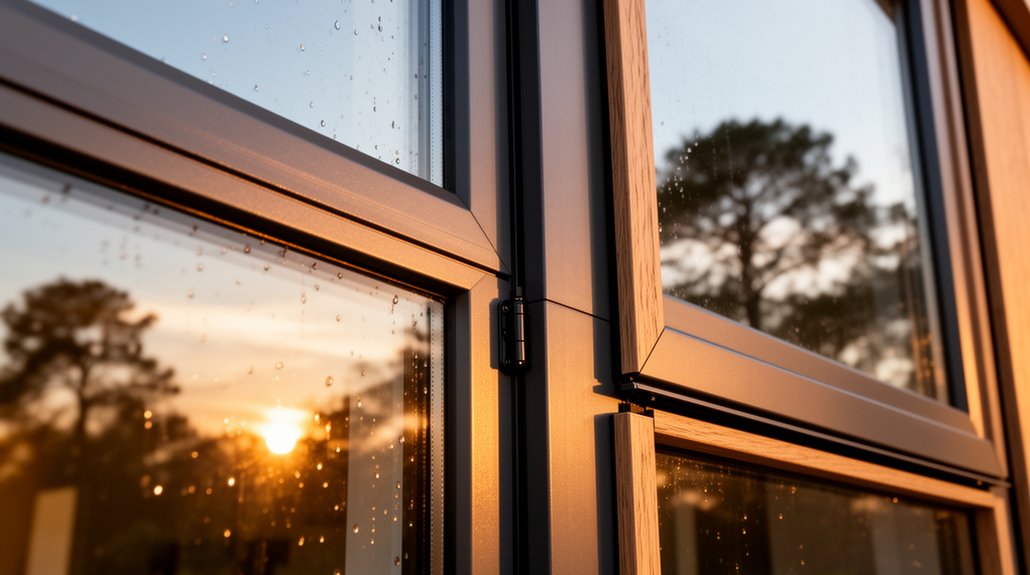
Although harsh humidity and temperature swings punish most window frames, composite windows manage both by combining low water absorption with controlled thermal expansion. You get a stable sash-to-frame fit because the fiber-reinforced matrix resists swelling, warping, and rot, even when wet seasons alternate with dry heat.
You’ll also limit condensation-related staining because composite profiles don’t wick water like porous timber. In hot sun, the material’s low expansion helps seals stay compressed, so you maintain air tightness and consistent U-values. Integrated UV resistance protects the resin and surface finish, slowing chalking and brittleness that can open micro-gaps over time. Because the frame stays dimensionally stable, you preserve gasket alignment and lock engagement without frequent adjustment. Added mass and multi-chamber designs improve sound insulation while supporting reliable thermal breaks year-round.
Which Is Stronger in Wind and Impact Tests?
Dimensional stability under heat and humidity sets the baseline, but real durability shows up in wind-load and impact testing. In standardized ratings, aluminium frames typically post higher design-pressure numbers because the metal’s modulus limits deflection under Wind load. Composites can match that performance when engineered with stiff reinforcements and thicker profiles, but you’ll see wider variation by manufacturer.
- Check design pressure (DP/PSF) and allowable deflection (L/175 or tighter)
- Verify corner-joint strength and fastener pull-out values
- Review glazing-pocket support and bite for load transfer
- Confirm Impact resistance results for large-missile and small-missile protocols
- Demand lab reports, not marketing claims, for your specific size configuration
If you’re in coastal or high-rise exposure, aluminium usually leads; top-tier composites compete when properly specified.
What Maintenance Do Aluminium and Composite Windows Need?
Once you’ve confirmed a window can take the load, maintenance becomes the long-term differentiator between aluminium and composite frames. For aluminium, you’ll prioritise Cleaning routines: rinse grit first, then wash with pH-neutral detergent and a soft cloth to prevent finish abrasion. Inspect drainage slots, clear debris, and avoid alkaline cleaners that can stain coatings. Check hardware fasteners annually and lubricate hinges and locks with a non-greasy silicone spray.
For composites, you’ll still clean regularly, but you’ll focus on surface integrity. Wipe off pollutants before they embed, and inspect joints and gaskets for separation or compression set. If your composite has a coated skin, schedule Paint touch ups promptly on chips to seal the substrate. Re-caulk only where adhesion fails, and don’t overpack sealant.
Which Frame Type Is More Energy Efficient?
Where does energy efficiency really come from in a window frame—material alone, or the full thermal-break-and-glazing system? You’ll get the best Energy savings when you treat the frame as part of an integrated envelope: frame conductivity, spacer choice, glazing U-value, and airtightness all stack up.
- Choose aluminium only with a proven thermal break and multi-chamber profiles
- Prefer composite frames when you need inherently lower conductivity and stable seals
- Specify low-E double or triple glazing matched to your climate load
- Demand warm-edge spacers and continuous gaskets to cut linear thermal bridges
- Verify whole-window U-values and air-leakage ratings, not frame-only claims
For pure Insulation performance, composites typically edge ahead, but high-quality thermally broken aluminium can close the gap when paired with the right glass and airtight installation.
Which Finishes and Colours Last the Longest?
Although every finish system fades eventually, you’ll get the longest-lasting colour by matching the coating technology to the substrate and the site exposure. For aluminium frames, specify factory-applied polyester powder coating to architectural standards, or premium fluoropolymer (PVDF) liquid coating when you need maximum Color durability and gloss retention. Choose high-build primers and sealed cut edges to reduce filiform corrosion that undermines Finish longevity. For composite exteriors, look for co-extruded, UV-stabilised caps or baked-on coatings that bond chemically to the skin; avoid thin paints that rely on adhesion alone. Lighter, inorganic-pigment colours generally outlast saturated organic tones, and matte textures hide micro-chalking better than high gloss. Always verify independent QUV and salt-spray results, plus warranty exclusions and cleaning requirements.
How to Choose the Best Frame for Your Climate and Budget?
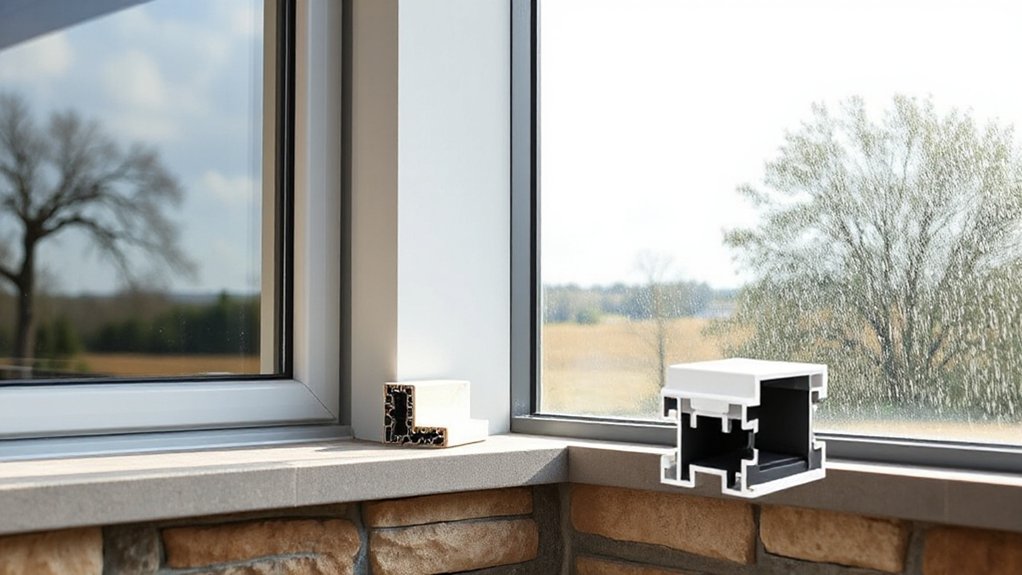
Long-lasting finishes matter, but the frame material and thermal design do more to determine how your windows perform—and how much they cost to own—in your climate. In hot or coastal zones, you’ll want corrosion-resistant aluminium with robust powder coating; in cold regions, prioritize thermally broken aluminium or insulated composites to cut condensation and heat loss. Match glazing and frame U-values, then lock in performance with correct Frame installation, including shimming, air sealing, and flashing.
- Check thermal break depth and verified U-factor
- Choose marine-grade hardware for salt exposure
- Specify composite cores for extreme temperature swings
- Demand tested water/air infiltration ratings
- Price lifecycle costs, not just upfront budget considerations
If your budget’s tight, focus spend on thermal breaks and installation quality; you can upgrade hardware later.
Frequently Asked Questions
Can Aluminium or Composite Window Frames Be Recycled at End of Life?
Yes—you can recycle aluminium and many composite window frames at end of life. You’ll follow local recycling processes: separate metals, remove glazing/seals, and send composites to specialist facilities, minimizing environmental impact and landfill.
Do Aluminium or Composite Frames Reduce Outside Noise Better Than uPVC?
You’ll typically get similar or better Noise insulation with composite, while aluminium can match uPVC if you use thermal breaks and laminated glass. For Soundproofing effectiveness, prioritize airtight seals, multi-chamber profiles, and higher Rw-rated glazing.
How Long Do Warranties Typically Last for Aluminium and Composite Windows?
You’ll typically get 10–25 years, with premium aluminium or composite warranties reaching 30 years. Like a quiet safety net, proper window installation and routine material maintenance keep coverage valid; always check exclusions, finish warranties, and transferability.
Are Aluminium or Composite Windows Safe With Coastal Salt Exposure?
Yes—you can use aluminium or composite windows near coasts if you choose marine-grade finishes and sealed hardware. You’ll get strong corrosion resistance; composites excel. You’ll also reduce environmental impact by avoiding premature replacements.
Do Aluminium or Composite Frames Work With Triple Glazing and Slim Sightlines?
Yes—you can pair aluminium or composite frames with triple glazing and slim sightlines. You’ll specify deeper profiles and reinforced sections, while optimising frame insulation via thermal breaks. You’ll still meet design aesthetics through narrow mullions.
Conclusion
When you choose aluminium or composite frames, you’re betting on longevity worthy of Theseus’ ship: parts may age, but performance holds. Aluminium won’t warp, rot, or swell, and it shrugs off wind loads with high strength-to-weight. Composite resists moisture, limits thermal movement, and stabilises insulation values. You’ll spend less time on upkeep—mainly cleaning, seals, and hardware checks. Match the frame to your climate, finish, and budget, and you’ll secure durable, efficient windows.
About the Author