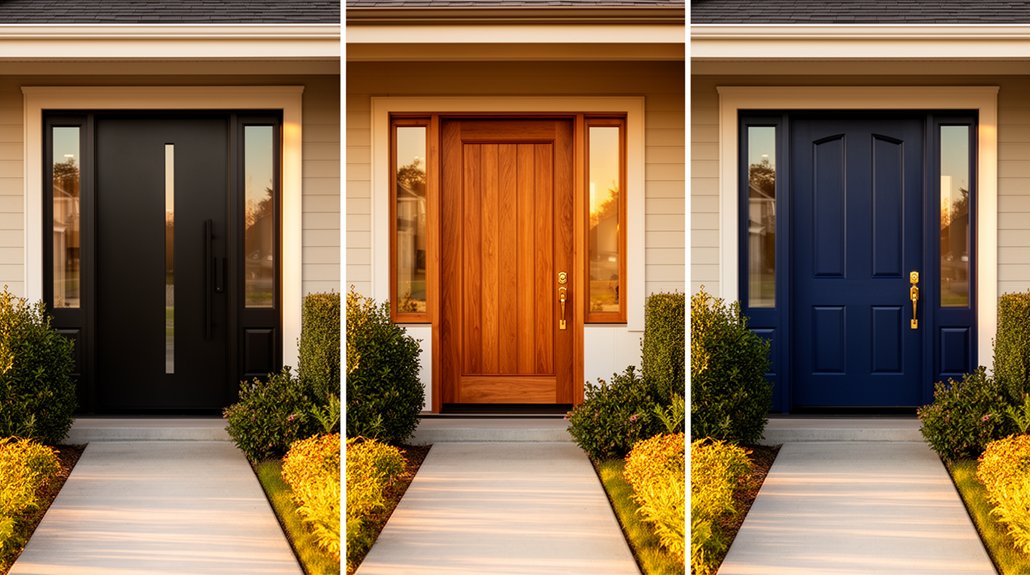
Choose a front door that matches your home’s period and proportions, so the façade stays harmonious. Pick a colour that works in UK grey light and contrasts the exterior by a shade or two, then test big swatches outside. Select a material that suits exposure: timber for heritage, GRP composite for low upkeep, steel for impact resistance. Add coordinated hardware and fit it neatly. Prioritise PAS 24 security, quality seals, and a low U-value to cut draughts; there’s more to contemplate.
Key Takeaways
- Match the door’s style, glazing, and mouldings to your home’s architectural period for a cohesive, authentic frontage.
- Choose a colour that complements brick/render tones, typically 1–2 shades darker for contrast in UK daylight.
- Pick a material suited to exposure and upkeep, such as timber for character or GRP composite/aluminium for low maintenance.
- Balance light and privacy with glazing choice, using frosted, reeded, or leaded glass to brighten without compromising security.
- Coordinate hardware finishes and proportions—handle, knocker, letterbox, and doorbell—to create a tidy, high-impact first impression.
Start With Your Home’s Architectural Style
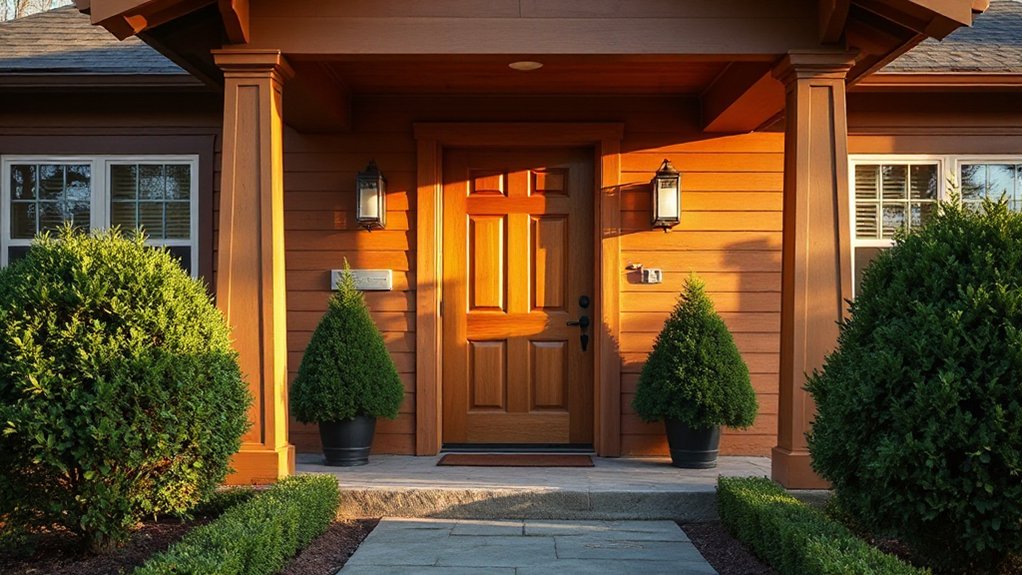
Before you look at colours, glazing, or security upgrades, take your cue from your home’s architectural style, because the right front door should look like it belongs there. Identify your property type first: Georgian symmetry suits a six-panel door with restrained detailing; Victorian and Edwardian terraces often suit taller, more ornate doors with traditional proportions; 1930s semis typically take simpler panel layouts and bolder surrounds; contemporary homes suit clean lines and minimal framing. Match period-appropriate mouldings, fanlights, and sidelights so you preserve Historical authenticity rather than adding a feature that jars. Keep the door’s scale consistent with the opening and any brick arches or stone lintels. Aim for Architectural harmony across the façade, including porch, railings, and window styles too.
Set Priorities: Style, Security, Efficiency, Budget
Once you’ve matched your home’s look, set clear priorities so you don’t end up with a door that’s pretty but impractical. Balance kerb appeal with proper security (look for PAS 24) and energy performance (a low U-value) to suit UK weather and reduce heat loss. Fix your budget early and spend where it counts—good locks, solid construction, and efficient glazing—then tailor the finish and extras to fit.
Balance Style And Function
Although a front door sets the tone for your home, you’ll get the best result by deciding what matters most to you—style, security, energy efficiency, or budget—then choosing a door that meets those priorities without major compromises. Start with the look: match glazing, colour, and panel design to your property’s era and the street scene, but don’t ignore performance. Choose door material that suits your exposure—composite or uPVC for low maintenance, timber for heritage character, aluminium for sharp, modern lines—and check weather resistance for wind-driven rain and coastal air. If security tops your list, insist on PAS 24 or a Secured by Design option, plus a multi-point lock and toughened glass. Balance hardware and letter plates with everyday use.
Plan For Budget And Efficiency
Where should you spend—and where can you save—when you’re choosing a front door? Start by ranking what matters: security, thermal performance, then style. In the UK, prioritise a door set with a good U-value, quality seals, and multi-point locking; these cut draughts and help lower heating bills. Spend on the core construction (composite or insulated timber) and certified security rather than pricey glazing or ornate panels.
Save with smart design choices: use Creative color schemes to lift kerb appeal without upgrading materials, and choose decorative hardware that looks premium but doesn’t compromise locks or weatherproofing. Keep the spec simple, avoid oversizing, and check fitting costs and warranties upfront so your budget stays controlled.
Choose Single, Double, or Door-With-Sidelights
Before you settle on a style, decide how you’ll use the entrance day to day. A single leaf suits most UK homes, keeps heat loss down, and gives you simpler security upgrades. Choose durable front door materials—composite or steel for low maintenance, timber for character—then match them with door handle styles that feel solid and meet your locking requirements.
Pick double doors when you’ll regularly move bulky items, host often, or want a grander elevation; make sure you’ll actually use both leaves, not just one. Choose a door-with-sidelights if you want more daylight in the hall and a wider-looking frontage without changing how the main door operates. Keep glazing laminated or toughened, and insist on multi-point locking throughout for consistency and insurance-friendly security.
Size the Door for Your Entryway and Clearance
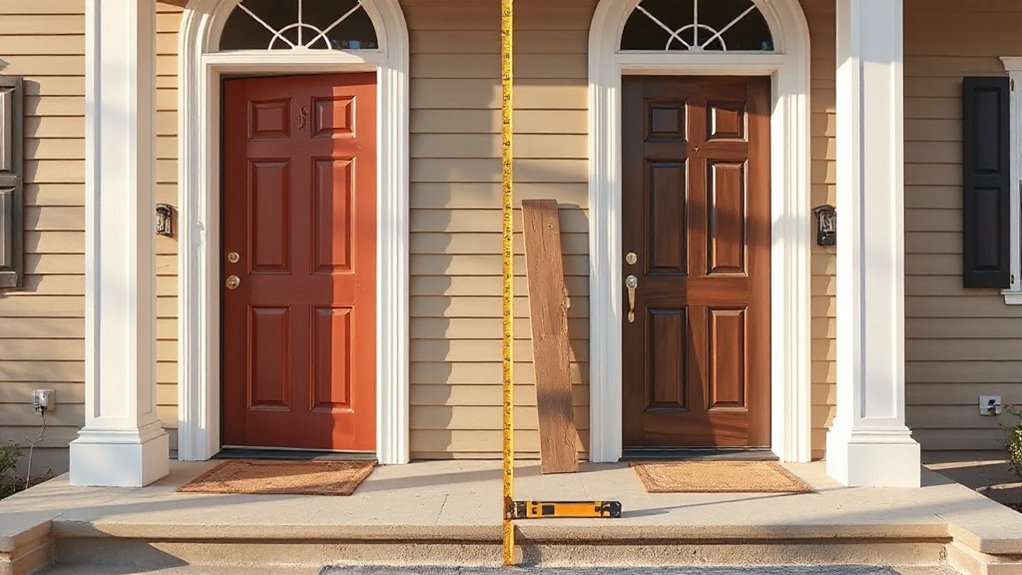
If you get the size and clearance right, your new front door will shut cleanly, seal properly, and open without clouting a wall, radiator, or porch frame. Measure the structural opening, not the old leaf, and check whether you’ve got a standard UK size or a bespoke aperture, especially in period homes. Allow for the frame, threshold, and any draught-proofing so the sash doesn’t bind. Confirm the swing: you need enough internal and external arc to clear furniture, steps, and letterbox cages. Choose door hinge styles that suit your reveal depth; wide-throw hinges can save tight hallways. Finally, plan Entryway lighting positions so fittings don’t foul the door or cast shadows on locks and house numbers.
Compare Wood vs Fiberglass vs Steel Doors
When you compare wood, fibreglass, and steel front doors, you’re balancing durability and security against maintenance and weather resistance in the UK’s damp, changeable climate. You’ll also want to weigh the style you’re after—period charm, modern finishes, or a painted look—against upfront cost and long-term value. Get these trade-offs clear now, and you’ll choose a door that performs well, looks right, and pays off over time.
Durability And Security
Although kerb appeal matters, your front door’s real test is how well it stands up to UK weather and keeps intruders out. Your choice of door material drives both durability and security, so match it to your risk level and location.
Timber doors feel solid, but they’re only as strong as their core, joints, and locks; choose engineered hardwood and insist on robust hinges. Fibreglass (GRP) doors resist dents and won’t split, giving dependable weather resistance while supporting multi-point locking. Steel doors offer the best impact protection, yet you should check for a quality frame, reinforced lock area, and a secure threshold to prevent levering. Whatever you pick, look for PAS 24 or Secured by Design certification, plus anti-snap cylinders and hinge bolts.
Maintenance And Weather Resistance
Because UK rain, wind, and temperature swings punish exposed joinery and coatings, you should weigh maintenance as heavily as style. Timber doors need the most attention: you’ll repaint or re-stain, seal end grain, and check joints for swelling, especially on south- and west-facing elevations. Fibreglass resists rot and warping, so you’ll mainly clean it and inspect seals; it suits homes exposed to driving rain. Steel can shrug off weather but chips invite rust, so you must touch up paint quickly and keep drainage holes clear. Whichever material you choose, prioritise Weatherproofing techniques: quality thresholds, continuous gaskets, draught seals, and correctly fitted door canopies. Set Maintenance schedules: seasonal seal checks, annual hardware lubrication, and prompt repair of cracks.
Style, Cost, And Value
If you balance kerb appeal against budget and long-term payback, the door material quickly narrows your best options. Timber suits period homes and elevates Home decor, but it’s usually pricier and needs regular finishing to protect the look. Fibreglass gives you convincing woodgrain with lower upkeep and strong insulation; it often offers the best value for most UK households. Steel doors cost less upfront and deliver top security, yet they can dent and may feel plainer unless you choose a quality finish.
For resale value, match the material to your property style and street character. Pair your choice with coordinated hardware and outdoor lighting to sharpen first impressions. Check U-values and look for PAS 24-rated security for confidence. Always compare fitted prices, not just the slab door cost.
Pick a Material for Your Local Weather
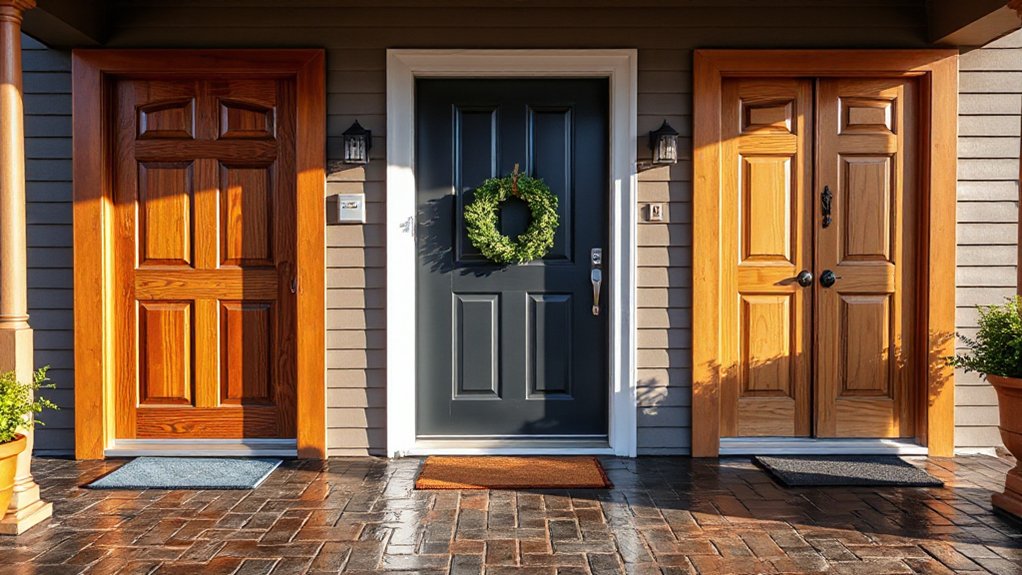
Where you live in the UK should drive your door material choice, as wind, rain, salt air, and temperature swings punish the wrong build fast. Start by weighing Material durability against weather suitability, not just looks. On exposed coasts in Cornwall, Devon, or the North East, choose GRP composite or marine-grade aluminium for corrosion resistance and minimal upkeep. In wetter western regions, look for multi-layered engineered timber or composite that won’t swell and stick. For colder Scottish and upland areas, prioritise insulated cores and stable frames that won’t warp with freeze-thaw cycles. If you’re in a sheltered city terrace, uPVC can work, but pick reinforced profiles and quality seals. Whatever you choose, insist on robust paint or foil finishes and proper threshold drainage details too.
Decide How Much Glass You Want
Decide how much glazing you can live with by weighing up daylight in your hall against the privacy you need from the street. You’ll get more light from larger panes, but you can keep things discreet with frosted, reeded, leaded or patterned glass. Choose a style that suits your home’s look and check it meets UK security expectations, such as laminated or toughened glazing.
Balance Privacy And Light
How much daylight do you want in the hall without putting your home on display? Start by assessing sightlines from the pavement, driveway, and neighbouring paths. If your front door faces a busy street, limit glazing to a narrow vertical strip or small panes placed higher up, so you gain light while blocking direct views.
Use Window placement to control what’s visible: align glazed areas away from coat hooks, inner doors, and your main living space. Inside, keep the hallway bright with pale paint and a well-positioned mirror, rather than adding more glass. Outside, add Landscaping accents such as a low hedge, a climber on a trellis, or a strategic planter to soften angles and screen views without darkening the entrance.
Choose Glass Style Options
Even if you only want a little extra daylight, the glass style you choose will shape both your front door’s look and its privacy. Decide first how much glazing you’ll live with day to day: more glass boosts kerb appeal and hall brightness, but it can expose silhouettes at night.
- Full-length glazed panels: maximum light, lowest privacy
- Top light only: keeps sightlines above eye level
- Side lights: brighten the hall without widening the door leaf
- Decorative glass: adds character while distorting views
- Frosted glass: strong privacy with soft, even daylight
In the UK, prioritise double or triple glazing with toughened safety glass and a low U-value. Pair clear areas with a security-rated multipoint lock, and choose patterned designs that suit your period style.
Choose Privacy and Security Glass (Clear, Frosted, Grilles)
Whether you’re upgrading a tired entrance or fitting a new front door, the glazing you choose will shape both your privacy and your home’s security. Clear glass suits quiet cul-de-sacs, but it can expose your hallway and valuables to passers-by. Frosted, etched, or reeded panes give strong Privacy options while still letting daylight in, making them ideal for streets with foot traffic.
For Security features, insist on toughened or laminated safety glass (to BS EN standards), and consider multi-point locking that secures the glazed panel within the frame. Decorative grilles can deter casual tampering, but pick designs fixed between double-glazed units so they can’t be removed from outside. Keep letterboxes and side panels in mind too: more glass means you’ll want higher-spec glazing throughout.
Match the Door to Your Exterior Colors
Match your front door to your exterior colours so the whole frontage looks intentional, not piecemeal. Start by coordinating with your brick, render, or cladding tones, then balance the trim against the door so neither overpowers the other. If you want a bolder look, choose an accent colour that harmonises with the rest of the palette and suits your home’s style.
Coordinate With Siding Tones
Because your front door sits against a large block of cladding, its colour needs to work with the dominant siding tone rather than fight it. Good siding coordination creates instant colour harmony and makes the entrance feel deliberate, not bolted on. Start by identifying whether your exterior reads warm (buff brick, honey stone) or cool (slate, grey render), then choose a door colour that complements that undertone.
- Pick a shade 1–2 steps darker than your siding for grounded contrast
- Echo a secondary note already present (roof, stone flecks, brick variation)
- On red brick, try deep navy, forest green, or charcoal
- On pale render, use black, oxblood, or heritage blue for definition
- Test large swatches outdoors in UK daylight before committing
Balance Trim And Door
Once you’ve got the siding tone right, turn to the trim—fascias, bargeboards, porch posts, and window surrounds—since it frames the door and can either sharpen or soften the whole entrance. If your trim’s bright white, a mid-to-deep door colour will read crisp and intentional; if the trim’s muted or stained timber, keep the door in a similar depth so it doesn’t look pasted on. Use trim contrast deliberately: high contrast suits modern builds and clean lines, while lower contrast flatters period homes and softer detailing common across the UK. Check the finish as well—satin on both trim and door feels coherent, while gloss on one and matt on the other can reduce door prominence. Always test swatches outdoors first.
Use Accent Color Harmony
With your trim working in step with the door, pull your eye out to the rest of the façade and choose a door colour that echoes the exterior’s accents rather than fighting them. Aim for Accent color harmony: repeat one or two tones you’ve already got in brick, render, roof tiles, or paving, then sharpen it with controlled Color contrast so the entrance reads clearly from the pavement. In UK light, mid-to-deep shades usually look richer than very pale pastels.
- Match the door to window frames, downpipes, or guttering
- Lift a tone from brick flecks, stone, or pointing
- Echo metalwork: brass, black, or chrome hardware
- Test swatches north and south facing, wet and dry
- Keep one dominant hue; avoid clashing “feature” colours
Pick a Door Color That Boosts Curb Appeal
If you want instant kerb appeal, the colour of your front door does more heavy lifting than most exterior upgrades. Choose a shade that suits your brick, render, or stone and the UK’s often-grey light: deep navy, heritage green, charcoal, or classic black look sharp year-round, while bold red or yellow works best on simpler façades.
Let your Door Material guide the tone. Timber pairs well with warmer, traditional colours; composite and uPVC suit cleaner, modern shades with higher contrast. Factor in your Glass Options too: clear or large glazed panels favour darker colours to frame the light, while frosted or leaded glazing looks best with richer, period-appropriate tones. Always check how the colour reads at your porch and from the pavement.
Choose Paint vs Stain vs Factory Finish
Although colour grabs attention, the finish you choose decides how long your front door will look smart in the UK’s damp, changeable weather. Compare Paint options, stain finishes, and factory coatings by maintenance, UV stability, and resistance to rain-driven swelling.
- Choose paint for maximum colour choice and easy touch-ups on timber or composite.
- Choose stain finishes if you want visible grain; pick microporous formulas that let wood breathe.
- Choose a factory finish for consistency and tougher curing, ideal for coastal or exposed sites.
- Check the warranty: it often depends on prep, edge sealing, and cleaning intervals.
- Match the finish to exposure: south-facing needs UV resistance; sheltered doors can prioritise look.
Recoat before failure, not after peeling, to avoid costly sanding and repairs.
Upgrade Curb Appeal With Door Hardware
How much does a new handle or knocker change the way your home reads from the pavement? More than you’d think: door hardware sits at eye level, so it dictates first impressions and boosts curb appeal fast. Match the era of your property—Victorian terraces suit urn knockers and letter plates, while new-builds look sharper with minimal pulls and a clean escutcheon.
Choose a consistent finish across handle, knocker, letterbox and door viewer: satin nickel for modern neutrality, antique brass for warmth, black for contrast against pale paint. Keep proportions right; oversized furniture can swamp a cottage door. Replace tired screws, align plates neatly, and fill old holes for a tidy, premium look. Don’t forget a smart doorbell to complete the frontage.
Prioritize Security: Locks, Frames, Hinges
Before you fall for colour and glazing, make security your baseline by checking the lock spec, the door frame, and the hinges as one system. A stylish door won’t help if weak components let it fail at the first attack. Prioritise certified security features and proven lock mechanisms, then match them with solid fitting and reinforcement.
- Choose a BS 3621-approved cylinder or a 3-star TS007/SS312 anti-snap option.
- Look for multi-point locking that throws bolts into the frame, not just a latch.
- Insist on a reinforced frame and keep fixings anchored into sound brickwork.
- Fit hinge bolts or dog bolts, plus security hinges with non-removable pins.
- Check a tight, even fit: no visible gaps, no flex, no rattling under pressure.
Check Energy Ratings and Long-Term Value
Where does the real cost of a front door show up—at the till, or on your heating bills over the next decade? You’ll feel it in draughts, condensation, and rising energy costs if you ignore ratings. Check the door’s U-value (lower is better) and look for independent certification such as the British Fenestration Rating Council (BFRC) label or Door & Hardware Federation guidance. Make sure the frame, threshold, and glazing (if any) are included, because weak points ruin energy efficiency. Choose a well-insulated core and quality seals, then confirm the installer will fit it to PAS 24 or equivalent standards to minimise gaps. In the UK, a better-rated door is a long term investment that can cut heat loss and support resale value.
Frequently Asked Questions
Do I Need a Permit or HOA Approval to Replace My Front Door?
You might need a permit or HOA/Homeowner approval, depending on your UK council, listed status, or conservation area. Check Building codes and lease rules, then confirm with planning and your management company before ordering.
How Long Does Professional Front Door Installation Usually Take?
You can expect professional front door installation to take 3–6 hours, or a full day for complex fits. Door material and security features can add time. You’ll minimise delays by clearing access.
Can I Reuse My Existing Doorbell, Smart Lock, and Mailbox Hardware?
Yes—you can reuse them, but what fits isn’t always what functions. Check hardware compatibility with the new door and frame. Confirm doorbell wiring matches UK standards. You’ll likely need new fixings or escutcheons.
What Maintenance Schedule Keeps a Front Door Looking New Year-Round?
You’ll keep it new by wiping monthly, washing quarterly, checking seals/hinges every season, and repainting or re-oiling yearly. Match Door material selection to the UK climate, and apply Weatherproofing techniques before winter.
How Do I Prevent My New Door From Sticking as My House Settles?
Nearly 70% of sticking doors trace to frame movement. You’ll prevent sticking by checking door alignment monthly, tightening hinges, fitting quality hinges, and adding packers; use settling prevention by maintaining even gaps and prompt adjustments.
Conclusion
Choose your front door like Odysseus choosing his route home: with purpose, not impulse. Match it to your property’s architecture, then balance style with security, insulation, and budget. Pick the right configuration—single, double, or sidelights—and guarantee clearances suit your entry. Weigh timber, GRP, or steel for UK weather and maintenance. Finish it well, upgrade hardware, and insist on robust locks, hinges, and frames. Check energy ratings for lasting value.
About the Author