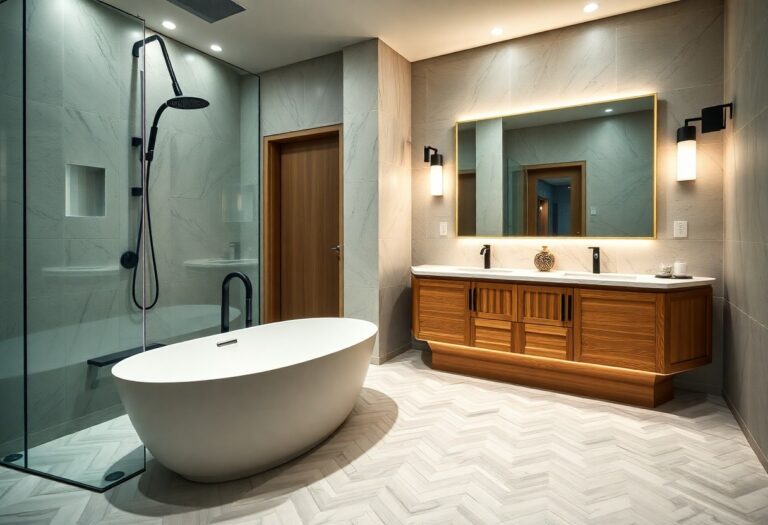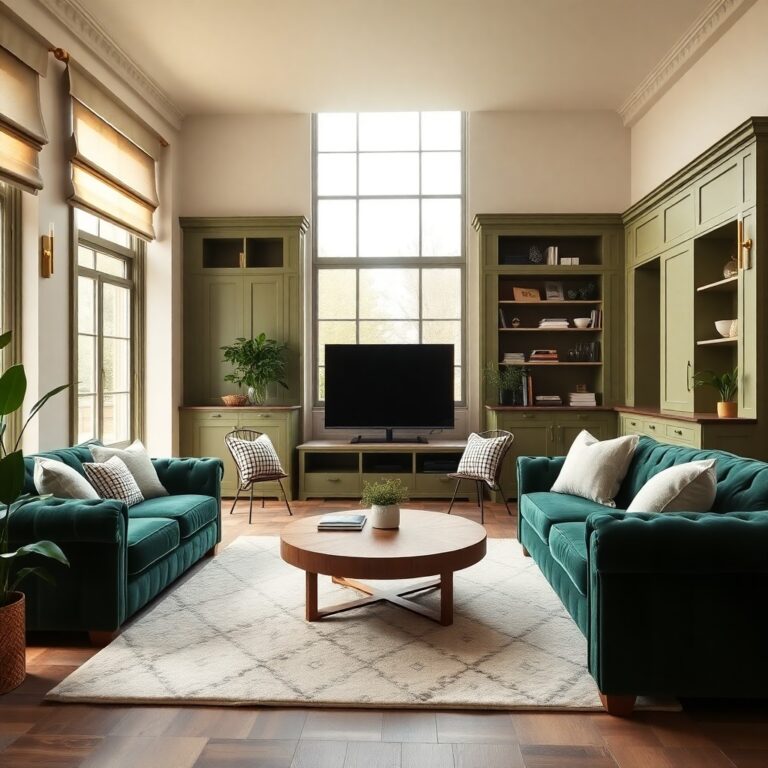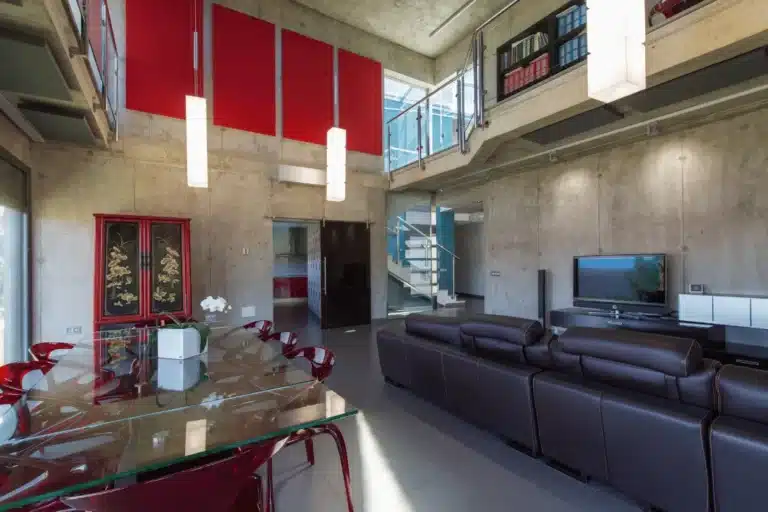
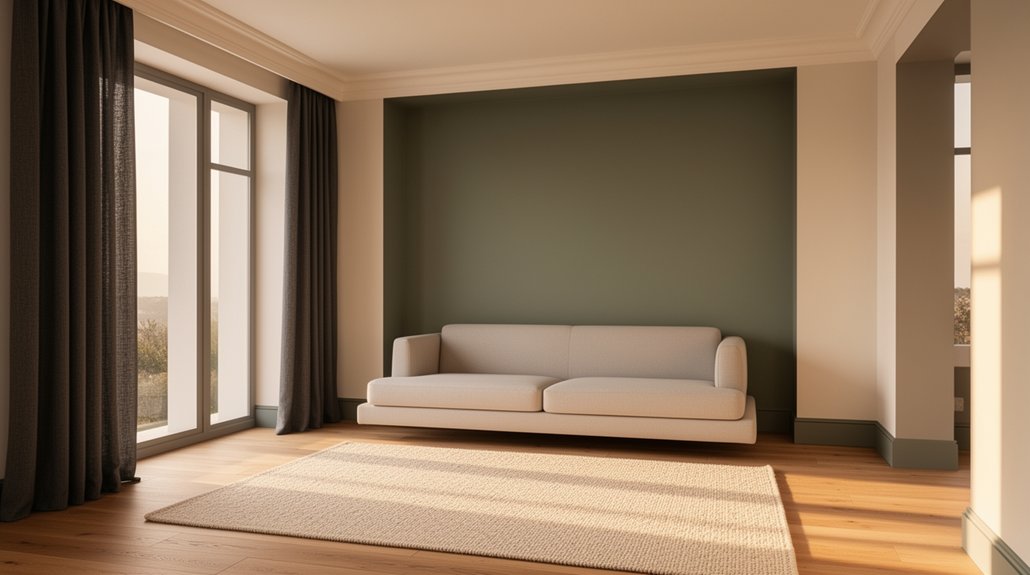
You can’t pick the best living room paint combo until you match color to your light, undertones, and fixed finishes like flooring and upholstery. Start with a flexible wall shade—warm white, greige, or misty blue—then use a cleaner or deeper trim to control contrast and define edges. If your room runs small or dim, reflectivity matters as much as style. The next step is choosing pairings that won’t fight your décor…
Key Takeaways
- Pair warm white walls with bright white trim for a clean, timeless look that suits most décor and lighting.
- Use greige walls with creamy white trim to add warmth and depth while staying neutral and easy to style.
- Choose soft sage walls with warm white trim for a calming, nature-inspired palette that complements wood and brass accents.
- Try dusty blue walls with crisp white trim to brighten the room and create a fresh, airy contrast.
- For drama, combine charcoal walls with soft white trim, and use satin or semi-gloss trim to reflect light.
10 Best Living Room Paint Color Combos (Walls + Trim)
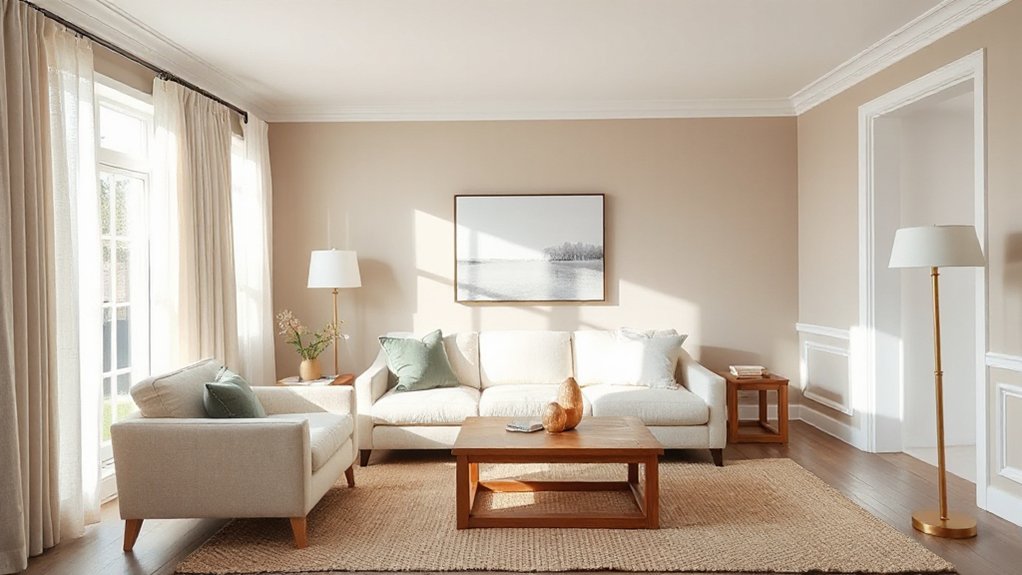
Whether you’re chasing a bright, modern look or a warmer, more classic feel, the right wall-and-trim pairing makes your living room feel intentionally designed. Use Color psychology to steer mood: crisp whites energize, warm neutrals comfort, deep hues cocoon.
Try these wall + trim combos: 1) Warm white + bright white. 2) Greige + creamy white. 3) Soft sage + warm white. 4) Dusty blue + crisp white. 5) Charcoal + soft white. 6) Terracotta + ivory. 7) Blush beige + bone white. 8) Deep green + antique white. 9) Inky navy + ultra-white. 10) Pale taupe + satin white. For paint application, cut in trim first, then roll walls; match sheen—eggshell walls, semi-gloss trim—for clean contrast.
How to Choose a Living Room Color Combo (Light, Undertones, Fixed Décor)
Start by evaluating your room’s light—its direction, intensity, and evening bulb warmth—because it changes how every paint combo reads. Next, identify undertones in your top contenders (cool blue/green vs warm yellow/red) so your walls and trim stay crisp, not muddy. Finally, work with fixed décor like flooring, stone, and large upholstery, and choose a palette that complements those permanent tones for a cohesive, current look.
Assess Room Light
How much light does your living room actually get from morning to night? Track it for a full day, noting direct sun, bright ambient light, and dim corners. North-facing rooms often read cooler and flatter, while west light swings warm and dramatic late day. Use this map to decide where you can push deeper hues versus where you’ll need lighter, light-reflective paints to keep the space open.
Next, adjust Room furniture placement to avoid blocking windows and to keep shadow lines intentional, not accidental. Then evaluate Ceiling color choices: a clean white lifts low light, while a softened off-white reduces glare in sun-heavy rooms. Finally, confirm your plan under your actual bulbs at night.
Identify Color Undertones
Before you commit to a “neutral” or a trendy shade, pin down its undertone—the subtle warm (yellow/red), cool (blue/green), or balanced base that determines whether your living room reads crisp, cozy, or slightly off. Undertones drive Color psychology: warm bases feel inviting, cool bases feel calm, and balanced bases feel modern and flexible. Test undertones with disciplined comparisons, not guesswork.
- Hold swatches against true white paper to reveal hidden warmth or coolness.
- View samples at multiple times; undertones shift as light temperature changes.
- Paint large sample boards and move them around; walls can distort color.
- Choose finishes with paint durability in mind—washable eggshell or satin keeps undertones consistent after cleaning and wear.
Work With Fixed Décor
Even with perfect undertones, your living room color combo only works if it respects what can’t change: flooring, large upholstery pieces, built-ins, stone, and metal finishes. Start by sampling paint against these elements, not against a white wall, and view it morning and evening to catch shifts in warmth and depth.
If your floors read orange or red, keep wall colors softly warm or balanced greige; cool paints can look icy and clash. With gray tile or concrete, you can push cleaner whites, muted sages, or inky charcoals. Match sheen to surfaces: matte hides wall flaws, satin complements trim, and eggshell handles traffic. For Accent wall ideas, echo a rug’s darkest thread or the fireplace stone. Use Decorative paint techniques sparingly—limewash, color-wash, or subtle striping—to add texture without fighting fixed finishes.
Living Room Paint Combos for Small Spaces (Make It Look Bigger)
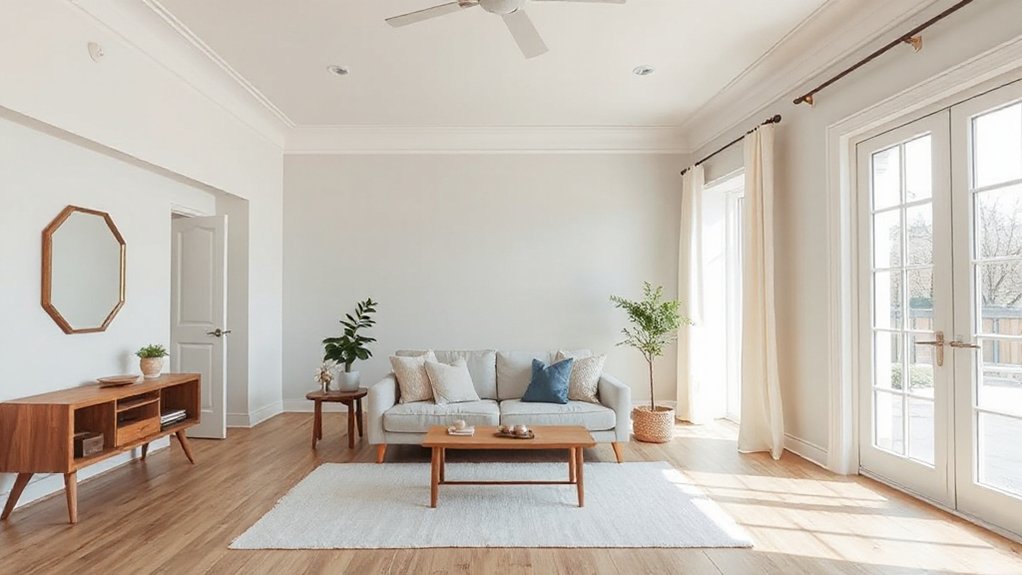
In a small living room, you’ll make the space read larger by anchoring the palette in light neutrals and adding controlled contrast—think warm white walls with a crisp charcoal line on trim or a single feature element. You can also go monochrome, layering one hue from ceiling to walls to textiles in stepped tints to erase visual breaks and stretch the room’s proportions. Finish with a few high-impact accents (matte black metal, brushed brass, or a saturated cushion tone) so it feels current without looking busy.
Light Neutrals And Contrast
Although small living rooms can feel boxed in, you can make them look noticeably bigger by pairing light neutrals with intentional contrast. Start with warm off-white, soft greige, or pale sand on most walls; Color psychology says these hues reduce visual noise and boost perceived openness. Then add crisp, controlled contrast to define edges without closing the room in. Choose the right paint finish: matte hides wall flaws, while eggshell softly reflects light for added lift.
- Paint walls light neutral; keep ceilings a step lighter.
- Use charcoal or inky navy on trim, doors, or built-ins.
- Add a single high-contrast focal line (mantel, beam, or niche).
- Repeat contrast in textiles and frames to sharpen depth.
Monochrome Layers With Accents
When you layer one paint colour in multiple values, you create a seamless “wrap” that makes a small living room feel longer, taller, and less chopped up. Choose a mid-tone for most walls, then go one step lighter on the ceiling and one step deeper on trim or built-ins to sharpen edges without visual clutter.
Use Color psychology to steer the mood: blue-greys calm, warm greiges cozy, sage greens balanced and current. Then add a controlled accent—matte black hardware, a terracotta niche, or a deep navy door—so the room reads curated, not busy. Explore paint finish options strategically: eggshell on walls for bounce, matte on ceilings to hide flaws, satin on trim for cleanability. Keep accents under 10% of the palette.
Low-Light Living Room Paint Combos That Brighten the Room
Since a low-light living room can make even stylish furniture look flat, the right paint combination should bounce light around the space, not swallow it. Use Color psychology to steer mood: cooler, cleaner hues feel airier, while controlled saturation keeps depth without gloom. Prioritize paint durability with scrubbable matte or soft eggshell so high-traffic walls stay crisp under lamps and TV glare. Try these brightening pairings:
- Misty blue walls + crisp charcoal trim for contrast that sharpens edges.
- Pale sage walls + inky navy built-ins to add depth without heaviness.
- Blush-taupe walls + deep plum accents to warm skin tones in evening light.
- Light sand walls + forest green doors to anchor the room and amplify greenery.
Aim for high-LRV top shades and satin on trim.
Neutral Living Room Paint Combos (Warm Whites + Greiges)
When you want a living room that feels current yet timeless, you can’t beat warm whites paired with the right supporting tones. You’ll get the cleanest result by matching warm white walls with creamy trim, soft taupe textiles, or light oak, then keeping metals and lighting in a consistent temperature. For greiges, you’ll balance the room by checking undertones (pink, green, or violet), using a slightly deeper greige on an accent wall or built-ins, and anchoring the palette with crisp whites and natural textures.
Warm White Pairings
Although crisp whites can read stark in a living room, warm whites paired with greiges give you a polished neutral scheme that still feels inviting. You’ll get the best results when you treat warm white as the light-reflecting base and let greige add quiet depth across trims, built-ins, or a single focal wall. Color psychology matters here: warm whites support comfort and ease, while greiges read grounded and modern, aligning with current organic-minimal trends. Use smart paint application techniques—cut in cleanly, keep a wet edge, and test swatches in morning and evening light. Try these pairings:
- Creamy warm white walls + putty greige ceiling
- Soft ivory + mushroom greige trim
- Linen white + stone greige built-ins
- Buttery white + taupe greige accent wall
Greige Balancing Tips
Warm whites set the bright, welcoming baseline, but greige does the heavy lifting that keeps a neutral living room from looking flat or washed out. To balance it, match undertones: pair pink-beige whites with warmer greiges, and cleaner ivory whites with slightly taupe-leaning greiges.
Control contrast with placement. Use warm white on trim and ceiling to sharpen edges, then choose greige for the main walls or a single accent to ground the space. If you’ve got greige furniture, keep walls a shade lighter so silhouettes don’t disappear. Add depth through texture—bouclé, linen, and oak read current and soften the palette. Finish with greige accessories in mixed sheens (matte ceramics, brushed metal, stone) to bridge warm and cool elements without adding clutter.
Warm Living Room Paint Combos (Beige, Terracotta, Tan)
If you want a living room that feels grounded yet current, pair beige, terracotta, and tan to build a warm, layered palette that reads sophisticated—not dated. You’ll get instant comfort without sacrificing polish, thanks to Color psychology: beige steadies, terracotta energizes, and tan bridges both with natural ease. Keep undertones aligned (golden or neutral) so the room feels cohesive in daylight and lamplight.
- Paint walls a soft beige; it maximizes light and flatters wood tones.
- Use terracotta on an accent wall or fireplace surround for controlled depth.
- Bring in tan through trim, built-ins, or large textiles to unify surfaces.
- Choose the right paint finish: matte for walls, eggshell for durability, satin for trim.
Cool Living Room Paint Combos (Blue, Green, Gray)
Because blue, green, and gray share cool undertones, you can build a living room palette that feels crisp, calm, and undeniably modern without tipping into sterile. Start with a soft blue-gray on the walls to widen the room visually, then add muted sage on built-ins or trim for a layered, designer look. Color psychology matters: blues lower perceived stress, greens read restorative, and grays add structure when you need balance. Choose the right finish—eggshell for main walls, satin for trim—to keep light bounce controlled. Use paint application techniques that prevent lap marks: cut in one wall at a time, maintain a wet edge, and back-roll after spraying. Test swatches morning to evening for shift.
Bold Living Room Paint Combos (Accent Walls Done Right)
Cool palettes set a calm baseline, but a bold accent wall lets you dial up personality without overwhelming the room. Choose one focal plane—behind the sofa or TV—and keep adjacent walls quieter so the color reads intentional. Match saturation to your light: jewel tones shine in bright rooms; deeper shades feel rich under warm lamps. Use wall texture to amplify depth (limewash, subtle plaster, or paneled MDF), and pick the right paint finish: matte hides flaws, eggshell cleans easier, satin pops on trim.
- Inky navy + warm white + brass accents
- Forest green + greige + oak wood tones
- Terracotta + sand beige + black metal
- Aubergine + taupe + smoked glass
Modern Living Room Paint Combos (Clean Contrast, Minimal)
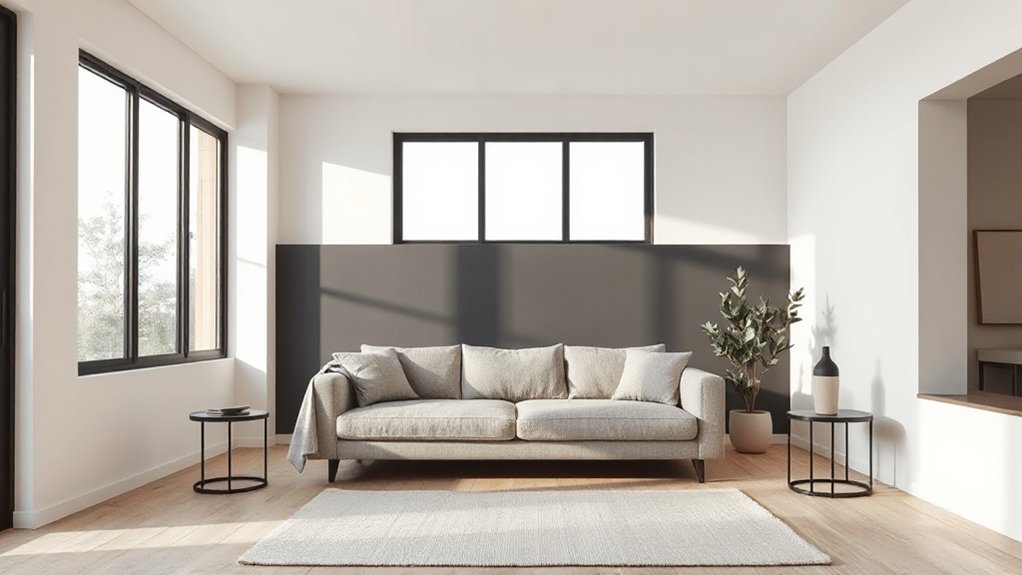
While bold accents bring drama, modern living room paint combos lean on clean contrast and disciplined restraint to look intentional. Start with a soft off-white or pale greige, then add a single deep counterpoint like charcoal, ink navy, or muted black for trims, built-ins, or a media wall. Use Color psychology: cooler neutrals read calm and focused, while inky tones add confidence and visual weight without clutter. Keep undertones consistent—warm with warm, cool with cool—so the room feels seamless in daylight and lamplight. Choose finishes strategically for paint durability: matte on broad walls hides flaws, satin on trim resists scuffs, and washable eggshell handles high-traffic zones. Limit to two hues plus one metal.
Traditional Living Room Paint Combos (Classic, Timeless Pairs)
If you want a living room that still feels right a decade from now, traditional paint combos deliver proven balance through warm neutrals, heritage hues, and crisp trim contrast. You’ll get a tailored backdrop that supports classic Furniture styles, from rolled-arm sofas to carved wood tables, without looking dated. Keep your Window treatments in mind: linen drapes and woven shades read richer against nuanced, historic color pairs.
- Cream walls + soft black trim for sharp, library-like structure.
- Warm greige + muted sage for calm, English-inspired comfort.
- Sand beige + dusty blue for coastal tradition with restraint.
- Putty taupe + burgundy accents for formal depth and warmth.
Use these pairs to anchor artwork, brass lighting, and patterned rugs while staying current with today’s layered, collected look.
Living Room Paint Combo Mistakes to Avoid (Undertones, Contrast, Trim)
Traditional pairings work because they balance warmth, depth, and trim definition—but the same room can look “off” fast when undertones clash, contrast lands too harsh (or too flat), or trim color gets treated as an afterthought. Check undertones in daylight and lamplight: a “greige” with green can fight a pink-beige sofa, while a blue-gray can skew icy next to warm oak. Use Color psychology intentionally—cool palettes calm, but too much blue reads sterile without a warm counterpoint.
Manage contrast with value steps: aim for 20–30% difference between wall and accent, not black-on-white unless you want graphic drama. Treat trim as a third color; align it with flooring and hardware. Finally, choose the right paint finish: matte hides flaws; satin highlights trim lines.
Frequently Asked Questions
How Long Should I Wait Before Moving Furniture After Painting?
You should wait 24 hours before moving furniture, but give heavy pieces 48–72 hours. Drying time varies with humidity and ventilation. For safer furniture placement, use felt pads, avoid dragging, and keep airflow steady.
What Paint Sheen Is Best for Living Room Walls and Trim?
Sure, pick flat everywhere—if you love scuffs: you’ll actually want eggshell or satin for wall paint finishes, and semi-gloss for trim. They resist marks, reflect tastefully, and complement today’s living room color palettes perfectly.
How Many Coats Are Typically Needed to Cover Darker Wall Colors?
You’ll typically need 2 coats to cover darker wall colors, but you may need 3 with high color contrast or porous surfaces. Use quality primer and durable paint; paint durability improves with full, even coverage.
Should I Repaint the Ceiling to Match the New Living Room Color Scheme?
Yes—you should, if the ceiling’s “fifth wall” feels tired. For Ceiling paint matching and sharper living room aesthetics, you’ll repaint to a clean flat white or a softened tint, hiding seams, modernizing light.
How Do I Calculate How Much Paint I Need for My Living Room?
Measure each wall’s height and width, subtract doors/windows, then divide total square footage by coverage (typically 350–400 sq ft/gal). Plan two coats. Your color palette and accent wall add separate totals, so buy extra.
Conclusion
You don’t need a single “perfect” color—test the theory that the best living room combo is really a balance of light, undertone, and contrast. When you match wall shade to your room’s exposure and fixed finishes, the space instantly feels bigger, calmer, and more expensive. Keep trim either crisply lighter for lift or deliberately deeper for definition, then echo the palette in texture. Skip guesswork: sample, observe morning-to-night, and commit confidently.
About the Author