You don’t have to lock her into “princess pink” to make the room feel kid-friendly. You can build a palette that balances calm pastels, a few confident brights, and warm neutrals so it stays current as she grows. Start by choosing the mood—cozy, playful, or bold—then assign each color a job across walls, trim, and accents to control visual noise. The key is where you place saturation and sheen, because that’s what makes the whole plan work…
Key Takeaways
- Pick the mood first—calm, playful, or bold—so paint and textiles stay cohesive.
- For calm coziness, use a soft neutral base with dusty lavender or misty sage, plus warm wood accents.
- For happy energy, choose one bright hero color for 20–30% of the room and keep large surfaces neutral.
- Add a deep “stop” tone like navy or forest in 5–10% to anchor the palette and prevent visual overload.
- Use durable finishes: eggshell or satin on walls, semi-gloss on trim, and matte textures (linen, bouclé) for warmth.
Choose the Mood: Calm, Playful, or Bold
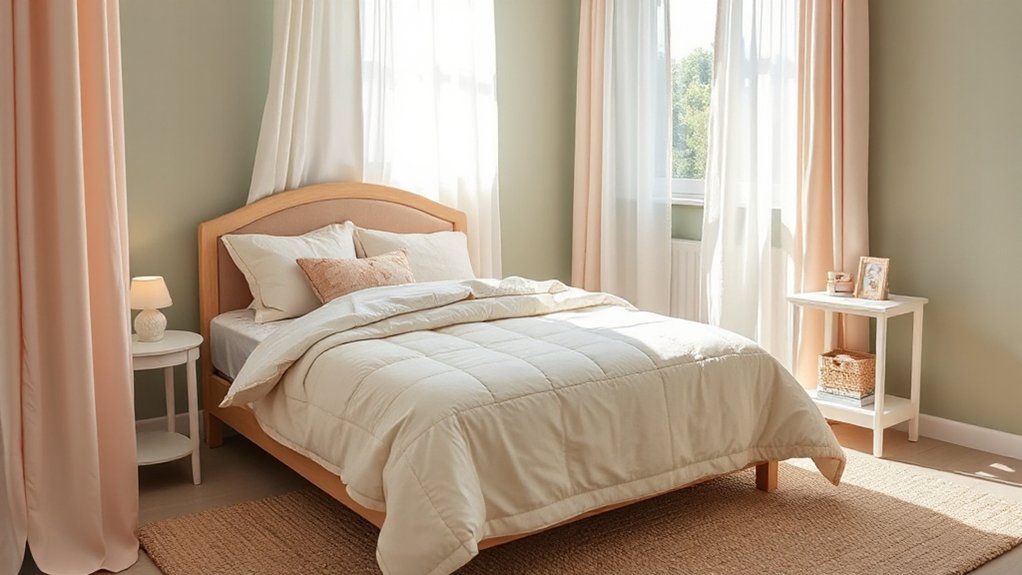
Before you pick specific paint chips or textiles, lock in the mood you want the room to deliver—calm, playful, or bold—because that decision dictates everything from saturation and contrast to how the space reads under daylight vs. warm ламplight.
If you want calm, you’ll prioritize low-contrast pairings and matte finishes that reduce glare and visual noise. If you want playful, you’ll push higher chroma accents, graphic stripes, and color-blocking that reads energetic from the doorway. If you want bold, you’ll commit to one dominant hue and support it with high-contrast trim or a statement ceiling. Use Decorative wall decals to test scale and pattern without repainting. Choose Bedroom lighting options early—2700–3000K for cozy, 3500–4000K for crisp—so undertones don’t shift at night.
Pastel Bedroom Color Palettes (Calm + Cozy)
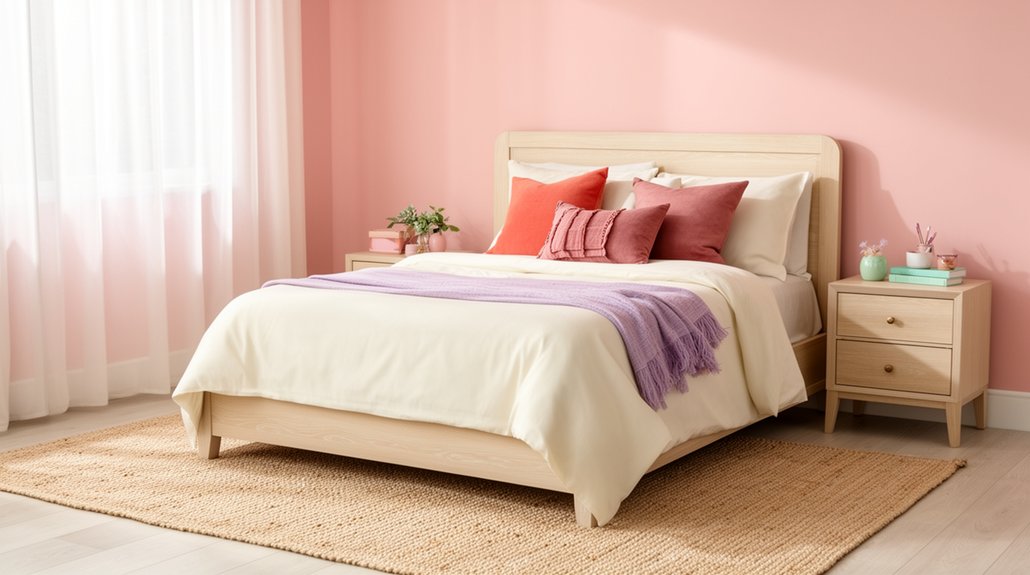
Because pastel palettes rely on low saturation rather than low impact, you can make a young girl’s bedroom feel calm and cozy without it reading “babyish” by pairing a soft base color (warm white, pale greige, or blush-tinted ivory) with one dominant pastel and a slightly deeper tonal anchor for contrast. Choose a dusty lavender or misty sage as the main note, then ground it with smoked mauve, clay, or soft charcoal in rugs, trim, or a headboard. From a Color psychology lens, lavender supports decompression, while sage cues safety and steady focus—useful for bedtime routines and homework. Tie in developmental themes by mixing tactile textures (bouclé, cotton, matte paint) and simple patterns. Keep saturation consistent, vary sheen, and add warm wood to prevent a cold cast.
Bright Bedroom Color Palettes That Feel Happy
While brights can easily tip into chaotic, you’ll get a genuinely happy young girl’s bedroom by choosing one high-chroma hero color (sunny marigold, coral, turquoise, or hot pink), then controlling the rest of the palette with a crisp neutral and a deeper “stop” tone for visual order. Keep the hero at 20–30% of the room: an accent wall, drapery, or rug. Use the neutral on large planes to bounce daylight and prevent fatigue. Add the stop tone (navy, forest, or aubergine) in 5–10% via furniture legs, frames, or a desk chair to anchor the scheme. Finish with Creative wall art that repeats the hero color in small hits, and Personalized bedding that mixes solids with one bold graphic for cohesion.
Warm Neutral Bedroom Color Palettes (Modern)
If you want a modern look that still feels cozy for a young girl’s room, build your palette around warm neutrals with a clean contrast strategy. Start with a creamy off-white (walls) and layer camel, oat, or warm greige in textiles to keep undertones aligned. For crisp definition, add matte black or deep espresso in small doses—hardware, picture frames, or a desk lamp.
Use Color mixing deliberately: pair one warm neutral base, one mid-tone, and one dark anchor, then add a single muted accent like terracotta or dusty rose at 5–10% for lift. Prioritize furniture coordination by matching wood tones (light oak or walnut) and choosing upholstery in textured bouclé or linen blends to stay modern and durable.
Theme Bedroom Color Palettes That Age Well
To make a themed bedroom feel current now and still work in middle school and beyond, treat the “theme” as an accent layer—not the base palette. Build your foundation with low-chroma neutrals: soft white, greige, or warm taupe, then add one saturated “signature” color at 10–15% of the room (bedding, lamp, chair). For longevity, pick themes that translate into graphics, not characters: celestial, vintage travel, ballet-core, or retro sports. Keep large surfaces quiet; use removable decals, pillow covers, and swap-friendly textiles to refresh fast. Apply a 60/30/10 ratio so the theme reads intentional, not juvenile. Use nursery decor ideas in storage and lighting, and rotate wall art themes as tastes shift.
Nature Bedroom Color Palettes (Sage, Sky, Sand)
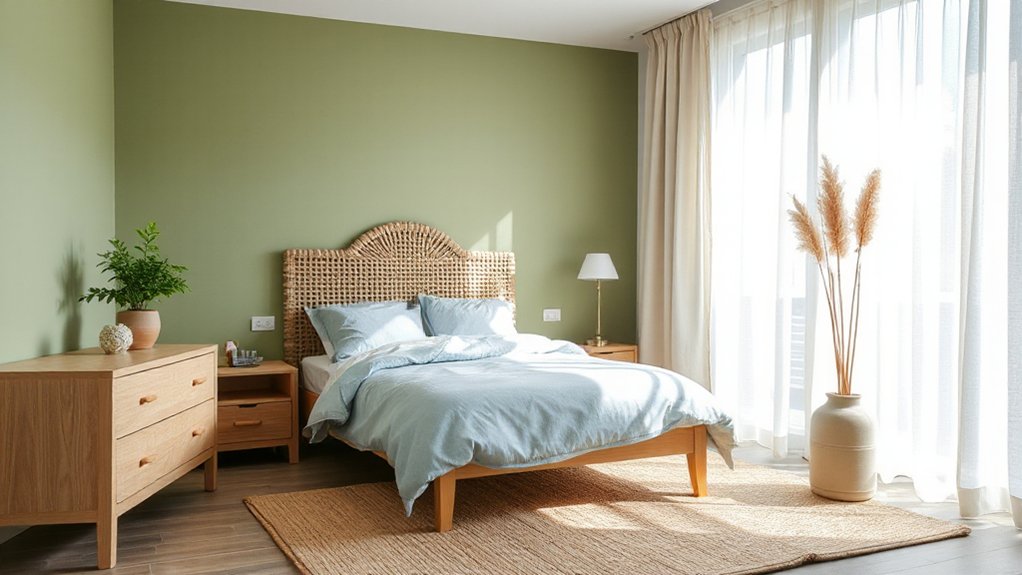
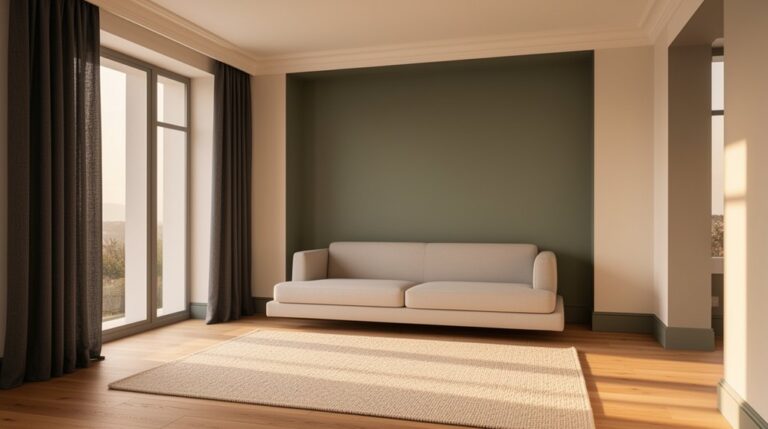
Because nature palettes rely on soft contrast instead of loud novelty, sage, sky, and sand give you a bedroom scheme that feels calm now and still reads age-appropriate later. Put sage on the walls in a low-chroma, gray-leaning tone (think matte or eggshell) to reduce glare and keep the room restful. Layer sky blue in bedding or a pinstripe curtain for cool balance, then add sand through rugs, cane furniture, or linen Roman shades to warm the mix. Keep undertones aligned: pair green with muted cyan, not teal, and choose beige with a slight peach cast. For Nursery decor ideas, use botanical prints and wood toys. You’ll hit age appropriate themes without feeling babyish.
Small Bedroom Color Palettes That Open Space
Although a small bedroom can’t gain square footage, the right low-contrast palette can make the walls visually recede and push light deeper into the room. Stay within a tight value range: soft warm white, misty blush, and pale greige keep contrast low while still reading youthful. For a cooler, airy feel, pair powder blue with cloud gray and a hint of lilac—very on-trend, and it reduces edge definition. Prefer modern minimal? Try oatmeal, ivory, and muted pistachio for gentle saturation without visual clutter. Choose finishes with higher LRV and a clean matte to cut glare while preserving softness. Add Creative wall art that matches the palette’s undertones, and use playful decor accents in one brighter hue to avoid shrinking the space.
Where to Use Each Color (Walls, Trim, Accents)
When you assign each shade to a specific surface, you control scale, light bounce, and how “busy” the room reads. Start with your base wall color ideas: keep most walls a soft neutral or pale tint to stabilize the palette and reduce visual noise. Put the highest-chroma color on one plane only, using smart accent wall options behind the bed or desk to frame a focal zone without shrinking the room. Reserve the lightest value for trim and doors to create clean edge contrast and make ceilings feel higher. Use mid-tones on built-ins, a reading nook, or the bed wall molding to add depth. Limit patterns to movable accents—pillows, art, lamps—so you can update fast.
Paint Finishes and Textiles That Last Years
To keep a young girl’s bedroom looking fresh through growth spurts and style shifts, you’ll get the best longevity by pairing the right paint sheen with durable, easy-care textiles. For walls, choose washable eggshell or satin: they resist scuffs better than matte yet don’t glare like semi-gloss. Use semi-gloss on trim and doors for maximum scrub-ability and cleaner lines around bold colors; this boosts the Durability of paint finishes. Specify high-quality acrylic with stain-blocking primer in high-touch zones (switch plates, desks). For textiles, pick solution-dyed or tightly woven cotton/poly blends, and performance velvets with high rub counts. Add Textile longevity tips: prewash covers, use zip slipcovers, rotate throw pillows, and select machine-washable rugs with non-slip pads.
Frequently Asked Questions
What Are the Safest Low-Voc Paints for a Child’s Bedroom?
Choose GREENGUARD Gold–certified, zero-VOC paints; you’ll minimize off-gassing in a child’s bedroom. Look for non toxic finishes and eco friendly pigments, avoid added formaldehyde, and ventilate well for 72 hours.
How Do I Match the Bedroom Palette to Existing Furniture and Flooring?
Start by sampling your flooring undertone, then pick wall colors with Matching color schemes that echo it. Use a 60-30-10 ratio, coordinating furniture hues via shared neutrals, and update accents with on-trend textiles and art.
How Often Should I Repaint a Young Girl’s Bedroom as She Grows?
Measure twice, cut once: you’ll repaint every 3–5 years, or sooner for scuffs and shifting tastes. Update wall texture with patching, and refresh accent walls annually using peel-and-stick or low-VOC paint for flexibility.
What Bedroom Colors Can Help Improve Sleep Quality and Reduce Anxiety?
You’ll sleep better and feel less anxious with muted blues, soft greens, warm greiges, and dusty lavenders. Use Calming color psychology and Mood enhancing paint choices: low-saturation, matte finishes, and consistent undertones to minimize visual arousal.
How Can I Incorporate Her Favorite Colors Without Making It Feel Childish?
You can layer, edit, and anchor her favorites with neutrals. Try Choosing gender neutral shades, balancing vibrant and muted tones, then reserve brights for accents. Use matte finishes, textured textiles, and modular decor that ages well.
Conclusion
You’ve got a clear roadmap: set the mood first, then build your palette with pastels, warm neutrals, or happy brights, and anchor it with nature tones for longevity. Treat color like a playlist—your base shades set the rhythm, and accents add the chorus. Keep walls light, use trim to sharpen contrast, and rotate decor for trend updates. Choose durable finishes and layered textiles so the room stays fresh as she grows.
About the Author