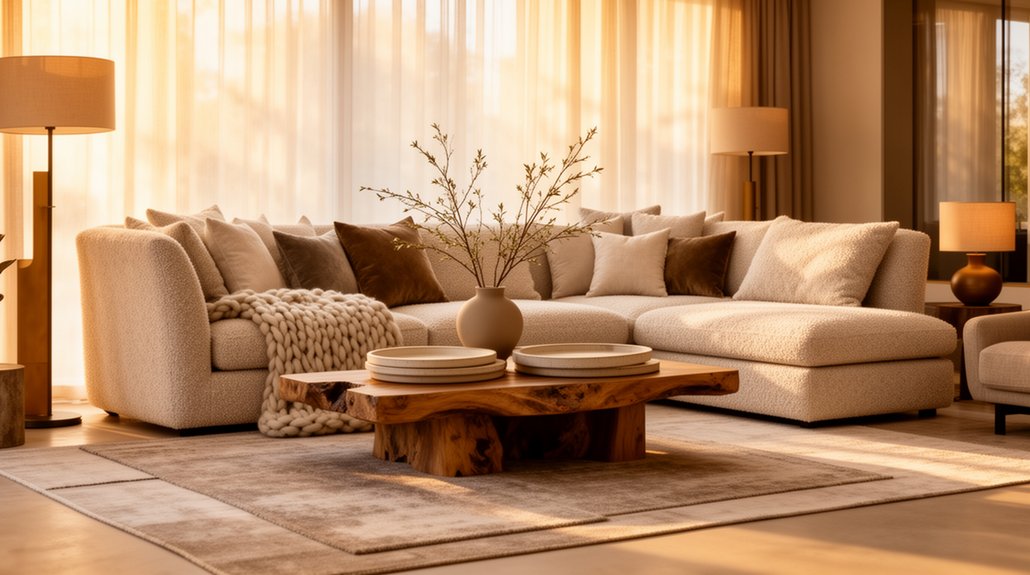
Float your oversized lounge-first sofa and keep 30–36 inches clear for main walkways, aiming the chaise toward views, not traffic. Anchor it with a rug that extends 8–12 inches past the sides and reaches under the front legs. Choose a coffee table about two-thirds the sofa length, set 14–18 inches away, and 1–2 inches below cushion height (rounds help tight paths). Layer 3–4 scaled pillows, add textured throws, warm 2700K lighting, and keep décor edited—there’s more ahead.
Key Takeaways
- Float the oversized sofa and keep 30–36 inches of clear walkway to preserve flow and create a modern, lounge-first layout.
- Place the chaise toward views or conversation areas, keeping it out of main traffic lanes for comfort without bottlenecks.
- Choose a coffee table about two-thirds the sofa length, set 14–18 inches away, and 1–2 inches below cushion height.
- Use a rug that extends 8–12 inches beyond sofa sides and fits front legs plus 12–18 inches in front for scale.
- Layer 3–4 oversized pillows and two textured throws, and add warm 2700K lamp lighting while keeping décor edited to a few high-impact pieces.
Place an Oversized Lounge-First Sofa (Clearance + Flow)
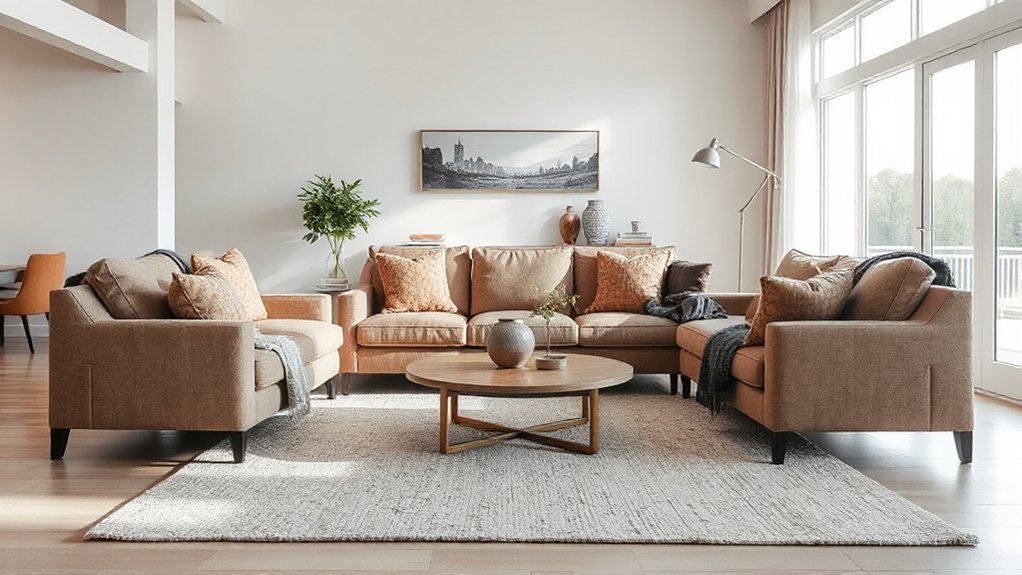
If your oversized lounge-first sofa is meant to be the room’s main attraction, you’ve got to place it with circulation in mind, not just symmetry. Give yourself 30–36 inches for primary walkways, and don’t pinch entries or balcony doors. Float the sofa when you can; it looks more current and prevents the room from feeling walled off. If it must sit on a wall, pull it forward a few inches so curtains can drop cleanly and cords can route discreetly. Aim the chaise toward the view or conversation zone, not the traffic lane. Then build Lighting ambiance with layered sources—floor lamp at the back corner, dimmable table lamps nearby. Anchor the sightline with wall art centered above the seatback.
Rug Sizing for an Oversized Lounge-First Sofa
Because an oversized lounge-first sofa carries so much visual weight, the rug has to read as a deliberate “platform,” not an afterthought. Go bigger than you think: choose area rugs that extend at least 8–12 inches beyond each side of the sofa, or aim for the front legs fully on the rug with a 12–18 inch margin in front for breathing room. In open plans, size the rug so it also captures adjacent seating, creating one cohesive zone instead of floating pieces.
Match pile to lifestyle: low-pile or flatweave keeps edges crisp and reduces trip risk; a dense, plush pile adds lounge energy but needs larger scale to look intentional. Anchor your color schemes with a mid-tone ground, then repeat two accent colors nearby.
Coffee Table Size and Shape for an Oversized Sofa
Once you’ve committed to an oversized sofa, your coffee table needs to match its footprint and sit low enough to keep the room feeling lounge-forward, not top-heavy. Aim for a Coffee table height that lands 1–2 inches below your seat cushion; it reads modern and keeps sightlines open. Size-wise, target about two-thirds the sofa’s length, and leave 14–18 inches of clearance for easy pass-through and reclining comfort.
Choose shape based on circulation. A large rectangle anchors long sofas; an oval or round softens deep, bulky silhouettes and prevents shin hits. For modular sectionals, try two nesting tables or a pair of squares to mirror the layout. Let table material do the visual balancing: warm wood adds coziness, stone feels elevated, and glass lightens a dense seating zone.
Pillow Formula for an Oversized Lounge-First Sofa
On an oversized lounge-first sofa, you need a balanced pillow layering plan that frames the corners without swallowing the seat. Follow clear size-and-scale rules—start with larger back anchors, step down to mids, then finish with one lumbar to sharpen the silhouette. Keep it trend-right by mixing textures and a tight color story (solid + stripe + subtle pattern) so the sofa reads styled, not chaotic.
Balanced Pillow Layering
While an oversized lounge-first sofa begs you to sprawl, your pillow layering should still feel deliberate, not chaotic. Lock in a repeatable pillow arrangement that reads polished from every angle, then edit hard—too many “extras” kills the lounge-first vibe. Use color coordination to connect the sofa to your rug, art, or drapery, keeping the palette tight and intentional.
- Start with two anchor pillows in a solid or subtle texture to ground the look.
- Add two patterned or contrast pillows that echo one accent color already in the room.
- Finish with one statement lumbar or bouclé pillow for depth and a trend-forward touch.
Rotate the front pillows slightly for ease, and keep seams aligned so it looks curated, not fussy.
Size And Scale Rules
Because an oversized lounge-first sofa reads bigger and lower than a standard frame, your pillows need to scale up or they’ll look like afterthoughts. Start with two 24x24s in the corners; they anchor the depth and set scale harmony. Layer in front with two 22x22s to keep the stack full without crowding seat width. Add one 14×36 lumbar (or two, if your sofa runs over 110 inches) to define the lounge line and support your lower back. Follow proportion guidelines: your largest pillows should span about one-third of the back height, and the front layer should step down 2 inches per size. Keep each corner at 3–4 pillows max so you don’t steal lounging real estate.
Texture And Color Mix
Once you’ve nailed pillow scale, texture and color are what keep an oversized lounge-first sofa from looking like one big upholstered block. You’re aiming for layered tactility and intentional color contrast, not a random pile. Start with a tight palette (two neutrals plus one accent), then shift textures to create depth under real-life lighting.
- Base anchors: Choose two solid pillows in a durable weave (linen, cotton slub, or bouclé) that echo the sofa tone, so the arrangement feels integrated.
- Pattern driver: Add one medium-scale print for pattern blending—think stripe + micro-check, or abstract + subtle herringbone.
- Finishers: Top with a high-touch texture (velvet, mohair, or faux shearling) in the accent color to sharpen the silhouette.
Throws and Texture Layers for Lounge-First Coziness
You’ll get lounge-first coziness by pairing throws with intent—start with a structured woven or brushed wool layer, then top it with a softer knit or faux mohair for contrast. Keep the palette tight (two to three tones) and vary scale: a chunky weave over a finer texture reads current and tailored on an oversized sofa. Mix textures by balancing matte and subtle sheen, and anchor it all with one tactile “hero” throw that invites you to actually use the seat.
Layered Throw Pairings
When an oversized lounge sofa sets the tone, layered throw pairings do the fine-tuning—adding warmth, depth, and that lounge-first “stay awhile” signal without clutter. You’ll get a styled, intentional look by treating throws like movable upholstery: they frame seating zones, soften edges, and make deep seats feel inviting.
- Start with a base throw in a solid, mid-weight weave, draped lengthwise over the chaise or corner seat.
- Add a second throw in a tighter knit or cashmere-blend, folded at the arm to create a clean landing spot.
- Finish with a lightweight, fringed option across the back cushion for a relaxed, editorial layer.
Keep your Fabric texture combinations within one palette, then vary scale and drape for contrast without chaos.
Texture Mixing Essentials
Because an oversized lounge sofa already delivers volume, texture does the heavy lifting—building coziness and polish without adding visual weight. Start with one anchoring throw in a substantial weave (bouclé, chunky knit, or brushed wool), then add a contrasting layer like smooth linen or matte cotton for crisp relief. Keep fabric patterns disciplined: pair a large-scale check with a tight herringbone, or a subtle stripe with a nubby solid, so nothing competes.
Nail color coordination by choosing one dominant neutral, one mid-tone, and one accent pulled from nearby art or a rug. Vary sheen for depth—velvet or sateen next to slubbed textures reads modern, not busy. Finish with a tactile lumbar pillow to lock the stack in place.
Side Tables and Lighting That Match the Sofa Scale
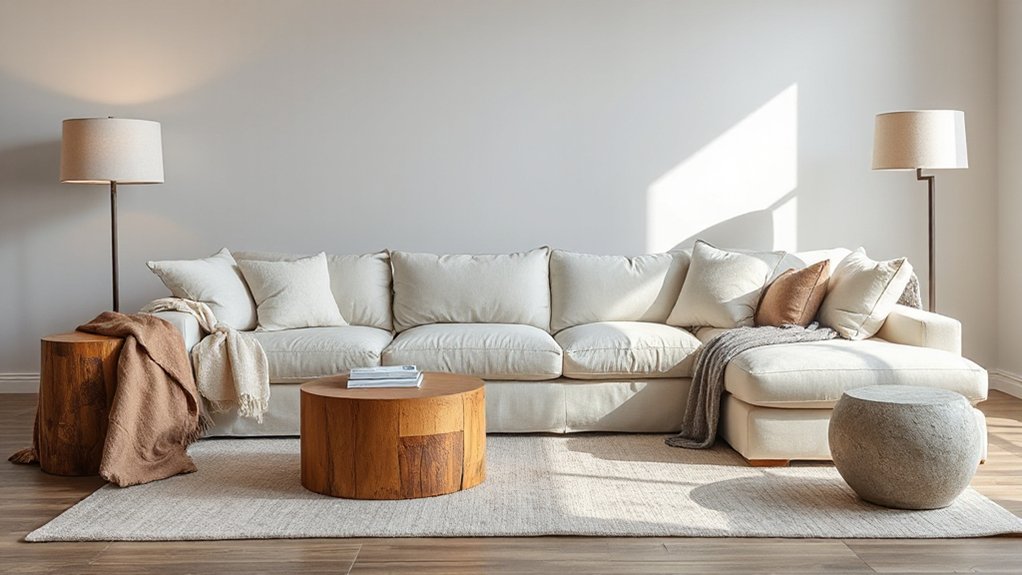
Although an oversized lounge sofa anchors the room, it can easily dwarf the pieces around it, so your side tables and lighting need comparable visual weight to keep the layout feeling intentional. Choose side table styles with broader tops and sturdier bases, so you’ve got reach, stability, and proportion. Aim for tables that sit at seat height or slightly below, and size them to at least half the sofa arm’s depth for a balanced stance. Layer ambient lighting at similar scale: oversized arcs, tall tripod lamps, or substantial ceramic bases keep the visual rhythm. Follow this quick sizing playbook:
- Pick 18–24″ wide tables, or go C-table pairs for flexibility.
- Place lamp bottoms at 22–28″ tall.
- Use warm 2700K bulbs to soften the lounge zone.
Edit the Look: Décor That Stays Polished, Not Cluttered
Even if your oversized lounge sofa begs for layers, you’ll keep the space looking editorial by editing décor down to a few high-impact pieces with breathing room between them. Start with one anchor: statement artwork sized to the sofa’s width (or a bold diptych), hung with its center at eye level when seated. Limit tabletop styling to a tight trio—tray, book stack, sculptural object—so sightlines stay clean. Choose Minimalist accents that echo the sofa’s curves: a low ceramic bowl, a single oversized vase, or a matte stone candle. Repeat one metal finish and one wood tone to prevent visual noise. Finally, quarantine clutter with a lidded basket or closed storage, and keep throws folded, not piled.
Frequently Asked Questions
How Do I Clean and Maintain Performance Fabric on an Oversized Sofa?
Vacuum weekly, blot spills fast, and follow the care tag. For fabric cleaning, use mild soap and water, test first, and air-dry. For stain removal, dab—don’t rub—and schedule annual professional cleaning.
What’s the Best Way to Protect Floors From a Heavy Oversized Sofa?
Protect your floors by using oversized felt sliders or rubber-cork furniture pads under each leg, plus a low-profile area rug and gripper. Coordinate decorative accessories and lighting arrangements so pads stay hidden and on-trend.
How Can I Make an Oversized Sofa Feel Comfortable for Shorter People?
Less is more: You’ll boost comfort by adding a firm lumbar pillow, a smaller seat cushion, and an ottoman for feet support. Use Color coordination and intentional accessory placement to visually shorten depth and invite lounging.
Which Slipcovers Work Best for Oversized, Deep-Seated Lounge Sofas?
Choose stretch performance slipcovers with deep-pocket, box-cushion sizing and strong elastic hems. For Fabric options, pick washable cotton-linen blends or stain-resistant microfiber. Add style tips: tailored skirts, contrast piping, and neutral solids.
How Do I Stop an Oversized Sofa From Sagging Over Time?
Like a bridge, you’ll stop sagging by rotating cushions monthly, adding Sofa frame reinforcement (center supports, corner blocks), and scheduling Cushion replacement with high-density foam. You can’t ignore uneven loads—spread seating and avoid perched edges.
Conclusion
Treat your oversized lounge-first sofa like a modern hearth. You don’t pile logs anywhere—you set clear paths (proper clearance), lay a rug that fully anchors it, and choose a coffee table that fits the “circle of warmth.” You add pillows with a repeatable formula, then finish with tactile throws. You scale side tables and lighting to match, not compete. Finally, you edit décor like a firekeeper: curated, calm, never cluttered.
About the Author