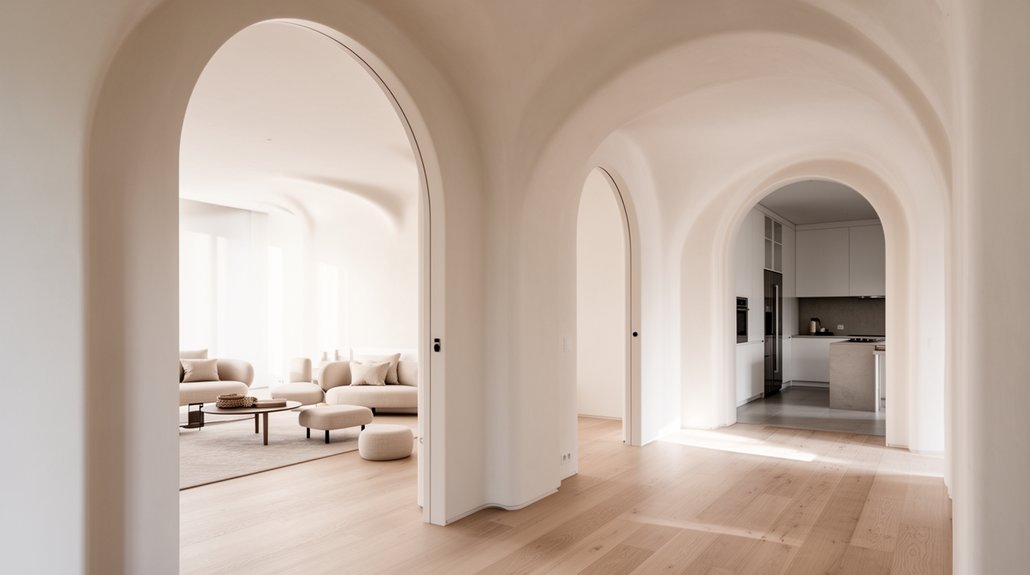
Arched internal doors are replacing standard frames because you get a cleaner, more architectural threshold that softens hard modern lines without losing intent. The curve guides your eye upward, improves proportions, and can make ceilings feel higher and corridors more rhythmic. You can align awkward junctions, frame views, and keep joinery consistent with slim architraves, concealed hinges, and refined ironmongery. Choose stable, durable cores so the arch stays crisp, and you’ll see where they work best.
Key Takeaways
- Arched doors soften modern interiors, adding architectural intent and calm curves without committing to a specific period style.
- The curve draws the eye upward, improving proportions and often making ceilings feel higher and corridors more fluid.
- They create deliberate thresholds and framed views, strengthening symmetry, rhythm, and sightlines across open-plan layouts.
- Arched frames integrate cleanly with minimalist joinery, slim ironmongery, concealed hinges, and consistent finishes for a refined, bespoke look.
- Better materials and precise installation now make arches durable and crisp, overcoming past concerns about alignment, wear, and long-term stability.
Why Are Arched Internal Doors So Popular?
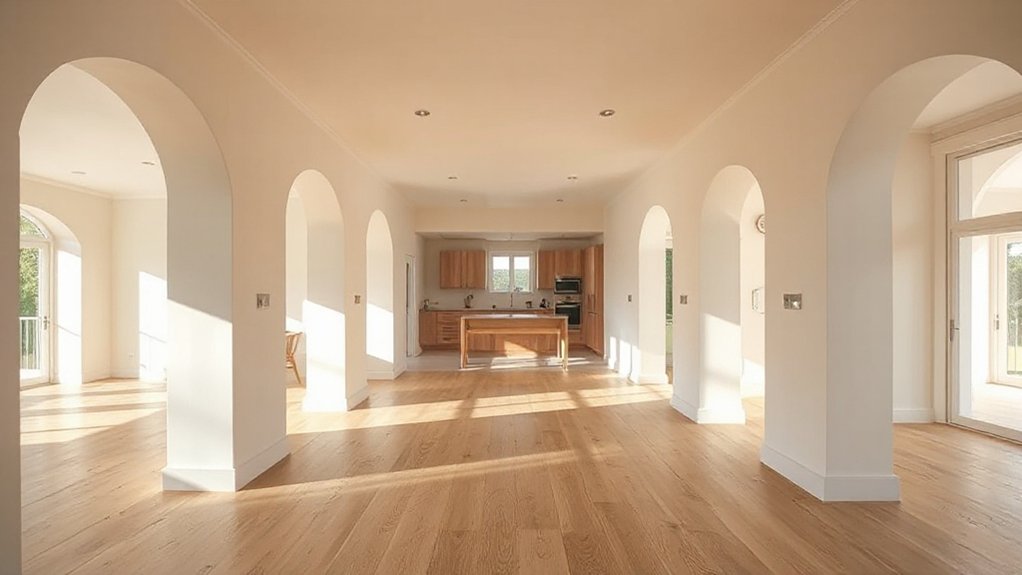
Although trends come and go, arched internal doors have surged in popularity because they soften modern interiors while still reading as architectural and intentional. You’re drawn to their quiet confidence: the curve signals craft, not novelty, and it references Historical architecture without forcing a period scheme.
You can specify arches to resolve awkward junctions between rooms, align openings with ceiling lines, and introduce a disciplined rhythm along corridors. They suit minimal palettes because the geometry carries the interest, yet they also welcome decorative accents such as reeded glazing, panel mouldings, or contrasting architraves. You’ll find them compatible with contemporary joinery, slim ironmongery, and concealed hinges, so the detail stays crisp. When you want refinement that feels considered, an arched frame delivers.
How Do Arched Internal Doors Change a Room?
When you introduce an arched internal door, you strengthen visual flow by guiding the eye smoothly between spaces. You soften rigid room geometry, replacing harsh angles with a calmer, more refined shift. You also create the illusion of greater height, lifting the perceived ceiling line and improving overall proportion.
Enhancing Visual Flow
If you want a space to feel cohesive without losing definition, arched internal doors reshape how your eye travels through it. You read the opening as a deliberate threshold, so sightlines extend cleanly from hallway to reception room and onwards, linking zones without dissolving them. The curve frames views like a considered aperture, guiding attention to focal points, artwork, or a garden aspect, while keeping circulation legible.
You also borrow Historical influence without pastiche: the arch signals craft and permanence, lending the plan a composed hierarchy. When you align multiple openings, you reinforce Architectural symmetry, creating a visual rhythm that steadies the interior and makes progression feel intentional. Under consistent arch profiles, finishes and joinery appear more integrated, so the scheme feels calmer and better resolved overall.
Softening Room Geometry
Because most interiors rely on straight lines and right angles, an arched internal door immediately softens the room’s geometry by introducing a continuous curve that eases shifts between walls, ceiling and openings. You guide the eye more gently, so circulation feels composed rather than abrupt. The arch also lets you balance contemporary minimalism with historical influences, echoing cloistered corridors or Georgian proportions without copying them. To keep the effect deliberate, you’ll refine adjacent details and finishes:
- Use colour coordination to link the door leaf, skirting, and adjacent wall tone
- Repeat the curve in a niche, mirror, or radiator cover
- Specify slim architraves to keep junctions crisp
- Choose consistent ironmongery to avoid visual noise
You’ll find corners feel less severe, and the room reads calmer and more resolved overall.
Creating Height Illusion
How can an arched internal door make a ceiling feel higher than it is? You guide the eye upward along the curve, so the opening reads as taller than a rectangular frame. The apex creates a visual terminus above head height, extending perceived verticality and making adjacent walls appear longer.
You can strengthen this effect by keeping architraves slim and aligning the spring line with existing cornices or picture rails. A lighter paint tone within the reveal lifts the perceived soffit, while consistent skirting heights prevent the room feeling chopped. The form also carries Historical significance, referencing Georgian and Victorian proportions, yet it suits pared-back interiors. Specify robust cores, stable timber, or steel-reinforced frames to guarantee Material durability, so the arch stays true, doesn’t rack, and retains crisp symmetry over time.
Where Do Arched Internal Doors Work Best?
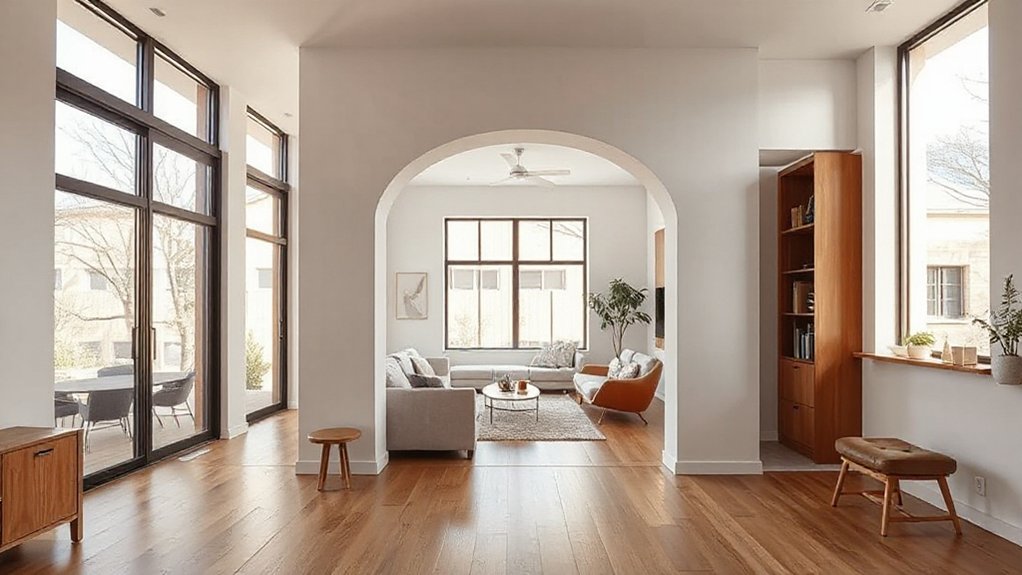
You’ll see arched internal doors work best when you need to define zones without breaking flow, particularly in open-plan living areas. You can also use them to elevate hallways and other passageways, turning simple circulation routes into purposeful design moments. In bedrooms, an arched door to an ensuite entrance softens the threshold and adds a refined architectural note.
Open-Plan Living Areas
Where do arched internal doors work best in an open-plan living area? You’ll get the strongest effect where you want definition without shutting down flow. Set an arch between kitchen and dining to soften sightlines, manage cooking noise, and frame views. Use it at the edge of a snug or reading nook so the curve signals retreat while daylight still travels. Choose profiles that echo Historical influences, then refine them with Artistic details in glazing bars, timber grain, or slim shadow gaps, keeping the overall scheme contemporary.
- Between kitchen and dining for controlled openness
- At the boundary of living and study zones
- Around a snug nook to emphasise intimacy
- Facing large glazing to create a focal axis
Hallways And Transitional Spaces
In hallways and passageways, an arched internal door works best when it turns a pass-through into a deliberate threshold without impeding movement. You can use it to soften long sightlines, reduce the tunnel effect, and introduce a clear hierarchy between public and private zones while keeping circulation generous. Place it where routes change direction, where a stair landing meets a corridor, or where you want to anchor a console or artwork with a shaped opening. Historical influences matter here: the curve references Georgian and Edwardian proportions without forcing pastiche. Specify crisp reveals, slim architraves, and consistent skirting heights so the detail reads intentional. Today’s manufacturing processes let you match radius, veneer, and ironmongery across multiple openings with reliable tolerances.
Bedrooms And Ensuite Entrances
After shaping circulation routes with a considered arch, apply the same geometry at bedroom doors and ensuite entrances to signal privacy and calm without resorting to heavy detailing. You’ll soften the threshold from public to personal zones, while keeping lines disciplined and contemporary. Use the arch to align with your colour schemes, so joinery, wall paint, and textiles read as one composition. Pair it with considered lighting fixtures: a centred pendant beyond the opening, or wall lights that graze the curve, will heighten depth at night. For best results, prioritise:
- Wider reveals for a quieter, hotel-like arrival
- Pocket or swing doors that clear furniture layouts
- Reeded or frosted glazing for ensuite discretion
- Matched ironmongery and architrave profiles for cohesion
Arched Internal Doors vs Standard Doors: What’s Different?
Although both options frame a doorway and manage circulation, arched internal doors create a softer, more architectural silhouette than standard rectangular doors, which rely on straight lines and visual uniformity. You’ll notice the curve draws the eye upward, lending perceived height and a calmer transition between rooms. Standard doors suit strict grids and repeatable detailing, while arches introduce focal rhythm and selective emphasis.
You can also expect different implications for joinery and setting-out. Arched frames demand accurate templating, careful plaster alignment, and tighter tolerances at the head. That discipline pays off when you want Historical inspiration without pastiche, because the geometry reads as intentional rather than ornate. With standard doors, you prioritise speed and interchangeability. In both cases, you should evaluate Material durability at hinges, edges, and thresholds, since traffic quickly reveals weak construction.
Best Materials and Styles for Arched Internal Doors
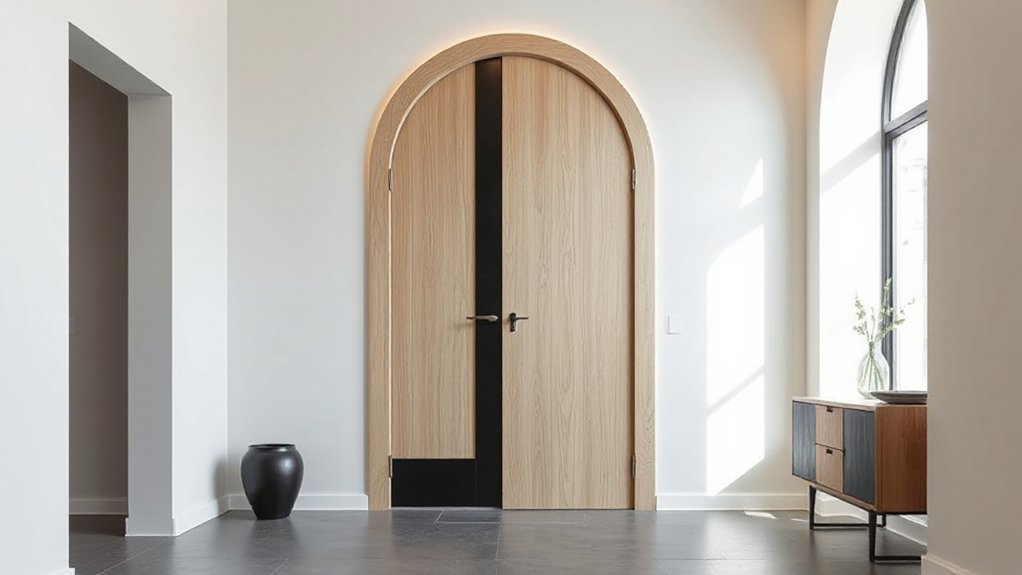
Whether you’re specifying a subtle curve for a contemporary flat or restoring period proportions, the best arched internal doors balance visual weight with everyday resilience, so your material choice and style detail need to work as one. Prioritise Material durability where traffic is high, and style versatility where rooms evolve.
- Engineered timber: stable, paint-ready, ideal for crisp modern reveals.
- Solid hardwood: richer grain and heft; specify for heritage or statement joinery.
- Steel-framed glazing: slender sightlines, borrowed light, and a refined industrial note.
- Composite with acoustic core: reliable performance, suited to bedrooms and studies.
For styling, pair minimalist flush leaves with a soft arch for calm modernity, or choose glazed panels and moulded rails to echo Victorian or Edwardian rhythm without pastiche.
What to Measure and Check Before Installation?
Material and style set the character of an arched internal door, but accurate setting-out makes it read as designed once it’s hung. You’ll start by confirming the structural opening: measure width at head, mid, and floor, then take the smallest. Check height to the springline and to the crown, and template the radius if the reveal isn’t perfectly true. Verify plumb on both jambs and level across the head; note any twist in the wall that will telegraph through the architrave. Allow for finished floor build-up, hinges, and clearance to skirting. Inspect substrate soundness and locate services before drilling for Installation safety. Finally, dry-fit the frame, record packer positions, and recheck measurement accuracy before fixing permanently.
Frequently Asked Questions
Can Arched Internal Doors Be Retrofitted Into Existing Rectangular Openings?
Yes, you can retrofit arched internal doors into rectangular openings, but you’ll need reframing or an arched head insert. You should assess architectural compatibility and historic preservation constraints, then specify bespoke linings, architraves, and finishes.
Are Arched Internal Doors More Expensive Than Standard Door Replacements?
Yes—you’ll usually pay 20–50% more than for standard replacements. You’ll cover specialised joinery, decorative glass, and custom finishes. Yet you’ll gain a softer architectural line, elevating proportions and perceived quality throughout your interior scheme.
Do Arched Doors Require Special Hinges, Handles, or Custom Hardware?
You don’t always need special hardware; you’ll match standard hinges and handles when the leaf stays rectangular. For true arches, meet Arch hinge requirements and explore Custom handle options, often bespoke for alignment and finish.
How Do Arched Internal Doors Affect Soundproofing and Privacy Between Rooms?
Sound sealing suffers slightly if you don’t fit precise perimeters; you’ll boost Acoustic insulation with compressible seals, heavier cores, and tight thresholds. For Privacy enhancement, you’ll specify solid leaves and minimise gaps through careful joinery.
What Building Regulations or Fire-Rating Options Exist for Arched Internal Doors?
You’ll follow UK Building Regulations, typically Approved Document B for fire safety, and specify FD30 or FD60 arched doorsets. You’ll guarantee structural integrity with certified frames, intumescent seals, and compliant ironmongery, backed by third-party testing.
Conclusion
Choose an arched internal door and you won’t merely replace a frame—you’ll reshape how your home feels. You’ve seen what it can do: soften hard lines, draw the eye upward, and give circulation a quiet sense of ceremony. Yet the real difference appears only once it’s fitted—when light moves, sightlines lengthen, and rooms begin to connect. Measure precisely, check clearances, and match materials with intent, because the reveal is closer than you think.
About the Author