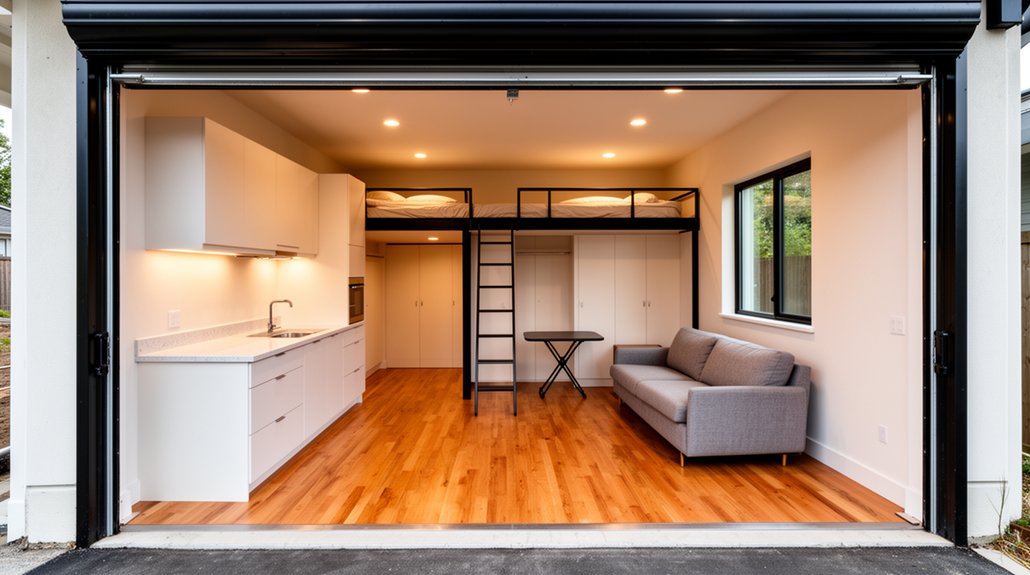
You’ll convert a detached garage into a high-yield studio by confirming ADU zoning, setbacks, owner-occupancy rules, and whether the existing nonconforming footprint can stay, then pulling structural/MEP/energy permits and documenting as-builts. Design for rent premiums: tight, light-filled layout, separate metering, and durable finishes. Keep plumbing runs short, use a ductless mini-split, and size the panel for dedicated circuits. Meet egress and fire-rated assemblies, then pass rough/insulation/final inspections. Next, you’ll see how to optimize costs and maximize rent.
Key Takeaways
- Verify zoning allows an ADU, confirm setbacks and fire rules, and pull structural, MEP, and energy permits before design starts.
- Inspect the garage for square framing, dry slab, and sound roof; fix moisture, foundation, and nonconforming footprint issues early.
- Maximize rent with an efficient studio layout, strong natural light, private entry, and durable finishes that match the main home’s curb appeal.
- Optimize MEP by clustering kitchen and bath, keeping drain runs short, using a ductless heat pump, and sizing the panel for all-electric loads.
- Protect safety and resale with code-compliant egress, rated wall assemblies, airtight insulation, documented inspections, and separate metering when feasible.
Can You Legally Convert Your Detached Garage to an ADU?
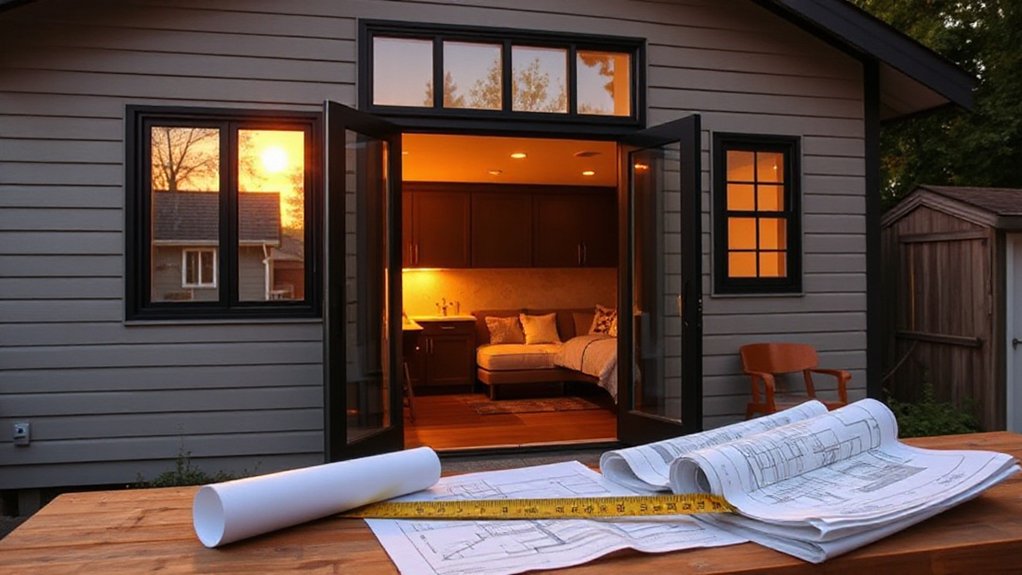
Before you spend a dollar on design or finishes, you need to confirm your detached garage can legally qualify as an ADU under your local zoning code and building department rules. Verify your parcel allows ADUs, then check minimum unit size, height, lot coverage, and required setbacks for converted structures. Confirm allowable use (rental, short-term limits), owner-occupancy rules, and whether fire sprinklers apply. Ask planning if your garage’s nonconforming footprint can remain or must be brought to current setbacks. Next, map utility requirements: separate electric meter, sewer connection, and backflow devices. Pull permits for structural, electrical, plumbing, and energy compliance; Garage insulation must meet local R-values. Budget for required site work like driveway resurfacing if access, parking, or drainage triggers conditions of approval.
Is Your Detached Garage a Good Studio Candidate?
Once zoning and permitting pencil out, the next question is whether your detached garage can produce a compliant, comfortable studio without blowing up your budget. Start by verifying the shell is square, dry, and structurally sound; a failing slab, racked framing, or chronic moisture will complicate code compliance. Check clearances to property lines and confirm you can meet required fire-resistance ratings at walls and openings. You’ll also want workable utility routing for water, sewer, and electrical without violating easement or trenching limits, and enough ceiling height for finished floor/ceiling assemblies. Finally, evaluate marketability: Exterior aesthetics can’t scream “converted shed.” Prioritize:
- Garage insulation potential and thermal-bridge control
- Egress window/door placement and natural light
- HVAC, plumbing, and panel capacity within code constraints
What Does a Detached Garage Conversion Cost (and ROI)?
You’ll typically price a detached garage conversion by line-iteming code-driven scope—permits and plans, foundation/slab work, framing/insulation, MEP tie-ins, fire separation, windows/egress, and finishes—plus a contingency for utilities and site constraints. Your ROI hinges on rent premiums from legal ADU status, efficient layout, separate metering, and durable specs that reduce vacancy and operating costs. You’ll then model payback by comparing all-in cost to net rent uplift and weigh the exit value impact against appraisal rules and local ADU regulations.
Typical Conversion Cost Breakdown
- Soft costs ($5k–$25k): survey, architect/engineer, Title 24/energy docs, permits, school/utility fees, inspections.
- Shell + structure ($15k–$50k): slab/moisture fixes, framing, roof repairs, shear, exterior cladding, rated assemblies.
- MEP + interiors ($40k–$80k+): electrical service, plumbing/sewer, HVAC, water heater, drywall, kitchen/bath, flooring, appliances.
ROI Drivers And Rent Premiums
Although build costs set your baseline, your detached garage conversion’s ROI hinges on three levers you can actually control: rentable square footage, code-compliant livability, and market-positioning upgrades that appraisers and tenants recognize. You boost rent fastest by legally maximizing net habitable area (ceiling height, egress windows, and permitted loft/storage rules), not by overspending on finishes. Hit life-safety first: compliant separation wall/ceiling, rated door, smoke/CO alarms, and dedicated HVAC/ventilation, because failed inspections erase any rent premium. Invest in Garage insulation to meet energy code and cut tenant utility complaints; comfort supports higher advertised rent. Upgrade curb appeal with durable Exterior siding, proper flashing, and lighting so it reads as an ADU, not a shed. Document permits and specs for valuation comps.
Payback Period And Exit Value
- Model payback using stabilized net rent minus vacancy, utilities you cover, and reserves.
- Stress-test against permit delays, impact fees, and code upgrades (egress, insulation, sprinklers where required).
- Estimate exit value via paired sales and appraiser guidance on ADU recognition and GLA treatment.
Studio Layout Tricks for a Garage ADU
To push rental yield in a garage ADU, you’ll lay out the studio in tight, code-compliant zones using multi-functional furniture that preserves required egress paths and clearances. You’ll shift storage vertical—tall cabinets, overhead racks where permitted, and wall systems—so you keep the floor area open and marketable without encroaching on electrical, plumbing, or mechanical access. You’ll also optimize light and sightlines with strategic glazing, mirrors, and low-profile partitions to make the unit feel larger, support ventilation and lighting requirements, and justify higher rent.
Multi-Functional Furniture Zones
Because every square foot in a garage ADU has to earn its keep, you’ll get the best ROI by zoning the studio with multi-functional furniture that defines “rooms” without adding walls that can trigger new permitting, egress, or corridor requirements. Use folding furniture and right-sized storage solutions to keep clear circulation and protect required clearances around doors, windows, and any rated separations. Aim for layouts that read as distinct use areas while staying open-plan for inspections and faster approvals.
- Sleep/Work zone: a Murphy bed with an integrated desk lets you switch day/night use without moving utilities.
- Dining/Living zone: a drop-leaf table doubles as an island, keeping the kitchenette’s work triangle functional.
- Entry/Utility zone: a bench with concealed compartments manages shoes, linens, and cleaning gear, reducing off-site storage costs.
Vertical Storage Strategies
When you push storage upward instead of outward, you preserve required clear floor area and circulation while increasing rentable functionality. Use Vertical shelving to keep egress paths and door swings unobstructed, and maintain code-compliant clearances around the kitchenette and bath entry. Anchor tall units to studs, specify rated fasteners where required, and keep heavier items between knee and shoulder height to reduce tip risk and tenant damage claims.
Build shelving organization into dead zones: above the entry, over the closet, and along the wall opposite the bed. Add ceiling-height cabinets with a dust-closed top to protect finishes, and integrate a ladder rail only if it doesn’t encroach on required pathways. You’ll cut furniture count, speed turns, and boost rentability with minimal square-foot cost.
Light And Sightlines
Although a garage ADU studio may start with a low ceiling and a single overhead door opening, you can materially increase perceived square footage—and rental comps—by controlling light entry and preserving uninterrupted sightlines from the main entry to the primary window. Prioritize code-compliant glazing and keep partitions low-visual-mass so daylight travels deep.
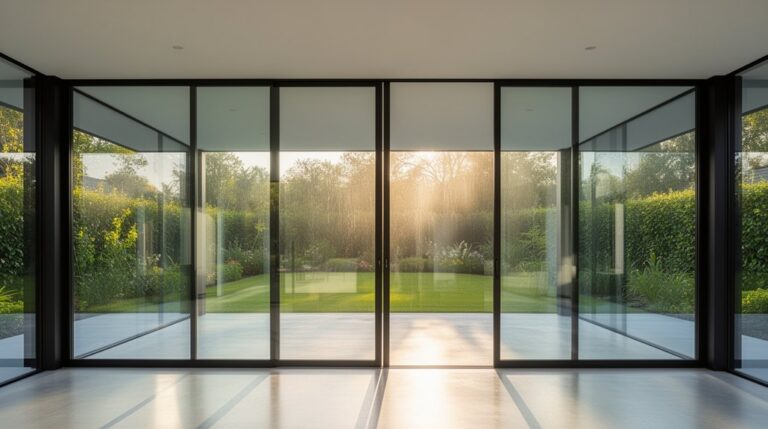
- Upgrade openings: Convert the garage door to an insulated wall with large, egress-compliant windows where required, and add a clerestory or solar tube to boost Natural light without sacrificing privacy.
- Manage obstructions: Place the bath, mechanicals, and storage in a single “dark core” along one side to protect Sightlines end-to-end.
- Specify surfaces: Use high-LRV paint, slim mullions, and glass/transom panels; they maintain fire/energy compliance while improving perceived area and rentability.
Plan Plumbing, HVAC, and Electrical for a Garage Conversion
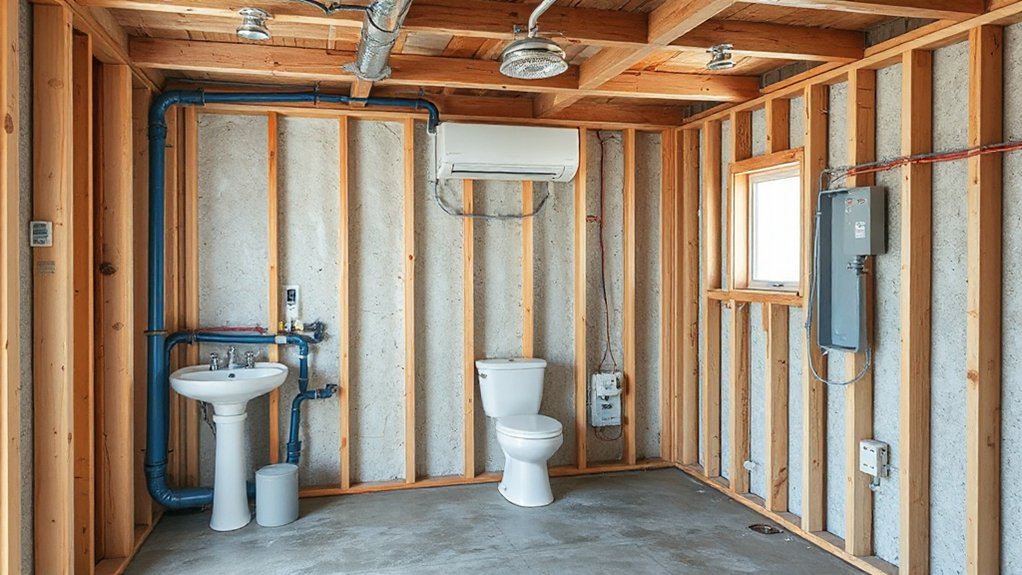
Before you frame walls or pour a new slab, map your plumbing, HVAC, and electrical runs to meet local code and protect ROI. Place the kitchen and bath on a shared wet wall, keep drain lines short, and confirm slope, venting, and cleanout access. If you’re adding a bathroom, verify sewer tie-in depth; budget for an ejector only if gravity can’t work. Size the panel for an all-electric studio, add dedicated circuits for HVAC, range, and laundry, and plan GFCI/AFCI placement per jurisdiction. Choose a ductless heat pump to reduce chases and preserve ceiling height. Coordinate penetrations with Garage insulation and Foundation reinforcement so you don’t compromise air sealing, shear, or slab integrity. Document as-builts for faster permitting and resale.
Garage ADU Code Basics: Egress, Fire Rating, Inspections
Because inspectors will enforce life-safety rules first, you’ll protect your permit timeline and rental ROI by locking down three code pillars early: egress, fire-resistance, and required inspections. Treat your detached garage ADU like a small dwelling unit and document compliance on plans before you build.
- Egress: Provide an exterior door plus an egress window where required; verify minimum clear opening, sill height, and window-well specs. Don’t let driveway resurfacing block an exit path or change grades at landings.
- Fire rating: Meet separation requirements at walls/ceilings near property lines and any remaining garage areas; use tested assemblies, sealed penetrations, and compliant self-closing doors. Coordinate Garage insulation so it doesn’t compromise ratings.
- Inspections: Schedule rough, insulation, and final; keep photos, product cut sheets, and signed corrections to avoid rework.
Finishes and Amenities That Increase Studio Rent
Once you’ve cleared egress and fire-rating hurdles, you can boost studio rent fastest by specifying finishes and amenities that appraisers, inspectors, and tenants all recognize as “real housing,” not a converted garage. Install hard-surface flooring with an approved underlayment, quartz or solid-surface counters, and a vented range hood tied to code-compliant makeup air where required. Add a ductless mini-split with permitted electrical, and use high-R insulation plus acoustic caulk to meet energy targets and reduce noise complaints.
For kitchens, choose full-height cabinets and a 24-inch appliance package; for baths, use a tiled shower with an exhaust fan on a timer. Improve Outdoor aesthetics with matching siding, lighting, and address numbers. Solve Privacy considerations with frosted windows, fencing, and independent entry.
Frequently Asked Questions
How Do You Market a Garage Studio to Attract Premium Tenants?
You market a garage studio by showcasing code-compliant finishes, premium Garage decor, and high-value Tenant amenities, pricing via rent comps, and listing with pro photos, 3D tours, and certifications to justify ROI-focused premiums.
What Insurance Changes Are Needed After Converting a Detached Garage?
You’ll update to a landlord/dwelling policy, add liability and loss-of-rents, and insure code-compliant Garage insulation and Plumbing upgrades. Tell your carrier it’s a separate unit, adjust replacement cost, require tenant renters insurance.
How Do You Handle Property Taxes After Adding a Garage Studio Apartment?
When you add a studio, you’ll trigger property tax reassessment; you’ll report permits, track assessed-value notices, and appeal if overvalued. Example: you document zoning compliance and receipts, reducing assessed improvement value 8%, boosting ROI and cashflow annually.
Should You Furnish the Studio, and What Items Yield Higher Rent?
You should furnish it; furnished units often command higher rent. Prioritize Furnishing essentials and High yield furniture: durable bed, sofa, desk, smart TV, full kitchen kit. Confirm fire codes, egress, and insurance requirements.
How Do You Screen Tenants Effectively for a Small ADU Rental?
You’ll screen tenants effectively by standardizing Tenant screening: verify income (3x rent), run Background checks and credit, confirm landlord references, and apply consistent written criteria under Fair Housing/FTC rules, minimizing vacancy, default risk.
Conclusion
You’ve tested the theory that a detached garage can become a high-yield studio, and the numbers back it—if you stay code-first. When zoning allows an ADU, your layout, egress, and fire-rated assemblies authorize final approval and higher rent. You’ll protect ROI by sizing plumbing runs, electrical loads, and HVAC early to avoid change orders. Then you’ll spend on durable finishes, storage, and in-unit laundry hookups—amenities that justify premium rents and lower vacancy.
About the Author